








Metrorunner Deep Dive
What the Community Thinks About Metrorunner
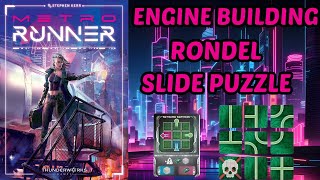
Metrorunner, designed by Steven Kerr and published by Thunderworks Games, is a one to five player euro in which runners race around Mirror City completing jobs and hacking networks. Early coverage is positive, with the usual caveats about where it comes from. Before You Play's rules teach was sponsored by Thunderworks Games. Quackalope filmed its overview during the last days of the Kickstarter campaign, states that it is not sponsored, and mentions having first played the game as a prototype with the publisher. TheGameBoyGeek discloses having made official rules videos for Thunderworks in the past. Within those limits, reviewers describe a quick, accessible game whose parts tie together well, anchored by a sliding tile hacking puzzle that will decide for many players whether the game clicks.
Core Mechanics That Define Metrorunner
Rondel System and Action Selection
The main board is split into districts that players travel around like a rondel. TheGameBoyGeek explains that a runner moves one or two spaces for free and then takes the action where it lands; moving further costs one cube per extra space, and an uncompleted job card from hand can stand in for a cube. Occupied spaces matter. TheGameBoyGeek likes that runners jump over one another, so landing just ahead of a rival can effectively block the spot that player wanted. Quackalope makes the same point from the other side, noting that players end up blocking locations from each other and that this gives the game more interaction than a typical euro.
Engine Building Through Job Completion
Jobs are the engine. Before You Play's teach lays out the layers: each completed job grants an immediate reward, a track advancement and an ongoing ability, plus points at the end of the game. The ongoing abilities include effects such as gaining an extra cube whenever a cube of a certain color is gained. Completed jobs are tucked into slots on the player board, each slot holding up to three cards, and at the end of the game each slot can fulfill one of four contracts that ask for particular combinations of districts. Quackalope calls completing jobs and stacking them up to three deep one of the primary scoring functions of the game.
The Metrorunner Experience
Planning Turns Ahead
Quackalope describes a game light enough to plan several turns out, with one player saying they had their next five turns planned while others played. The shared puzzle and the shifting job market regularly disrupt those plans. TheGameBoyGeek recounts having a hack fully mapped out, only for another player to change the board first. The option to cycle a network card to the bottom of its deck helps when a puzzle has gone stale, and TheGameBoyGeek appreciates that flexibility.
Production and Art
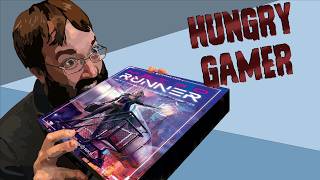
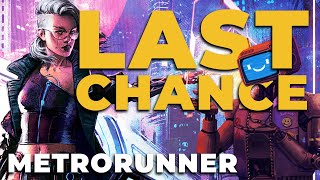
TheGameBoyGeek praises the futuristic artwork as stunning and says the game looks as good on the shelf as on the table, consistent with Thunderworks' other releases. Quackalope points to chunky meeples in the final copy and an optional metallic upgrade offered during the campaign.
What Makes Metrorunner Stand Out
Accessible Weight With Real Interaction
Quackalope places Metrorunner at low to mid weight, with fairly accessible rules and a decent amount of player interaction. That interaction comes from contested spaces on the rondel, jobs players fight over, and a shared hacking grid that each turn reshapes. Quackalope also cautions that players who come to euros for a quiet rondel puzzle may find more interaction than they want. The game ends when a player reaches the end of a track, completes nine jobs, or when the job deck runs out, so the pace is partly in the players' hands.
Hack Puzzle as Signature Mechanism
The hack action is where Metrorunner differs most from its peers. Nine tiles in the center of the board represent the 3x3 grid printed on each network card, and a hack succeeds by connecting the two core nodes with one continuous path, with optional bonus nodes for extra rewards. Players get two manipulations for free and pay a cube, or a job card, for each additional one. The allowed moves are rotating a tile 90 degrees, swapping two adjacent tiles, or shifting a whole row or column. Quackalope adds that each character has a unique hacking ability, such as swapping any tile with the skull tile, which can never form part of a path. A successful hack also seeds resource cubes into districts on the board, and because everyone manipulates the same tiles, Quackalope notes the perfect solution may already be sitting there when a turn comes around.
Potential Drawbacks
Analysis Paralysis in the Hack
TheGameBoyGeek flags the puzzle as the main risk. Visualizing a sequence of tile moves can cause analysis paralysis, a plan can fall apart once the tiles are actually moved, and cycling network cards compounds the problem because a new card means a new puzzle to study. Players who dislike sliding tile puzzles are warned that this is a core action repeated throughout the game, so the game is probably not for them.
Theme as an Overlay
Quackalope is candid that, as a euro, the theme is an overlay or skin on the mechanisms. The puzzles are set up in a thematically cohesive way and the job cards carry flavor text and art, but in Quackalope's words players do not really feel like a crazy awesome hacker; completing puzzles simply feels good. Players who want narrative immersion should expect mechanisms first.
If You Enjoy Metrorunner
The one direct comparison in the coverage comes from TheGameBoyGeek, who says the ongoing abilities from completed jobs felt very much like Gizmos, an engine builder described as out of print, where taking a cube of one color triggers more cubes. TheGameBoyGeek calls Gizmos a fantastic game and suspects it influenced that part of Metrorunner. Players who enjoy cascading resource engines like that should find the job system familiar, with a rondel and a hacking puzzle layered on top.
What Reviewers Are Saying
"At the heart of it it's an interesting little Rondell system with a lot of opportunity to manipulate the board and manipulate the jobs, a decent amount of player interaction and the rules are fairly accessible I'd call this kind of a midweight maybe a low to midweight Euro game."
— Quackalope
"The artwork in here is stunning, it looks awesome that futuristic look, the look and feel of the game, it just looks cool it looks cool on the Shelf looks cool on the table."
— TheGameBoyGeek
"in Metro Runner one to five players compete to become the top hacker in Mirror City by navigating the city's Metro Network and completing jobs while gaining influence and notoriety along the way"
— Before You Play