









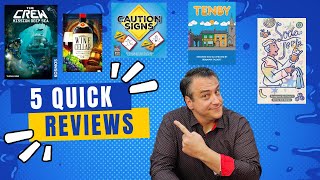
Caution Signs Deep Dive
What the Community Thinks About Caution Signs
Caution Signs draws a consistent response across reviewers: infectious laughter and family-friendly fun. Whether played in a living room, at Gen Con, or on a podcast stage, the game succeeds in what it sets out to do, bringing groups together for fast-paced drawing that doesn't require artistic skill. The game designed by Daniel Reynolds and Scott Brady for Wacky Wizards bridges the gap between party games like Pictionary and newer drawing experiences, offering something accessible to casual players and families while remaining genuinely engaging for experienced gamers. Reviewers universally praise the outcome, from dedicated board game critics to comedians seeing it for the first time, suggesting the game's appeal transcends typical player demographics.
Core Mechanics That Define Caution Signs
Drawing Under Time Pressure
The heart of Caution Signs is its brutal 20-second timer. Players receive two cards: an adjective and a noun, which they must combine into a single drawing. This constraint forces quick visual shorthand rather than careful rendering. Reviewers note that the time limit is both the game's defining feature and its genius. It eliminates the possibility of beautiful artwork, leveling the playing field for non-artists. One reviewer observed that 20 seconds feels impossibly short when you're holding the pen but becomes reasonable enough to capture something recognizable. The time pressure creates a specific kind of fun: rushed, urgent, and guaranteed to produce bizarre visual compromises.
Deduction and Matching
After all drawings are complete, players shuffle them together with a few extra cards drawn directly from the deck as red herrings. One player takes on the role of guesser and must figure out which combination of adjective and noun belongs to each drawing. This asymmetric mechanic creates tension and replay value. The red herrings aren't just filler; reviewers highlight them as essential to the game's balance. Without them, the math becomes trivial. With them, the guesser faces genuine uncertainty and must read visual cues carefully, considering whether they're looking at a clumsy photographer or a tiny wizard.
The Caution Signs Experience
The Chaotic Drawing Phase
Reviewers describe the drawing phase as kinetic and frenzied. With multiple people drawing simultaneously for only 20 seconds, panic sets in quickly. Several reviewers mention players forgetting to uncap pens or prepare their markers, eating into their time. The experience is one of controlled chaos: everyone racing against the clock, focused on their own card but acutely aware that others are doing the same. Some reviewers note that this shared pressure is part of the appeal, creating a sense of collective struggle that bonds the table.
The Reveal and Laughter
The reveal is where Caution Signs truly lands. Once all drawings are laid out, the group sees the full array of bizarre images and begins the guessing round. Reviewers repeatedly emphasize the laughter that follows. The combination of time pressure and random adjective-noun pairs guarantees strange, funny drawings. A player might have intended a classy rhino but produced something unrecognizable. A frozen zombie might look like a dancing creature. What matters is that the reveal is a collective experience where the table laughs together at the interpretations, the drawings, and the inevitable mismatches between intent and outcome.
What Makes Caution Signs Stand Out
Accessibility and Inclusion
Multiple reviewers note that Caution Signs does not require drawing talent. In fact, artistic skill can be a disadvantage. One reviewer remarked that a table full of skilled artists might find the game less balanced because polished drawings make the guessing too easy. The game actively welcomes players who think they can't draw. The time limit ensures that even a professional artist produces rushed, simplified visuals. This democratization of the core mechanic is intentional and powerful. Players report that family members and casual players enjoy it as much as seasoned gamers because the rules and expectations are simple and forgiving.
Quick Teach and Scalability
Multiple reviewers praise how easy Caution Signs is to learn and teach. The game plays from 3 to 9 players, accommodating everything from a small family dinner to a party gathering. One reviewer described it as a game you see from another table, and people instantly understand what's happening and want to play. The teaching time is minimal. Once people understand the basic loop of draw, shuffle, guess, and score, the game plays itself. There's no hidden information to manage, no complex rule interactions to explain. This simplicity makes it a perfect crowd-pleaser and a natural fit for holidays and gatherings.
Potential Drawbacks
Dependence on Group Dynamics
While reviewers are largely positive, a few note that the game's success hinges on group attitude and willingness to engage. If players take the game too seriously or prioritize competitive winning over fun, the experience suffers. The game also depends on participants' willingness to embrace imperfection and laugh at failures. Some players might feel self-conscious about their drawings or frustrated if they can't convey an idea within 20 seconds. For groups that thrive on humor and low stakes, this is no problem. For groups that value precision and mastery, Caution Signs might feel frustrating.
Time Pressure Fatigue
The constant rush of 20-second rounds, played repeatedly over multiple turns, can feel intense. A few reviewers mention that even experienced players feel pressure accumulate as the game progresses. Some might find the timed drawing stressful rather than fun, particularly those who prefer reflective or strategic experiences. For larger groups, the waiting time between turns can also feel long, though the comedic nature of the reveal usually keeps the table engaged even when not actively playing.
If You Enjoy Caution Signs
Players drawn to Caution Signs will find kindred spirits in Pictionary, which shares the drawing-and-guessing core, though Pictionary typically allows more time and has less chaotic energy. Those who love the rapid-fire nature and asymmetry should explore Telestrations, which combines drawing with the telephone mechanic of cumulative misinterpretation. For a faster, lighter experience with similar spirit, Fake Artist Goes to New York offers cooperative drawing with a hidden traitor mechanic. Clover, another fast drawing game, similarly rewards quick thinking and lateral visual interpretation. For players who want the party-game energy without the drawing component, Codenames or Landmark provide similar accessibility and laughter-driven gameplay. Pandemic and other cooperative games can offer structure for groups seeking more strategic challenge, though they lack Caution Signs' speed and silly spirit.
What Reviewers Are Saying
"I think that's half of the fun of this game is just that reveal moment where everyone has these bizarre pictures. You combine those two things that have nothing to do with each other and then you had no time to draw it and then you reveal and it's hilarious, just a big period of laughter every single time."
— Ryan and Bethany Board Game Reviews
"This is one of those that's very quick to teach. It's also fun to watch. One of those games that you see from the other table, you walk in, you see people playing it. It's just a blast."
— The Dice Tower
"What I like about games, it's just a way to socialize and pass time and, you know, get your brain working in a different sort of way and you're not looking at your phone. You know, you're getting to be present."
— Grant Lyon