


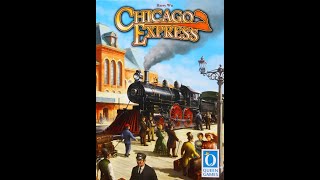







Chicago Express Deep Dive
What the Community Thinks About Chicago Express
Chicago Express holds a special place in the train gaming hobby. Reviewers consistently praise it as a foundational cube rails game that balances elegant design with genuine tension. Multiple players describe it as a classic that players continue to return to, even after exploring dozens of other games in the genre. The game's tight mechanics and strategic depth make it more than just a historical artifact, it remains compelling and competitive, capable of generating surprising reversals and tense player moments.
What stands out most is how different players appreciate different aspects of the game. Some embrace the auction-driven stock manipulations; others tolerate them as a necessary framework for the system. Some seek the weirdness and zaniness of newer cube rails games, while others recognize Chicago Express for exactly what it is: a clean, elegant design that lets players focus on what matters without distraction.
Core Mechanics That Define Chicago Express
Action-Selection Dial System
The most distinctive mechanic in Chicago Express is the dial-based action selection system, which reviewers describe as both elegant and rarely seen elsewhere in the cube rails family. There are three core actions available each turn: buying stock, laying track, and developing board spaces. Each action has a dial, and when players select an action, a token advances on that dial. Once two of the three dials reach their maximum, they reset and all players collect dividend payouts. This elegant timing mechanism means that common actions can quickly become unavailable, creating genuine pressure to commit at the right moment or prevent opponents from reaching certain actions before payouts arrive.
Reviewers praise this system for making the action economy feel tight and consequential. The dials reset on a two-of-three basis (not all three), which means players often face genuine choices about which actions to allow to advance toward their maximums. You might choose a weaker action just to prevent an opponent from executing something better before the next payout.
Stock Acquisition Without Liquidation
Chicago Express uses a stock system typical of cube rails games (and Queen Games' design), where players buy shares in railroad companies and want those companies to prosper. However, Chicago Express differs from some cube rails games in a crucial way: stocks have no resale value at the end of the game. You cannot liquidate your holdings for cash. Instead, all of your remaining shares are simply worth their final stock price. This means players cannot use stock-dumping as a late-game griefing tool the way they can in some 18xx games. Every acquisition is a genuine commitment to seeing that company succeed.
This design choice creates a very different incentive structure from games where you can sell stock at will. Players must think carefully about their entry price and their conviction level when buying in, because overpaying hurts more than it would if you could later offload the loss.
The Chicago Express Experience
Chicago Express generates a fascinating emotional arc. Early rounds can feel tight and uncertain, you are bidding on stocks without perfect information about company values, and player order matters. Reviewers describe moments of doubt, where early bids feel risky and a stock choice might not pay off. But as track gets laid and companies progress toward revenue-generating stations, the game crystallizes. Valuations become clearer, and players who positioned themselves well early start to see returns. The mid-game tends to be the most intellectually engaging, with money flowing regularly from dividend payouts and players constantly recalculating what their shares are worth.
The second prominent feeling is competitive tension over shared incentives. Because you own stock in companies that other players also own, you benefit when they expand the network, but they benefit equally (or more, if they own more shares). This creates moments where players must choose whether to develop a company themselves, knowing it helps their competitors, or buy another company they are less excited about just to diversify. Reviewers note these situations create interesting dynamics where cooperation and self-interest intertwine.
What Makes Chicago Express Stand Out
The dial mechanic remains one of the most elegant action-selection systems in cube rails design, giving the game a distinctive heartbeat that other train games lack. The ability to block opponents' actions by exhausting dials creates a level of tactical depth that doesn't appear at first glance. Many players describe discovering that you can sometimes win by preventing opponents from reaching profitable payouts at the right time, even if it means sacrificing your own options.
A second standout element is the balance between route building and stock manipulation. Chicago Express is fundamentally about buying shares and hoping companies succeed, but companies only succeed when track reaches them and revenue ticks up. You must place track to make your stocks valuable, but you must also be wary of how much you contribute, because each track placement costs company money. The interplay between personal investment (stock ownership) and collective resource management (company treasuries) creates situations where you are constantly negotiating between helping yourself and helping the table progress the game state.
Potential Drawbacks
Auctions form a significant component of Chicago Express, particularly at the game's start and whenever a new stock comes up for bid. Some reviewers note they actively dislike auctions in cube rails games, finding them an awkward fit compared to other action types. For players who prefer games where all actions are fully available every turn, Chicago Express's bidding phase can feel like friction. This is particularly true if early auction results create large swings in starting capital among players.
The game can also feel static if one company completely dominates early on. While reviewers describe instances where underdogs make comebacks (by doubling down on an apparently doomed company and finding an unexpected path), it's possible for a company's value to become so locked in by mid-game that player decisions stop mattering for that line. This can make the endgame feel like a foregone conclusion once stock positions are fully established, depending on how the bidding shaped initial positions.
If You Enjoy Chicago Express
Chicago Express appeals most to players who enjoy games where money and share prices matter, where tight resource management intersects with network building, and where the tension comes from shared incentives rather than direct conflict. If you loved Chicago Express, you may find yourself drawn to other cube rails games that experiment with similar ideas: Iberian Gauge offers a route-building focus with a different auction structure; Dual Gauge brings multiple network types to the board; and Trans-Siberian Railroad pushes the nationalization and stock-dumping mechanics further for players seeking higher chaos. Union Station offers a stock-manipulation focus with shuffle-deck randomness instead of the classic auction structure.
For players who find Chicago Express's action-dial system clever but want more aggressive stock play, 18xx games (like 1830 or 1889) extend all the stock mechanics to their logical extreme. For those who prefer the route-building over the stock-manipulation, pure network games like Steam offer similar pathway-building tension with less financial maneuvering.
What Reviewers Are Saying
"It has that dial mechanic which I haven't seen anywhere else and I I really enjoyed that."
— Getting Games
"It's Chicago Express. I have enjoyed many of these kind of cube rails, small, they're very weird games. Chicago Express is one of the less weird ones."
— Board Gaming Ramblings
"What I've realized is I vastly prefer the weird quick rail type games as opposed to the like pristine brilliant style train game."
— Getting Games