







Minecart Town Deep Dive
What the Community Thinks About Minecart Town
Minecart Town has earned a distinctive reputation among board game reviewers: a deceptively elegant title that plays quickly but divides players on depth. The game receives consistent praise for its design and visual appeal, but reviewers are candid about its limitations. While some enthusiasts rank it among their favorite games from convention seasons, others note it as a solid but unspectacular experience that lacks the complexity or dramatic moments that sustain long-term interest. The North American reprint has generated renewed enthusiasm, as players who encountered the original Japanese release struggled to justify importing a large, heavy box.
Core Mechanics That Define Minecart Town
Tile Placement and Resource Management
At its heart, Minecart Town operates as a light engine-building game through tile placement. Players begin with minimal resources and gradually construct their personal towns by drafting and placing tiles across four rounds. Each tile serves a specific function: some produce resources each turn, others convert those resources, and still others award end-game bonuses. This means every placement decision compounds over the course of the game. The constraint of limited rounds creates constant tension between immediate resource gains and long-term scoring potential. With 72 unique tiles available, the game offers enough variety to create distinct town identities across plays.
Railroad Track Building
The railroad system transforms Minecart Town from a simple grid-filling exercise into a route-building puzzle. Players construct tracks connecting their buildings, with the clever option to build either a two-path rail (cheaper) or upgrade later to a three-path intersection (more expensive but offering more routing options). Resources must travel along these tracks to reach processing buildings, making connection planning essential. Unlike many route-building games, resources can flow through other players' territories if a rail path exists, adding an unexpected layer of spatial consideration.
The Minecart Town Experience
Quick, Satisfying Combos
The most consistently praised aspect of Minecart Town is the feeling of executing a well-planned chain of resource production and conversion. Reviewers repeatedly mention the satisfaction of watching resources move through their carefully designed rail network and trigger end-game scoring conditions. This moment of payoff occurs regularly enough throughout the game that players feel a sense of accomplishment without needing to build towering engine combinations. The 30-to-40 minute playtime keeps turns snappy, allowing players to stay mentally engaged from start to finish.
Cozy, Accessible Charm
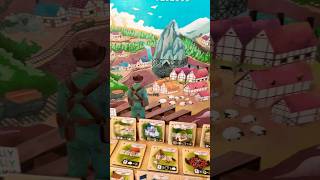
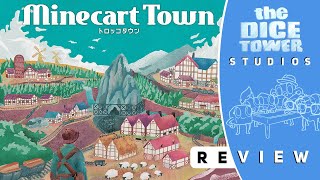
Minecart Town cultivates an inviting atmosphere through its visual presentation and straightforward rules. The cute, colorful artwork evokes cozy farming simulators and relaxing building experiences rather than competitive strategy. Rules teach quickly and resolve smoothly, making the game accessible to players new to engine building. This approachability contrasts sharply with the game's underlying optimization puzzle, creating a deceptive ease that masks genuine decision-making.
What Makes Minecart Town Stand Out
Clever Rail Mechanics
The two-path versus three-path rail upgrade system encapsulates Minecart Town's design philosophy. This single mechanic gives players meaningful tactical choices without overwhelming complexity. Do you pay extra upfront for maximum routing flexibility? Do you build cheap and adapt later? Reviewers praise this restraint, noting that every decision matters within the game's compact scope.
Japanese Design and Manufacturing
Originally published in Japan before a North American reprint, Minecart Town carries the hallmarks of Japanese game design: polished mechanics, beautiful components, and production quality that feels premium despite the game's modest footprint. The appealing artwork and thoughtful presentation make it visually distinctive at the table, standing out from the glut of contemporary board games.
Potential Drawbacks
Market Randomness Creates Frustration
The tile draft system depends heavily on what buildings are available each turn. If you build your strategy around converting sheep into points early but sheep tiles never appear in the market, you have few recovery options. Reviewers describe this randomness as a significant barrier to strategic depth. While the game includes mechanisms to mitigate runaway luck, some players found the mitigation insufficient for serious strategy games.
Limited Replay Depth and High Variance
At its core, Minecart Town offers a relatively short, light experience. While this serves the casual market well, players seeking complex optimization puzzles or games that reward mastery through repeated plays may find the decision space too narrow. The lack of dramatic swings in fortune means high-scoring moments feel incremental rather than exhilarating. Reviewers who prefer games with clear agency and low luck components sometimes view Minecart Town as pleasant but forgettable.
If You Enjoy Minecart Town
Players drawn to Minecart Town's satisfying combos and route-building puzzles will find similar pleasures in Brass: Birmingham, a heavier route-building economic game that rewards network planning across a full career. Cascadia offers comparable tile-placement ease with relaxing spatial puzzle solving. For those who love the cozy theme and light engine-building feel, Timbertown delivers similar satisfying resource conversion on a tight timeline. Dune Imperium shares the modular board and multi-phase turns but adds deeper player interaction and higher stakes decisions for those ready to graduate to additional complexity.
What Reviewers Are Saying
"It was one of my favorite games that we played during that cottage week. So yeah, I was so happy to be able to actually play it and I again am very happy that a new version is coming to North America um from Alleycat Games."
— The Board Game Garden
"It's an optimization puzzle and kind of route building and kind of pick up and deliver, and it just hits all the perfect notes for me. I really liked it."
— Foster the Meeple
"I actually do think that it's very clever that you can either build a like two path rail or a three path rail because uh you can either do it all in one turn or you can upgrade later so you have a little bit of freedom to change if you want to expand out."
— The Dice Tower