Game Info
Year
2025
Players
1-4
Age
10+
Playtime
60 min
Collection
Ratings
Creator Score
Mechanic profile
Not enough video data yet
Vibe profile
Not enough video data yet
Description
Day of the Dead card-placement game arranging portraits of relatives on altar boards fulfilling their wishes
Featured Videos


Ask a Rules Question
Images

GID0452431.jpg

GID0452431_thumb.jpg
All mentions
Browse transcript mentions, sentiments, pros/cons, mechanics, topics, quotes, and references.
Total mentions: 10
This page: 10
Sentiment:
pos 7 ·
mix 0 ·
neu 0 ·
neg 2
Showing 1–10 of 10
Video qC88i4vY2UA
The Dice Tower Analysis at 6:02 sentiment: negative
video_pk 96786 · mention_pk 265945
Click to watch at 6:02 · YouTube ↗
Overall sentiment (raw)
negative
Pros
none
Cons
- It felt too restrictive.
Thematic elements
Comparison games
none
Mechanics (from transcript analysis)
- Card placement — Placing cards in the middle of the table where the scoring depends on adjacency.
Video topics + discussion points
No key topics recorded for this video.
Quotes (from this video)
- Hey everybody, I'm Tom Vassal.
- This is look back, a series where I go through uh games that I reviewed last year during this time frame and 5 years ago, 10 years ago, and 20 years ago.
- And I tell you what I think about the games now, if I think about them at all.
- Twinkle Twinkle from All Play Games.
- Men Nefer. This is from Firman Million who did Petoku and the very modern Covenant.
- Infiltrators. This is a deduction style game, and you are working together trying to figure out these infiltrators at the playing the cards at the right time.
- And those are the games that I reviewed 1, 5, 10, and 20 years ago.
- Thanks so much for watching.
- Hey. Thanks for watching another video here on the Dice Tower.
- If you really like what we're doing here at the Dice Tower, then there are different ways to support the Dice Tower.
- Until next time though, I'm Tom Vasel, and I hope you enjoyed this video.
References (from this video)
No references stored for this video.
Video aUe8vt8KVY4
Board Gaymes James Discussion at 1:06 sentiment: negative
video_pk 85638 · mention_pk 336456
Click to watch at 1:06 · YouTube ↗
Overall sentiment (raw)
negative
Pros
none
Cons
none
Thematic elements
- portrait drafting around relatives
- aphrenda/day of the dead tableau-building
- tableau-building with familial portraits
Comparison games
none
Mechanics (from transcript analysis)
- Card Drafting — draft and orient portraits of relatives
- Tableau Building — arrange portraits to form a tableau
Video topics + discussion points
No key topics recorded for this video.
Quotes (from this video)
- I am not a fan of it at all.
- This artwork is so beautiful. Like look at it's so vibrant and so pretty.
- The Lord of the Rings Fate of the Fellowship though this I am very excited about.
- Cali Mala is a reprint.
- I pre-ordered Cube Express from them because I wanted to take a look at that one.
References (from this video)
No references stored for this video.
Video 9S--g74QQoc
TheGameBoyGeek - Hi Quality Hi Energy Board Game Reviews Top List at 2:07 sentiment: positive
video_pk 84904 · mention_pk 306024

Click to watch at 2:07 · YouTube ↗
Overall sentiment (raw)
positive
Pros
- Puzzly
- Crunchy puzzle
- Feels different from similar games
Cons
none
Thematic elements
- Making an altar to light up portraits of loved ones lost.
Comparison games
- Calico
Mechanics (from transcript analysis)
- Card Drafting — Players will be 'drafting cards'.
- Pattern Building — Players are 'placing them in different spots in your pyramid' and scoring depends on 'certain things... next to them'.
- Set Collection — Scoring is based on 'different attributes' and adjacency requirements like 'doesn't want green cards... near them' or 'wants needs a pink card next to them'.
Video topics + discussion points
No key topics recorded for this video.
Quotes (from this video)
- This one is the top 10 games that I've already played cuz I'm fortunate enough to get some early copies of things that are releasing at Gen Con.
- Jungo is the reason why I'm never going to play Scout again.
- This is one of the most unique experience games ever.
- Breaking down barriers, growing relationship board games by helping you find the next one you love.
References (from this video)
No references stored for this video.
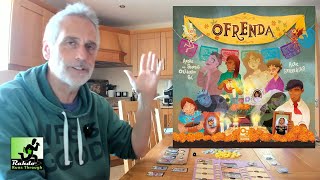
Video YwdvKm67VUo
Rahdo Runs Through Top List at 4:28 sentiment: positive
video_pk 84877 · mention_pk 340111

Click to watch at 4:28 · YouTube ↗
Overall sentiment (raw)
positive
Pros
- Incredibly simple and elegant
- Super crunchy
- Very pretty
- Smart, fast-playing
Cons
none
Thematic elements
- Paying respects to deceased loved ones
Comparison games
none
Mechanics (from transcript analysis)
- Card Play — Players play cards smartly to a "altar" where cards either want to be next to or stay away from other cards.
- Set Collection — Meeting the needs of cards as they are played allows players to flip them over and score points.
Video topics + discussion points
No key topics recorded for this video.
Quotes (from this video)
- Planet Unknown is Planet Unknown in my top 10 of all time now.
- I'm generally not a fan of that, but the game is so good I'll allow it.
- I think Earth is near perfect as it is, but abundance for my wife makes the game even better.
- A musthave expansion for one of the 10 greatest games of all time, Earth Abundance.
References (from this video)
No references stored for this video.
Video mvaXxp0c1vY
Jamie, Tabletoptiktok Top 10 List at 6:30 sentiment: positive
video_pk 84278 · mention_pk 346825
Click to watch at 6:30 · YouTube ↗
Overall sentiment (raw)
positive
Pros
- gorgeous components
- puzzly and engaging
Cons
- not always perfect; some players may end unhappy with placements
Thematic elements
- grudges across generations and familial placement
- family tomb or ancestral setting with a focus on placement
- puzzly, drafting-driven with a somber tone
Comparison games
none
Mechanics (from transcript analysis)
- draft system — Initial drafting that determines play order or available actions
- Placement puzzle — Place pieces (ofrena) so that family members are satisfied with positioning
Video topics + discussion points
No key topics recorded for this video.
Quotes (from this video)
- The artwork on these cards is adorable and you're trying to capture rooms because essentially you want to be the head honcho of this manor. It's really fun. It's really cute.
- The components are amazing in this game, and I can usually find it for really cheap on sale.
- it's a ridiculous theme, but it's not scary or gross. It's more meant to be funny and campy.
- This is a fantastic solo only game. And I love the game, but I definitely lose more than I win.
References (from this video)
No references stored for this video.
Video 5u87WYKLF6M
kovray Top 10 List at 26:04 sentiment: positive
video_pk 83606 · mention_pk 344749
Click to watch at 26:04 · YouTube ↗
Overall sentiment (raw)
positive
Pros
- Distinctive themes and art
- Cozy, approachable yet strategic
Cons
none
Thematic elements
- altar-building with portraits
- Day of the Dead
Comparison games
- Calico
- Calico Style Games
Mechanics (from transcript analysis)
- card drafting with adjacent scoring — Draft cards to place adjacent portraits and score with candles and other tokens.
Video topics + discussion points
No key topics recorded for this video.
Quotes (from this video)
- This is also Ilia's number eight. Galactic Cruise. All right.
- The theme is amazing. The variability is fantastic. I love the different strategies that I've been able to discover through this.
References (from this video)
No references stored for this video.
Video XNp6_Syfjwc
The Dice Tower Top List at 22:58 sentiment: positive
video_pk 81632 · mention_pk 203648
Click to watch at 22:58 · YouTube ↗
Overall sentiment (raw)
Mixed to Positive (for one speaker), Negative (for others)
Pros
- Great theme
- Looks great
- Great return on investment (few rounds, high engagement)
- Engaging and thoughtful throughout
- More control than Calico
- Gorgeous production
Cons
- Actively disliked by some speakers
- Not for everybody
- Requires being in the mood for a thinky, puzzly game
- Can potentially betray you
Thematic elements
- Appears to be related to a day of the dead or offering theme based on 'Ofrenda'.
Comparison games
- Calico
Mechanics (from transcript analysis)
- Hand Management — Involves managing a hand of cards.
- Set Collection — Implied by managing cards to achieve goals in a puzzly way.
Video topics + discussion points
No key topics recorded for this video.
Quotes (from this video)
- Um I like this one a lot. It's a very It's It's It's a relaxing game. You You got a few minutes, you don't know what to do while you're waiting for such and such thing to come around, shuffle up the deck and start playing.
- I will say I absolutely hate the cover. That is one of my least favorite covers from last year, period.
- This game manages to feel cozy to me because of the theme, but very not cozy in the gameplay. It's very thinky.
- And no matter who I play it with, we always find ourselves getting into the theme and talking about the family like, 'Oh, my mom's going to go play play um Whist over here with my, you know, sister.' Or whatever.
- I think if either side holds back, especially the heroes because you're you're you've been kind of conditioned to do that um by playing other games. If you hold back, you get steamrolled and I think this game got a lot of pushback for that.
- I just the Mancala thing, I wish more games did it. And this one does it in such a very satisfying way.
References (from this video)
No references stored for this video.
Video -2Qg0TK8ZMw
Our Family Plays Games Review at 1:00:21 sentiment: positive
video_pk 81527 · mention_pk 202963
Click to watch at 1:00:21 · YouTube ↗
Overall sentiment (raw)
positive
Pros
- beautiful artwork
- educational about Dia de los Muertos
- honors culture
Cons
none
Thematic elements
- altar building with portraits
- Dia de los Muertos
- cultural celebration
Comparison games
none
Mechanics (from transcript analysis)
- family interaction — meeting relatives' preferences and placing near or away from loved ones
- pattern building (drafting / open drafting) — drafting and arranging family portraits with candles and marigolds
Video topics + discussion points
No key topics recorded for this video.
Quotes (from this video)
- This is all we got.
- ENDORSED.
References (from this video)
No references stored for this video.
Video b7cmA-QaWVU
Rules Teach at 0:00 sentiment: positive
video_pk 69063 · mention_pk 165383
Click to watch at 0:00 · YouTube ↗
Overall sentiment (raw)
positive
Pros
- Super duper smart
- Very fast playing
- Drop dead gorgeous, bright, vibrant, and colorful
- Wonderful to look at
- Incredibly simple, elegant rules
- Challenging and fun puzzle
- Crunchy and puzzly
- High positive player interaction through drafting
- Satisfying sense of pride at the end with a colorful ofrenda
- Strategic depth with many considerations per move
- Appeals to both gamers and non-gamers as a gateway game
- Unique and characterful art on every piece
- Less cutthroat than Azul, more focused on personal puzzle
- Fast play time (12 rounds, 15-20 minutes)
Cons
- Solo mode uses a score chart, which could be more engaging
- The optional variant (public goals) can take the game to '11' and might be overwhelming for some
- Compromises are necessary, and not all cards will score
Thematic elements
- Honoring departed family members by creating a beautiful display (ofrenda)
- Mexico, Day of the Dead
Comparison games
- Azul
- Small World
- Forenza
- Neotopia
- Century Spice Road
- Calico
Mechanics (from transcript analysis)
- Card Drafting — Players draft cards from a central display, with costs increasing for cards further down the line. This mechanism is compared to games like Small World and Century Spice Road.
- Player Powers (Implied) — Different family members have unique preferences for what they want to be next to or not next to, acting as individual objectives or constraints.
- Resource Management — Players manage 'marigolds' (currency) to draft cards and candles, with strategic decisions about spending and saving being crucial.
- Scoring objectives — Points are scored based on adjacent cards, whether they are 'lit' or 'unlit', and fulfilling specific conditions for cards and candles.
- Set Collection — Players aim to collect specific types of family members (e.g., green, orange) and desires (e.g., sweets, fruit) to satisfy placement conditions and score points.
- solo mode — A solo mode is included where a die roll determines the AI's choices, simulating opponent actions.
- Tile Placement — Players place drafted cards onto their personal 'ofrenda' board, considering adjacency requirements and potential scoring opportunities.
- Variable Goals (Variant) — An optional variant introduces public goals that players race to achieve for additional points, increasing complexity and strategic considerations.
Video topics + discussion points
No key topics recorded for this video.
Quotes (from this video)
- Azul lovers, rejoice. Your next um super passionate obsession is here.
- I practically melted down.
- This is the one I'm going to play guaranteed.
- The rules for this game, excuse me, could not be simpler or cleaner or more elegant.
- It's the complexity of trying to make sure all every single one of these cards is an objective you are giving yourself and it's an objective based on proximity to other objectives that are their own unique requirements and puzzling that out.
References (from this video)
No references stored for this video.
Video Y12UkIK2hn0
kovray Rules Teach at 0:00
video_pk 60302 · mention_pk 164469
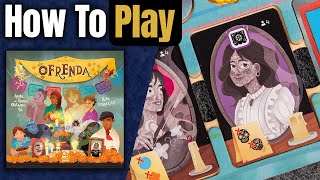
Click to watch at 0:00 · YouTube ↗
Pros
none
Cons
none
Thematic elements
none
Comparison games
none
Mechanics (from transcript analysis)
Mechanics unknown.
Video topics + discussion points
No key topics recorded for this video.
Quotes (from this video)
- In Aphrenda, you'll be building an Aphrena, a colorful, inviting altar with offerings to the dead for Dia de Muertos, which is a Mexican festival of the dead.
- The game will end after each player has taken 12 turns, at which point the player with the most points wins.
- Looking for an extra challenge? Well, you can try the common goals variant.
References (from this video)
No references stored for this video.
Transcript Navigation
Showing 1–10 of 10