




Horrified: Dungeons & Dragons – Ravenloft Deep Dive
What the Community Thinks About Horrified: Dungeons & Dragons – Ravenloft
Horrified: Dungeons & Dragons – Ravenloft arrives as a bold expansion of the Horrified series, trading familiar horror monsters for the gothic dread of Ravenloft and its dark lords. The consensus among reviewers leans cautiously positive, with widespread praise for production values and design, tempered by concerns about chance-heavy gameplay that can frustrate careful planners.
Reviewers agree on the game's artistic achievements. The board design, artwork, and component quality consistently drew compliments across channels, with particular praise for the monster miniatures and the haunting atmosphere of Barovia. However, opinions split on one central design question: how much does luck undermine strategy in a cooperative game built on careful planning?
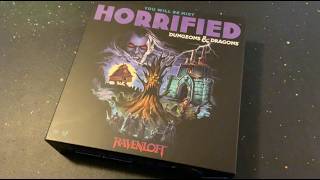
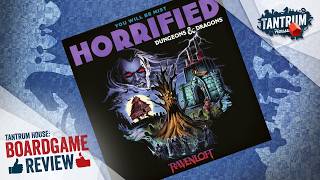
Tantrum House sums up the split. Luck is "a huge part of this game," and while Tantrum House enjoyed it, the verdict is that Ravenloft will cater more to veteran Horrified players: new players are still better off with the original Horrified and its classic monsters, which is easier to get into. Ravenloft shines if you already like the system and are a fan of the new gothic theme. Allies or Enemies liked the monsters and the look but had to work around some misprints. The Discriminating Gamer's unboxing is pure enthusiasm for the art and locations, and Meet Me At The Table praised a small accessibility upgrade: item locations are finally numbered.
Core Mechanics That Define Horrified: Dungeons & Dragons – Ravenloft
Dice-Roll Monster Defeats
Every monster in Ravenloft requires dice rolls to defeat, a signature system from the previous Dungeons & Dragons Horrified that returns here with thematic resonance. Players discard items matching specific colors and roll a twenty-sided die, adding the strength of those items to try and meet a target number. This mechanic transforms monster encounters into skill checks that feel authentically D&D. Reviewers appreciated how the system creates climactic moments: each monster battle becomes a pivotal roll, and the presence of perk cards that add bonuses makes item management feel consequential.
Dark Gifts: Corruption as Strategy
Dark gifts are the headline addition. Allies or Enemies explains that at any point in your turn you can flip your hero mat over, and "once you flip, that's it. You're stuck there forever." You gain a little extra power but mostly a negative, such as being able to protect a villager once while monsters always target villagers from then on, or getting hit or losing an item at the end of every turn. As a result, they save dark gifts for the very end of the game as "Hail Mary's." One card in the monster deck forces whoever's turn it is to flip, which Allies or Enemies likes because it makes you deal with the downside. Tantrum House frames it as players having to accept corruption in a risk-reward mechanism.
The Horrified: Dungeons & Dragons – Ravenloft Experience
Gothic Atmosphere and Immersion
Ravenloft delivers the gothic dread its theme promises. Tantrum House says the artwork perfectly captures the gloomy atmosphere of Barovia, and Allies or Enemies likes the stained-glass style of the windows. The monsters move through that world with personality: Strahd stalks the board and manipulates the heroes, Baba Lysaga brings her walking hut around the map, and the Gulthias Tree spreads corruption. Allies or Enemies even likes that Strahd's second monster board sits neatly above Castle Ravenloft on the map.
Tension Between Agency and Fate
Luck shapes the experience. Tantrum House points out that the previous Dungeons & Dragons Horrified introduced rolling a d20 for special abilities, and that this adds unpredictability without overwhelming the game because you have to spend an action to roll. The monster puzzles lean into push-your-luck: Allies or Enemies describes flipping tokens where "you always want to push it, but it's pretty risky," and Meet Me At The Table warns you don't want to push your luck too much while clearing the tree's roots. When it goes right, it is exciting: Meet Me At The Table's natural 20 removes a twig blight and earns a bonus perk card.
What Makes Horrified: Dungeons & Dragons – Ravenloft Stand Out
Exceptional Artwork and Board Design
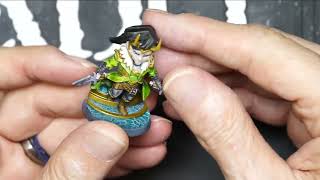
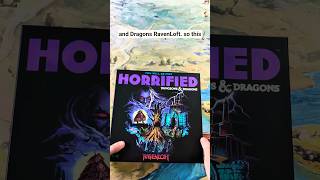
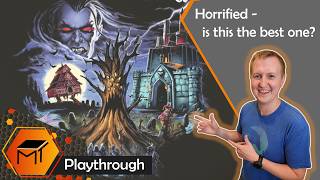
Reviewers singled out the presentation. Allies or Enemies calls these the nicest looking monster boards the series has had so far: thick, with backs that make them look like books. Tantrum House says the hero standees, monster boards and oversized game board are all easy to read, and the iconography remains the same as the other games. The miniatures, especially Strahd and Baba Lysaga, immediately grab attention, and Allies or Enemies finds the Carrionette super creepy.
Asymmetrical Monster Design
Each of the four monsters presents its own puzzle tied to the lore. Tantrum House notes that "every combination is a different experience." With the Carrionette, Allies or Enemies explains, you have to take objects to specific places. Baba Lysaga requires getting a gem out of a maze by going to her location and discarding items to flip tokens on her monster board. The Gulthias Tree stays in one location all game, guarded by twig blights, and Meet Me At The Table walks through clearing its roots before attempting to chop it down. Allies or Enemies' only caution is that the monsters require a lot of items, and a lot of specific items.
Potential Drawbacks
Heavy Reliance on Luck Over Planning
Tantrum House names luck as the big weakness, and it is a huge part of this game, especially for a cooperative game where you are trying to strategize together. Tantrum House is not sure players going in will appreciate Ravenloft as much given how much luck there is. The d20 rolls, push-your-luck token flips and monster draws mean you will sometimes be reacting to bad rolls rather than executing a plan. That is part of the Horrified design, but players who want tight control should know it going in.
Manufacturing and Printing Issues
Several production problems came up. Tantrum House's only component complaint is that the cardboard standees sometimes don't fit right. Allies or Enemies found misprints on a couple of the monsters: the rulebook says the Gulthias Tree's three twig blights have different color symbols, but the components do not match, so they explain a workaround. Meet Me At The Table found errors in the rules, including some names that are messed up, and says you need the second edition of the rulebook even to understand how the tree's enemies activate. None of this breaks the game, but expect to check for errata.
If You Enjoy Horrified: Dungeons & Dragons – Ravenloft
Tantrum House's advice is to start with the original Horrified if you are new to the series, since its classic monsters are easier to get into. Allies or Enemies came to Ravenloft as fans of the previous Horrified: Dungeons & Dragons, which introduced the hero roles and the d20. For the same setting in a different design, they have a soft spot for Castle Ravenloft. If you want a heavier cooperative game, Tantrum House points to Spirit Island for more depth, Pandemic for something lighter, and Pandemic Legacy for a heavier, more thematic co-op.
What Reviewers Are Saying
"The monster miniatures immediately grab your attention, especially Strahd and Baba Lysaga, while the artwork perfectly captures the gloomy atmosphere of Barovia."
— Tantrum House
"These are the nicest looking monster boards that they've had so far, they're nice and thick and the backs make them look like books. So they're quite fancy compared to the other ones."
— Allies or Enemies
"They have finally numbered the locations. So, when I have an item, it says number nine. It's so much easier for you to find on the map."
— Meet Me At The Table