Game Info
Year
2026
Players
2-4
Age
10+
Playtime
60 min
Complexity
2/5
Collection
Ratings
Creator Score
Mechanic profile
Percentile rank vs. all games
Vibe profile
Not enough video data yet
Description
Celebrate springtime in Japan with a picnic under the sakura blossoms. A competitive tile-placement game where players lay hexagonal tiles to build the most beautiful flower-viewing scene, using set collection and area majority to score.
Featured Videos

Ask a Rules Question
Images

GID0452793.jpg

GID0452793_thumb.jpg
All mentions
Browse transcript mentions, sentiments, pros/cons, mechanics, topics, quotes, and references.
Total mentions: 8
This page: 8
Sentiment:
pos 6 ·
mix 1 ·
neu 0 ·
neg 0
Showing 1–8 of 8
Video q2gS0mF7MKk
Where There's A Wilz, There's a Play Top 10 List at 26:51 sentiment: positive
video_pk 85845 · mention_pk 220756
Click to watch at 26:51 · YouTube ↗
Overall sentiment (raw)
positive
Pros
- interesting bidding dynamic
- varied actions with negotiations
Cons
- hidden information can be opaque to new players
Thematic elements
- negotiation and set collection
- geisha-favor bidding in a stylized setting
- thematic but abstract bidding
Comparison games
none
Mechanics (from transcript analysis)
- bidding and card drafting — bidding for geisha favors across rounds with card actions
- Hand Management — start with six cards, draw, and perform scoring actions; choose/discard/save
- hand management and bidding — start with six cards, draw, and perform scoring actions; choose/discard/save
- Hidden information and deduction — opponent's discarded cards affect your options and scoring
- hidden/discard mechanics — cards discarded by opponents influence scoring and options
Video topics + discussion points
No key topics recorded for this video.
Quotes (from this video)
- Ticket to Ride ... this is the game that brought us into the modern board gaming world
- this game is simple enough to be taught very quickly to new Gamers
- it's a gateway game
References (from this video)
No references stored for this video.
Video 0eBVxMGSx_0
Board Stupid Discussion at 14:22 sentiment: mixed
video_pk 81926 · mention_pk 401637

Click to watch at 14:22 · YouTube ↗
Overall sentiment (raw)
mixed
Pros
none
Cons
none
Thematic elements
- Remake/reimagining with new art/theme
Comparison games
none
Mechanics (from transcript analysis)
Mechanics unknown.
Video topics + discussion points
No key topics recorded for this video.
Quotes (from this video)
- a good game is a good game forever.
- the industry is booming.
- deluxification overkill. When is when too much is too much?
References (from this video)
No references stored for this video.
Video kox4NabJmm8
kovray Rules Teach at 0:00
video_pk 68355 · mention_pk 164734
Click to watch at 0:00 · YouTube ↗
Pros
none
Cons
none
Thematic elements
none
Comparison games
none
Mechanics (from transcript analysis)
Mechanics unknown.
Video topics + discussion points
No key topics recorded for this video.
Quotes (from this video)
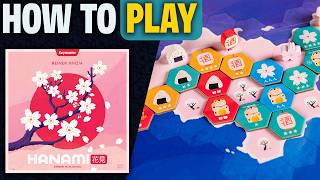
- In Hanami, you'll travel across Japan in spring, claiming the best picnic spots to enjoy food, flowers, and festivities.
- Strategically place your picnic blankets to gather celebration tokens to secure victory point tokens at the end of the game to win.
- The player with the most celebration token of a specific celebration type will claim the corresponding victory point token.
- If two or more players are tied for the same token, nobody is awarded that celebration.
References (from this video)
No references stored for this video.
Video kox4NabJmm8
kovray Rules Teach at 0:05 sentiment: positive
video_pk 68355 · mention_pk 398021
Click to watch at 0:05 · YouTube ↗
Overall sentiment (raw)
positive
Pros
- Quick to teach and play
- Variety through different board sides (Nihon/Tokyo)
- Advanced setup variants for added control and variety
Cons
- Ties for victory point tokens can occur easily and require tie-breaker rules.
- Limited number of victory points (three) can lead to ties.
Thematic elements
- Claiming the best picnic spots to enjoy food, flowers, and festivities
- Japan in spring
Comparison games
none
Mechanics (from transcript analysis)
- Action tiles — Special tiles like 'Move Action' allow players to reposition existing tiles, 'Draw Tile' lets players draw an extra tile, 'Cover Tile' acts as a wild tile, and 'Copy Tile' replicates adjacent tiles or empty spaces.
- Area Majority — The player with the most pips for a given celebration type surrounding a park space wins the corresponding celebration token.
- Hand Management — Players draw tiles to a hand of five and must strategically play them, keeping their draw pile visible to others.
- Set Collection — Players aim to collect celebration tokens by having the most pips surrounding a park space for a specific celebration type.
- Tile Placement — Players choose a tile from their hand and place it on an available space on the board. Some tiles have a fast icon allowing them to be placed before or after the main tile.
- Variable player powers — Each player receives an ability card that can be used once per game, with standard cards having a shared effect and special cards having unique effects.
- wildcards — Maneki neko and boat tiles act as wild tiles, counting as all three celebration types. Some action tiles also become wild.
Video topics + discussion points
No key topics recorded for this video.
Quotes (from this video)
- In Hanami, you'll travel across Japan in spring, claiming the best picnic spots to enjoy food, flowers, and festivities.
- Strategically place your picnic blankets to gather celebration tokens to secure victory point tokens at the end of the game to win.
- The player with the most celebration token of a specific celebration type will claim the corresponding victory point token.
- If two or more players are tied for the same token, nobody is awarded that celebration.
References (from this video)
No references stored for this video.
Video iWI41IFPgvM
Rules Teach at 0:13 sentiment: positive
video_pk 66557 · mention_pk 162202
Click to watch at 0:13 · YouTube ↗
Overall sentiment (raw)
positive
Pros
- Reimagining of the original game Samurai
- Theme of spring celebration in Japan
- Clear explanation of rules and mechanics
- Options for variable setup and advanced variants
Cons
none
Thematic elements
- Celebration of Japan's beautiful springtime, finding the best spots for a picnic under beautiful blossoms in the glow of lanterns while enjoying delicious food.
- Japan
Comparison games
- Samurai
Mechanics (from transcript analysis)
- Area Majority — Determining the player with the most strength around a park to claim its celebration token.
- Drafting — While not explicitly a drafting game, there's a 'start strong' variant where players pick their starting tiles.
- Hand Management — Players draw and play tiles from a hand of five, managing which tiles to use and when.
- Set Collection — Players collect celebration tokens by having the most strength (based on adjacent tiles) around a park.
- Tile Placement — Players place tiles from their hand onto specific spaces on the board (land, water, or parks).
- Variable player powers — Special ability cards can be used once per game, offering unique actions to players.
Video topics + discussion points
No key topics recorded for this video.
Quotes (from this video)
- And that's the setup.
- Hanami is played over a series of turns, starting with the first player and going clockwise around and around the table.
- All right, we now know everything you can do on a turn.
- Otherwise, that's everything you need to know to play Hanabi.
References (from this video)
No references stored for this video.
Video a0hbUbMNP04
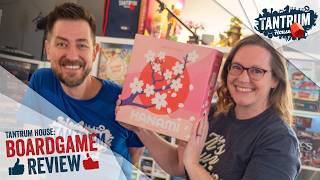
Tantrum House Review at 0:04 sentiment: positive
video_pk 62619 · mention_pk 155338
Click to watch at 0:04 · YouTube ↗
Overall sentiment (raw)
positive
Pros
- beautiful, approachable theme that lowers entry barriers
- gorgeous table presence and deluxe components (in the discussed copy)
- balanced design with meaningful choices and a tense two-player experience
- variety from special tiles and one-time powers that shake up standard play
Cons
- ties are common and can feel unfriendly due to tie-breaking on secondary tokens
- end conditions can catch players off-guard (e.g., abrupt end if a token type is wiped out)
- randomized token order can reduce planning in higher player counts, making it feel less deterministic
Thematic elements
- seasonal cherry blossom viewing and festive outdoor picnic
- Japan, picnic in a park among Sakura blossoms with lantern festivals
- area-control with tension and luck-tinged placement; visually cozy yet strategic
Comparison games
- Samurai
Mechanics (from transcript analysis)
- Area Control — A token is won by the player whose tiles surround it and have the highest total pips; endgame trophies depend on token collection
- area control and token collection — A token is won by the player whose tiles surround it and have the highest total pips; endgame trophies depend on token collection
- bullet train icon — Some tiles allow playing multiple tiles in one turn, speeding up play and adding risk-reward decisions
- copy tile — Copy tiles mimic the facing tile's pointed-to type, enabling strategic duplication of effects
- End Game Bonuses — End conditions include a token type being completely wiped from the board or four tokens in a tie slot; ties are resolved via secondary token counts
- endgame and tie rules — End conditions include a token type being completely wiped from the board or four tokens in a tie slot; ties are resolved via secondary token counts
- plane tile — Plane tiles enable swapping positions with another tile, adding cutthroat disruption
- player powers — One-time-use power cards that enable various rule-bending effects for all players
- Tile Placement — Players place tiles to claim influence on the board; each tile represents a picnic blanket with a number of pips that indicate group strength
- tile types and influence targets — Tiles include lantern (influence types), flower, and onigiri; these influence three distinct categories on the map
- Tile/Map Shifting — Copy tiles mimic the facing tile's pointed-to type, enabling strategic duplication of effects
- wild tiles — Boat tiles are wild and placed on water; lucky cat tiles are wild and can count for multiple types with some providing extra actions
Video topics + discussion points
No key topics recorded for this video.
Quotes (from this video)
- it's a reimagining of his 1998 classic game Samurai.
- the board art is gorgeous.
- If you've never played that, this is a really nice area control game
- the theme is much more approachable
- it's a two-player game, it's a lot more chesslike
- endgame conditions are a little crazy. not crazy, but because ties can happen
- Kitui does a great job of balancing things really well and making it come down to can you optimize your movements with this little bit of luck on when you get the things that you get
References (from this video)
No references stored for this video.
Video -zKSVUgaYx0
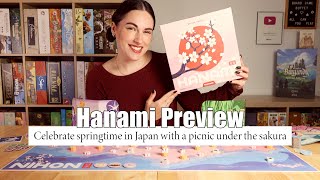
The Board Game Garden Discussion at 0:00 sentiment: positive
video_pk 42105 · mention_pk 148453
Click to watch at 0:00 · YouTube ↗
Overall sentiment (raw)
positive
Pros
- Beautiful, striking art and theming
- Simple core rules with deep strategic potential
- Two-sided boards offering variety (Nihon vs Tokyo)
- Hidden information and endgame interaction encourage player awareness
Cons
- Prototype components shown in video; final production may differ
- Potential analysis paralysis with token types and endgame scoring
- Limited clarity on publication year and availability in the video
Thematic elements
- Sakura viewing, picnic culture, seasonal celebration
- A Japanese park during hanami, featuring sakura viewing, lanterns (chin), and oniri (snacks); two boards sides (Nihon and Tokyo) with thematic activities
- abstract area-control with hidden information and take-that potential through token surrounding
Comparison games
- Samurai (Reiner Knizia)
Mechanics (from transcript analysis)
- Area Control — control is determined by surrounding activity tokens with tiles, scored per token type
- area control / token surrounding — control is determined by surrounding activity tokens with tiles, scored per token type
- endgame scoring based on token majority — at game end, the most tokens of each type (Sakura, Oni, Chin) determine victory tokens; ties invoke tiebreakers
- Hanami tiles (red symbol) for extra plays — Hanami tiles allow playing multiple times per turn, increasing action efficiency and strategic depth
- hidden player tiles and tokens — each player has a screen concealing their tiles and gained tokens, creating information asymmetry
- special abilities by board side — Nihon side grants a shared optional ability to swap two tokens; Tokyo side assigns unique abilities per player
- Tile Placement — players place one of five available tiles onto the board to contribute to surrounding tokens
- water/shore interaction (boat tiles) — boat tiles affect scoring near shore island spaces, tying into edge/shore placement strategies
- wild tiles (Mano) and event tiles — Mano tiles are wild and can represent any of the three token types; Tokyo adds extra special tiles with varied effects
Video topics + discussion points
No key topics recorded for this video.
Quotes (from this video)
- the most beautiful art I have seen in a game in a very long time
- the endgame scoring is pretty unique and cool
- super simple rules... deep strategy
References (from this video)
No references stored for this video.
Video EbkxuTiWqjI
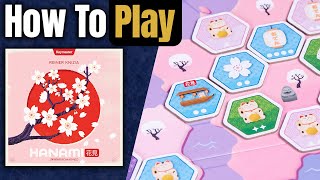
kovray Rules Teach at 0:07 sentiment: positive
video_pk 33192 · mention_pk 152508
Click to watch at 0:07 · YouTube ↗
Overall sentiment (raw)
positive
Pros
- clear setup and instructions in the video
- thematic coherence with Japanese spring picnic theme
- variety introduced by Nihon vs Tokyo board modes and the advanced variant
Cons
- potential complexity for brand-new players
- narration occasionally contains typos or phrasing that could confuse some viewers
Thematic elements
- picnic culture, flower viewing, night lights
- Spring in Japan; picnics in parks across Nihon and Tokyo sides
- abstract tile placement and token collection with park-based activity tokens
Comparison games
none
Mechanics (from transcript analysis)
- Activity token collection — Tokens are earned by surrounding park spaces with larger groups of matching activity tiles.
- Area Majority — Tokens are awarded to the player with the most matching activity pips around a park space.
- Area majority / token claim — Tokens are awarded to the player with the most matching activity pips around a park space.
- Endgame scoring and tie mechanics — Endgame triggers when a type runs out or ties fill the ties area; scoring compares token counts by type and remaining tokens.
- Special tiles and abilities — Tiles grant special actions (move, copy, or wild conversion) that affect placement and scoring.
- Tile Placement — Players place tiles with activity icons to influence available actions and token opportunities.
- Tile/Map Shifting — Maneki-neko tiles and water tiles count as all three activities (wild).
- wild tiles — Maneki-neko tiles and water tiles count as all three activities (wild).
Video topics + discussion points
No key topics recorded for this video.
Quotes (from this video)
- Hanami is a two to four player game designed by Rainer Kitia and it's published by Key Master Games
- you'll travel across Japan in spring claiming the best picnic spots to enjoy food, flowers, and the night lights
- The Tokyo side additionally adds three new special player tiles, each with a unique ability
References (from this video)
No references stored for this video.
Transcript Navigation
Showing 1–8 of 8