


Dungeon Crusade: Book I – Genesis of Evil Deep Dive
What the Community Thinks About Dungeon Crusade: Book I – Genesis of Evil
Dungeon Crusade has struck a powerful chord with board game reviewers and solo players, who consistently praise its ambitious scope and artistic presentation while grappling honestly with its logistical demands. The Dungeon Dive community views it as a landmark entry in modern dungeon crawl design, one that takes inspiration from the golden age of adventure games while adding fresh mechanics and a genuine commitment to ongoing support. Reviewers appreciate that designer Roger Deering has evolved the game meaningfully since its initial release, introducing official variants and refinements that address early friction points. The reception centers on a core tension: this is one of the richest dungeon crawl experiences available, but it demands real commitment in setup, storage, and playtime from anyone who wants to experience it.
Core Mechanics That Define Dungeon Crusade: Book I – Genesis of Evil
Patrol Routes and Dynamic Enemy Movement
At the heart of Dungeon Crusade's tactical gameplay sits an elegant minion movement system that creates moment-to-moment tension without requiring an app or elaborate bookkeeping. Rather than spawning randomly each turn, minions follow predictable patrol routes through dungeon corridors, but heroes can never be quite certain where a threat will emerge next. This system breathes life into the dungeons; encounters feel organic and dangerous rather than scripted. The patrol mechanic creates what reviewers describe as "random micro moments of adventure," where the alignment of patrol routes, event triggers, and encounter timing generates genuine surprises. This approach feels much more in line with classic dungeon crawls like Warhammer Quest than many of its modern competitors, grounding the experience in tension and discovery rather than pure mechanical complexity.
Events and Randomized Quest Elements
Complementing the patrol system is a massive event deck and randomized quest layer that ensures no two sessions feel identical, even when replaying the same physical dungeon. The Treasure deck alone is legendary among reviewers: a 192-piece collection where every piece carries unique art and lore text. Events strike a careful balance: they can disrupt carefully laid plans, introduce environmental hazards, or present unexpected opportunities. Reviewers note that this abundance of random elements, when woven together skillfully, creates the sense that the dungeon itself is alive and acting on the party. Combined with scalable difficulty rules for non-combat challenges, this randomization layer is genuinely replayable in a way that justifies the game's massive component count.
The Dungeon Crusade: Book I – Genesis of Evil Experience
Thematic Immersion and Visual Spectacle
Step back from the rules and setup, and what strikes you first is how visually arresting Dungeon Crusade is on the table. Every dungeon tile is custom-illustrated with striking atmospheric art that draws players into the experience. Card art is unique throughout, with loot pieces that tell visual stories and standees with personality. The presentation choices feel deliberate and thematic; there is no filler art here. Reviewers return again and again to how evocative and immersive the dungeons feel, how the game creates a strong sense of place through art alone. This commitment to visual coherence distinguishes Dungeon Crusade from many Kickstarter dungeon crawls, which often lean on stock assets or generic illustrations. The game feels like stepping into a living, detailed world rather than shuffling through generic cardboard.
Epic, Satisfying Loot and Treasure Discovery
Few games match Dungeon Crusade's treasure system. With hundreds of unique loot pieces, each play session can yield entirely different rewards. Reviewers celebrate the treasure deck for combining mechanical variety (different weapon types, armor, artifacts, and consumables) with genuine discovery: loot pieces carry flavor text and unique names that make each find feel special rather than purely functional. This abundance of interesting, well-designed loot creates a dopamine loop that keeps players engaged through long sessions. The treasure system is so well-regarded that reviewers compare it favorably to dedicated treasure decks in games built entirely around loot procurement. Mining for minerals and crafting enhancements add another layer of long-term progression, letting heroes grow more formidable as the campaign unfolds.
What Makes Dungeon Crusade: Book I – Genesis of Evil Stand Out
Robust Designer Support and Continuous Improvement
In the crowdfunding board game landscape, follow-up support is far from guaranteed. Dungeon Crusade's designer, Roger Deering, stands apart by releasing free reference guides, official variants, and rules refinements years after the initial Kickstarter. Deering introduced the evolved minions variant, which streamlines combat while making heroes feel more heroic by adding splash damage and a d20 roll mechanic inspired by solo RPGs. A scalable difficulty card makes non-combat encounters more accessible to lower-level parties. Setup pictures eliminate confusion about dungeon layouts. Most significantly, these improvements are freely available to all backers via PDF download and are being bundled into the reprint. This commitment to iteration reflects a designer who listens and acts, a rare enough quality that reviewers explicitly value it as a reason to reinvest in Dungeon Crusade expansions.
Uncompromising Sandbox Quest Design
Dungeon Crusade does not try to replicate the narrative arc of a campaign or RPG module. Instead, it commits fully to a sandbox approach: four modular dungeons with randomized quest elements let heroes pursue multiple playstyles and strategies on their own terms. Unlike games that drip-feed content or lock difficulty progression behind campaign structure, Dungeon Crusade gives players immediate access to the full suite of tools and encounters. A solo mode lets heroes recruit mercenaries and face off against the dungeon's challenges with a smaller party. This design respects player agency in a way many modern games do not, trusting soloists to find their own narrative arc and pacing rather than imposing one. Reviewers who value open-ended play and replayability point to this as a defining strength.
Potential Drawbacks
Massive Setup Labor and Box Storage Challenges
Dungeon Crusade demands real estate and real logistics. The game ships in a box that cannot physically accommodate all components; players will need external storage solutions to organize chits, standees, and cards. Setup time is substantial: sorting through quest chits, arranging the modular dungeons, and laying out encounter decks can easily consume 30+ minutes before play begins. One reviewer describes it as an "abundance of stuff," and that abundance is not metaphorical. With hundreds of chits requiring sorting, some players use multiple storage containers. While the quick reference guide and setup pictures have mitigated some friction, the logistical overhead remains real. This is not a game you can pull off the shelf and start playing in five minutes. For players with limited table space or those who favor swift setup, this stands as a significant barrier.
Playtime as a Double-Edged Sword
Sessions regularly stretch to eight, ten, or even twelve hours; reviewers describe it as "the longest single-session game I've ever played." This epic scope is intentional and carries thematic weight; dungeons feel vast and dangerous because the clock is always running. However, reviewers note that this playtime does not scale with session complexity; even with the evolved minions variant speeding combat, the sheer size of the dungeons and number of encounters means time will never feel short. Players who prefer tighter 90-minute to 2-hour experiences consistently land on this as a drawback. The game has never been positioned as a quick game, but returning players unfamiliar with a specific dungeon can still face surprise time commitment. Some reviewers suggest that house rules focused on shortening encounters would serve the game well, and many have adopted personal variants to fit gaming schedules.
If You Enjoy Dungeon Crusade: Book I – Genesis of Evil
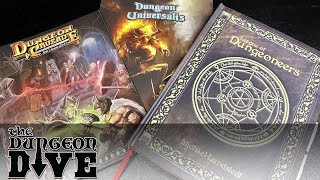
Dungeon Crusade sits alongside a small constellation of modern dungeon crawls that embrace the old-school adventure aesthetic. If its sandbox design and visual opulence appeal to you, explore Dungeons Universalis, which trades modular dungeons for a true RPG-in-a-box experience with extensive character creation and a world rich with lore. Shadows of Brimstone offers a grittier, more varied minion-dense experience with Western gothic themes and massive expansions. League of Dungeoneers captures the random dungeon generation and Warhammer Quest spirit, though with less visual flair and more focus on settlement-building between expeditions. Descent provides a more tactical, balanced one-versus-many experience with miniatures and terrain that rewards clever positioning. Arkham Horror shares Dungeon Crusade's love of thematic immersion and sanity-testing encounters, though in an eldritch setting. Solo players who crave a rich single-player experience without campaign overhead should consider Warhammer Quest 2: The Dwarf King's Quest or Dark Light Memento Mori for faster alternatives. None of these fully replicate Dungeon Crusade's particular alchemy of visual beauty and sandboxy freedom, but each offers a distinct angle on dungeon crawling.
What Reviewers Are Saying
Yes, the quick reference guide is longer than some games full rulebooks. That is definitely true, but it really does make it make, um, learning and relearning the game easier, much easier. It kind of eliminates any kind of issues I have with relearning the game at all.
— Dungeon Dive
The art and visual presentation of Dungeon Crusade is off the charts great. Roger did a fantastic job getting custom art and using art assets. The map pieces and dungeons look incredible, all of the cards have unique art. There is so much good art in Dungeon Crusade and it just looks, it just pops on the table.
— Dungeon Dive
Straight out of the gate, Dungeon Crusade has the best dungeon tile art I've ever seen. I absolutely love the way that various dungeons look. They are so evocative of the theme, and they really do so much to draw you in to the experience.
— Dungeon Dive