











Rosalie Deep Dive
What the Community Thinks About Rosalie
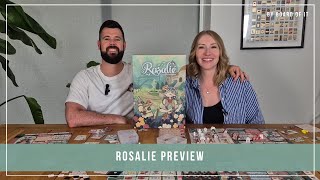
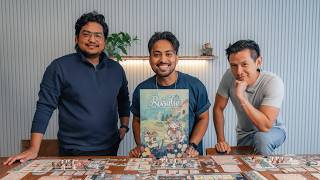
Rosalie has captivated reviewers with its ambitious combination of delicate gardening theme and demanding economic mechanics. The consensus is resoundingly positive: this is a sophisticated, rewarding game that delivers meaningful strategic depth alongside beautiful presentation. Tim Chuon and the Wolfpack find satisfying engine building potential, while Before You Play praises the asymmetric character abilities and action selection puzzle. Board Gaming Ramblings describes amazing artwork and components, and Board Game Sanctuary notes how every nuanced decision contributes to your objectives. Where reviewers diverge is on accessibility. Tim Chuon, despite appreciating the game's elegance, finds the debt burden oppressive for most of the campaign. By contrast, kovray celebrates the very challenge that creates an emotional arc from "misery to joy." BoardGameCo acknowledges the game is complex and time-consuming but argues those drawbacks are justified by the tight design. Whether Rosalie's demands feel rewarding or exhausting depends largely on whether you embrace its economic realism.
Core Mechanics That Define Rosalie
Action Drafting and Passing Boards
Rosalie's signature action selection system sets it apart in a crowded field of euros. Each round, players simultaneously place an action token on one of seven available rows on their clipboard. After resolving actions in turn order, boards pass to the left, progressively blocking off spaces. This forces real decision-making: should you take the action you want now, or pass and hope it survives when the board returns? BoardGameCo notes that this drafting mechanism is "new and interesting," reducing analysis paralysis compared to traditional turn order by letting players take actions nearly simultaneously. The system creates a cascade of difficult choices: you can double an action by exhausting a second worker, copy another player's action by paying them coins, or pass to climb the turn order track and claim pass bonuses.
Debt and Economic Pressure
Debt is not a punishment mechanic in Rosalie; it is the foundation of the economic system. Every player begins saddled with five debt tiles, worth minus 15 points each at game end. Yet throughout the game, especially in autumn rounds, debt accrues interest, which can cascade into additional debt tiles. Tim Chuon identifies this as his biggest gripe: the debt burden is so heavy that players report not paying off all their obligations until round five or later. Cardboard Couple, however, reframes this as the game's emotional strength. They describe starting "in such a position where you feel like you basically don't have any generational wealth. You're on your own." The debt system forces you to balance investment in your engine against the urgent need to service obligations. Board Of It loves the debt mechanic precisely because it creates "a genuinely quite stressful" atmosphere that puts you "in the shoes of this small business owner struggling to stay afloat."
The Rosalie Experience
From Misery to Joy
The emotional texture of Rosalie differs from typical euro engines. In most games, your investments pay off incrementally. In Rosalie, the first few rounds feel grim. You are borrowing money, paying salaries, tending flowers, and mostly watching your debt grow. Cardboard Couple describes the early game as feeling like you are "basically you don't have any generational wealth" and must "battle to make the best of it." Yet somewhere in the middle rounds, the game shifts. Your robot automations begin to activate. Your contracts fulfill repeatedly, cascading rewards. Your hybrids bloom. By round six or seven, if you have managed your economy well, the game "explodes off" (Tim Chuon's phrase). This arc feels intentional and makes the endgame triumph earn its satisfaction in ways most games cannot match. Board Gaming Ramblings notes that "there's a little spark that happens midway through the game where you're just like, wait a minute, I maybe can indeed run a business."
Depth and Mental Calculation
Rosalie is densely packed with systems, and the game rewards players who engage deeply with them. Board Gaming Ramblings calls it "incredibly satisfying depth and crunchiness." Each flower has multiple attributes: color, fragrance value, care requirements, country of origin, and final scoring potential. Contracts can be fulfilled multiple times, each fulfillment moving a marker down a track. Robots provide care in spatially-dependent ways: small robots affect specific flowers, big robots can be placed between flowers to care for both. The charm track and award track intersect to determine your income each round. Tim Chuon praises how "every nuance decision is going to help you achieve your objective," meaning that even small choices about which flowers to plant or whether to hire one more gardener ripple through your economic plan. This crunchiness attracts serious players but can also drain mental energy; reviewers note the game can feel "tiring due to the mental effort required."
What Makes Rosalie Stand Out
Asymmetric Character Abilities That Shape Strategy
Rosalie takes a lesson from Uchibacoya's earlier success with Sweetlands: asymmetric characters with unique abilities drive replayability and let each player pursue a distinct path to victory. At the start of each game, you select four special building cards from a pool of seven, each unlocking a unique ability when you construct that building. One character might gain money every time they fulfill contracts, making a contract-focused strategy natural. Another might focus on charm accumulation or electricity generation. Board Of It identifies this as their favorite part: "it's just a lot of fun because a lot of the variety of the game comes from these different characters." The beauty is that these abilities are not free; you must still take an action to construct the building, which forces you to balance pursuing your character's synergies against the urgent needs of the moment. This creates a persistent puzzle of timing and prioritization that invites replay with different characters.
Stunning Art and Theme Integration
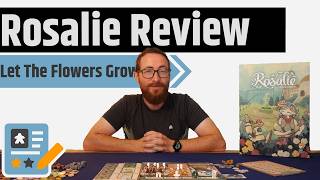
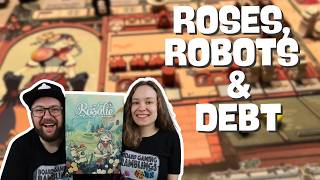
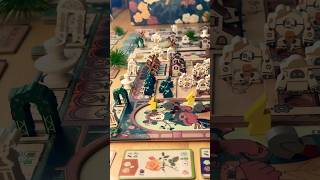
The visual presentation of Rosalie elevates what could be a dry economic game into something that feels warm and inviting. Board Gaming Ramblings marvels at the "amazing artwork and components," and Cardboard Couple notes that "the pleasant artwork may suggest that this is an easy cozy game. It's not," emphasizing how Uchibacoya has achieved a cohesive marriage of aesthetic charm and mechanical weight. The theme of managing a rose garden business is not merely window dressing. Robots are thematically placed on flowers to represent automation and care. Contracts represent your relationships with buyers. Debt reflects real business pressure. Reviewers consistently comment that the components are "top-notch" and that the game looks beautiful on the table, which softens the experience of engaging in such challenging economic decisions.
Potential Drawbacks
Length and Playtime Scaling
Rosalie is not a quick game. The box promises two to three hours, but multiple reviewers report actual playtimes closer to three to four hours, particularly with three players. BoardGameCo observes that the game "is on the longer side, potentially crossing the 3-hour mark," and Board Gaming Ramblings confirms they have "taken us like 4 hours with three players." Worse, the rounds do not get faster as the game progresses; players acquire more actions, meaning later rounds take longer. Board Gaming Ramblings notes that "you get to do more and more actions during the game so the rounds just like keep getting longer." This is not inherently a flaw if the experience justifies the time, but it does mean Rosalie demands a full evening and is not suitable for casual play or tables with analysis paralysis tendencies. Tim Chuon, who loves heavy euros, still feels the length works against the experience because you spend much of the game in debt-management mode rather than enjoying your engine.
Fiddliness and Tracking Abstraction
The care point system creates a notable friction point. Board Of It identifies that "the care points, they don't exist physically," while robots are spatial, and workers and trawls give care points wherever needed. This juxtaposition means that "it's very important where you place your robots, but everything else doesn't matter," creating confusion about whether placement truly constrains you or is merely aesthetic. Reviewers report that tracking whether each flower has adequate care becomes "quite tricky" and "something that should have been worked on a little bit more." A similar issue exists with electricity: windmills generate floating energy, while tokens can be spent on specific actions. Tim Chuon suggests the player aid would benefit from clearer phase summaries and separated graphics for gains versus maintenance costs. These are not game-breaking issues, but they slow play and create opportunities for misunderstanding.
If You Enjoy Rosalie
Players drawn to Rosalie's mix of economic pressure and engine building will find a kindred spirit in Agricola, which shares the resource management and worker placement roots without Rosalie's asymmetric characters or action drafting. Brass is another close relative, with debt as a core mechanic and a similar climb from a lean start to a humming economy. Reviewers who know Uchibacoya's catalog point to Sweetlands for comparable weight and character-driven replayability built on different core systems.
What Reviewers Are Saying
"And then that allows me to explore different characters. It allows me to check out different engines. And just the replayability of solo mode is extremely high in this game."
— Tim Chuon
"This game has a lot of crevices to explore, where every nuance decision is going to help you achieve your objective. The cost of planting the roses is also quite crucial, because the season will dictate whether you get to plant them straight into the garden now, or whether they'll be saplings that will grow across the year."
— Board Game Sanctuary
"You start in such a position where you feel like you are basically you don't have any generational wealth. You're on your own. All your money you have is from the bank. You have no money saved up. But all of a sudden there's competition everywhere and you are having to do duke it out with your opponents."
— Cardboard Couple