

The Dawn of Pangaea Deep Dive
What the Community Thinks About The Dawn of Pangaea
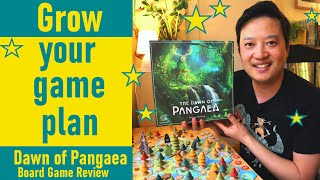
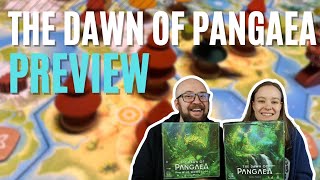
Reviewers agree that The Dawn of Pangaea is a well-designed abstract puzzle built around planting trees and connecting them across a shifting continent. Board Game Sanctuary is the most enthusiastic voice, calling it a beautiful abstract game with striking 3D components and placing it above Photosynthesis for its flexibility. Board Gaming Ramblings is more measured. Its hosts praise the meaningful decisions and the importance of timing, but they split on weight: one host finds it too light for medium-to-heavy Euro tastes, while the other considers the puzzle engaging enough on its own. Board Game Dad's preview in Board Game Dad groups it with medium-weight releases from Essen Spiel and draws a comparison to Hansa Teutonica. A second Board Game Dad video, Board Game Dad, lists the game only as a booth stop at Treeceratops during a show plan, offering no evaluation.
The consensus is that the racing structure, the spatial puzzle, and the production quality are the game's strengths. The points of disagreement concern how heavy the game feels, how long it runs for its weight, and how much the optional expansion adds.
Core Mechanics That Define The Dawn of Pangaea
Land Rituals and Route Scoring
Land rituals are the central scoring engine. A player holding a land ritual card chooses two of their trees in the matching terrains and connects them with a path. Reviewers stress that the route must be the shortest available path between the two chosen trees, which limits how much a player can wander to collect value. Board Gaming Ramblings explains that a player scores one point for each of their own trees on the route and one for each opposing tree they pass through. Board Game Sanctuary adds that routes built from a single player's species score the most, while borrowing several colors rewards a player with one point per different color crossed. Completing a ritual removes the two endpoint trees, opening new ground for others. The turtle guardian can bridge water between landmasses to make these routes easier to complete, while the bird guardian protects a tree from removal.
Planting, Growth, and Shared Saplings
Growth is the second pillar. Players place seeds next to trees, and the spirit figure's movement triggers growth in the surrounding area. Board Game Dad describes the core mechanic as area movement, where every sapling next to the player's landing spot sprouts into a tree. Crucially, those saplings can belong to opponents, who collect the same rewards. Board Gaming Ramblings notes that the growth of each new tree also produces a weather token, which feeds the animal cards and guardian actions. The Wild Woods expansion extends this system by letting trees grow taller, so that seeds can be dispersed one, two, or three spaces away depending on tree height.
The Dawn of Pangaea Experience
The Race to 30
Reviewers consistently highlight the race to the summit as the game's emotional engine. Players ascend a 30-space mountain, and the first to reach or pass the top triggers the end of the game. Board Game Sanctuary argues that this structure, rather than a fixed round count, is what gives the game its drama: players watch the leader's score climb and plan rituals to keep pace, creating a leapfrog effect where one large route can suddenly swing the standings. Board Gaming Ramblings adds that timing is the most interesting element, because the board state can shift quickly with more players, so a planned move often has to happen before someone else changes the layout.
Spatial Puzzling and Tense Blocking
The second defining feeling is the constant calculation of where to plant next. Board Game Sanctuary describes the game as one where players must observe the board closely, since a seed spot that looked available may be taken by another player's move. Reviewers describe the resulting feeling as a series of small calculations that weave together costs, benefits, and future routes. The same tension can turn sharp: Board Gaming Ramblings notes that an opponent's tree can block a planned path entirely, which is engaging for players who enjoy interaction but frustrating for those who want to build without interference.
What Makes The Dawn of Pangaea Stand Out
A Different Board Every Time
Board Game Sanctuary highlights the random continent setup as a major source of replayability. Terrain types are placed at random as long as the land remains a contiguous landmass, so the snow and desert regions may sit close together in one game and at opposite ends of the continent in another. Lakes carrying bonus focus tokens add further variety to each setup. Both Board Game Sanctuary and Board Gaming Ramblings praise the production, with the wooden tree pieces and artwork cited as a large part of the game's appeal.
A Sandbox of Play Modes
Reviewers appreciate that the game can be played in several ways. The base game can be taught in three or four key points, which suits a casual family session, while the Wild Woods expansion adds player boards, treetops, and an advanced area control rule for a heavier evening. A shadow Mele figure supports cooperative or solo play, in which players race to bring three spirit guardians to the summit before the Mele reaches them. Board Game Sanctuary describes the game as a toolkit that delivers a fruitful experience in any mode, and it notes that the game scales well at two or three players, where the board stays more compact.
Potential Drawbacks
Lighter Than Some Euro Players Expect
The most consistent criticism concerns weight. Board Gaming Ramblings places the game in the lighter strategy category and suggests that players who enjoy medium or heavy Euros may find it too light, although its hosts describe it as having the feel of a classic abstract game. The same channel observes that the game runs longer than its lightness warrants: the two-player game still took around 40 to 45 minutes, and one host hoped it could be shortened toward 30. The expansion is seen as optional rather than essential, and Board Game Sanctuary does not consider it necessary to enjoy the game.
A Crowded Board and Limited Options
Board Game Sanctuary raises a second concern: as trees fill the map, the game can feel like a busy car park in which every space is taken and players must wait for trees to clear before they can act. Opponents can occupy the spot a player wanted, forcing a pivot that may not be satisfying. The reviewer notes that this pressure can narrow a player's choices, especially for someone who prefers more focused decisions. Board Gaming Ramblings echoes the frustration, observing that the game's timing and blocking mean that a carefully prepared route can be ruined by another player's move.
If You Enjoy The Dawn of Pangaea
Players who enjoy The Dawn of Pangaea's land ritual connections will find similar satisfaction in Cascadia. Board Game Sanctuary compares the two because both reward pairing tiles and tokens in ways that require planning several moves ahead. Players drawn to its puzzle-driven design will also appreciate Jawa and Mexico, which Board Game Sanctuary groups with the reviewer's favorite traditional puzzle games.
For players who like the racing element but want more room to maneuver, Photosynthesis is the natural point of comparison. Board Game Sanctuary argues that The Dawn of Pangaea offers more flexibility and less cutthroat interaction, since there is no central scoring area that players must race toward. Finally, players who enjoy anticipating an opponent's movement to gain value from shared growth will find a familiar thrill in Hansa Teutonica, a comparison that Board Game Dad draws directly to the game's sapling mechanic.
What Reviewers Are Saying
"Sometimes it can feel like you're in a busy shopping center, car park. All the car spaces are taken up and you're thinking, okay, what can I actually do next?"
— Board Game Sanctuary
"I would characterize it as a light game, but the decisions absolutely feel meaningful. Since you've got two actions on your turn, it feels like you want to do the right combination of those two actions."
— Board Gaming Ramblings
"The core mechanic here is area movement. You are a spirit guardian of this land, and as you move over the board, wherever you land, every sapling next to you is going to sprout into a tree."
— Board Game Dad