Luthier, A Wild Venture, Arigato, AI 100% Human, Burst, Roland Wright | Board Game Reviews

Transcript
Hey everybody and welcome to another Chairman of the Board review video. And today I'll be taking a look at six different games, sharing my opinion about them, just to let you know obviously how I feel and if I recommend them or not. So I've got a good spread of games here to talk about, ranging from very light to very heavy. So let's get started with my least favorite and I'll work my way up to my favorite. At the bottom, unfortunately, comes Roland Wright. So, this is a roll and write puzzly game uh where each turn the active player is going to roll a bunch of dice. They're going to choose one cluster of dice um all matching the same color and everybody else will have access to the remaining colors. And what you're essentially trying to do is you are trying to seed this 6x6 grid of these different colors to try and build patterns based on these objective cards.
So, from that description alone, you know, you can probably tell there are a lot of games like this. Um, I've not played too many in the kind of roll and right format, but if you think of games like um harmonies, games like Calico, this does the same kind of thing. Uh, the twist on this one is that each turn you can actually rub out something on your board which will give you a unique ability um for that turn. So, for example, you can draft more pattern cards or you can change the colors of these different dots and so on. So, you know, very straightforward stuff. You know, nothing really new here. Um, I think the presentation of the game was, although I can understand it in terms of kind of affordability for the publisher. I don't think it was the best format to display the game. I think maybe a more tactile, maybe a tile placement game or some kind of tokens would have been a bit nicer to play with, especially for me because the colors used in this game were not colorblind friendly whatsoever.
Um, sadly making it nearly unplayable. So, I thought that it was visually quite um quite ugly and honestly my brain didn't quite click with this one because I was just overwhelmed by the subtle differences between the colors which of course I cannot differentiate and that just made the whole puzzle building just fall apart because I was too busy stressing about what color was what. So, um, unfortunately, I I can't probably grade this one, um, objectively, um, because, uh, you know, of course, it didn't work for me because I couldn't even play it because of the color deficiency. So, obviously, I can't recommend it for anybody who is color blind. But, you know, even if I wasn't, I think the game is pretty uninspired. There's no real flavor here. I didn't really find much enjoyment from it. And to be honest, the the type of game has been done so many times to a better standard. I would much rather play something like harmonies as I mentioned.
So, I can't really recommend it. I'd give this one probably a three out of 10, maybe a four um if I'm being generous. Next up, I have Burst. Uh this is a super light kind of competitive blackjack game as you and your opponents are contributing to the center display of cards trying to make someone else make it go above 21. Now, mechanically, the game is so easy. You either draw a card from the pile and bearing in mind you have a strict capacity of only three cards in your hand um or you can play a card and add to that pile. There are positive cards as well as negative cards. Um so you can actually lower the value uh if you want to. And it's all about trying to strike that balance and leaving your options open because of course if you hoard all the highv value cards, you're eventually going to be forced to play one which will inevitably push it over that limit. you as the active player who's made it go bust will not score anything and everyone else will score the cards remaining in their hand. So there's this good little trade-off of yes, I want to keep high value cards back, but if I keep too many and don't leave myself the option to play, then I'm going to be forced to bl to to burst it and not get any points.
So again, you want to be making sure that you always leave yourself the option to at least draw something and maybe back your opponents into a corner to push it over the limit and then you will score your points. So again, I do like that trade-off of needing low value as well as high value cards. Now, I have actually played a game almost identical to this before um called Fear. It was a Freedom and Freeze game. Uh I think this one is a a definitely a a pure example of the type of game because there are no real bells and whistles. I've just explained the whole game to you. Whereas fear came with like phases and stuff which made it a little bit over wrought for how simple the game was and how luck dependent the game was. But for a kind of zero barrier to entry game that anybody can play. Everyone's familiar with blackjack.
Um this one there is some enjoyment to be extracted from it but ultimately you are at the mercy of the deck of cards. You know what you going to draw? Um and it is a bit of a oneote game. So, I think after a game or two, you're pretty much going to be done with it, even if you do like the concept of it, which which I do. So, you know, I I do really like the idea of this one, but sadly, after playing it a few times, I don't really feel like I need to play it anymore because there's there's nothing really to explore. Um, and to be honest, if I'm going to have a, you know, a 15-minute gap at the end of a games day, I'm probably going to play something with a bit more decision space because, again, there are a lot of options now for games um that are short in length, but still offer some decisions. This one is short in length, but it doesn't offer many decisions. Um, but there are some cool kind of laugh out loud moments when you know someone is forced to play and it's it's kind of that um that visceral fun of what a blackjack game offers, but sadly again is very one note. So, I would have to give this one probably a four out of 10. Nothing really to write home about here. Moving on then to probably the more interesting games. I'm going to start with uh A Venture. So, I was very excited to play this twoplayer little tableau engine builder style card game where you are trying to um play cards, exploit the abilities for as long as you can and put them in your scoring pile and then hopefully, you know, win the game that way. Now, mechanically, I think this game does a great job of getting out out of its way in terms of
the rules overhead. very easy to explain this game because all you do on your turn is you can either um or you get two actions. You can either play two cards, you can activate two cards, or you can play one and activate one, as well as the option to taking free actions if you have that option available to you. Now, this game you come with three different types of cards. You've got your buildings, which are kind of ongoing benefits. Um, as well as giving you an option to kind of cash um coins and tie them into points. Uh, you've got your villagers, which are the the kind of emphasis of the game where you are trying to exploit their abilities um to be more efficient than your opponent. And you've got these gear cards as well, which will trigger when certain actions are taken, even if you do it or your opponent does it. [snorts] So, that's quite cool. there's that there's that little bit of passive uh interaction there as well. So the actual the way the card anatomy is broken down is very nice because there are only so many keywords.
So it's quite easy to digest the rules and to kind of gro everything and see how these synergies start playing out. Now I suppose the unique thing about this game is that your engine your your display of cards is of finite potency. So once you play a card, you will put a number of the supplies on that card equal to this this number on it. Um meaning that's how many times you can use that ability on that particular card. And these can be things such as gaining money from the bank, traveling on the map, drawing cards, maybe going through the discard pile, activating other cards, and so on. Um, and as soon as you've used the last that last supply on that card, you're going to put it in your um, scoring pile. And at the end of the game, for each kind of species of cards, you've got three different species. You've got like the black birds, the rabbits, and the um, I believe it's frogs or turtles. I can't remember which one. Frog. I think your worst pile is going to get multiplied by your strongest pile. So, ideally, you want to try and keep those balanced by the by the end of the game. So, there's a lot to like here. Again, particularly the smoothness of the game, there's some good combos to be found and you little little tricks you can pull off and all about trying to be efficient. Uh, but I have to say despite there being a lot to explore here, I think this game was really handicapped by the way that the game scores. So again, your
kind of the well 90% of the way you'll score will be based on your kind your lowest set of cards multiplied by your highest set of cards. Meaning that you're somewhat forced to play certain cards at times. Of course, if you've got seven crows and, you know, five um frogs, but you've got no rabbits, you're going to have to play those rabbits whether you want those abilities or not. There are ways around that where you can just tuck cards instantly from your from your hand, but more than not, you're going to have that tunnel vision of just trying to play rabbits because all your efforts are going to be in vain if you don't do that. So, um I I thought again there was there was a real um potential here to be a really juicy engine building game. Um but again, it was very much um got in its own way when it came to how interesting that endgame scoring was. I would have really um I would have really liked to have seen maybe something like you know like for a shuffle where these cards not only will have the abilities on them but they will score in different ways. So maybe you know this card will give you um a point for every one of these types of cards in your scoring pile. Uh you know and all those different variables that we've seen time and time again and we see them time and time again because they're interesting and this game could have had that. Now, frustratingly as well, I think the game is 30% too long and you do go through this whole deck of cards.
And as you're getting, you know, about 60% 60 to 70% through the game, you kind of run out of steam and you kind of feel like you've you've played it, but you've still got a lot of cards to burn through. Now, you can do that deliberately and try to get through cards quicker, maybe if you know you've got a jump on your opponent, but it does still feel that little bit drawn out. And having done a little bit of research on other people's thoughts, cuz I thought this might just be a me problem, it seems like that's a running and occurring um reoccurring issue with the game. And I have to agree with that 100%. It is just too uh long. Additionally, there are two different sides of this map that you can play with. Um, which you're going to kind of move your little piece along and get bonuses as you go. I think one half of that board is way more interesting than the other one. And one of them is just too easy to get to the top and back and top and back. It feels like you're going through the motions a little bit, whereas the other one you got to kind of pay fees as you go, meaning that you got to manage your funds more um, and, you know, get through that extra hurdle to make it a bit more interesting. add a one slight layer of strategy to the game as well. So again, lots of things to like here. Again, particularly the system itself, but I definitely feel like the game could have been developed further when it came to the actual objective of the game. Um because it does feel like you're just spinning your wheels through um a good portion of this. And I tend to not really love games or you know something prevents me from loving games is when you're almost
encouraged to spam things because a lot of the times I'm not really that interested in the ability of the card. I just want to keep doing it so I can get that card into my score pile. So again I feel that kind of does it you does harm to itself which is not something that I really wanted to see. So, I think maybe a big portion of me not loving this as much as I could have done is because there are so many great examples of super like juicy and in yourrface style card games. I particularly I think of games like you know there of eternity. Every card in that game just feels like I need to have it. I can't wait to use the ability. this one. There's a lot of them thinking like, "Yeah, that's nice, I suppose, but I'm more interested in just getting into my scoring pile rather than actually building that nice um powerful engine." So, I think a lot of people are going to like this. Um, you know, it looks lovely. Again, keywords or the, you know, the key terms and the the way that the rules are displayed is fantastic. Nice and clean design.
Artwork looks great. Again, the system is is so pure, but it is missing that final piece of the puzzle for me to make it a super rich experience. Again, it feels very much like you're just spamming things down trying to get rid of it as quick as you can, which feels again, it feels like it's wasted its potential. So, I'll leave it at that. Again, still I like the system and I'll give it I'll give it a 6 out of 10. I think that the maybe the negative spin on this particular segment is because I think this game has so much potential and it could have be easily been an eight out of 10 with a few tweaks. So that is u a wild adventure. Let's move on to a another little tableau building game with AI 100% human. So this is a game where you are going to be doing a passenger draft system. You know, you're having a bunch of cars. You're choosing the one you want, passing the rest on to your opponent to play. And in this one, you are building a 5x3 grid of cards, trying to score as many points as you can as you go throughout the game. So, this is actually a very tactical game, way more tactical than maybe comparative games where you're kind of building up a display towards, you know, towards the end end game and trying to score all these combos that way. This one is very much you smash a card down and you will score based on the state of play when that card is played, which I I'm not
particularly negative on, but it's just a different way of playing a game like this. And I think it works in its favor as well as sometimes hurting the game as well. But this game comes with a ton of cards, all of which score in different ways. They come in different colors. Um, as well as these cards having, of course, the scoring criteria on them. And in each of the corners you have you'll have numbers on them which will of course when they are put next to another card or on top or below another card they will build these little triangles which can be another kind of dynamic piece of the game which scoring cards will um will link to. So as I said you're going to be um having a bunch of cards. You're going to take one of them. You're going to add them into your little supply of cards and move the rest on to the next player. Now, a lovely touch on this game is that you do actually have a bank of I think two spare cards at all times, meaning that you can hold on to cards that you are planning to score later and you're not forced to pass them on to the next player. So, if you have these turns where you can't particularly get a good play, you can bear things in mind or kind of build towards another card with the hope of catching up later and scoring many more combos. So, um, just to give you an example of some of these cards in the game, some might say, well, if you score, um, you know, x amount of points of every card in this row is different or every card in this column are different for [snorts] every diamond that adds up to six, you know, for every blue card surrounding this card. But all these things again we've seen before,
but it's all about trying to get the most you can out of every single play and keeping maybe those highscoring cards in the background, building towards them until you can place it down to get those big chunk of points, you know, maybe once or twice throughout the entire game. So the game is actually surprisingly snappy. I don't think think it's outstay it's welcome in any way because you are just playing of course I think it's I think it's 15 cards throughout the whole game but you do have a starting card so it might be like 14 cards um and that's the entire game you're playing 14 cards down scoring 14 times as well as doing like a halfway scoring and an endame scoring based on these different objective cards that you can try and um try and compete for. So again, it's very very simple stuff in a way, you know, stuff we've seen time and time again, but I do like the variety of these cars. There's a lot of different ones, a lot of different things you can work towards. Um, so I do like that part. Now, I think the biggest issue that people are going to have with this game is the symbology. Now, I think it's almost like a an unavoidable problem with the game like this because there are so many different things you can score. There's a lot of iconography thrown at you. And of course, the first time you play this, it can be a little bit overwhelming and you will be referring to that rule book or the rules pamphlet quite often to see, you know, how does this card work again? How does that card work again? Maybe some things didn't quite mean what you thought they would. But [snorts]
I'm I'm really glad I stuck with this game because the more I've played it, that symbology actually becomes internalized quite quickly. And with subsequent plays, I didn't really find it an issue at all. I think once you go through those growing pains, um the game does actually become quite intuitive and much more enjoyable. I think the the um the initial plays you might have that little bit of a struggle session of trying to just understand and get your head around how these cards work. But with subsequent plays you you will very just you your focus will be more on actually extracting those points and the actual fun of the game rather than getting you know trying to learn a whole new language when it comes to that symbology. But all in all um a very enjoyable game. Again a nice example of this style of game. Again, I quite like the fact this game does offer a more tactical experience rather than all being towards that end state of play of how all these cards link with each other. It's just about that kind of more more quick grabs rather than the long-term play, which again just a nice different approach to a game like this.
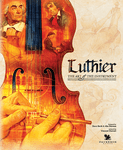
Um the the visuals, not talking about the iconography, is a little bit drab, you know, has a little bit of a sterile um look to it, but I don't think that hurts the game in any way. But maybe if you are more of a visually, you know, stimulated person, it's it's not really the best game to look at. Um, but functional, you know, functional functionality is is decent. Um, and it's yeah, all in all, it's it's just a nice game that I would happily play any time. So, that is AI 100% human. I'd give that one a 6 out of 10. Moving on to probably the heavy hitter of this video. This is Lutier. So, Lutier um is a very involved Euro strategy game. Um definitely was one of the most esteemed games from 2025. It made a lot of people's top 10 list, especially those Euro lovers and I was really um interested in playing this one because of course I love my my Euros, but more importantly, I love the setting and theme of this game. This is like right up my alley with what I like. Now, I'm a huge fan of classical music. Um, and so I was just like, this is just so so cool seeing all these great composers, all these great royal figures from history, all these instruments and so on. It was just like an extra layer to this game that I I just personally felt like it was tailored towards my tastes. Um, also gorgeous to look at.
Let's just, you know, get the production out the way. It is amazing. Amazingly produced. Everything looks fantastic. Iconography is great. um just gorgeous um illustrations. Um I cannot stress how how beautiful this game is on the table and the quality of the components is topnotch even with the the basic version without all the the Kickstarter bells and whistles. So let's talk about the game which is of course the most important thing. [snorts] So if I was to break this down, it is fundamentally a resource management contract fulfillment game. Now, those styles of games for me in general are not what I go for because I think we've seen them so many times. Um, and I do tend to like them on the the heavier end of the spectrum, which is what Lutier uh is. It is definitely a more involved games and on that on that base level of being a simple collect resources, cash them in um perspective, there are layers and layers and layers built on that that you need to navigate in order to do well in this game. So, and fundamentally it is a worker placement game. You're going to be um collecting these patrons and all of these patrons will have different requirements on what they want. So, they'll want some type of instrument made for them. uh they want maybe sometimes a particular piece of music to be played or an instrument to be repaired. And those are kind of the three um the three prongs of the game in terms of how you're going to get your
points. Again, building instruments, um playing music, as well as repairing uh instruments. Um these uh these instruments themselves, you're going to be drafting from the board and putting them on your little craft table. And as you'd expect, they do want certain materials in order to craft them. So you've got three different resources. You've got your like animal material. You've got your wood as well as your metal. And the way the game works is that in turn you are going to be deploying your workers on these different areas on the board. Now these workers will come in different strength values ranging from I believe one up to I think four or five I can't quite remember. The higher the value means essentially the stronger the action. But more importantly, it does dictate the initiative of that particular um action space. So, you know, if I was to play my strength four worker, my opponent was to play their strength two, even if they went there before me, I would activate my four token before they did theirs, which of course can be very important when it comes to grabbing the instrument you want, grabbing the patron you want, and doing certain actions and beating your opponents to the punch. So again, I do like that extra layer to the puzzle of how well or not only what actions do I want to go for, what workers do I want to deploy and what order do I want to do them in, you have this additional um option to try and boost the strength of the workers as well with these apprentices. So if we talk about the different um the different segments of the board themselves, they're all pretty
easy. Um one of them is just grabbing new patrons. Uh one of them is more playing with the turn order. you know, deploy your worker here to go first next time, for example, as well as going for public objectives. One of them is taking new instruments, one of them is playing music, and one of them is repairing uh instruments. And all in all, they they all kind of just require you to cash it uh to trade in um these different materials. I suppose the the wackiest action out of all of them is the the playing music part where you will actually be rolling dice counting up the number of notes on those dice and comparing them against these different scales. The the higher you get on these scales uh the more or the better the reward you'll get and you'll get to kind of put influence down on this big orchestra in the middle which is kind of this big kind of area control game where the more instruments you make you get to put stuff down. the more instruments you fix, you get to put stuff down. And it's all trying to get these first chairs um in order to get more endgame scoring. So, kind of like majorities with the majorities going on uh within this um this orchestra segment of the the board. So, this game does actually become a bit of a a bit of a brain burner and particularly when it comes to again the order in which you resolve these particular uh actions and you are sometimes at the mercy of the other players. For example, if I went to this particular spot because I need the wood from there, um I might want to make sure that I'm doing that before I end up
maybe building on my personal table because I needed that wood to build this instrument. But sometimes, um people might end up taking an action before you want them to. Um meaning that you didn't have the resource ready by the time that you wanted to use that resource. So if I was to compare this to any game, it actually reminds me quite a bit of a game called Vasco Dama, which is a really rich game which had a very similar kind of premise where it is in in essence a a resource collection and contract fulfillment game, but it's all about the layers built on top of it when it comes to where you're deploying your workers and the order in which you resolve them as well as the strength of those workers. And as you'd expect with a lot of Euro games, uh this one you are again climbing tracks uh to get ongoing bonuses, uh new abilities and so on. And one of my favorite parts of this game is the actual the patrons themselves because they are almost like a contract on top of a contract because they have the particular needs that they want. Um, and for every round that you do not kind of appease them or give them something that they want, they will go up this kind of displeasure or this impatience track where it can be a good thing because they'll give you nice income.
Um, but if you take too long to get any of their requirements done, then they're going to get really uh annoyed at you, get too impatient, and just leave and cost you points. So you are always spinning plates here thinking, you know, I need to get this instrument done now because it's my last chance to do so and if I don't do it, Queen Victoria is going to get annoyed with me and and go away and cost me uh precious points. So again, I do really like that. I I do like all these plates you're trying to spin your resources, your patrons, the instruments that you have a strict capacity for, trying to fight for these majorities. um trying to get stronger workers, making sure you have apprentices to boost your strength, factoring in what other players are going to do. Um and all these things of course compound on each other to build a really rich um crunchy euro that will have you scratching your head um despite its very simple premise and idea. So, you know, if you do like your combos, if you do like your intricate and deliberate resource management, you're going to have a great time uh with Lucier. That is for sure. Now, my main issue with this game, which um you know, it's a reoccurring theme for me because it's important factor of what I look for in games, is that this game is too long.
It does take a good three hours to play. You know, I played this um at four players recently and I think it took over 3 hours to to play, which is it's generally too long for me. You know, I I've at a maximum I'm going to play, you know, 2 and 1/2 hours and even then that's going to be quite a rare occasion. So, if I do have a game that takes three three plus hours, then I'm going to want it to be one of my absolute favorite games. And you know, despite me liking a lot about this, I'm not going to put it in my favorite games category because it is essentially just get resource management and contract uh fulfillment. I also felt like sometimes the actual action resolution part of the game did feel a little bit too long and drawn out because again, you're going systematically through all these different locations. Maybe you didn't deploy here, so you're just waiting for everyone to take their actions. And because you know maybe through the first three turns of the game people are doing that maybe quite leisurely but by the end of it because you are getting into that three-hour territory you start rushing through it meaning that you know thinking I've got nothing here so let's go on to the next one while you do that and when you start rushing it starts to feel um I don't know maybe some of the enjoyment is lost and you can't really maybe observe what other people are doing so so acutely. So that for me it took me a little bit of the enjoyment as well. Um I think maybe a big part of that is that it could be maybe one round too long if they maybe tweaked the whole game so that you could get the more powerful things done within I think it's like four rounds rather than the five
rounds. I'm not sure if it's four five or six, but at least I think they could at least shave one round off this game. Um, additionally, if you don't time things just right, the final round in the game can feel a little bit wasted. Again, because it is a contract fulfillment game, you um you need to make sure that you are building towards that final contract being done on the last turn because there's not really much point in taking new contracts on that last turn because you're probably not going to get it done because you do have again very limited capacity of workers and how many resources you can gain in a single round. So again, you do need to make sure you're setting yourself up um to avoid a very disappointing last turn. But all in all, it's a very wellp polished, enjoyable, crunchy Euro that I think most people are going to enjoy this. Now, I I definitely did enjoy it, particularly the visuals and the setting of the game.
But the decision space is rich. Lots again, lots of gears turning here. And you know, I did well, it's been a long time since a game has had me thinking as hard as this one has. So again, if you like your worker placement games, especially on the heav heavier end of the scale, I am confident you're going to like this game, but be prepared for it to be pretty long. Again, probably at least 3 hours if you're playing with the the full complement of players. Um, so if that doesn't bother you, then I couldn't recommend this one enough. If it does bother you, then maybe you might look for an alternative. But um if I was to give this a grade, I would give it a seven out of 10. All the decisions are there. But if it was a 2hour game, this could easily be an eight out of 10. But sadly, that's not the case and I don't think there's any way around it. So that is Lutier and really um really grateful if I got a chance to play this one because it is a very solid design. Um but sadly just a little bit too long.
[snorts] Uh moving on then to the uh the top game of this particular video. This is Aragato. Argato, a game I took a bit of a punt on really. Uh this is a another card driven little tableau combo builder game where you will have a strict capacity of four active cards at any time. Uh now the the way the game works is a is a draft and then it's going to be kind of resource conversion as well as engine building. So you're going to have a bunch of cards. You're going to choose two of them in order to pass on to your neighbor. You're going to pick two of them to convert into the resources on that card and the remaining card you are going to play into one of your four spots on your personal little in your personal active area. Now there are further restrictions because these cards are limited on whereabout on this little 2x two grid they can go. Um but you are trying to factor in so many different things because the resources are going to be used to complete the contracts within these cards so that so that you move them onto your scoring pile. Um, but it's all about this kind of balancing act of I kind of don't maybe want to score them immediately. Uh, because I want to exploit the ability on those cards for as long as I can to get the most from it. So, the abilities on these cards are really nifty. You know, for example, some might say whenever you pass pass a blue card to your neighbor,
you get this resource. Or whenever you get this resource, you get another one. Or every time you u maybe complete a yellow card, you'll get an extra point and so on. So, there's lots of different things you want to factor in, and you got to know when to zigg and zag in this game. Your engine is always in flux, which is what I really like about this. Maybe you've got a power that's been there the whole game, and you've exploited it time and time again. You've had it complete, but you're just not ready to convert it into points yet because that ability is so strong. Um, or perhaps, you know, maybe while this card is available, I want to use it as much as I can. And then on once I've completed it, then I will start to maybe tailor was tailor my strategy towards something else based on the new cards available to me. So, uh the pacing of this game is really cool because it's only like 12 rounds, but at the end of each of these rounds based on this kind of um on the score track really, uh at the end of each round, if you have reached a certain requirement, then you'll get one of these bonus tokens from the supply. And at the end of the game, the more bonus tokens you get, the more the more points you get based on a sliding scale. So you can somewhat try to adhere and almost obey the actual restrictions of which the game is trying to hold you to. You know, for example, it might say, well, by the end of the third round, make sure you have at least one card complete. By the end of the fourth round, have um a number of these resources in your supply. By the end of the sixth round, have at least three of the same type completed.
And of course, if you are really strict and you know, holding yourself accountable to those restrictions, then you can do really well that way, but of course, you are putting yourself in a bit of a corner because you're not going to have much wiggle room to do what you want to do and really exploit those combos. So, there's a good trade-off here. You know, do you want to completely ignore that? Maybe you just want to hit it a few times throughout the game and focus on what you're doing. or maybe you just want to be a complete slave to those restrictions and do well that way instead. Of course, you got to factor in the the interaction with the other players because if I'm giving blue cards to my opponent and I know that my opponent has a great blue engine in terms of every time he plays a blue card, he gets a point. Every time he completes a blue card, he gets a point. Every time he gets a blue resource, he gets another one. So, you know, you got to be very careful about what you give to other players. But at the same time, your most of your um most of your bandwidth is going to be on your own board and trying to do what you can with the best of your abilities with your own cards. So, I love the game. Definitely my cup of tea when it comes to um a card game like this. Lots of combos to be explored, lots of things to explore. Uh ticks along at a nice pace, acting strategically based on the cards you have, but you are restricted tactically by the cards available to you. It's not like you can keep cards back or anything like that. You're always reacting to what is available. Um, which might rub some people the wrong way at times because you might really be wanting a particular card type, but you just can't get it. But the game is quick and brisk
enough for that really not to hinder the game for me. Um, looks nice. Your iconography is good. Nice setting. It only takes around 45 minutes to play. Um, scales well. Um, so yeah, ticks a lot of boxes from what I want from a you know, a medium length card game like this. So, lots to um lots of fun to be had here. I know this a game like this is going to hit my table a lot because it's what I'm looking for nowadays to be honest when it comes to my collection. Again, rich experiences in a reasonable amount of time with simple rules overhead but lots of decisions and depth. And for me, Aragato ticks all of those boxes. So, if you again, if you like these little card games where you are exploiting combos, games like Veil of Eternity, uh games like, you know, For a Shuffle, um this is going to be a great addition to your collection because it has, you know, it has that feel, but it's definitely distinct and unique enough to hold its own. So, that is Argato. A huge pleasant surprise for me. I'd give this one probably a seven and a half, maybe even an eight out of 10. It is that enjoyable. So, uh, that's it really. That is, uh, the, uh, the the reviews done. I'm hopefully you have enjoyed it. If you have, please be sure to hit like and subscribe to the channel and check out my other content, too. But for everybody else, I'll see you next time on Chairman of the Board. Bye-bye.