Life as a board game designer-turned-publisher (guest: Emily Vincent, Pink Hawk Games) | Ep 185
Games in This Video
6 games are featured in this video — they unlock as you watch.


Transcript
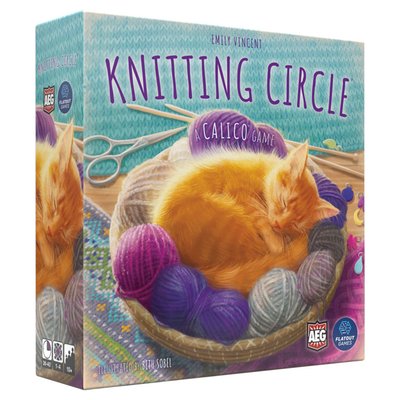
Hi everybody. Welcome to the Going Analog Show, a podcast in which industry guests come with a game to discuss and a topic of their choice. So with us this week, we're excited to have Emily Vincent, the founder of Pink Hawk Games and also a fantastic designer have played your knitting circle game. Really enjoyed that. That was out from uh FlatOut Games. And then uh upcoming, we have some very exciting news for Pink Hawk Games. We've got a big Kickstarter coming up later in October. So, we're going to ask you tons about that coming up. Um, and so I love a lot of the the style of your games. You've got really interesting indie vibe, but like enough crunch, but very cute themes that it's just sort of like right in my wheelhouse, that sweet spot. So, um, welcome to Going Analog.
Thank you. Thank you so much for having me. I'm so excited to hear you say that and I'm so excited to be here and chat with you both today.
Yeah. And you have brought a topic for us to discuss later, right? What would that be?
Yes, I have. Yep. Uh today we're going to talk about a little bit about the decision of sort of going from being a designer to being a publisher, but also I'm still a freelance designer. So, I was thinking we could talk a little bit about like how do you decide which games to publish yourself? How do you decide which games to try and sign to other companies? That kind of thing as a designer. I've always been curious about that cuz this like board game space is so I I don't want to say incestuous but sort of right small and connected.
Small. Yeah, let's not make it gross, Christina. Uh just small. And so, you know, sometimes some games seem to work really well one space and then maybe you want to take in take charge of it in another space. So, we'll discuss that real soon. Uh we always start with a game pick. So, our game
by the way, are you going to introduce me? I'm here on the show, too.
Everybody knows you now. So yes, this is Shu. Shu is here all the time
and he is uh you know he keeps me on track as you just saw right there. He's a great great on producer guy. Yeah.
Keep you on track.
Uh-huh.
What is our game pick for today?
Today our game pick is into the machine. Uh this is uh published by AEG games designed by Casper Lap. Um, and this is a game I I like talking about this because if you saw a group of people playing this on a table, you would probably walk right on by without giving it a second look because it it looks so plain and clinical. It's not that it's colorless, but it's just
a color.
Yeah. So, uh,
orange is a color.
Yeah. Look it up online. If if you're watching on video, you can see a little bit of the back of the box here. Uh but the basic idea is you're a bunch of robots uh and you're in a factory making robots and you're racing these robots. So there's a sort of conveyor belt and then you're placing you're trying to decide your actions and they're all worker placement actions like I want to go here to create more robots for my supply or I want to go here to be able to move forward and slide until I hit the next robot or I want to do this to jump over a few spaces and things like that. So the main board like 70 80% of the board are these sort of worker action spa worker placement action spaces and you have three different types of robots. So you have like uh a lowle mid-level and a highle robot. Some of them have restrictions like some powers you can only access with a highowered robot and so on. Then you can start to create these chains of like because if you start to go if people start to go to one place more it becomes more expensive for you to go there as well. So you have to have as many robots as the last previous highest stack. So you have to make more robots to be able to place the workers on. And then if you have adjacent spaces, sometimes you could go in between the worker placement spots to trigger both of them at the same time. So you create these interesting combos.
But the main part of this is all there's a race where you're you have these robots on a track and then you can always skip over over other players. you can uh and there's other powers like I said and so it's a lot of fun of like positioning yourself just right so that you get to skip over as many people as possible you've reached the end of the track then it upgrades to a different type of robot that has to go the other way and now there's uh two streams of robots crossing each other on one path and then all the different combinations you can have like this is now going to jump where it is I'm leaping five uh steps forward because uh this was positioned just right and I picked the right move at the right time it's really puzzly and rewarding and it's very satisfactory when you're like, "Ooh, in two moves I was able to skip like 15 spaces and things like that." So, it's a really fun game. Uh, it just looks really
a really bad actual factory cuz the conveyor belt's very
such a mess. Yeah. But, and then you get these cards that give you additional powers. So, there's a lot of different combinations. And so, I really like this game. I just wish one like the board looked more exciting. Uh, that's the only thing I think could hold it back a little bit. It's a fun theme, fun gameplay. The other thing too I wish is like they made the track be in the middle of the board because that's the main action. Uh, and it's sort of at the top of the board. It's it's just kind of weird from a graphic design standpoint, but anyways, don't overlook this. This is a really neat game called Into the Machine. You have any thoughts on it?
Uh, yeah, I'm just bad at it. Uh, not great at figuring out the timing of my robots. Um, and some people are very good at saying like, well, if I do it this way, they've like they've got it all figured out the timing and or they just get really lucky and maybe I just suck. So,
that is one thing that is a good point that there are games definitely that we've had where there's a runaway winner because they they figured it out so well and but it's not consistent. It's not a type of game of like, oh, someone who knows what they're doing can always win well. It's just a lot of interaction.
Yeah. how the robots are positioned, what cards are coming out, what spaces are available to you. It's just sometimes it can lead to some people having better moves than others. Uh but it doesn't feel unfair, but you will have situ I had one game where one person's already got their two robots to the end and back and that's how you win the game is to finish with two robots. And I'm like I I don't even have one that has made the first lap.
Maybe like three or something. But anyway, three robots. They were like very far ahead. Very far ahead. Yeah. Uh, but when you get that sort of combo of activation, it's really, really satisfying. So, yeah, it's good types.
Mhm. Nice. That sounds fun. I haven't played it, so I shall look for it the next time I'm at a a board game library type place.
Yeah.
And what game did you bring for us, Emily?
So, I brought a game uh called Color Jam, and it is actually it's on Kickstarter right now. Some friends of mine designed it, Jean Coup and Joe Kell. Um, and it's published by Lunar Punk Games. And it's a coloring game. And so it's actually like a print and play. There's like 10 different 10 different images that you can work on. Um, and on the Kickstarter, I think there's a way to get like five more. Um, but it's it's really fun. So, Lunar Punk is doing victorless and multi Victor games. Uh, which is such an interesting sort of space to play in, right? Because like you think of games and you're like, who's the winner? And they're like, I don't know, does there have to be a winner? Um, which is just kind of very fun. And so they made a game out of coloring and it's it's very fun and very soothing and it also has these moments where you it gets really crunchy all of a sudden and you're like I don't I don't quite understand what just happened. So So all you need is like six uh crayons or colored pencils or something like that and you put them in a row and you know that you know this side is one and that side is six and all of the little spaces on here have numbers on them. So, you start by coloring in two of the spaces, but then when you pick a crayon, if you pick it from space three, you can only color in a space three, and it has to be touching one that you've already colored.
And so then when you use it, you put it at the end, and everything else sort of rolls down and changes numbers. And so, you get into this situation where you're like, I really want like here, I've got this one. Um, so I really wanted that cat to be all orange. And so I had to keep rolling the orange down to the correct numbers to get it to go. And that meant I just sort of had to like make other choices at times. I was like, I have to use the purple on a tooth. And and so I like I had to make my skull have two different color eyes just because like there was there was no way for me to make it work, right? Um, and so you start to find your I find myself in these positions where I'm like, what is suddenly most important to me and what am I willing to give up to like make this picture read, right? So the other one I did, I did my space bunny. Um, and I was like, there's a space on a planet and so I really want it to be like a green bunny. Um, and I just sort of was working around that. So you you can play it solo. Um, but you also can play it cooperatively. And so you just take turns, right? I take a crayon, I color in a thing, I put it at the end, then the next person goes and they get to do it as well. And and it was really surprising to me how sort of how the conversation evolved and how you suddenly have these moments of like it's really important to me that you don't color that purple. Like what are you doing? Don't pick up the purple crayon.
I can't believe you did this. You've ruined my vision for this picture. and the sort of like negotiation back and forth and like maybe I really want to do something and I'm trying to like convince you, hey, what if you took that green crayon? Just put it anywhere. I don't care. Just put it on a two so that my color will roll down into the space the number that I'm hoping to do on my turn. Um, and so it's just a lot of fun um in a way that I found to be really unexpected. So I've been enjoying coloring my color jams uh here. I I got to see it a little bit ahead of time because I I play test with some of these folks and so um I've been playing it for like on and off over a year now and it's just a lot of fun. Um I don't know.
Yeah.
So what like when you say I want my cat to be all orange or I want my bunny to be green like what are what in the game is encouraging that or is it just subjective like you like it that color?
It's just you, right? And part of what the um instructions are saying, so all the rules are just on the side here, right? But it sort of at the end it sort of says, you know, how how will your color choices like impact what story you're going to tell about this picture, right? Like what does it what does it mean that like my space bunny has a purple tail, right? Or that like I had to make my nebula all pink or something like that. Um, and so it's just about the experience of doing this with your friends and like it was surprisingly, like I said, it was surprisingly um, not competitive, but like we we were at odds at times, which I hadn't expected. Um, and then also this number puzzle can really get you can get like five steps ahead of yourself of like, okay, I'll pull the brown and then that'll make this the purple into a three, then I can do the purple and only then should I use the one, right? Cuz it's really tempting. you've got the one in a spot and you're like, "Oh, I want to use the red on a one, right?" But as soon as you do that, all of the other pencils shift and so it might make sense to like hold on to that and like leave something in place and do a couple of other moves in order to to not mess up all your other moves, right? So, there's a fun uh numeric sequencing puzzle that sort of popped out that I wasn't expecting to see.
Okay. And that's color jam. You mentioned it's on Kickstarter, but um in two weeks when this episode is actually out, it it'll be like down to one or two days left. The final get on it.
Yeah, I'm checking right now.
I'm sure they'll be doing late pledges. They're about 15 days left. Yeah.
Yeah. So 15 days left and we're going to this episode will be 14 days from the moment of this recording. Yeah. But you catch it right at the very end or wait for the late pledge manager.
Yeah, absolutely.
But yeah, it's a fun team of people and it's a fun little game. Okay, that's exciting. I'm I've been into adult coloring for sure lately. It's just like so relaxing, right?
Yeah, they've got a bunch of fun stuff. There's a dragon in there. There's a giant weird teddy bear. There's, like I said, a space bunny and stuff like that. So, I feel like there's some some art that will appeal to lots of people.
Is it like something I imagine kids would play as well?
100%. Right. And I think they also have some stuff where they're like chatting with teachers and schools and stuff cuz it's just a fun, you know, it's like a cooperative thing that you do together and you have to sort of negotiate, you know, how this is going to turn out and everything. And so, um, yeah,
it's a fun game for families, I think,
and for adults.
We wanted to talk to you about your company of course too and your design like what what you've gone through your history right so uh upcoming when this episode comes out you will be very close to the launch date for your your next big Kickstarter with two entire games which is very exciting we got a little sneak preview at Gen Con of uh Good Kitties and Super Chunk. So, why don't you tell us a little bit about this upcoming Kickstarter that's coming out October 20th?
Yeah, absolutely. So, we're doing a bundle two possum games together. Pawsome. I don't know if that works when you say it as opposed to when you write it.
I was thinking psums like the
Yeah, I was thinking possums then I was like that didn't work. Uh, perfect. They're perfect, right? Um, yeah. So, Good Kitties is a cooperative strategy game where you are cats taking over the house at night while the humans are asleep. Um, and so it's kind of got like Pinky in the Brain but cats vibes. Um, and it's uh it's got a b a couple different difficulty modes, but it is like a 60 to 90 minute strategy game, right? And that game it will escalate. The mice will try and steal all of your supplies. The dog will try and mess up your plan, right? And so it's actually it's a bit crunchier than some folks expect given that we're cats, but like we're cats who are trying to be bad, right? And I think we all all those of us who have cats know that cats just want to be bad secret.
That's secretly. It's not even that secret. They just what they like.
Um but yeah, so you you um there's a bunch of different missions in the box and you get to do things like um take over the kibble supply and uh knock the plants off the shelf. Uh but you also get to like make yourself internet famous and build pocket dimensions to hide in so that when the humans are looking for you, they like don't know where to find you. It's all very very typical cat stuff. Um, and so that's a game that I designed. I've been working on it for a number of years now. Um, and it's one, it's actually the first game that I ever started to design. So, it's like my first design, but you know, years and years later.
Um, and then I've paired it with this game, Super Chunk, which is actually a game that I signed to Pink Hawk. So, it's designed by Ben Jones. And so this is the first um other designer that my company has brought in a game from. And um this is a game of it's a fast competitive game of cats that just want to be really chunky, right? They want to eat all the kibble as fast as they can. And so it's a game where you get to choose your speed uh and choose where you're going to eat and then if you play the same number at the same bowl as someone else, you bonk heads. And so it's all about reading each other and like I think you're going to play a one, so I'll play a two, but now you you probably know that I'm going to play a two, so maybe I should actually play a three, right? And it's got a lot of that kind of double think uh going on. Uh and your cats and so you're running, you're eating kibble, and at the end of the game, you want to have eaten the most kibble, but if you ate um you always have to throw up your tallest stack of kibble because you ate too much. And so, so there's a lot of like which kibble should I take, which stack do I want to throw up? Uh, so that I can be the chiest kitty at the end of the game. And that's like, so this is like a 15-minute game. Yeah.
It's really accurate. I don't know.
It's a cat sim.
Yes. And And actually, as part of this game, when you are ready, when you've made your decision, you meow at the other players like me. And And if someone's being slow, you should definitely just keep meowing at them. It'll definitely help them. it'll help them make their decision faster. Um, and so yeah, I we sometimes say it's a game of passive aggressive meowing uh at your friends uh because that's what we're going to do. We're going to meow. We're going to run for the food bowl. We're going to eat all the kibble.
What stood out for you for this game to be like the first game that you're signing that you didn't design for your company?
Yeah, that's a great question. Um, I think it's a couple things, right? So, I think one is just the the joy of that sort of like it's very easy. You have a couple of cards in your hand and you just pick one, you run, and then you're like, did I get the most things? Did I run into someone else? Right? It was a very straightforward and streamlined core loop that I just found to be delightful. Um, and then when you add the meowing on top of that, I was like, this is an experience that I that I want to have, right? And for me, it hits the sweet spot of what I'm trying to do with Pink Hawk in that it is light and whimsical in theme. It'll make you smile, right? Um, but there is actually a little bit of strategic bite in there where you do have to think about it's it's not random, right? like I have gotten better at this game as I've played it over and over in development because it's about figuring out what other people are going to do and what the right play in this group of people at this moment with this table setup is.
And so there was all this interesting depth there that I, you know, that that's the kind of game I want to play, but I want to play it about cats and pirates who drink tea and things like that. um and not about conquering the galaxy, at least right now in in my current uh place where I'm at in my life. Those are the things that I'm excited about. So um but yeah, so yeah, and then I think the fact that I could pair it with Good Kitties was the other part cuz I was looking to see if I could do a big game and a small game together and so I was like cats, cats go together. Cats and cats, right?
Well, when they except when they hate each other, but yes. So for and then like you've talked about your cooperative game that's coming out of course Good Kitties. Um what is the gameplay like for that? Like how did you uh you know how do we achieve these missions together?
Yes, great question. So um every turn, so there's an action track on the side of the board that tells you the turn order, but the turn order is something that you guys can manipulate as a team. You can say, "Actually, I think you should go first this round, so I can change that around." But eventually it becomes your turn. You get two turns per round and in your hand you have a set of action cards. And so every card has some amount of movement and a cat action that you can do. So maybe I can run five spaces and scratch the sofa or I can uh you know run two spaces but wiggle to increase my catitude which is what I use to catch mice and to fight with the dog. Um, and so there's like trade-offs on every card, but you basically pick an action card to play and then you get to do your movement and take your action interspersing them however much you want. Um, and so that sounds very simple, right? And the trick is all of the complexity unfolds on the board because what you're trying to do is we have the top- down view of a house and we are trying to move through the house to pick up supplies that have dropped on the in various rooms. So there's forks and laser pointers and cat toys and things like that. Um, and you're trying to pick them up and you as a cat can only carry one thing, right? Cuz you put it in your mouth and you walk around. So you you don't you don't have thumbs, unfortunately. Um, so you're trying to collect things and bring them together to build contraptions. So the mission will always have a this is a contraption you need to build or these are two or three contraptions you need to build. So there's a lot of coordination of who's going to get the stuff, where are we
going to get it, where are we going to bring it together, who's going to build it. Um, and then there's objectives where you have to then use whatever you've built, right? So, in the first mission, we're trying to become internet famous. We build ourselves a camera and a selfie stick, and then we have to go and take pictures of ourselves being cute um or of the dog doing bad things. Uh because that's the other piece. There's always an objective in the mission where you kind of need to blame or frame the dog for anything that you did bad because we're good kitties, right? Um and so so there's a lot of sort of manipulating the pieces on the board and um you might call it pick up and deliver. Um I think that's a little bit of a stretch of that mechanic, but um picking up items, bring them together. Um and then the other piece of this is um this is a game where the um the game itself sort of escalates against you. So if you think about like pandemic where you have you know outbreaks and things like that and you have to do a bunch of cleanup, right?
The same thing is happening here with your mice. Your mice are trying to steal all of your supplies. And so you do have to go around picking off mice, sending them to mouse jail. Um because you whenever you send mice to mice mouse jail, you actually can upgrade your skill cards, your action cards. Um plus if the mice get enough supplies, they actually win the game. And so you want to be stopping them. Um, and that gets harder and harder as the mice and the dog both power up over the course of the game as you complete objectives. So, there's some amount of go do the thing that's listed on the objective and there's some amount of like keep the board from blowing up on us while we while we focus on getting this mission done.
So, you are cats trying to take over and literally stopping Pinky and the brain mice from taking over. Right.
Exactly. Exactly. I feel like someday in the Good Kitties universe there's a game about what the mice are actually up to in the walls. We don't have that game planned yet, but um you know Yeah, exactly. Good mouses, bad mouses.
So, before we move on to our topic, uh we of course have a fun board game trivia question for you. Um but this one gets to be choose your own adventure a little bit because I heard you like going to circus gym. Uh which is very cool, like fun hobby. How long have you been doing that?
Oh, uh, since like 20 probably 10 years, uh, 2015, 2016. Yeah,
that's amazing. And so we you can choose either a circus themed board game trivia question or of course you're a game that's available right now, Pirates of the High TE's is pirate themed. So we have a pirate themed question for you, too. What would you like?
Oh man, I don't know.
What do you know better, circuses or pirates? In the context of board games also.
In the context of board games, I might know circuses better. So, let's try circuses.
Okay. Okay. And so, which of these circuit circus themed games has the most ratings on board game? So, people have just decided to rate it. We're not saying how high or how low, but just the most ratings.
Yeah. So, they're just popular in some way for the board game crowd. Is it A. Three- ring circus, B. Maple Circus, C, The Magnificent, or D, Scout.
Oh, I was going to say Maple Circus because I think that game is fabulous and I think
it really is.
I just enjoy it so much. But I kind of feel like it might be Scout because that was a spiel a spiel winner or spiel nominee. I think I'm a spiel winner. No, I don't remember.
You know your games. Um, yeah, I'm going to go with Scout from a uh strategic standpoint, but in my heart it's Maple Circus.
And you were right. Very nice. I I agree on all of that, too. Maple Circus a huge huge like soft spot because we've had that maybe one of our oldest dexterity games that we have.
Yeah, it's so silly
and I will not get rid of it. So,
yeah.
But congratulations. Yay.
Yeah. if you want to tell her how many ratings.
Um, it actually Scout has over 30,000 ratings and Meo Circus has about 6,500. So, yeah,
not bad.
Still well rated. Many rated. Many rated.
Many rated. Still,
you want to try the other one just for fun?
You did answer our questions successfully, but
Okay. So, we just had the same version. Which one has the most ratings on Board Game Geek of these pirate themed games? And we have A. Libertalia, B. Jamaica, C. Skull King, or D, Captain Flip.
Oh, I'm going to go I was going to do Libertalia, but I think it's Captain Flip.
I'm going to go Captain Flip.
You were right in picking the circus themed question.
Yeah,
it's Jamaica because it's been around so long. I think you know, it's uh it's just been out for a long time.
Yeah, I was I was writing this question and then I'm like that surprised me that Jamaica beat out all the others. And I asked Christine the question as a test. got it wrong. Also,
she got it wrong, too. So, we we all This took us all by surprise.
So, now we know. Mhm. It's a classic. It's been around. It's a fun time. It's a fun time.
Okay.
Yeah.
And so, what what was your topic for us again today? Let's let's discuss.
Yeah. We were going to talk about um how as a designer one decides like should I pitch this game? Should I self-publish this game? and sort of I can talk a little bit about my journey of how I became, you know, how I decided to self-publish.
Yeah. Mhm. As well
because the first game I heard of yours was the Nicking Circle from Flatout Games. And so, but it sounds like you you were designing Good Kitties first. So, what what's your process been in this design?
Yeah. So, I started designing games in like 2022 after I came back from PAX East and was like, I I'm a designer. I'm a a user experience designer sort of by day, right? And I was like, I'm playing all these games. I love all these games, but I'm not seeing the games I want to play.
Right? And I think that was, you know, to what I was saying earlier. It's these light, fun, whimsical themes, but with like some crunch of like, I want to be challenged in this game. And I was like, I design stuff, right? I design interfaces. I design software. I can why not try and design a game? And so my partner went out for a long run. He came back and I was like sitting surrounded by little pieces of index card that had drawings of cheese on it because in the very first version of this game you use cheese to to distract the mice. Um, and I was like, I designed a game. And so I don't know, I just I'm a person who throws themselves into hobbies. So I sort of threw myself into the deep end and started designing as much as I could, right? And so I'd worked on nine different games in my first year as a game designer. Some of which never made it past, you know, the first play test where I played it and I was like, "This is
I just designed a bad version of Clank. Cool. Nobody needs that."
Over.
You have to be willing to do that, right?
Yeah. And so in there was Good Kitties. In there was an early version of what became Pirates of the High TE's. And right at the end of the year, I was sort of driving to work listening to a podcast. They were talking about cozy games. And I I said, you know, if I was to design a cozy game, what would it be? I was like, well, knitting's cozy, and I have knit before, and knitting has these two stitches that are the opposite side of the fabric, and a tile has two sides. Like, there's got to be something there, right? So, so I I sort of developed this idea for Knitting Circle and I had all these other threads going in the background of other games because I do like to design multiple games at once. Um because I think when I get stuck on something, it's nice to be able to put it down and go work on something else, right? I was like, I don't know how to solve this problem. I'll go think about knitting uh for a little while. Um, and so, so I was sort of building out these games and, and what I realized after play testing Knitting Circle was that it had legs. It had interest um, from other publishers, right? I I took it to a convention called Unpub. Um, and I played it with a lot of play testers, played it with some publishers. Um, got some cool tweets about it. Uh Elizabeth Hargrave and Randy Flynn both tweeted about the game after that convention. Um and so I was sort of like this game maybe could be my foot in the door,
right? And so I so I pitched that around and it luckily made it in front of FlatOut. Um and they were amazing and pretty excited and they were like our biggest question is would you be okay if we put cats into it?
I was like, "Yes, yes, let's put all of the cats into this game." [snorts] Um, and so they wanted to put it into sort of the Calico family. Um, and so I started working with them and they have this amazing system where they it's called their collab and they bring the designer in and they bring other designers in to do the game development and finish out the game and and all of that. And so that was a great opportunity to see how it worked at a publisher, right? Um, and I've I've built a great relationship with them. And actually, one of my other games uh was is on Kickstarter or will have just been on Kickstarter by the time this airs. It's called Perennial.
Um, and so and we've got a couple more things in the pipeline coming from them. And so, so yeah, so I've been doing some work with them and and pitching games around, but at some point I, you know, I had Pirates of the High TE's and I had Good Kitties and they were starting to shape up and I was faced with this choice, right, of like go find the publisher that's going to be the right publisher for Pirates. Um, or do it myself. Um, and I think for me there were a lot of things that sort of tipped me to I want to try to do this one myself. Um, and so, so some of that is I really wanted to see the style of game that I was looking for on the market. I wanted this theme and I wanted this game play. And I think when you sign to a publisher, um, it's theirs to do with what makes sense for their company, right? So, if I had signed it to a company that was like, we really like it, but our our customers are more about space or more about, you know, classic fantasy or something like that, right? It might have gotten rethemed into something that wasn't Pirates and Tea, right? It it could and it would have been it would have been great, right? Uh, but it wouldn't have been that game, right? Yeah. Um, or if I'd signed it to a company that did does more like kidfriendly games, they might have said, "We love this. We can totally
sell Pirates and Tea. It's, you know, like a Mad Hatter tea party, but like we need the gameplay to be simpler,
right?" And and both of these things were things that I was hearing while I was pitching the game around,
right? of people saying, "We like the foundation, but here's how we'd change it."
Yeah.
Um and you know, that that wasn't what I was hoping to put into the world, right? And so then I sort of had to sit down and say, "Do I think I can do the self-publishing piece?" Because it's it's a huge lift, right? Like I can't even it's it's such a big lift. Um because I have to be the game designer and developer, right? Um I have to be the art director. I have to be the product designer. I have to decide, you know, what thickness of card are we going to have and what finish are we going to have on that and how many cards will we have and what will the boards be made of? I have to be the marketing person, right? I have to decide what are my ads going to look like, how much money am I going to spend on them, what are they going to say, do I pay people to make videos, you know, all of these things. Um, I have to reach out to content creators and ship packages all over the country to to get people to make content about them, right? Um, and so there's just all of these hats that one has to wear. And at the end of the day, I have to run a business, right?
Um, and I think that there's a there's a jump that you make, right, between like designing games cuz it's fun and it's a great hobby and you enjoy it and if you can get something signed, that's awesome. And then you have like another group of people who are like, "No, this is what I do professionally and I have, you know, I have my spreadsheet of every publisher and I know what they're looking for and I shop games on spec and I meet with them on this basis and I, you know, like they are very business-like about their pitching." Um, and then there's like I'm running a business, right? I'm running a business where I literally ship boxes from China on a ship and then I I deal with freight and I pay tariffs and I pay VAT and I pay all of the right, you know, and it's and I have to pay myself ideally. Um and and so
and you have a day job and so
Yeah.
Yeah. And so it's um you know I think that's the I think that so often when we think about self-publishing it's that first story that I think about or I thought about and I hear which is the control right and the ability to put this vision into the world exactly in the way that I envisioned it. Um, and it's all of the stuff that makes that happen that is such a heavy lift that's sort of behind the scenes and no one sees it.
So crazy. So you you you knew all that. You knew what you were signing up for and what you're getting into, but you're like it's worth it for to preserve the integrity of this one game
or or was there a bit of you that's like
there's also some appeal in all of those things that you just described? Um I think it's a little bit of uh the second one as well. So like the pieces that I'll add to this context, right? I have always wanted to run my own business and have not had a specific
uh piece of technology or nugget, right? I come from software to start and I just I've never sort of had a like ooh this is the software business that I want to run, right? Um because I then sort of transitioned into user experience and stuff like that. I looked at that list of stuff and I was like there's pieces of this that I like and that I think I'm already good at. Product design, uh some of the marketing, right? There were pieces of that that I had from my prior work that I was like, I think I have enough of this that I'm okay doing it and that I would that I'd be pretty good at it. Um and I think the other piece of this was really strategic. Um, so when you look at where the money goes in the board game industry, right, obviously the designers get paid, obviously the artists get paid, but like the the sort of the money and like what gets made lives in the publisher, right? And and sometimes the publishers lose big, right? Because there's a ton of risk that you take on as a publisher, financial risk. Um, but I was like, I'm interested in like the big risk, big reward possibility, right?
Like if I can do it, like this this could work. It could be a business that I could work at full-time, you know, that sort of thing. And I was at a point in my career where I felt able to step away from my career and actually take that risk.
Um, so I did actually quit my day job about two years ago.
Yeah. And I've just sort of I was like worst case it I call it a sbatical, right? Um and so I, you know, I thought really hard about like do I do I want to take on this risk and if I'm going to do it, what's the right foot forward as my first offering, right? Because I think
sometimes you hear very good advice, right, to start small, right? pick a pick a 50 card game and and just do that, right? And raise a couple thousand bucks and get through the whole process soup to nuts that you really understand it. And that is obviously not what I chose to do. [gasps] It's not my biggest game. Good Kitties is by far a more complex product. Um, but I I looked at what I had designed and what I had available and I said, you know, Pirates of the High TE's is the best encapsulation of the type of game I'm trying to bring forward. And so, like, let's swing for the fences on this one and see if if I put all my effort behind it, can I can I sort of make a name for the company with this game and sort of use that as a launching platform for future success, right? Um, which I think, you know, take a big swing is another is another path for the industry. There's so many different paths through this industry and every person's is unique, right?
It's it's true to their story, the skills that they come into the [clears throat] industry with, the things that they value, the things that they want to pursue, right? Everyone's story is just a little bit different, right?
When you cross that threshold, you're like, "Okay, I made that decision. I'm going to go be a publisher now." What did anything catch you off guard or were you like this is way harder despite all the warnings despite everything I know this was way bigger or harder than I thought?
Yeah, I mean it still catches me off guard, right? There are still things where I'm like learning new things about state taxes every day that I didn't know and I'm like, "Wow, I feel like I should have known this.
I should have known this quite some time ago." Um, and so, so there's lots of things about having a business that I still am learning, right? I I I sit down and talk to my accountant and I'm like, "Wait, explain to me again the difference between being taxed as an escorp and being taxed, you know, as an LLC and stuff like that." So, um, there's some of that. Um, I think the other thing is I just don't quite know where the time goes sometimes. like every task I sit down to do seems to take longer than I think it should. Um even if it's writing an email to backers, right, or like um working on, you know, some graphic design for for an Instagram post or something like that. And I'm like, why why do these take so much longer than I think they should? Um and and so, you know, there's there's that piece. Um, but I think the biggest surprise or thing that caught me off guard is just the decision fatigue when I am the only person making every single decision.
Yeah.
Right. At some point you're like,
I don't care. Could someone else decide this and there's no one else? Right. Like I just I just have to pick. Right. I have to pick what type of uh material we're using for this card. I have to pick the box thickness. I have to, you know, pick between A and B, whatever that is. And um it's exhausting and it's exhausting to sort of live in a state of anxiety of like, did I make the right choice? How's the Kickstarter going to go? You know, all of those things. Um, and it's just me, right? It's it's just me.
But evidently, Pirate of the Highes did well enough that it did not scare you off. So,
this is true. This is true. Pirates had such a delightful response. It really resonated with um gamers in the way that I'd hoped it would.
And so that's been I I find actually going to conventions to be almost one of the most like refreshing moments because I get to interact with people who've played the game and are excited about it or who are picking it up for the first time and they're like, I'm excited to play this. And that is just sort of a
I don't know. It's like fuel in my tank, right, of like I've been sitting in front of this computer.
Yeah.
And now and now I'm seeing the people who who who saw the vision, right? And who picked it up and who tried it and who had a good time?
And do you think like in the future that's sort of going to be like your main sort of decision point? I have this game and I have this very specific like very whimsy sort of theme for it and I want to keep it this this heavyweight this this sort of weight and it like fits your brand like that's always going to be like a pink hawk game, right?
Yeah, that's exactly it. Right. So, when I sit down to work on a game now, I think about who does this fit with, right? Is it a Pink Hawk game because it's whimsical, but it's got some like some bits of strategy that you want to put your teeth into? Or maybe it's a whimsical theme and it doesn't have the strategic depth yet, but I know that's what I want to do with it.
Um, and if it's not, I'm like, well, who who else might be interested in this, right? Is this is this maybe a fit for FlatOut and I should go talk to those folks? Is it a fit for should I think about trying to go find the OP or, you know, whoever else? Um, I've been lucky enough to build a bunch of connections in the industry as I do this. So, I have at least a sense of what other companies are doing and what they might be interested in. And so, you know, when I first started designing, I wasn't thinking about who does this fit with. And now I think about that, right? and I wonder and and if I really can't think of anyone who would publish it and I wouldn't publish it, then it's a well maybe I don't work on this one quite yet, right? Maybe I maybe I put this on hold either until I feel like I understand how it fits into Pink Hawk, right? Maybe at some point in the future we're wildly successful and we have a couple different lines, right? Or something like that. Um or maybe or maybe another publisher comes along and I'm like, "Ooh, actually this might be a great fit for them." Um but yeah, so that's now a part of my process in a way that it wasn't at the beginning.
Is it hard? Because I would imagine if I were to own my own business, it's like you have to put all of your energy into just keeping it afloat and managing all the things that you mentioned that you have to deal with. But if you're designing a game because that's creatively fulfilling. You're designing games that might not be Pink Hawk games sort of material. Do you does it is it difficult because you're like now I'm spending time and energy for something that's not ultimately going to support Pink Hawk games even though you'll make money from it. Yeah, it's I think it's been challenging just as as I now try and launch two games at the same time to sort of find my limits of like I can actually if I'm publishing I can only work on a smaller number of games uh simultaneously than I used to. And so yeah, there is that sort of value question of like is working on this game that's not going to my company, what's that going to bring to me, right? Is it just if it's just joy that like this is a game that should exist and I think it's a really great game, that will probably drive me enough to push forward on it anyway. Um, but if I'm working on a game and I'm like it doesn't feel particularly special, um, maybe I'll put it down and try and find something that does feel really special, whether that's special for me or special for another company. Um because yeah, there is just really limited time now that I'm juggling all of these pieces of the business, right? Um yeah, that makes
sense. Uh I'm excited to see how this next Kickstarter works for you and excited to follow it. So, um everybody can go and join that Kickstarter October 20th again for both GoodKitties and Super Chunk. And thanks so much for joining us, Emily. We had so much fun talking to you.
Yeah, thank you so much for having me. I really appreciate it. Uh this was great. And if they want to follow, are you on the social medias and they should follow you or Yes. Where?
Yes. So, you should find me on Instagram, Pinkhawk Games. Uh I'm also a little bit on Blue Sky as Emily Keepskitties. Uh but really my social media home is Discord. So, if you're on Discord, uh you can join my server or another server I'm on. I'm Emily Keepskitties. Uh but the other place you can find me is I am a co-host of a podcast called Building the Game. Um, it's a weekly podcast about game design. I'm not on it every week because I'm the co-host. Uh, but it's a great podcast and it's been going. We're on like episode 740 or something at this point.
100.
Yeah, I was I only joined about 150 episodes ago, but uh yeah, they've been they've been going for quite some time. Uh, so Building the Game podcast. Um, dedication. Find me there.
Yeah, Jason's great. Jason's the main host and he's been on all 740 whatever except for like two episodes.
Holy cow.
Okay. Yeah. Game design. That's that's the place to go for that. Um follow the Kickstarter. Very excited for all the kitty stuff that's coming out. And now uh thanks for listening to all of our listeners. Thanks to our amazing editor, Mike Zipkin. And now everybody can stop listening and go play a game. Bye
bye.