TDG: Cody's Top Fifty GMT Games (#30-#21)
Games in This Video
11 games are featured in this video — they unlock as you watch.




Transcript
Hello, ladies and gentlemen, and welcome to the discriminating gamer. You know, I'm in a bit of trouble. The guy I pay to clean poop from the backyard, he found out I don't have a dog. Ladies and gentlemen, today we're going to go ahead and take a look at my top 50 GMT games of all time. Today, we're taking a look at number 30 to number 21.
All right, ladies and gentlemen, let's jump right into the list. My top 50 GMT games of all time, 30 to 21. My number 30 is the British way. The British way is a great two-player coin game. Essentially, um, here there's there's four different scenarios. you are in Palestine, Malaya, um, oh, Kenya, and I can't remember the other one, Salon. And, uh, what you do here is you are essentially trying to, uh, either the the British are trying to hold on to their empire essentially. And these various in these various scenarios, the other player takes on kind of indigenous peoples, uh, trying to take over those areas for themselves. This was the first like I I think this was like the first coin game I ever played. And this is, you know, a great game where you've got both sides have units. Some of them are, you know, for for the insurgent. Some of them are revealed, some of them are hidden, and they can go ahead and they can take take various actions. This is really the game, I think, that I cut my teeth on coin with um and really learned how to how these systems worked. and it kind of demystified coin for me because I was really scared to play coin games. Um, and then I played this one and I realized, oh, that, you know, there's a bit to it, but it's it's manageable.
It's not as difficult as and and and treacherous to learn as I thought it would be. And this is really fun with this theme of the British desperately trying to hold on to the parts of their empire and various indigenous peoples trying to cast it off. And great great, you know, great kind of struggle to uh play. You know, I recently read um Max Boot's Small Wars of Peace and and his kind of thesis is that that these kind of small wars, these kind of insurgent wars and whatnot, they're the common wars, right? It's it's it's a World War II war is is kind of the exception. It's these kind of smaller wars of insurgency that that that have been far more common in American history and ultimately in world history. But I really enjoyed the British way. Great two-player coin game. So that is my number 30, the British way. Number 29 is an old game, an older game, and this is Washington's War. Um, Washington's War is a great game about the American Revolution. And of course, one of you is the British, one of you the Americans, and you are attempting to, of course, gain your independence or stifle the American Revolution right off the bat. But this is a a card uh card driven game, a CDG. And what's great here is it's not just about the the the military struggle, but it's really about the political struggle and trying to kind of gain kind of political and military control as much as you can in these different areas on the board. So, I really enjoyed that. And one of the things I really love, too, is is toward the end of the game, you don't know exactly when the game is going to end.
And I really loved that tension of trying to to to do as much as you can, but having to really pick and choose because at any moment, the game could end. And I and I like I like dynamics and games that do that generally and I think it is very very fun here. Great American Revolution game. So this is my number 29, Washington's War. My number 28 is a game that I enjoy. Uh it's a cooperative game. It's also good solo. In fact, it's probably a better solo game. But this is Banish the Snakes. Spanish the Snakes is just this really fun game of trying to convert pagans to Christianity in medieval Ireland. It's really a lot of fun and I really like this game. Um I like it because it's it's a fairly easy game to learn and to teach. And in fact, this is a game that when I teach Western Civilization courses, I usually have a game night and I bring a bunch of different kind of thematic games from the period we're learning. And one of the games I bring is Banish the Snakes. And it's just a a great game. And every time I have students play it, they always enjoy it.
They always love the cooperative nature of the game. They love working together and trying to to to, you know, convert the the local leaders and the kings and the high king and then trying to get to all the people. It's really a fun game with a lot of fun and interesting systems in there. Uh it's got die rolls, but it's got these wonderful mechanisms to mitigate the die rolls throughout the game. Really enjoy it. This, like I say, it's a good cooperative game. I think it's probably more fun, at least for me, as a solo game, but I love my students how much they enjoy it as they play it cooperatively. So, this is my number 28. This is Banish the Snakes. My number 27 is a game that I played a while ago, and this is a game that is, I'll be honest, it's it's got a pretty steep learning curve. And I ended up giving this one away because it was I found it very difficult to teach to people. Um, and I kind of regret it. And I know they're coming out with a sequel before too long and and I'll definitely check out the sequel, but it was still was a fun game. In fact, I played the game several times solo and really got a kick out of it, but this is Atlantic Chase. Now, Atlantic Chase is is a naval war game set in World War II. It's the early years of the war when the marine surface fleet actually posed something of an issue to the British Navy. And it's very interesting because the game is really about finding your enemy.
That's a big part of it as much as the battles are. But what you do is you actually will lay out trajectories like like the the the course of where the ship is is headed. And then the British player is actually trying to locate where those ships are or the enemy ships are trying to locate where their opposing ships are and you're trying to find out where they are. There's different units and and and and actions you can take to try to locate them. And then when you you actually do locate them, there's a battle board. You've got tactics. How far do you want to close in or stay away? And so it's it's really a fun game with a lot of different systems. It's a very unusual game. I don't know that I've ever played a game quite like Atlantic Chase. Now, as I say, they are I think working on Pacific Chase. In fact, Al, I think, was just at the GMT convention in California not too long ago. I think he said he played it or he saw it being played. So, I'm excited to see how that one works out.
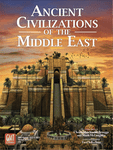
But my number 27, Atlantic Chase. Now, my number 26 is a sequel to a game I had earlier on this list. I like the earlier game. I like this one better. This is Ancient Civilizations of the Middle East. Now, as I mentioned, just like Ancient Civilizations of the Inner Sea, Ancient Civilizations of the Middle East is it looks like a civilization building game, right? You've got different empires that are building up cities and temples and all sorts of things around the board, buildings around the board, and you can invest in in in in in other things as you're building here. But you've got the the little cylinders that are your units on the board. They're they act as cities, too. And you've also got um like they also are money. So, you use them for a lot of different things here. But critically, even though the game looks like a civilization building game at its heart, it is a take that game. You are constantly playing take that here. And it is hilarious. It is so much fun trying to build things up and then you're playing these cards and your opponents are just swatting you down.
It's great. I I like this. And and it can be a longer game with a higher player count. You can play scenarios that that are kind of shorter. But it's I don't know. Every time I played this one, I always have a big grin on my face. And it's funny when I play it with people that haven't played these games before and they don't really know what to expect. They're thinking, "Oh, this is just a civilization building game." And I tell them, "Well, not quite." And it's it's fun to kind of see how the game plays out and just it's got some absolutely hilarious moments, but it's also got some really good tough decisions throughout the game. Really enjoy it. That is my number 26, Ancient Civilizations of the Middle East. My number 25 is a block war game, and it's frankly one of the best block war games I ever played, and this is Fields of Despair. Fields of Despair is a great World War I block war game. And you've actually, it's the Western Front. You've got kind of a line going from the coast down to, you know, the Swiss border roughly. and you have these blocks. But what's cool here is you got these really small blocks and they have very high values on them. So when you're adding together the all the blocks you're attacking with or defending with, you you kind of look at the factors. You've got, you know, combat results tables, you're going ahead, you're you're rolling off there.
And then the game also abstracts things like the Yubot war events in the east. And it's there's a lot going on here. I really had fun with with this from the military point of view. did kind of wish it had been a little more streamlined, maybe scaled back on some of the other events in the war and just really focused on the Western Front, but it it was fun. It was very charming. Sadly, this is one I gave away. I think maybe this is one that didn't leave Texas with me. I might have given this to a friend in Texas. I can't remember, but it's a great game. Great block war game. So, that is my number 25, Fields of Despair. Number 24 is a great game set in the Roman Empire that is also a great deck building game. This is Time of Crisis. Um this is a great game because of course during the 3rd century time of crisis where you got the barracks emperors who were um marching on Rome. It was like 50 years of just absolute chaos in the Roman Empire as you had like sometimes several emperors a year start marching on Rome and the Senate with a sword to their necks keeps proclaiming these guys emperor. It led to what was referred to as legitimate rebellions. But the game is fun because again you've got you've got deck building and you've got different aspects of the deck building. You've got obviously they're colorcoded but you've got like uh you know the military and the political and what have you. And so so you're playing with the cards. You're trying to build up your infrastructure, move your armies toward Rome. Very fun and interesting game. In fact, if I remember correctly, this was the last or one of the last board games I played in
Utah before I moved to Texas. Um, it's great. Actually, I haven't played this in years. I still have this one. I I need to get it to the table again because it is just awesome. And I know they've come out with some expansions to it, but I haven't played any of the expansions. I've just played the base game and I need to play it again. It is a great deck building kind of kind of strategic uh war game. Really love Time of Crisis. Uh that is my number 24 Time of Crisis. My number 23 is a game and I and I mentioned in another video one of its well it's sequel game. Um because there's there's there was this game and then the sequel came out a few years ago. This game I think came out in 2015. This is Triumph and Tragedy. Triumph and Tragedy is a great block war game from World War II in Europe. Now, you've got three factions. You've got the Democratic West, you've got the fascist Germany and Italy, and then you've got the Soviets, the Communist Soviets.
And what's great here too is just like in Conquest and Consequence at the beginning of the game, it's before the war. You're actually playing cards to align various countries to you, to your faction, to your ideology. So, you're playing these cards in order to get them to to line up there, right? And I really really like that quite a bit. I really enjoyed um the diplomatic play and the card play here. And then the war starts and it's kind of a conventional three-way block war game. Um you can actually have, in fact, I remember the first time I played this, the West, the Democratic West, before they went to war with Germany, they declared war on Russia and they were actually fighting a war against Russia. And I was Germany thinking, "Hey, this is pretty cool, you know." Um, but then you've also got like tech cards and you can build up tech over the course of the game and tech kind of can enhance some of your your block abilities. Now, again, this is a game sadly I I gave away a while ago and I regretted giving this one away. Uh, I really felt bad about it. This is one maybe I need to require at some point.
Really love Triumph and Tragedy. It's just an outstanding diplomatic military war game. Uh, but that is Triumph and Tragedy. My number 23, my number 22 is um got a similar theme to one I mentioned just a minute ago. Um this also takes place during the time time of crisis in the 3rd century Rome, but this is the barracks emperors. This is a card game, a a very fun and interesting card game where you're trying to capture the various emperors. You've got a board that's a grid and what you're doing is you're trying to surround the emperors with cards, but how you play those cards and the number values on those cards matter and certain cards have different abilities. And you're playing the cards trying to trap the emperors hoping that you can claim the emperor for your side.
But when you lay down a card somewhere on the board, the side of the card that you're using, the other sides of the cards can be used by other players. So, you've got to be very careful as you play this game because the cards you play to help you can end up helping somebody else. This is another game that I frequently bring to game night for my West Civ students and they really enjoy it, you know, because it's tough and and you got this card play that it, you know, you you never are quite sure if if you're ultimately going to benefit from the cards you play. You've also got barbarians come out there and it's really a hoot. I really enjoy this game. The first time I played it, I only played it with three people and it's it's good with three. I liked it, but you really need the full four players to really enjoy this one. But the Barracks Emperors is a fantastic game. I absolutely love it. Love to play it at game night with my students. So that is number 22. The Barracks Emperors.
All right, my number 21. I'll tell you right now, this is probably the most popular game when I take it to my West Civ one game nights. This is Charioter. Charioteer is fantastic. It's a racing game. It's a racing game set in ancient Rome. And you've got cards and you're trying to match the numbers and and and and type of cards with cards that are kind of placed out there every round and you're going to kind of add them together. That's going to give your total number number of movement spaces. But then you also have these blocks that you can play, these wooden blocks that give you special abilities. You know, you go around corners and you have to go in, out, in, out. If you play the right cards, you can just go along the inside, save you a lot of time. Um, there's some cards that inflict damage on the other players, some cards that heal damage, some cards just let you go super fast. It's really a lot of fun. It's a great racing game.
Another one that my students just absolutely eat up. Ray usually comes to my game nights. He helps out and he loves playing this game with my students because it's so much fun. Or at least watching them and kind of facilitating the games. He absolutely loves that because and and I don't blame him. It's a super fun game. I love Charioteer and that is why Charioteer is my number 21. Well, what do you think ladies and gentlemen? Do you like the games on this list? Do you not like the games on this list? Should they be higher? Should they be lower? Should they not be on the list? I'm very eager to hear what you have to say. So, please, please, please leave a comment for us here on YouTube, on Board Game Geek, on Facebook, on X. Love to hear your feedback on this uh on what's going on here. Now, if you like this video, please please please like it. Give us a thumb and subscribe to the channel. We would love to have you uh subscribe to The Discriminating Gamer and be part of the family. If you really like what we do here, please check out my other channel that is Cody Carlson PhD where we talk about history, military history, books on history. I even post some of my lectures on there.
Have a lot of fun. It would mean the world to me if you would subscribe to that channel as well. And then also too, ladies and gentlemen, if you really do like what we do here on the discriminating gamer, I would humbly ask you to click on the super thanks button and leave a tip. You know, the bag boy at the grocery store, he asked me if I wanted paper or plastic. I told him that he could decide. He said baggers can't be choosers. Somebody help me again. And I DON'T KNOW WHERE I'M GOING. AND I DON'T know where I've been. IT'S A LONG TIME AND I'LL BE DYING. Once a year I wind up in the I love to fight but I don't ever win my LIFE
and your life's work will have been meaningless. No.