Fountains, Paws Up, Solstis, Dog Park, Word Slam - Ranked & Reviewed
Games in This Video
5 games are featured in this video — they unlock as you watch.



Transcript
Hey everybody and welcome to another Chairman of the Board ranking video. This is where I take a look at the last five new to me board games that I've played and I rank and review them in order of preference. Now, before I get into today's five games, I want to give a shout out to the show sponsor kiender.co.uk who are my go-to online retailer. And if you use the link in the show notes or the QR code, then you can get 5% off your first order. At number five, I have Dog Park. So, this is a gateway level resource management contract fulfillment game where you are collecting resources um and then trading them in against these dog cards. And the dog cards will give you points as well as um trying to give you majorities when it comes to different categories for endgame scoring. So, there's a bunch of different types of dogs and you want to have the majority of the most kind of lucrative ones. Also, whenever you um fulfill one of these contracts, you'll kind of gain a either a temporary power or an ongoing benefit or even like an endgame scoring opportunity that you can work towards. Like, for example, some cards might say, um, well, at the end of the game, if you have this spare resource, you get a point for every one you have. Or, uh, when you come to the resource collection phase, you can share spots with somebody else. So, the game is pretty procedural, and it's very simple in each of those phases. First off, you're just drafting these cards.
Uh, and then you can trade in your resources in order to complete these cards. And then you're going through this kind of little resource gathering game where you're going along this track where you can't go back on yourself um collecting the different types of resources. If you get to the end of the track before the other players, you'll get a little bit of a bonus. So, there's this little bit of a um game of chicken going on where if your opponent's going slow, you might want to go slow as well and mop up those resources. Um, but you don't want to be caught off guard and get left with kind of negative points by finishing last. Um, I thought the game order or the phase order was a little bit strange in this one and it maybe diminished some of the excitement. So, something I normally like in these types of games is that when you commit to your contracts and then you try and gain the resources, kind of adds a little bit more tension. This one you can kind of just complete contracts when you have the resources. So, I thought that maybe took a little bit of the edge um off the game, but it's, you know, it's fairly straightforward stuff. Um maybe the majorities are a little bit swingy and the powers are a little bit subtle, but again, I am coming from the perspective of quite a seasoned Eurog gamer. So, this isn't exactly um aimed towards me as the kind of market audience, but I can see why people would like it. It's clearly tried to capitalize on the kind of wingspan buzz because it's got the same aesthetic with those white cards and the sketchy animal drawings. Um, so it's kind of trying to hitch onto that wagon. Um, but it is different enough.
It's not like the same type of game. Um, but that being said, I think if you own Wingspan, you'll probably rather just play that one over this one. So, I thought it was a valid effort, but ultimately it was a little bit toothless. Um, a little bit maybe more abundant. not exactly, you know, not exactly exciting in any aspect, but that's if you like dogs that you're going to like it because there's a tons of dog cards. And again, if you're much more of a casual audience, you want to play with almost non-gamers who like dogs, then they'll probably like this one. So that is Dog Park at number five. At number four, I have a party game with Word Slam. Um, so very simple word association style game, which is a genre I tend to enjoy, but I understand there's not exactly a huge demand for them, especially when it comes to YouTube content. Um, but this one essentially you are um playing in teams.
Each team is going to get given a kind of a word they are trying to uh portray to their teammates to try and guess. But in this one, you can only communicate by using these predetermined cards, by slamming them down on the table, maybe trying to build some kind of network or pattern with these words to try and break down what you're trying to say. It's quite clever with the kind of strings of sentences you can build or know the word association or tricks you can do. Um, and if you play games like concept, you're going to understand what this game entails. So, fairly straightforward stuff. You know, lightning quick. If you want to play a quick, fast, funny, kind of frantic um party game and you do have enough players to have teams, um then this one's worth a shot because I'm sure you can pick it up for very cheap and that kind of filtering through your card system is quite fun, albeit a little bit chaotic. So that is Word Slam at number four. At number three, I have Pause Up.
This is a very simple card game by Ry Kitia. um as you are managing a small hand of cards um and you're using this kind of initiative blind bidding system in order to claim other cards. So each card has a I believe a unique number on it um you're going to reveal them at the same time as your opponents and that's going to give you access to different cards first. So if I had the highest number I get to take from the display before the other players do, but I will replace it with the existing card that I've swapped it with. Meaning that my opponents can now access those cards. Now, what I'm trying to do is I'm trying to build sets of animal types or kind of background types. Um, and you are racing to get different sets. So, basically at the start of the game, there's going to be a huge um display of these scoring cards that will diminish in points. So, they start at high value and of course once somebody completes that contract, the next value card will be a bit lower.
And of course, you're trying to beat your opponent to all of them so you get all of the higher value cards. But the kind of twist on this game or the the trick of the game is to try and bleed those scoring opportunities into each other so that you're scoring a couple at a time. That way, you're much more efficient and can beat your opponent uh to the punch. Now, it's fairly straightforward stuff. I mean, I do like the idea of um the chopping and changing of the cards. You know, what I don't want anymore could be what exactly what you're looking for. And of course when the uh initiative order comes into play that becomes a bit more interesting and a bit more exciting. Um but all in all it's fairly standard contract fulfillment that we've seen time and time again. These kind of games where you're just collecting collecting collecting cashing in. Um they don't normally do it for me anymore. Now this one's super slick smooth and it's got those additional um little little ideas that I do appreciate but overall it just feels like a you know like a Splenderesque style game. and those are a bit boring to me now. So, despite me objectively thinking this game is welldesigned and again I do love that um incentive to be as efficient as you can to be kind of one of the cool tricks and like kind of hooks about this game and of course it's all cutesy artwork as well. So that might be appealing to you.
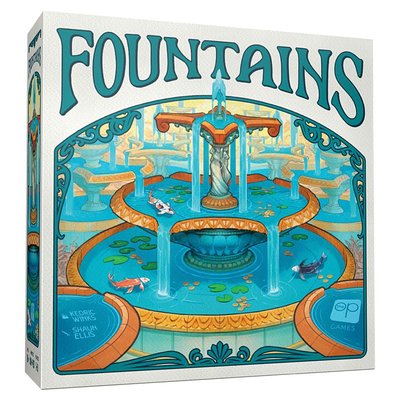
Um but all in all I just left the game feeling a little bit I don't know not I don't know maybe a bit neutral on it really. I didn't really feel excited by it despite enjoying the process by the time it was finished. it felt like that was just another game that I played and I don't really need to go back to it anymore. So, um maybe if you like these styles of games, it'll do it for you, but for me, it's just other things I'm looking for at this time. So, uh that is Pause Up at number three. At number two, I have Fountains. So, this is a game that caught me by surprise really because I did go in blind to this one. I'd never even heard of the game uh before playing it, but um my girlfriend and I were in the States and we went to a board game cafe and they had this one in their library, so we thought we'll give it a go. It looks interesting at least. Now, this is a tile placement game, but it's a a multiple tier tile placement game where you're placing tiles on top of other tiles. Um and of course, as the name would suggest, you are building a decorative fountain. Um and you're doing that by placing all these different size tiles. So you have like big tiles, um, small tiles, all different shapes that fit in to each other, which can kind of fragment off these different tiles into multiple different pools. Now, some of the ideas in this game are really novel and I thought were so fresh and original, especially when it came to this kind of jet system where only certain pools would be active if they have a jet stream going through them. The way that works is that certain tiles will have the jet symbol on them and that will
kind of power um tiles on the same level or lower levels as long as there's kind of like an unbroken route of these little funnels that go through from fountain to fountain. And of course, as your fountain builds up, certain pools might not have access to a jet, meaning that meaning that that's kind of stagnant water and that's going to kind of block your scoring opportunities. And I thought that was really cool. So, not only are you trying to focus on scoring, you're also trying to keep your fountain alive by keeping those jets kind of going around your fountain. Uh, the way the actual game works is really straightforward and it feels to me like a kind of a Euro game from 20, 30 years ago, uh, where you're using this rondelle system with different pawns and each pawn represents a different scoring um, opportunity. And once these pawns go around the rondelle and land back on their starting spot, that will trigger that particular scoring opportunity. And that'll be things such as these lily pads. You know, if you have your kind of longest unbroken chain of lily pads will score points. The higher the tier they're on, um, the more points you'll get. There's the same thing, but with fish, and they come in different colors, and if you activate the scoring, you can choose, uh, which color is going to score. And also, the number of pools that you have is going to score as well.
So, as I said, you might have this big round fountain and then you might put like a d um a diamond fountain in the middle and all of a sudden that one round fountain becomes um five separate pools, but of course that's much more difficult to power and you need to have that jet stream. So, I thought that was really cool. I mean, the table presence is great here. The actual production quality is quite interesting as well as you have these kind of foamy tiles. They're they're kind of nice to play with. Um, and I do like that idea of the scoring being controlled by the players. You know, if you know that you're falling behind on the on the lily pads, um, you might want to say, "Well, I'm going to skip over that scoring opportunity so that my opponent won't score it and get a jump on me." But at the same time, when you're moving these pawns around the rondelle, that determines which tiles you have access to to place into your own fountain. So, a cool little um, blending of mechanisms there. All that being said, I did think that the the fountain itself was a little bit congested. There's like three pawns there and there's not actually that many spaces on the rondelle, so you can kind of travel a bit too far at times. Um, and it kind of felt a little bit plotting at times as well. So, um, also despite me again loving the fountain and the tile placement side of things, I thought that there was some missed opportunities to maybe up the complexity when it comes to the scoring.
Now, the actual tile placement game is is simple enough, but I wouldn't say it's pure gateway level because of that jet mechanism. And because of that, I would think that the players who would go for this game would probably want a little bit more meat on the bones when it came to the different scoring criteria. So, this game was like 75% of the way there for me. I would just have liked to have seen that Rondell system tweaked just a little bit so it wasn't so congested and also maybe add a few more interesting um you know scoring opportunities into the game to make you spin a few more plays. But that being said um you know I want to put a positive spin on this game. I did really enjoy it. I thought there was some great ideas and you know for such a convoluted um genre of game at the moment there's so many tile placement games and there's even more and more of these tile placement games where you're placing tiles on top of tiles. Uh this one feels certainly um distinct to a lot of the other ones and that for me um gets full credit. So that is fountains at number two. And finally at number one I have Solstice. So, it's quite rare for me to rank a Bruno Cathala game so high because his style normally clashes with my own taste, but there's something about Solstice that works for me. I find it very charming and just super pleasant to play. So, this is a twoplayer only tile placement game, although I think there is a solo mode. Um, and in this one, you are trying to build up your big kind of mountainscape by placing these tiles. Um, you're going to gain these tiles through this pretty interesting
drafting system where you're going to play a tile from your hand. If there's a matching number or a matching color in the central display, then you can take those tiles and then you'll put them in your own personal mountain range. And the kind of unique thing about this game is that every single tile is unique and has its own distinct place on the map. So, the mountain range kind of goes from wide and funnels up to, you know, a point. And what you're trying to do is you are trying to build your biggest kind of group of these tiles without breakages. Um, so your kind of biggest grouping of tiles will score a point for each of them at the end of the game. Um, also if you manage to trace a route from your base all the way up to these bonfires at the kind of pinnacles of the mountains, you'll get additional points. And whenever you build a square of tiles, you can place one of these bonus tokens onto your map, which will unlock further scoring or give you kind of one-off bonuses uh, and so on. So, it's quite nice how this is only a two-player game and you kind of look at your opponent's state of play and see that they might have the tiles that you need that would fill in certain gaps on your board because again, every single tile has its own place. And the game is just very free flowing, very smooth. It's kind of a a very minor game, kind of um what's the word? Like a slight game.
It's not exactly huge swings in points or big exciting moments, but it's a game I think you can just settle into and just enjoy the process. And you know, I don't want to sell this as being like a big, you know, grandio strategy game or there being a ton of depth here. There isn't. But again, I just like the process of it and I think it's just fun. I do think it's a very fun game and which is, I suppose, what we're all here for. Lovely kind of cartoony aesthetic. uh reminds me a little bit of um an older Kramer and Keeling game called um Sansusi where again everything has its own place and I think that's a concept that's not really been explored too much uh in the board game space. So it's nice to see that kind of theme or that that that idea being reexplored in such a streamlined and smooth game. Um, the flow of the game can sometimes, maybe not the flow, but the restrictions can come into play a bit more as there are fewer tiles available in the middle, but they do come with some backup plans where if you don't have a matching tile, you'll get kind of one of these wild rainbow tiles and they can go anywhere on your map. Now, they don't count towards your biggest clusters as in scoring points, but they can let you kind of bridge gaps and things where you wouldn't be able to fit things before.
There's always kind of a plan B in this game as well and it doesn't have a a mean edge to it. So again, if you want a more of a passive, maybe couples friendly two-player game, this is a really good option. And it also plays lightning fast in only about, you know, 15 or 20 minutes, which I think is fantastic for a game like this. So that is Solstice at number one. So there we have it. That concludes another video. Hopefully you have enjoyed it. If you have, please be sure to hit like and subscribe to the channel and check my other content. But for everybody else, I'll see you next time on Chairman of the Board.