The Best Thematic Board Games | A Cinematic Documentary
Games in This Video
4 games are featured in this video — they unlock as you watch.



Transcript
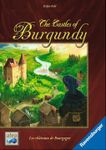
The question came at me like a madman with a sledgehammer. It was February 13th, Friday night. The kind of quiet evening where time seems still and the outside world feels distant. Kim and I were playing Castles of Burgundy. Take your actions. Collect your resources. Score your victory points. A perfectly picturesque evening paired with a perfectly quaint game. But then she ripped that pretty painting right off the wall. "So, what's the point of all this? What's our goal?" she asked. I laughed at her naivity. To get the most victory points, of course. Yeah, I know that, she replied. But why are we building these things? What's the meaning of all this? Meaning, I asked. The question hit me like a crowbar to the skull. I thought gaming was just a hobby, a fun thing to do late at night on a Thursday. Was there a point to any of this? Was building this silly little estate with cardboard tiles just a waste of time?
The question followed me to bed, haunting me from the darkness of shadows? Can a board game tell a story, fulfill a purpose that goes beyond solving a puzzle? Can cardboard and plastic move us emotionally? Can board games bring us together over something deeper than mechanical puzzles? Can they impact our lives like the storytelling mediums that have been giving us meaning for thousands of years? More questions gathered and sat on my chest like a demon. I wasn't falling asleep until I got some answers.
I remember begging my parents to let me stay up one night to watch two horror movies with them, Aliens and Ghoulies 2. I convinced them with what I'm sure was flawless logic that I was mature enough for such sophisticated entertainment. I was not. I've always had a bad habit of getting a little too immersed in the stories I consume. There's a scene in Ghoulies 2 where this like tiny little gremlin crawls out of the toilet. That moment scarred me so deeply that for years I did not sit down properly on the toilet. Instead, I sort of hovered ready for whatever monster the toilet might throw my way. It took me far longer than I care to admit to sit on that toilet seat again. Films, for better or for worse, have a way of embedding themselves in your brain long after the credits roll. And if there's a cinematic board game that captures that, that same lingering paranoia and excitement, it's Nemesis.
In the darkness of space, a semi-ooperative nightmare emerges. A stranded crew awakens from a deep slumber, engines failing, ship lost, nobody to trust. And in the deep corridors of their hellish prison, a new threat emerges. Monsters driven by slaughter and the insatiable urge to jump down your throat. Nemesis, rated R.
No board game evokes its source material better than Nemesis. Each turn, you you dive deep into the cinematic narrative of the experience, feeling like a like an unlucky soul trapped within an Aliens film. But here, there is no director or writer to save you because because at the table, you and your friends are completely at the mercy of your decisions. And the story doesn't come from a script. It emerges from the the experience of everyone at the table. The panic of failed roles, the the paranoia over the motive of your fellow shipmates, and the constant fear that this this giant alien that that just appeared in front of you, well, it it's probably going to bite your winky off. Or I think that's what the alien's after. It's not really explained in the rule book. Ghoulies really has ruined me for life.
From the very first action, Nemesis feels less like a game and more like like an engine for storytelling. It even mirrors the classic 3-act structure. You start the story orientating yourself with your new surroundings, working together as a team to to check engines, repair the ship, and and discover, you know, discover its secrets. Then something moves in the vents, and the first alien appears, and the tone rapidly shifts. You now enter the confrontation act of your collaborative story. You're complaining to the table that Jon misses all his shots. You're screaming that that Phil has abandoned you to to run around the ship and collect eggs. And and why does Mark keep making so much noise? Are my fellow crew mates actively working against me? Should I abandon my collective objective and pursue my own survival?
And then finally, you reach the climax of Nemesis's narrative. Maybe it's a a desperate last stand against the queen. Maybe the ship is completely overrun. Maybe Al just set a crash course towards the sun and is now sprinting towards the escape pods. However it unfolds, the ending belongs to you and your friends at the table. I think that's what makes Nemesis so special. Yeah, Nemesis can sometimes feel like a bloated mess of a game. It is overproduced. It can feel painfully random at times. Is expensive. The rules have these like strange edge cases that makes you feel like you want to pull your hair out. But damn does it tell one hell of a story. The tension, the arguments, the selfish choices, the heroic sacrifices. Nemesis turns a few chaotic hours at the table into a compelling narrative of shared struggle that resonates with you like a good film long after the game's been put back in the box.
When I was a kid, I hated reading books. It just it always felt so boring when compared to the the beautiful green tinted screen of my beloved Game Boy. But one day, while my parents are away, I stumbled onto a book. It admittedly wasn't the literature I was looking for in my father's room. We we won't get into that. But I couldn't turn away from the muscle infused monster of a man with his his giant sword in one hand and half- naked lady draped around his leg. Each page of Conan felt it felt exciting and really rebellious as a child. And when I had finished, I returned to that same bookshelf, but this time I grabbed a copy of The Fellowship of the Ring, thinking it would sort of be more of the same. It was not. It was it was sort of something else entirely. And on the day like like every little dude, I became obsessed with Lord of the Rings. Movies, cartoons, video games, toys. Over the years, I devoured everything Middle Earth. And eventually, many years later, I discovered the board game War of the Ring. A game that over the last two decades has provided me as much wonder as a Lord of the Rings novels and as much excitement as Conan did in my youth, minus the half- naked barbarian ladies.
Sadly, War of the Ring is an epic two-player strategy game set in Tolken's Middle Earth, where one player guides the free peoples in a desperate attempt to destroy the one ring, while the other commands Sauron's overwhelming armies across the map through asymmetric factions, restrictive action dice, and iconic characters. Each session unfolds as a tense, player-driven saga shaped by hard decisions, clever cardplay, and a few lucky dice rolls. War of the Ring is long, complicated, and has one heck of a barrier to entry. But it's easily one of the most beautiful expressions of storytelling in a board game that I have ever experienced. What makes Warthering resonate is how much it invites players to create their their own story. You might follow the familiar path and echo the choices from the books, or you might go completely off script and create a story that belongs only to you and your partner at the table. For three to to four hours, Middleear is entirely yours.
But that freedom, it does come with restraint. The action dice limit what you can accomplish each turn, forcing difficult decisions and some seriously painful trade-offs. You can't do everything. You you sort of have to adapt, and those limitations, they shape the story, acting as both friend and foe while you enact your cardboard hero's journey. But it's not just the dice. the the characters themselves, represented by these little plastic miniatures, further push the narrative forward. You you sort of move these faithful soldiers and and heroes across the land you've known since childhood, and you watch in agony as the heroes you love are risk for a greater purpose that both you and those champions share. Aided by these amazing dual purpose cards, each card can be either played as a combat effect or an event that completely changes the story in a meaningful way. And what's agonizing is that the stronger the combat card, the better the event the card provides. So every single time you use these cards, you're left with an increasingly painful decision, which really just it just sort of heightens the tension and excitement for the entire experience, making you feel like you're a character in the story driven to to survive. Yes, War of the Rings is a beast to teach. Yes, it requires emotional and physical stamina like no other board game. And yes, you will absolutely forget a critical rule halfway through and have to consult the rule book. For me, War of the Rain comes closer than almost any other board game to recreating the feeling of reading those books for the first time as a
child. And it shows it shows how powerful board games can be as a storytelling medium to provide us to provide us meaning as they stand shoulder-to-shoulder alongside some of the greatest pieces of literature.
My love for video games goes back to the days we'd visit my grandparents for the holidays. In their basement was the original Sega Master System. I would spend hours down there playing games while the adults talked about boring nonsense. Like the weather. Wait, I feel like the weather is all I talk about now. I'm old. There was something intoxicating about controlling what happened on screen. Sure, I was following a path designed by developers, but it sort of felt empowering, like I was shaping the story through my choices, as if I was the storyteller. Board games give me that same feeling. Sure, we're we're following the designer's rules, but the story that comes from engaging with those mechanics is entirely ours. And and right now, the game that best exemplifies that feeling is today's sponsor, Raid: Shadow Legends.
I'm kidding. Uh, it's it's Black Rose War Reaper. But I did say in the previous video that if you don't support our Patreon and subscribe to the channel that I would seek sponsorship from crappy mobile games, this this is your second warning. Black Rose War Rebirth is a competitive combat deck building game where players strive to destroy their opponents in the arena using well-played magic spells, traps, and summoned otherworldly monsters. all to become the crown holder of the lodge and the Black Rose champion. Black Rose is not a narrative in the traditional sense like and like an RPG. You're not you're not reading flavor text off cards or choosing arbitrary dialogue options. It's more a fusion between the magic system and tactics divine divinity and the insanity of an arena based shooter.
Black Rose War Rebirth delivers its story in a way that makes you miss those times you you got together as kids to have land parties and play just way too much hexa. And like all the wacky and insane guns you remember from your favorite shooters, there is a mind-boggling number of different spells in this game. Each magic school feels it feels distinct and creative. You're placing powerful hexes on people, damaging yourself to hurt others, giving people nightmares, summoning demons, upgrading equipment, and loads upon loads of other cool stuff. Experiencing how each school interacts with one another and doing your best to create these sort of like jaw-dropping combinations is part of the exciting story that Black Rose tells every single time it hits the table. And like any good story, the experience sort of thrives on tension. Understanding what you can control and sort of just accepting what you can't is a huge part of the enjoyment. Every turn, you play your spell cards for the round face down. And while you plan your best to anticipate the actions of your fellow mages, you're never going to be fully certain, carrying not only an immense amount of weight to every decision, but a load of enjoyable suspense. And finding ways to utilize that suspense to to sort of bluff your opponents makes you feel like a powerful protagonist in this this shared story. Do you choose to go for the killing blow on an enemy mage for points, or do you sort of hang back and let someone else do the work while you restore one of the lodg's rooms? Did that mage you've been targeting all game who likely won't be your friend after the match? Did they play a defensive spell or have you made yourself
vulnerable to what could be a devastating attack spell? The game thrives on confrontation and opportunism that requires a group of collective storytellers willing to embrace that madness. Black Rose War Rebirth is not a game that will appeal to everyone. It It's chaotic, over complicated, and a swingy mess of a game. But I don't care. I'm not always looking to play the next great German design game featuring trading of European goods. Sometimes I just want a game that's going to facilitate an amazing story. And Black Rose War always delivers a great narrative.
Like every young boy in the '90s, I was obsessed with comic books. And while I love the traditional superheroes, I always gravitated towards the sort of like weird and creepy stuff like like Tales from the Crypt. I'd stay up late under my covers with a flashlight just devouring those stories and pretending the next morning that I that I definitely didn't have nightmares because I'm a big boy. So when I found a board game that perfectly captures that same uneasy like midnight under my Ninja Trail sheets atmosphere, I was I was hooked. Playing Terescape feels like stepping inside one of those horror comics to excitingly go face to face with my own impending death. Terascape is a tense one versus many hidden movement horror game where a group of survivors scramble through a dark creepy mansion removing obstacles, searching rooms, and repairing the radio for escape. All while being hunted by a bloodthirsty ghoul. Playing as a survivor in this game, it's amazing. You generally feel dread waiting as the the killer considers his next move. You convince yourself you've been clever by hiding in the same space they've been occupying, holding holding your breath and feeling that tension in your stomach release when the murder eventually leaves or doesn't because you you pull that trick all the time and it and it never works and yet you keep doing it.
Maybe I'm just bad at games. As a team, you're continually evaluating risk under this immense pressure of time and the fear of being disembowled with a chainsaw. Like any good piece of horror fiction, the game sort of escalates quickly as survivors complete their objectives and and generate noise which alerts the killer to their location. It's this fantastic cat and mouse feeling where at times you feel you feel ingenious and then suddenly powerless as the killer busts through a wooden barricade and rips you to shreds to leave you with one more chance before death and ending the story for your team. Because unlike every other horror narrative, this is a collaborative story. Yeah, you might You might split up like all good dumb horror protagonists, but you're utilizing each other's special skills and and you're sort of working as a team in Hushed Whispers because in Terescape there is no final girl. Either you all survive together or you embrace and shared slaughter. But playing the killer is also a hell of a lot of fun. Each one has its own thematic deck that allows them to find different ways to murder the intruders. Whether it's disappearing from the board to surprise them in a in a new location or revving your chainsaw to put the fear of God into them, each card perfectly reflects the chosen killer's character and play style. And it's a joy to whip out in the perfect moments to murder your friends. You feel this mounting tension and frustration as you barge through another barricade to to gleefully slaughter the helpless victims that made noise in the study and then and then feel this immense amount of disappointment and frustration when
you realize that they're no longer there or that you might have been tricked. It builds this expectation for when you finally do catch one of those cockroaches because you know the catharsis you'll feel when their scrawny pathetic little necks is in your grasp will be one hell of a release. I I am not a serial killer. I promise. Whether hunted or hunter, you engage in this amazing collaborative story to create your own piece of horror fiction at the table. And honestly, as much as I love horror films and literature, it's a lot more exciting to share the narrative experience with friends, being an active participant in the story, than sort of passively consuming it and wondering what I would do as the killer or how I would have done things differently as survivor. Terrorcape brilliantly puts those theories to the test and lets you and your friends have an amazing thematic and meaningful experience to the table.
When I was a kid, I would sometimes listen to the radio just before going to bed. It was always talk radio and I had absolutely no idea what anyone was talking about because I was a kid and I was I was dumb. I just enjoyed listening to the boring voices before going to sleep. Eventually, I came across very old episodes of The Shadow, which some rock station in Toronto was playing on Sunday nights, and I just became enamored. the the deep voice of the narrator, the suspenseful music, the the dramatic stings, the entire experience had the complete opposite effect and had me staying up way past my bedtime to find out how each mystery would solve. And so Pulpy Mysteries have always been nostalgic for me. So when I came across Detective City of Angels, I was thrilled. I tried so many other detective related games and they all sort of just fell flat. But City of Angels quickly became the perfect game to scratch that hard-boiled narrative itch with friends.
Ridiculous, huh?
Who knows what evil lurks in the heart of Detective City of Angels? A one versus many deduction game set in the shadowy streets of LA. The chiseled nose. Have the detectives successfully chased down these to find the end or has the evil chiseled set them lies while working behind the curtain? Stay tuned to find out.
What Detective captures better than than most narrative mystery games is the sort of like the messiness of deduction. This isn't one of those like perfect information games like Planet X. Here, the truth can feel just within your grasp one minute and then and then slipping through your fingers the next, leaving you feeling like either the most brilliant detective in the world or an impostor that's probably better off just doing office work. And a lot of that comes down to the skill of the chisel. The chisel is the foil to the player's detective work. When someone asks the suspect a question, the chisel chooses their answers from a list. Some answers are true, some are lies, red herrings, or or these like subtle misdirections. The detective then has to decide, do I challenge the chisel and and risk giving them leverage to use against me, or do I let it slide and potentially chase the wrong lead for the next half hour? It can be it can be mildly stressful, but also incredibly exciting. And I think those emotional beats of detective, they're they're subtle, but really powerful. There's satisfaction in solving the case, sure, but what stays with you is the story itself. I I've watched friends crumble when the answer finally clicks and they realize they were off by like a mile. I I've seen smug smiles stretch slowly across faces as they feel they just solved the case, ready to gloat for months when the story is over. Well, I I didn't really I didn't really see that because those instances were me. Uh uh but you know that's because I solved this case, right? And what happened is that everybody thought this one individual was lying. But I knew for a fact that if
the this is the type of game that inspires so many different emotions and it accomplishes it through simple mechanics and overwhelming theme, the game sort of invites you to perform in a way to to lie, to bluff and narrate your turns like you're in some, you know, Dashel Hammet hard-boiled detective novel. And the best part is every detective is some dark reflection of the city itself. There are no good guys here. You could be cooperating this game, sure. But the promotion, the promotion is yours, and it's yours alone. And if it means pocketing evidence or extorting some low life, so be it. It's all part of the story. Because there are no hollow victory points here. Only the time Mark thought the florist was the killer for for half the game or or when Kim put the screws on the lady in the red dress to get important information where every other player ignored her. And that is the magic of Detective: City of Angels. Like many games on this list, the narrative comes from the theme and the storytelling efforts of the friends at the table. Each person sort of sort of doing their best to contribute to the shared story of murder, mystery, and intrigue.
Thematic board games are the convergence of every storytelling medium. the curated progression of film, the the immersion of novels, the interactivity of video games, the striking imagery of comics, and when paired with friends, the shared adventure of stories told out loud. Because the true beauty of board games is a story that forms between the people at the table. An unfolding narrative that you and your friends exclusively share and build together. A story that only exists because all of you were there to tell it and revisit it long after the box is closed.