Use These Tips to Teach & Learn Games Better - Lost In The Shuffle
Games in This Video
5 games are featured in this video — they unlock as you watch.


Transcript
Today we're going to talk about different ways to learn games. Is there a best way to learn a game? Or would any method eventually leave you lost in the shuffle? I am really, really, really stoked for today's episode. And not just because I just got done eating free Milky Way candy bars. That explains a lot. It does, doesn't it? Yes. By the way, Milky Way candy bars, not a sponsor of this episode yet. Yet. Regardless, we are not here to talk about dectable candy treats that refuse to sponsor this episode. True. We are here instead to talk about something that we do all the time. Learning slasheing board games. Yes, I've been known to do that a few times. And you know, I have to make a confession to you right now. There's one method that I detest when it comes to teaching board games and I end up just for one reason or another having to do it all the time. M I think perhaps the worst way to teach a board game is to sit down at the table and open up the rule book and start reading through everything.
Unless everybody at the table, including you, has never even like looked at this game before. But if you knew ahead of time that you're going to teach this board game to people, the worst thing that I can do as a teacher, speaking about me personally, not not as the collective everybody, but me, the worst thing I can do is to sit down and crack open the rule book and start going through it. I fall into that trap like creamy nougat so often and it leaves me feeling sticky just like creamy nougat. I don't know why the Milky Way candy bar analogy is I don't know, but we might need some insulin by the end of this episode. That is that is a distinct possibility at this point. Absolutely might be. Regardless, there's got to be a better way. Absolutely. I mean, you would think the rule book is the way because that's the thing that defines how to play the game. You'd think so.
And yet so many people watch videos or are just taught by somebody else. Yes. Right. Or don't read the rule book. can just play the game anyway. I've seen that. Wait, what? How's that work? Well, I get it. Oh, I've played with that person. Yeah. Yes. Okay. It's like we need resources. We convert them to points and the most points wins. Right. Great. No, not at No. Yeah. Right. That's not a good way to teach the game. That is That is the shortest way to teach the game. Shortest. And it works for just about every game, but I I boiled it down to 10 seconds of instruction for every game, but it's not really helpful. How is it that you prefer to teach a game? So, I I definitely like to be up on the game. So, if it's a new for everybody, including me, I will read the rule book first and then I will watch some videos because that videos to me are like a combination of getting the rule book out and setting up the game. Okay. But with context. Yes. Right. Because it's hard to see like this abstract, what's in the rule book. Okay. Here's the pieces. So, if you can get all that together, it it really helps me learn. What percentage of the time do you feel like that approach gives you the knowledge that you need to then go out and teach the game without having to reference the rule book?
In order to get to a point where I can teach a game without referencing the rule book, that is more a matter of experience. I have had to play this time the game several times. It's totally fair. Um and and so for me it it is I'll I'll watch a playthrough video because that gives me the 10,000 foot view. Okay. First I'll do that first. I'm like, "Okay, I understand how this works." Mhm. you know, and what the little things are. And then I'll get into the rule book because that's where the minutia and the edge scenarios are. And oh, in this weird case, if this players get double points or there's, you know, that ara kind of stuff, just random all those things with a sidebar like, hey, remember here's one special quirk. Right. Right. And sometimes those are just uh strategy tips which are good to share with everybody. Yeah. But sometimes they're an obscure rule. It's like, oh, don't forget this thing. You know, on round three, you get eight cards instead of five. Oh, okay. Thank you, Round three. Yeah. So, that that's how I like to to learn a game to teach.
Now, when I'm teaching a game, right? Um I actually subscribe to uh Roto said this at the Funicon event. Who am I? Where am I? What am I doing? Mhm. Why am I doing it? Mhm. And when does it end? That that should be the initial synopsis. Everyone has the context of what they're doing. Okay. Setting the stage for the key and the context. kind of the the again the 10,000 foot view. Here you are looking down at this. You're going to be this, you're doing this, you're doing it because of this reason, you know, for this purpose and it's going to end when this happens. That's probably also a good way to go into any teaching session is with those things because I have found that one of the best things to start a teach with is the end. Here's how the game ends. Here's what we're going for. Here's how we're going. Correct. And then working backwards from that a little bit, but introducing that premise of, hey, here's our goal. Here's our reason for being here. Right. Yeah. Yeah. Right. And this is this is teaching. This is also rulebook writing. One of the great quips I've heard from from Gabe Barrett on again Board Game Design Lab is that you know writing a rule book and I'm not sure if he's quoting someone else but writing a rule book is a lot like computer programming only you have to assume the computer is going to ignore 10% of what you write and you don't know which 10%.
It it feels that way with games sometimes. You're like oh on page 17 there's this one thing. Well that would have changed the whole game. It's like next time we play this we'll play it right. Cool. Great. Let's continue on this path though. So, I think giving that context is is so important. Just just that that that player of like it just tells them why they're there. What are they doing? What is the whole point of this? You know, I think I'm going to up the ante on you though when it comes to teaching. Okay. For the purposes of education, both for ourselves and others, there is reading the rule book and watching instructional videos of some sort. But I think a stronger teach happens when you sit down with someone and they've already played it enough to have that experience of knowing the pitfalls that you could potentially fall into and they know to answer those questions right before you're going to answer them. I think that that persontoperson instructional environment actually leads to a stronger teach. I agree. I agree. And and you know, we we talked about this earlier off screen, but Magic the Gathering, that's exactly what came to mind. I I used to play 25 years ago. I'm a recovering Magic player. I appreciate it. And I don't know anyone who has learned that game by reading the rule book. Exactly. Yeah. I I think there's like six people who helped create the rule book and then they just went and told people. Yeah. I I honestly don't know. It's an amazing feat. It's an amazing thing. It is. You said it's like an almost an oral history being passed down now. How to how to be introduced to play Magic the Gather.
Furthermore, the Magic the Gathering little pamphlet they give you, I don't see how anyone could learn that game from that pamphlet. Cuz when I was learning and I went through it, I was like, I I can understand the broad strokes of what's happening, but I cannot visualize this game being played from this little rule book, right? And yeah, I just think it's such a hurdle. That game, something about it lends itself to being best taught in a personal environment, which I also think is part of its success. Sure. there is almost this this inheritance of of enthusiasm, excitement for the game. And and because you've been taught by someone else instead of like, I don't know what's this on the shelf. Let me pick this up, take it home, read it, and see what I think about it. Right? You're inherently if your friends are excited about it, then you get excited about it.
Right? So I I agree. I think that is one of the best ways to learn a game is to have someone teach it to you. Now, in terms of expertise, though, I do have one clarifier on that. Oh. because I have been taught games by people who were absolutely the experts on that game. I mean like like I learned Scythe from a fellow who was part of the online group that went through every possible thing in Scythe. Okay. All the play testing and yeah they knew everything. So to him that game was not solved but prescriptive. If you were this faction and you were here you did this. If you were in this faction you you did this. So I never got to learn to play the game. Okay. I was just told kind of what to do on my turn. I still have no idea how to play the game. Yeah. Interesting. Right. So, this was an example of somebody knowing too much of the game and not being able to bridge to people who didn't know the game. That's part of being a good teach as well is being like where's your bringing those expertise levels together. Uhhuh. You know, um because it's just it's a very different thing to have mastered. Knowledge does not necessarily equate to teachability or make people understand things. Right.
Right. Right. Exactly. Yeah. Yeah. Yeah. And also for me personally, something I enjoy about learning a new game, whether that's being taught to me or I'm learning it myself, is exploring it, seeing what's possible, what you can do, what the possible combinations are, how you can score points different ways. I love exploring that game. So if I first game I don't win. I don't care because I'm Oh, what's this over here? What's this? Someone's created this whole world for me to explore. And maybe I'm not winning, but I'm enjoying exploring it. You're in an exploratory mode. Yeah. And part of that is learning those strategies, right? And figuring that out. And how do we dance this dance? Correct. And so when I teach people games, um, I will actually parcel out that information in different ways because I don't want to overload them with everything of the game. game. It's like, here's what you need to get started. Here's our 10,000 foot overview. Here's the first step. Okay, now we're three rounds in. Here's a little piece of information you guys need to know. Not right now, but in a little bit. Okay, we're getting close to the end of the game. Just so you know, here's how scoring and things go. Right.
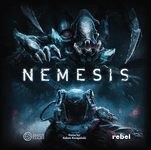
So, it's timing when the information comes in. Cuz I've been on play tests where someone's like, "Okay, here's the entire 48 page rule book." Right. They frontload everything. Correct. And and I'm not getting the context. I'm remembering the last thing you said, not like the setup or how many, you know? Yes. Um, so I think that's part of being a good teacher. I think that can be an excellent approach if the people that you're playing with know that you're doing it out in small bites. Yes. Cuz I've been in a situation where that works really well. I've also been in a situation where the players I didn't communicate that clearly enough and the player's like, "Oh, you're adding rules now." And it's like, "Oh, oops. I didn't set your expectations." Right. Right. Yeah. And that's partially not the right information at the right time. Right. I think that's the art. Exactly. I think it also can depend on the game. Um, yeah, I one of my favorite games to teach is Nemesis, okay? Which is, you know, the board game version of the movie Aliens. And if the group is up for it, one way that I like to teach that game is just to teach them, okay, here's the scenario we're in. Here's your characters and kind of how your character boards work and your hand of cards, which will you use for actions.
For example, you'll use your hands of cards to walk around the ship. So, you know what? Let's start start walking around the ship and then you'll discover what happens next. As long as they have that expectation and they know, oh, I'm gonna have little bites filled in as we go along and I'm gonna have surprises along the way, they have that expectation. It actually has worked beautifully. Absolutely. Because you It's pacing. It's leading them as you need to. If you were going to take someone backpacking, you would not talk to them about nighttime once your camp's all set up when they don't know how to set up their camp. Exactly. All right. I want to circle back real quick though to the discussion of the best way that we ourselves learn how to teach a game. What I discovered is it's not necessarily reading the rule book or watching anything or even talking to people. There have been several games where I've discovered my best teach has happened if I first by myself, took out the game, set it up, and played through a couple of rounds playing every player myself to get that muscle memory of not just Oh, interesting. Yes. of okay, I'm going to know what we're doing and where we put pieces, but then doing a couple rounds like, oh, now I understand why I'm putting these there. And so getting the muscle memory to actually play through a couple rounds myself has led to the best subsequent teaches. I feel I very much like solo games. Um I I love multiplayer games as well, but it's also nice for me um you know, just because my wife doesn't play as heavy games as I'd like. And fortunately now there's all these games that have a solo version to them without compromising the gameplay.
But that's one of the ways I really like if I can approach it in the solo and learn it, right, and get more of those nuances and all that, that is absolutely a way for me to then feel way more confident in going to the game. I mean, White Castle is a great example of that. That is a game I got and I just played solo, you know, for I know the first dozen plays and then it was like, okay, I feel really confident teaching this to people in a way that isn't like overly complicated, but can I can pace it out and be like, this is important to consider now. So yeah, I think that's I think that's huge. Getting that experience in. And if you're able to do that solo, whether playing all the players or because there's a solo mode is a wonderful way to get that experience. Something related to that. Our mutual friend Rick taught us Endeavor Deep Sea recently. Yes. And that was neat because Rick had played it solo quite a bit. So he knew the mechanisms down and was able to teach it. But then when we started playing it multiplayer, his first reaction was, "Wow, this plays so much different multiplayer than solo." Yes. So he had the expertise to teach it but he was getting a completely different experience. Absolutely. He got to enjoy and explore the game with other people.
Yes. And that that is what I you know sometimes an an Ottoa or a solo player doesn't quite grasp the full experience of the game. You know it can give you that enough of a teaser you know to feel it or if that's your gaming situation or whatever or it tells a slightly different story or it tells a slightly different story, right? And so then to be able to bring it and have other people share and see, oh, this is what it looks like with this, I think is just a wonderful thing. I think it's a great way for people to learn, you know, and then be able to teach others and then more people are playing it. There you go. There's nothing wrong with that. Well, I think we solved that riddle. I think we solved this problem for everybody. Oh, good. Good. No one else will ever have to make this video again. Perfect. The internet is closed. It's done. It's solved. That's right. We just get royalties from here on out. Yeah. Yeah. There you go. That's it. Yeah.
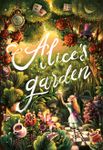
Yeah. I didn't think going into this that we would come up with that many different examples of different ways to teach and learn and apply that knowledge to teaching games. The only thing at this point that I know for certain is we probably haven't even scratched the surface. So, which makes me wonder you there watching this video by your mobile device and or keyboard and mouse, how do you like to best learn and teach board games? Is it one of the methods that has already been described in this episode or is there yet different ways of learning and teaching games to explore and discover? Let us know either down in the comments or by taping your answer to a Milky Way candy bar and mailing it to the address, which probably I will forget to put in the description below. Moon on Moon. Fantastic. Well, my game night pick to share is Alice's Garden. This is great because I'm not familiar with this game. So, right now you're going to have to teach it to me.
Aha. Well, luckily this is one of the reason I bring this up actually. It's one of the simplest games, easiest games to teach as well as set up that I've come across. Okay. It's a very straightforward polyomino game, you know, where you're just trying to fill in your own little tableau with different scoring. Person whose turn it is picks a bag, pulls out number of pieces, equal number of players, picks one, and that just keeps going around until somebody fills up their board. Now, are there certain rules for the ways that the polyominos can fit together on your board? Nope. You're allowed to put them wherever you want. They don't have to attach. They can they can be separate a spot. But the icons on them all have different scoring mechanisms. So, depending on where they are in relation to each other, you want to cluster your roses. You want your trees to be far apart. You want your uh chest pieces to be on a particular spaces. So, it's just it's it's great.
It's all right there on the board. Um you almost don't need a rule book uh for this game, especially not to teach it. Oh, that's um you know, and you can have people playing it in three minutes. So, it's it's a wonderful in that regard and it's just a lot of fun. It's a great little like puzzle challenge. Um you know, much like Isisle of Cats or any one of the Polyomino games where you're just trying to, you know, how do you do this most efficiently and effectively, but it plays in about 20 minutes. If you have come across this little gem of a find, let us know down in the comments. And as you're typing, take your time, flesh out your response. take so much time that you'll still be around when our next video comes and airs in a couple of days. Until that next video lands on the internet, thanks for joining us for this one and we will talk to you again real soon. The Milky Way candy bars are wearing off. I can Oh, yeah. Right.