









































The Isle of Cats Deep Dive
What the Community Thinks About The Isle of Cats
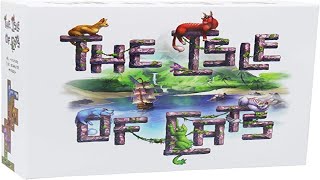
The Isle of Cats, designed by Frank West and published by The City of Games in 2019, is one of the better-regarded polyomino games among reviewers who cover the hobby. The reviewers agree on its core appeal: a light, cat-filled puzzle that hides a deeper scoring engine. 3 Minute Board Games calls the game "both a silly idea and a wonderful game," and argues that it appeals to players of different ages and experience levels. The same reviewer places its real strength in the lesson system, which changes how each player scores as the game unfolds.
Reviewers also agree that the game rewards the people who enjoy watching a board fill up. Adam in Wales - Board Game Design was surprised by how much the group enjoyed it, and the game became a regular two-player table during a difficult stretch of time. That reviewer also praises the family mode and the artwork, which they describe as stunning.
Not every voice is uncritical. All You Can Board liked the game when it first arrived but cooled on it over time, and the channel is now selling its copy. Getting Games is also worth reading with context: the reviewer disclosed that they were paid for a sponsored tutorial of The Isle of Cats and that they are friends with the designer, Frank West. That relationship does not invalidate their praise, but it is a reason to weigh their enthusiasm alongside the more independent voices in this set. The consensus across the channels is that the game is charming and clever, with a few real frustrations around luck and its opening rounds.
Core Mechanics That Define The Isle of Cats
Polyomino Tile Placement
The physical heart of The Isle of Cats is fitting cat tiles onto a boat. Each cat is a unique tile that belongs to a family, and players must arrange their tiles on a board shaped like a boat so that the families stay together and the pieces fit efficiently. CA Couple places the game toward the heavier end of the polyomino category they usually play, and All You Can Board points out that the boat is an oval divided into rooms, which gives the placement puzzle its own shape. The reviewers stress that this is not a casual tiling game. Placement choices made early can shape the rest of the match, and 3 Minute Board Games notes that the game is not the easiest to recover from after poor placements early on.
Card Drafting Into Paid Objectives
The second mechanic is a card draft that feeds the placement puzzle. Getting Games describes the flow: players receive a large hand, draft two cards, keep two, and pass the rest, repeating until they hold a full hand of cards. Those cards then provide objectives and actions, such as recruiting new cats. Adam in Wales - Board Game Design describes the same loop in more detail. Each turn, players gain fish, draft a handful of cards, and then pay fish to purchase the ones they want. Some cards resolve immediately, while others become end-game scoring objectives. Reviewers often compare this to the drafting in Bunny Kingdom, which Getting Games also praises, though it adds that the lessons in The Isle of Cats are where the two games diverge.
The Isle of Cats Experience
Whimsical Charm
Reviewers describe The Isle of Cats as a playful, fantastical experience. The premise is a rescue mission to an island that is about to be destroyed by the evil Lord Vesh, and players are trying to save as many wild cats as they can before he arrives. 3 Minute Board Games sums up the tone with a little humour, noting the cats, the baskets, and the threat of a pirate who needs to be beaten in five rounds. Adam in Wales - Board Game Design adds that the game has a nice bit of story and a sense of getting to know the characters, which gives the cat-collecting a warmer emotional weight than the mechanics alone would suggest.
Solitary Puzzle Satisfaction
The second feeling reviewers describe is the quiet absorption of solving a personal puzzle. Players are mostly focused on their own boats, and 3 Minute Board Games describes the game as creating an emergent puzzle that changes shape with each choice of cards, placements, and lessons. The same reviewer admits that the boat is so satisfying to watch fill up that viewers may end up watching it instead of listening to the explanation. Where There's a Wheels, There's a Play reinforces this sense with its description of the solo mode, which pits the player against a set of colour cards in a way that feels like a dedicated puzzle run.
What Makes The Isle of Cats Stand Out
The Lesson System
The most consistently praised feature is the lesson system. Each lesson a player collects gives them another private way to score, and the lessons change how the game feels over time. 3 Minute Board Games calls the metagame around lessons "really captivating and surprisingly deep," and it argues that this is what keeps the game interesting after the first few plays. Reviewers also note that the learning curve is steep at first, because the objectives evolve in ways that new players may not grasp until they have played a few times.
Art and Family Play
The second standout is the presentation. Adam in Wales - Board Game Design calls the artwork stunning and says it is beautifully illustrated, and CA Couple points to the giant box full of cats as a large part of the appeal. The family mode is also repeatedly praised. Adam in Wales - Board Game Design describes it as a really fun, simple version that works well with a mixed group, and that reviewer argues that this flexibility lets the game reach beyond the usual audience for cat-themed titles.
Potential Drawbacks
Automatic Income and Drafting Friction
The most pointed criticism comes from All You Can Board, which argues that the automatic income is hard to justify. Every player gains 20 fish at the start of each round, and the reviewer found that thematically odd. The same channel also found the drafting step less useful than it should be, which is a major reason the reviewer is moving on from the game. Players who like the drafting may not feel this problem, but the criticism points to a design question about how much of the early game is genuinely meaningful.
Luck in the Lesson Cards
The second concern is randomness. All You Can Board notes that the lesson cards can produce luck-based wins, because a player who draws weak public or private objectives early may be at a serious disadvantage that is hard to recover from. 3 Minute Board Games makes a related point about the game being difficult to recover from after early placement mistakes. Reviewers who enjoy the strategic side of the game may accept this, but the balance between luck and skill is a fair point of debate.
If You Enjoy The Isle of Cats
Players who enjoy The Isle of Cats's lesson-driven scoring will find a similar satisfaction in Tiny Towns, which 3 Minute Board Games recommends as another evolving game about filling a limited space. Players who appreciate the polyomino placement and the feeling of building a neat, efficient board will also enjoy King Domino, which 3 Minute Board Games describes as a simpler option for the same kind of tile-based puzzle.
Players who enjoy the drafting and the lesson-driven objectives will find a comparable experience in Bunny Kingdom, which Getting Games describes as sharing a similar drafting structure and lesson design, though with its own differences. For players who like the flip-and-write version of the same world, All You Can Board points to Isle of Cats: Explore and Draw as the lighter option that keeps the boat-scoring idea and removes some of the friction in the main game.
What Reviewers Are Saying
"Isle of Cats is both a silly idea and a wonderful game and will appeal to a wide variety of players of different ages and experience. Superficially it's a fun cat placement game, but the metagame around lessons and how they evolve your scoring is really captivating and surprisingly deep."
— 3 Minute Board Games
"I mean this came as a bit of a surprise to me really how much we enjoyed this game. This game pretty much got us through lockdown."
— Adam in Wales - Board Game Design
"This is a really cool polyamino style game that also has a great drafting style element, where um in the game you're going to be playing through a few rounds, and you are going to get a big hand of cards. You're going to draft two of them, keeping two, you're going to pass the rest, then you'll get the ones passed over to you, you'll keep two, and you'll keep doing that until you have a hand of cards, and then you can use those cards to do things like um get new cats."
— Getting Games