SPIEL 2026 | Kennerspiel+ Neuheiten (Zwischen Kenner und Experte) im Überblick



Transcript
So, hello and a warm welcome. Sound and picture are running. Great that you're tuning in. Yeah. This category is hard to name. Between intermediate and expert. For me, the standard intermediate game is really something like Forest Shuffle or Wingspan, and the intermediate range is just incredibly diverse and versatile, and there are games at the very top limit where expert players say, "No, that's actually still more of an intermediate game, right?" Let's not take it too seriously here, in the expert range it's no "heavy hero," but the intermediate player who perhaps has only played Forest Shuffle so far says, "Help!" So this is about games that are a bit in between. I will also make an extra video on intermediate games that are more, let's say, at the Forest Shuffle level, so let's say under 3.0 on the BGG weight rating, and sometimes even significantly lower, but still above family games. There, too, many players often have a wrong perspective of what a family game is; namely, much of what is assessed as a family game is actually already more of an intermediate game, but let's not argue about that here. It should, pardon me, simply be about the games that are, yeah, a bit in between, and I can tell you that these are definitely, in this video, the games that are on my watchlist. I did the expert video last time; there are also a few games there that interest me, but I think I would like to play every single game here on this watchlist. I've requested some of them as review copies for inspection.
I'm getting almost all of them, um, and I can show them all to you after the Spiel fair, and then I'll send them back and so on. I at least want to take a look at all of them, and one I'm not getting, so I hope that someone who is at the fair will buy it. Um, but otherwise I would probably just take it with me to Essen myself. And John just wrote as well, right, thanks for the impressions. It also helps one to, uh, assess if a game fits and that you can avoid bad purchases. I'm glad if that definitely helps you out. That's also quite a good point, right? In case you are not yet—you see it's Patreon October right now—in case you aren't a supporter yet and maybe have already added three games to your list because of my videos, but also crossed off five others because you think, "Nah, the hype isn't that real for me," and thereby maybe saved 50, 100, or 200 euros. you don't spend on these games. Just consider whether you want to say: "Hey, why don't I become a Patreon for 2 or 5 € a month and uh, thereby continue to support the work. I also had, well, a new Patreon write to me that she found the videos super helpful , really great, and that she would definitely like to have them again next year, which is one of the reasons she became a Patreon. And I think that's nice, it makes me happy, and it definitely helps to do this work, because Patreon is a huge pillar that this channel rests upon. There’s a reason I promote it so much. It is very important, and since Patreon fluctuates —people join, people leave—you just have to stay on the ball and keep reminding people that this is an important support platform. But that should be enough about Patreon for today. We’ll just jump right in, starting with Opera Magna. I'm super curious about that one, and whether it will actually be at the Spiel fair. I
don't think I know a single demo that will be at Spiel, because for all my preparation, I said:" It's fine that there are many games as demos, but people are primarily interested in games they can buy, that they can take home with them. "Whenever I went through the preview list on BoardGameGeek, I hid the demos, usually hid the expansions too, and only looked at the games that will really be there. And Opera Magna was listed among the games that are supposed to be there. The crowdfunding for that only ended a few days ago. No idea how they manage to have it in Essen in just one week. As I said, it’s always possible— especially with this watchlist here— that much of it is just knowledge I've read up on. That means I’m sharing my impressions of the games, how I assess them, and that doesn't have to be right . In practice, it can feel completely different and have a different impact, and it’s also possible that a game might not be there after all, because that’s the nature of Essen: it’s stuck in customs, or even though it was planned to be there, it's just arriving at the harbor, reaching the fair on Monday, like the Monday after next, which doesn't help the publishers at all. I'm curious if Opera Magna is definitely there, and yeah, what makes this game interesting to me? What's especially interesting—it looks a bit obscure here, but you can see various market boards here, right? It's like The Red Cathedral, you know? We're building this structure, this—I'm not sure if it's a sanctuary. I think in Milan or somewhere, a church or cathedral, and we can deliver goods there and build on it. But we each also have our own workshop here, which you
can only see on the side, that I can expand in different ways, where I can build in upgrades. What's really exciting to me, and perhaps even more exciting than everything else, is the market mechanic, because up here we have these three markets and, well, I can't move them like that. At the top, it essentially shows what goes in, and at the bottom, what comes out. That means I have to put this and that resource in and then get this and that resource out, right? Or here as well. There, I have to put in this and that resource and get this and that resource out. I can always shift it one position on my turn when it's my turn. That means I can change the input, I can change the output, to make it advantageous for myself, and I have a dynamic market that works differently than the markets one usually knows, right? I have fish, I sell fish, oh, the fish gets cheaper; someone buys fish, the fish gets more expensive— that's how most market mechanics work.
But here we have a different type of market for exchanging resources with each other, and I find that to be a really exciting element. My preparation for the game was a while ago, so, well, there were like 3, 4, or 500 games, and the details get lost quickly. For that, I really have to play it, but I remember that the mechanic definitely stuck with me. Plus, as I said, we have our own workshops that we can expand, where we can unlock all sorts of special things. So, to me, it sounds kind of like The Red Cathedral, but cool. It will probably feel quite different, but also, you know, resources: exchanging resources, building a little engine, fulfilling contracts. It's at a nice intermediate level: it lasts an hour, yes, 45 to 60 minutes. I'm really looking forward to that. I definitely really want to play that sometime. Just like everyone is talking about—what's it called— Timespan. I took a look at the rules for that. I watched some videos about it. I think I have to play it to understand all the hype. To me, Architects of Civilizations sounds 100 times cooler. So much more interesting.
I definitely want to play that. And that's from Labot J, or however you actually pronounce it. They just say, we do it in France, and if there are going to be games elsewhere, we have partners for that, and they handle it, and that's where you get your review copies, which is why they don't really give any out. Um, I think he wrote something like, we'll stop by, we can take a look, but no, maybe it's not available yet, but that's not a big deal. I have to check how much it costs . I would definitely get that for myself too. Not definitely, I suppose, but that would be a game I am very curious about. A civ game where we also , unlike—I think in Timest we don't even have a shared map. Here we have a shared map again, and you can see it up here. The actual gameplay is great, right? Simply, per turn, just play two cards, and these cards, you can see it, have quite a lot of stuff on them, right? Get three victory points per temple in your civilization. Very nice here, explained both with a symbol and with text. That's already a good thing.
At the same time, you can also use this card to, you know, either discard it for the effect or use it to grow your civilization. Because we have this player board where all these different buildings—you can see that down on the left—are located, and it works like this: the more buildings I unlock, the better the actions and the functions are that these buildings have , and the abilities they give me. And we then build them here on the common game board, where it's also important: where do we place the buildings? We also want to build roads so that we can trade with other people using the trade action. But we can also take military actions, where I think we can—I don't know—take over buildings from other players. But somehow, well, military isn't quite as bad in this game, but it's definitely a factor. And we just have a common map where we influence each other, like just mentioned in the" Gezockt "segment earlier: I've always liked games with a shared map a lot. I like that, and I'm curious to see how it is here. I like civ games, even if they have a shared map, but I prefer it when we influence each other in ways other than," Oh, you're coming with your units, now I have to defend myself and focus on military, even though I don't really want to. "I always find military in such games to be the least exciting component, though it is good to have some kind of threat present, and I’m curious how that’s handled here. But this interplay of having a shared map and a board that looks a bit like a Terra Mystica board where we can build structures, all of which have different functions, right? With some things, we can develop our situation in one direction, then in another—we probably have to find a good mix—and then we can play cards that also have effects, likely permanent effects, passive effects, or scoring effects. So
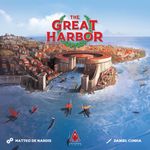
much stuff that we know, but as I said, everything I’ve seen of Timespan so far—and maybe it will turn out to be great—but if I compare a known civ game like Timespan and Near side by side, I’d know immediately where I’d sit down first. I would try the other one later and see what appeals to me. But this one has so much that triggers me; maybe I’ll buy it, or maybe someone will bring it to the con, then I can try it out there. If I don’t catch it at the Spiel fair, I’ll definitely take a look at it somehow. It’s always the same story: it makes almost no sense for me to buy a lot of games that only interest me a little bit, because I simply have too many games at home that want to be played. Ah, that’s a bit of a shame, but I’ll sneak around on Sunday and see, maybe someone will say," We’re letting this go for cheap, "if it hasn't already been promised to someone else. I am looking forward to that. I am genuinely curious about that. If you also say you like civ games—and it doesn't always have to be" Through the Ages, "like that four-hour beast, but rather something like this, which is done in 60 to 120 minutes—then this is definitely something you can check out if civ games are your thing. Then" The Great Harbor, "I also find that— is it that one? Yes, I also find that super exciting, because two years ago there was" Minus "—it was released by Spielofensiv—a dice drafting game where we have dice up here and we can place them, but a high die means good because I get a lot, but a high die is also bad because I'm late in the turn
order. Low dice get placed somewhere first, and exactly this mechanic, which I already liked in" Minus, "but everything else in" Minus "I found dull , didn't grab me, didn't grab Flo. I think Flo also played it twice and found it dull both times. Everyone else at the event thought it was great and I think it did quite well, but it just didn't grab me at all, and here we have the exact same mechanic where we also draft these dice. We can then place these dice here in the harbor on a matching colored space, depending on what the number is on it. We can then, you know, get resources accordingly, do some other actions, get some ships, and trade with them somehow. So here, it's also this little mechanism that entices me, and I'm curious to see how it's implemented here, whether it's a bit more light and breezy. Also 45 to 120 minutes here, which means with three players it's probably done in an hour and a half. I'm super stoked for it. I definitely want to play that very, very much. Akona Games, I think they already promised me that I can show the game later. I'll write to them later. It is definitely a game in the advanced connoisseur range that I would really, really like to try out. Then Ashes and Ambers alone. I think the cover is awesome. Looks super cool, and the game , well, watch it, there's a trailer for it. After that, you have this 2-minute teaser trailer here. The guy narrating it sounds like he's 1,000 years old.
Not with a broken voice, just with a voice full of deep wisdom and dignity, and you'd think he has a white beard down to his knees. And I think the game is completely different from the impression you get from the video, but I saw that ages ago. There's another one, there's an older one, that one is a month old. I saw this some time ago, this Aserson Amber the Epic Civilization Card Game. I believe it’s this trailer. So, as soon as you see a trailer where you say," Wow, that voice is intense, "then it's the right one. And it's also a civ game where we build cities. Here you can see all the cards laid out, and I think the illustration is amazing. It just has these KDM vibes, even if it's set in a different world, and, well, yeah, we had that topic, right? Board games as works of art here, for sure. I hope he painted it himself; at least that's what he wrote. Um, it's just really, really, really, really coolly illustrated, and here, right? That is a key point of the game: the catastrophes . Because we are building these cities, and I'm showing a bit of the artwork here because I think it's truly stunning. Even if the game is garbage.
I think I would get it just based on the artwork alone. That child in the top left, looking at whatever it is in amazement, or here. Just awesome. I find the artwork really amazing, and the game itself, right? More here; I'm really becoming a little fanboy of the spray paint too. That looks cool. So, Ra Exhaust is House of Slide. We build cities, as you can see here, and these cities are essentially stacks of cards, and it’s always the case that at the start of a round you know—for whatever reason, which is probably explained thematically—which catastrophe will strike at the end of this epoch or age. And then you have to think, because these catastrophes always remove certain cards from our civilization tower, weakening it, because we can always activate the top card once per round, and other cards we’ve played underneath give us symbols that make us stronger or better . And we have to consider, we can also —I find this thematically really neat —because we build a city as a stack of cards, a row of cards, and when we build a new city, we don't just play a new card somewhere. No, just like in real life, people migrate. People start a new city somewhere. We take a card out of this stack, as I read it, and use it to found a new city. You have new symbols again, new traits, and the disasters refer to specific cards, specific card types, certain effects that somehow take the card and, I think , an adjacent card out. That means you also have to think: do I build up my civilization in a way that it gets more and more powerful, has more symbols,
has more traits, or should I rather protect the things that are there from the current disaster, from upcoming disasters, and how do all these things interact? I have no idea what else you do there. I watched a video where it was explained for about 20 minutes. I think that went by too quickly. I didn't understand much of it, but I would definitely pick it out. I'm also going to track the game, I'll definitely take it with me. I'll also say hello to the author and have a quick chat with them. Um, also, I'll definitely bring up the artwork and say it's amazing. That's definitely cool. I mean, every single card I've seen so far, I think, as a colorblind person. You guys, as people who see color, probably see it a bit differently and perceive it a bit differently, but I think the thing is really mega pretty. It has a civ theme, city building, we have cards, we have card effects. These are all things that 100%trigger me and draw me in when gaming. That's why this has definitely landed on my watchlist.
And no illusions: I won't introduce all the hobbyist games at this high level here, but I still took a look at this list, the board gaming list, looked at which games fit in, and I think out of the first 200, 300, 400, these are all the ones that caught my eye. And then there might be others that I personally didn't find that interesting. It's also always nice if you can still discover a few things for yourselves. Rivalcies also sounds mega. I mean, when you hear what's all in there, it sounds at first like it would be a super complex thing, but if you look at the photos, there's not much more material, so it's actually very manageable. And it's just a game that has a ton of interaction again, because we have, let me just check my cheat sheet. That is an Amber.
Exactly, we are building—well, it’s not just that. It seems like it at first: we have a shipping line, we do some pickup and deliver, build some routes, but no, it's actually like this . Imagine it like, what was it called by MacGerz, Imperial 2030, where we also control states, but we control a state when we have invested the most in it, and if someone else invests more in the state I currently control, it becomes their state and then they can suddenly do things with it. And here it is just the same, in that we don't build these routes ourselves; the shipping companies build the routes, and you can effectively build routes that impact those companies, which are then paid for from the company treasury . So, it’s a game where I have my own money, where I have a company treasury that I have to manage, and I have to bring both into alignment. I can build routes, but it might happen that I built the route from here to there, while someone else built the route from there to there and there to there, and then they all have to be used. This also increases the value of the respective companies, but it's not your company, not my company. We all hold shares in them, and all these synergies there, that’s just how it is, right?
Container prices also change: frequently delivered goods then become more expensive, rare ones somehow become cheaper, right? Or the other way around: frequently delivered goods become cheaper, rare ones become more expensive, stock values change, demand in the cities also changes, which means deliveries can end up going elsewhere, right? Our paths cross, we fight for company control, the deliveries also always impact the common market, and we have a timeline, a sort of time mechanic; actions cost time, and whoever moves too far ahead is simply finished with their turn a bit earlier. And these are all such elements; every single small element of this sounds like a mechanic that personally turns me on. This shared game board turns me on. These stock shares, I mean 18xx with companies super light, well it probably has nothing to do with that, but uh, I will still dive into the world of 18xx games, sometime, when I'm done with all the Age of Steam maps, so in about 5 to 10 years, and uh then, when you look at it, you think it's half a children's game because there are only these colored markers lying around and once in a while a ship floating around, but it seems like it could be something, like it's not rules-heavy even though it has many elements and like it's super interactive. It can be really great, it can be super flat, be done after one playthrough, I'll try it out, but uh it also sounds like something Dr. Reiner Knizia could come up with if he wanted to make it a bit more complicated than usual. I will definitely take a look at it, I got an email today that I can take a copy of it. I can show that to
you then. I find that, of course, super exciting. I'm super grateful for that, not just for all the support from the community, but also that publishers and authors participate and give me the opportunity by providing these games to me. Often only on loan. I then mostly send them back, because I don't need them all here. Um, I hope we can change that a bit soon so that you can also benefit from it a bit, but uh I still have to wait a little. But uh yes, cool that it's also exciting for those people, because I always say when I make a request like this, hey, this and that interests me, I would be interested. Uh and if it is interesting for you that the game is shown on my channel, then we can gladly talk. If you say, no, it's not, then I won't just beg for a game I want to have. I don't actually see the channel like that, rather I want to show things that interest you. I also want, of course, for the publishers to say, okay, it's exciting for us to show the game on your channel, and thank God that usually works out quite well, and if not, then so be it. Um, speaking of Green Go, that worked out very well too . It was still standing here. What do I have there? I haven't played that yet either. It's relatively high up on my agenda. Unless I get sick now, and really, if I have to, I’d prefer to be sick tomorrow. I had a bad day. I need to catch up on some sleep and such , and I hope that if I do get a cold or whatever, it happens before the Spiel, so I’m fit again by the Wednesday of the show, because I definitely don't want to get sick during the Spiel.
After that, it doesn't matter. Later I have 10 people there who will entertain you, but let's see. But if I stay healthy and we can make use of the weekend and the Spiel, then Green Goat will definitely hit the table, because Green Goat is another game that doesn't have a great photo yet. But it is once again an interactive game and it has a playing time of 40 to 80 minutes. There are different things listed on different sites. I think the box says, or some publisher homepages say, I believe, a longer playtime. Let's see where it eventually falls into place. And the game is just like, can you see it here? Let me take a look. No, there is actually an action wheel where we take our actions. We can take workers from neighboring depots, and the color of the workers we use for the action determines which company the action affects. And we can also buy shares in the companies here. We can build factories, we can build our own trading posts, and it all has an effect on one another. Which color is used can actually help a fellow player, because they might have the most shares in that company. You can use it to, pardon, you can use it to, um, yeah, action, you can fulfill, import orders, fulfill orders, you can expand factories, you can buy stocks, you can open trading posts. Those bring in money again when other players take tea in the city, and they have to take the tea to import or export it somehow. You can also deliver tea to the Crown, and you aren't just rattling through your production chain, but worker colors tie actions to
companies, and a turn—so your own turn, as well as the turns of others— can each change stock values, can ensure dividends are paid out, or that you earn money with trading posts. And you are competing for actions, for orders, for majorities in the companies . Sounds like it's also one of those" I collect resources, I fulfill orders, I buy shares "games. But play it on a nicely interwoven level with good interaction, where I don’t just have my own personal puzzle, but rather what some of the people here in the chat right now are saying. They say that’s why I like these Heavy games, because they have great interaction, because you play a lot with each other and trade a lot. Here it’s broken down, not to that really high level, but to something where you’re finished in an hour to an hour and a half, and we’ve had things like this on a much lower level too. But it doesn't always have to be this intense euro-crusher, unless you have the group to play it over and over, but I personally like games where we really play together and not just— I mean, there are people who say:" I don't like cooperative games. "This" togetherness, "it's not for them. I want to play against each other nicely.
But this" against each other "consists of very little in many games. It’s just that I take my turn and do something on my board. You do your own thing, we might take a space from each other, and at the end I say I have 100 points, the other person has 103 points . Yay. We were sitting at the same table, we used the same components, but we didn't really play with each other at all. That is often quite different with cooperative games. There, we really play with each other. And with these more interactive Eurogames like this one here, or the Rival Seas one from before, or things like Pax Pamir, John Company, Age of Steam and stuff, the bigger things, you really play interactively with each other. And many of these games that I’ve picked out —not all, but many—also do this on a level that is accessible to, let’s say, mere mortals. And I think that’s a good story, because there’s a reason why Settlers is one of the most popular games ever: because we have interaction there, because we play with each other, because we trade, because we influence each other, because we play on one board. And I think that’s something that was simply underestimated for a long time. And even if they are all good, few will have such an impact as Settlers, but that’s what I personally really like in games. Other people have a completely different taste and say no, I want my own thing here and my own personal board. That’s also something where I say with 60 Below. It's cool that I have my card game bubble where no one can interfere, but it's great that the gaming world is so versatile.
So, then the advanced hobbyist games that I've already had on the table. There are a few of those too, but this time I think there are even more of the others, namely Tinktura, a game where we run a pharmacy and have to treat our patients. For that we have—I think I already mentioned this in the last" played "—this board where we can collect herbs at the bottom. Above that , in the middle, we can get various items, further our education, get journeymen, and at the top, we can brew tea to change the player order and get patients. And the patients have specific ailments; we need specific remedies for them and specific methods for how we produce these remedies. We have to further our education on our personal player board so we can actually manage it and not have to say, " I can't treat that now, sorry. "It exceeds my capabilities, and these are partly, well, just like players, there are different types. One might say," Hey, I've got something, get rid of it, no rush, I have enough other things to do, but it would be good if it were gone by tomorrow. "Someone else says," Listen here, buddy, I have things to do today, take care of it now, I have to be back in the field in three hours. " So hurry up, you get more points the faster you treat the whole thing, and those are also the number markers you see down here on the board in blue and up here in yellow, right? That's when the person arrives, and you have a maximum of 24 hours to provide for them . You have to get the herbs in that time and maybe further develop your skills, right? They are also tiered by levels, they become increasingly demanding. And what's exciting is: this action selection mechanism is this clock here. The colors of these markers
basically match the colors of the areas , and I can then program my action by placing my clock markers on this clock. And then we all simultaneously process the positions: 8 o'clock, then 9 o'clock, then 10 o'clock, then 11 o'clock and so on. In this regard, it's like this: the earlier I go there, the fewer herbs I get, but I get the specific herbs I want. do I go very late, maybe at or after 4 PM, and get whatever is left, but then it might already be pretty picked over, right? Or here with the patients: the selection might just be a bit smaller if I go there later. When I do training here, it usually costs me two action slots, where I can't do other things, but in return I push my skills up here. That is, of course, also a scoring track at the end, a bit like Knizia, and it feels very thematic. This, this, it’s super fun to plan: when do I do what, how, when, where? What might the other players be doing? Where do I need to pay a bit of attention now, as there is also another interaction, of course, the one I was just talking about, a somewhat indirect interaction? But I am interested in what the other players are doing, what they want, what they have, what they can do, and what they need. I really like that about this game and it just feels very thematic.
Then uh, Quebec, and my memory of that is really fuzzy. We had that on the table one more time at Vincence, I believe, after we played the AX campaign. There, you read that right: 2011, it’s a bit older. It just came back on the market this summer in a new , updated, prettier version; you can buy it at Spielworxx. And so, I think that Spielworxx will be well represented in my list this year because I don't think I'll be including MLY House again, but we'll see. There are also a few other special titles coming soon. Maybe Greenville will hit the table toward the weekend. Maybe we'll manage to play Stellar Renters early next week. And there are still a few things in the mix that I'm really looking forward to. There are also quite a few other titles coming after Essen, then. And as I said, Quebec is a game where we build up Quebec as a city over four generations. What's exciting here is that we have interaction on the game board. It also has super simple rules, really, right? I have a few action discs that I can place. I somehow only took photos where there were no action discs on the board, but you can see it, every uh city district here has three areas where you can place your action discs. With that, you can then trigger any actions that are adjacent to it. That allows you to build these cities here. Only certain buildings from specific eras are scored . That's why, if you want to build there, I think you're only allowed to build there anyway. The exciting part is always having a certain number of markers on a building, and it's also attractive for other players to use your buildings because they get certain
benefits. Um, or to place markers where I have majorities; when that's full, I believe it flips and then does something. And, uh, what's exciting here is this mechanism where I have to consider: do I build more on the board here? Do I put more of my discs into this cascade here? Because the thing is , at the end–there's a district that gets triggered at the end of the round, the era–and whoever has the majority there gets some kind of benefit. Probably the sector action, as I said, that was too long ago. I just know that I definitely thought the game was cool, and then from the winner, somehow half the discs or so go into the next sector , and that way you can trigger these cascade scorings. You have to consider where to jump in, where the other person might win, how many markers they move further because of it, and where I can jump in to block them, so that I somehow end up with more markers and can suddenly take over this action cascade. That was nice. Also, when you think of Spielworks, you often think of heavy expert titles first, but they sometimes have things that are really at a connoisseur level, and here we have an established weight rating of 2.8, with 2,000 ratings at 2.98. That will probably be about right, and it was also super easy—just take your turn, place your discs somewhere, do an action, upgrade, resolve this cascade at the end, that is definitely, um, good, but it is definitely a connoisseur game, or even a higher-end connoisseur game. For that, it's a bit —well, it's a connoisseur game. Here we are again in a video where you could say: Yes, actually this is only at the Mischwald level, but people who play Mischwald often run away screaming from things like this. And this is simply at
a different level, just through its design and the action options you have, even if it's not much more. But you have to meet people where they are. But I also recently, what did I play here? Um, Natera, where it also is, yeah, it's also just a follow-up game, where I thought, no way, that's already significantly more, but now definitely quickly categorized where it fits, probably, right? It's just like this here, too, right, 2.98, and this video is supposed to include games that are somewhere between 3 and 3.5, and this 100%fully meets that. True. Boardgame reached me, thank God. And if you like interactive games, if you like city-building games, if you find cascading as a mechanism interesting, then check this out. Best check out my" played "video where I talk about it, because I had just freshly played it then, because I can—my memory is really scary. With games I can remember a relatively lot, which surprises me again and again, but even there are limits, especially as of now, I think 400 games played this year, maybe even a few more, plus 500 new games that I’ve somehow already half-learned.
That, uh, yeah, I'm glad I can get that much together. Then" Prague Hidden, " which is being released in German by Brettspiellösung, the publisher of Spieledieners, who have since started their own publishing house. If we ever start one, it will definitely be the Coffee and Cake publishing house, something like that won't come out of it. Um, here you can see it on my table , actually, I photographed it nicely from above. Uh, also another game where we have many mini-games. We have a weight rating of 2.00. I would say it's even almost a bit more, but um, yeah, so it's really the case that you could say, in my opinion, it could actually be called a side expert game, also again because there's just so much going on and the rules are quite a lot. You have to work your way through that first. We had many questions in the meantime. Thank God we could ask the Dinos directly via WhatsApp when we had certain things. We even had someone in the stream during the first game who also helped manage the game in the German version. Many thanks for that again. And what do we do in the game?
First off, we have, uh, you can see it here on the board, four different workers. We have, we have we have four districts here. In the filter, we have this clockwork mechanism here where, whenever we place a worker, we move this marker forward to the space corresponding to the worker we placed. However, if it were a robot, it would simply stay put. Accordingly, we move up this track by that many steps, where we can unlock various benefits or get victory points at the end, depending on how far we've climbed. We can then use this market here, similar to Concordia. Either take the resources or retrieve the flipped-over resource tiles. Then we have a cauldron mechanism up top. There too, depending on which worker we place, we get specific resources or rumors, which is the universal currency . We can then draw corresponding parts from the bag and place them here on our board in this cabinet, always in a row, earning points and placement bonuses for doing so. Here we have a track where we can access this mill wheel to take all resources from one space, push one resource one space forward, and most importantly, use this first symbol down here with the ship. It's unfortunately hard to see, but the middle part is supposed to be a river where we can also advance, depending on which worker we use. If I'm at the very beginning and I place a golem here, I move forward to the golem space. If I then place another golem, I would only
move to that space. But if I placed a yellow worker, I would drive straight to here, because a yellow worker is depicted there, and I want to get as far as possible on the river to get some bonus tiles. And we have these mini-games here where we have a golem. Depending on which worker I place there . If I use the yellow one here, I can take three golem steps. If I could move 1, 2, 3, I could take a card, unlock a guild, move one space with the ship, and then the turn order changes again. So, it's also nicely interactive, what you do yourself. Usually always has an impact on the others 'turns. Plus, we have buildings here that we can construct. We get points for building structures. We gain influence in the neighborhood. You can tell there's a lot going on. It's definitely in the upper connoisseur level, and I'd almost say it's bordering on an expert game. Um, the buildings get crazier and crazier. You can build over buildings to gain majorities; certain districts that are particularly attractive then get scored differently. They're worth more points, but the one that was most attractive then shifts, making it less attractive, and then the area with the least going on becomes worth more points. So suddenly, everyone shifts over to that. We can build buildings, but we can also use buildings that other people have built. There's a bit of competition over that, too. That way we gain influence, and as I said, influence is important for the scoring, for points, and for various hex markets . I could go really deep into this, because I've actually played it a few times. I liked it and had fun with it.
I think for a direct comparison with Queen Alice, I would have to play them both side-by-side. Because that's something many people will probably ask . This one or Queen Alice? Queen Alice is definitely more hyped. I wouldn't put too much stock in the hype. It's good, but it's not as good as the hype suggests. There are many other games I'm presenting in this video that I personally find more interesting and exciting. Please don't be blinded by the hype lists, but get informed and just make your own decision. I've already made videos about it. I really like Queen Alice too, but saying it's the number two game of the year is definitely a stretch. And yes, as I said, all these mini-games work here. What I do always has an effect on what other people do. This building construction, this bridge building, the fact that you can suddenly walk your workers—who you placed here for an action—to other districts, not necessarily to perform actions, but to use the buildings. So there's a lot in there. If you're into games with mini-games inside, then you should definitely take a look at it. Next, we have North Green, a strategic Eurogame about grazing, forests, and shaping the landscapes of Iceland. It's also the kind of game where we have nine rounds and nine actions. At first glance, it reminds me a bit of The White Castle.
is also roughly on or maybe a bit above the complexity level of Norscreen, which Vincence and I played at two, we played two games in a row, like we should do. Um, no tablecloth on the table, I'm very sorry, that's the Terraforming Mars mat, um what we didn't find quite as cool is that we simply don't have an interesting action selection mechanism. The question is, which action do I take? Period. What does it get me? That is, for example, an advantage in The White Castle, that it's not just which action do I want to take right now, but how can I take it, which dice do I have available. Aha, I can take that one and use it to do things or take that one and trigger something else, thereby having an impact on the options other players have. So, here too, a little interaction at the action selection level ensures that a game succeeds.
Unfortunately, we don't have that here. Here, I also wrote to the author, nope, it’s supposed to be about which action is interesting and nothing else was put in there. I would have found that even cooler. That would be—it's a strength in games when they have an interesting action selection mechanism, right? I think that's true, so I actually agree with Vincence there. If Civolution had some interesting twist in this dice selection, it would be cooler than just I have a die and place it. Done, right? Even there, of course, the action I choose is decisive, there's so much in it. I don't know if it needed another mechanic, but something like that can never hurt. And fundamentally, it is actually relatively exciting, because we have here, kind of like in Glam, we build our own landscapes. A bit like in Cooper Island, we can build the landscapes upwards, then they are worth more points. We can just always build houses like this, we can build forests, and we can build fields here and, well, in some we can put sheep and horses.
always more sheep than horses, they can also continue to multiply. Um, here we can also, similar to Agricola, grow things, sow things, and harvest them again. We have cards we can play, which always have certain requirements, right ? Have a forest on level two, then you can play the card, get three food, or here I have seven food, also a good synergy here, right? At the beginning, at the end of the action, you get a second worker. That means, right, I might want to complete this first, then that, and from then on always perform this action with the book here on the board, because that's actually quite exciting, isn't it? I have workers, and these are the action spaces—the blue one is basically the main action space, and I can always take a left and a right action. That means I can take an example, let's take the forest here, on the left, where all these forest tiles are. When I go there, I perform the main action. I puzzle a forest into my landscape, which provides me with some benefits. And then I can consider: If the space is still empty, do I want to use the right function, place my worker on the right space, and thereby, I think, place another forest or upgrade a level? I don't remember exactly, it's been a while. um, plus discard a card on top to get the discard benefits of the card, or do I want to do the left action and also puzzle in a forest, but for that, also be able to sow on a farm plot, which I obviously have to have.
Plus, I am allowed to play a card, because these cards I showed, which give me some benefits and usually points—well, sometimes points—I can't just play them whenever. I have to go to the right space here, right? That's where I have spaces where I can get workforce. Workforce depends on how many buildings I have. So I want to build many buildings. I build buildings with this space here, for which I then need food again. So I have to see where I can get food from. You get that here as well for buildings. It's all a bit interconnected, isn't it? Here I can sow something to then get some resources. And all the resources, when I have them and am allowed to harvest them, I can also place them here on my action board. Here I want to then also place these on my player board. I want to place the resources here too, because if I have placed a horse here and another horse here, I immediately get one point. I get a heart marker, a heart, a heart step here on this heart track, where you also get points and other small benefits, and then I trigger these seven points here during certain scoring phases, right? Just like here, I get two food, two food, and two strength. But I need three cabbage for that. You have to manage to get three cabbage in this game first.
I'm getting too deep into the details again. I'm sorry, but I just know the game better now. Uh, at the same time, I also have this track here. Whenever I reach the top, I push it up, get more points for it, have a further way to go , and it also triggers all these effects. There is still much more. I won't go into any more detail now, but you can see that it definitely has something to offer. If you say you generally like games from Ode and you also thought, for example, something like La Granja was great, then you're at a level that I'd say is a tad lower here, but it's not trivial. We are definitely in the advanced range here. 3.0. Yes, I think it will settle around there. 3.1, 3.2, I'd probably say, right? Because you have this heart track here that you want to go up. You can get pins for yourself. You can also use these pins to get some extra things . You can expand your landscape here on several levels, simply branch out. You can fulfill these orders. You can move forward on this forest track, which I haven't even mentioned yet, and make progress there, there is just so much.
We also have the round track here, where in certain rounds we get yields and in certain rounds we can deliver here. We have to prepare for that too. It also determines the player order. So there is a lot to do. It's pretty crunchy, it's pretty good. So I liked it as well. I enjoyed playing it. I would definitely bring it to the table again if there were time, but it's already been on the table twice, and that is a lot of time on this channel because there are many more games than I can play or film videos for, and I can produce much more content than you can likely watch. That's why, yes, you also want to see new things more often, but I say I'm already looking forward to the" Eurassic "month, when we play old things again and bring them to the table for some appreciation. And yes, Northgard is definitely good, nicely interconnected. This building is fun, filling a book is fun, getting your workforce is fun, getting food is fun, completing cards is fun, advancing on these tracks is fun, choosing the right action is fun, thinking: Do I want to focus more on building structures, or on animal husbandry, or more on the forests I plant, or on landscape points , or—there is really a lot to discover here. Anyway, Rayway Boom, I’m just rambling like a waterfall.
I’m sorry. Um, let me adjust something quickly. I have to kick Eloken out for a second. Never played Age of Steam. Zap, gone. No, just kidding. We’ll change that. Definitely come to the con sometime, then we’ll get it on the table. And exactly, Rayway Boom was already there last year, 3.21, so also at a more advanced level, it will now be released by Stroman Games. And some people already missed the stream in the last video and are maybe asking themselves now, will Ben include this here? No, I won’t. It probably won’t come until 2027. Definitely not in German for the fair. The English release was last year . It won’t be appearing in any video. I know we have to, some of us, but it just won’t be there. Period. So, Rayway Boom, a game, yeah, that—me, as a big Age of Steam aficionado, naturally says, great, a railway game where we build tracks and also have pick up and deliver, I think that’s cool. So, we don’t really have that much pick up and deliver here, but we do have a lot of bidding. But it is definitely more of a Eurogame than an interactive AOS 18XX thing or something like that; we don’t have any shares here at all and we just have a game board that is also quite important. But first, we have our own player board here where we collect different resources. Wood, money, technology, and coal. We have trains that we can build.
We still need a locomotive, it’s reflecting a lot right now. You can see it here on the left by, don't know who that is, Ragner or something. No, you’d recognize Ragner. Um, so you can build locomotives in front and then build wagons behind them, and for these wagons, you need certain resources that you have, which you can convert. And we , so we have wood, and I need wood when we are in the first phase to bid on these wagons and these locomotives that are available. Whoever bids the most gets to choose things first. They will likely take the best ones, because they need the least coal, have the most deliveries, have the most slots to build things in, and have short conversion times. For that, I spend wood. Then we have money. Route cards are laid out here. With these, I can build posts here on this, or the rail map, similar to how it’s done in Age of Steam, not like in Ticket to Ride.
There are cards here that say:" Connect A to B, then you get points for that. " If you do it first, you get more points . And then I just build the station on the card, which—you can still see it a little bit here, right?—which is basically indicated there. And such a card also always generates specific track construction points. Then I can build my route, and I can also spend the corresponding resource to build more route points; but then I don't have that resource anymore. On the left , we always see what I produce at the end of the round or shortly before the end of the round, and on the right, we see the stock. You can also always convert resources into each other, I think at a 2: 1 or 3: 1 ratio. That is always very tense, and then the resource is missing in the corresponding area. You also have certain advances here, depending on how far I’ve progressed on this production track. The cooler the benefits I get: drawing another card, getting extra resources, and lots of points at the end. And as I said, that's the bidding part with wood for wagons and engines, and with the money for routes and the posts here; there are points for my next route network at the end, so I definitely want those too . Plus any benefits from building to certain stations. Then we have this tech track here, where I can spend my tech points to get tech cards—I don't have them here—that give me permanent benefits, allow for extra deliveries, or give me an immediate effect.
Different sets are laid out there, and whoever bids the most gets to pick a set first, and. Sometimes you also have to activate them with tech points and can spend additional points there to convert other resources. And then at some point—well, we have bidding here , bidding there, bidding there—then the production phase follows. And then we can basically fire up all our locomotives, build them up somehow, place markers on them, and then get the engine running, shovel in coal, and see what we get out of it, scoring lots of points that way. Hopefully. Um, it also has an interesting, well, a bidding mechanic, where we—well, we’re always bidding each other up—and then you have to...well, the first person has to give up all the resources, the second one too, the third one, well... the second half, the third one somehow, the fourth one not at all. Uh, you have to look: Where do I position myself now ? What do I get there? What do I have to spend for it? And in the end, we have cards that have different scoring.
We play four rounds and in each round we score, well, we bid on a card with any resources. We just bid each other up, and whoever bids the most in total can place their marker at the very top. And then they have here—what do we have here for trains?—on these routes you get three points each, two points, two points, one point. And it makes a difference whether I get three points each there, doing a lot, or get one point, doing very little for it. But there are, of course, other elements in the game where you can get points, and yeah, then it starts all over again. We bid on wagons, we bid on routes, we bid on technical items, we produce, we fire up our locomotives, we bid on points, and we do that four times. So, it's actually simple, you could say, but everything is, of course, nicely interconnected. The resource management is straight from hell, because you never have what you need, and you can get it, you can convert it. You might regret that later, and uh yeah, so I liked it well, but it is a game where, with such a board, with such a theme, I hope for more interaction; it doesn't have it. You can't blame the game for that, you have to know that beforehand, and the interaction is there a little bit through the bidding, but the bidding often just has personal consequences for me. We bid on these locomotive parts, I get them, then you have nothing more to do with them. We bid on these tech parts, I get them.
That has no further effect on you. I might get a slight advantage when I build somewhere or something, but the other player actually doesn't care. So, and we have this board where we do have a bit of interaction. So if you say you want a Eurogame, a train theme, but with a lot of classic Euro vibes, where you have your personal board to expand production and build a train engine, it's definitely a cool thing. I think that will do quite well with Stroman. Then we have Greenwood from Feuerland, and that is, well, I would agree that it is definitely a gamer's game, but also a sophisticated one. There are two big special features in this game. One is, well, the game is set up here, and as someone who is colorblind, I find it very colorful, you know? Thematically, it's about creatures that have been enslaved and are now forced to play around in this vacation paradise, but it’s actually bad for them; they all want to leave and we have to free them.
That means we want to ship them out in our submarine here, and then we have a little Tetris puzzle here. But essentially, we have our player board here; we can play characters onto it, cards basically, for our tableau building, and we can activate them by placing activation markers on them to perform the action. Or we place a movement marker on them, then we look at this movement track and see, aha, I’m allowed to take two steps now, and we see, okay, here the game is set up differently, this one here might be allowed to take three steps. Then you can move that many spaces accordingly on the game board here. If I have the resources, I can free this creature, get this puzzle piece and the points indicated, fit the creature onto my board, and get some benefits for it.
When I cover things up, I get benefits, if I cover certain rows, like points or progress on specific tracks, or I advance on this strength track here. This strength track unlocks new storage capacities for me and sometimes special things for my faction that only my faction can do. And the things I play here, well, they have certain abilities , some actions on them that can be pretty cool. We have here, do I have here, no, I think I already used it. Uh , we have these copy markers that you can place, well, that was just a solo game I was playing here. I can use any action on any player's board, even the ones that have already been used, once or twice per round, depending on how many of these markers I've unlocked, which gives us this interactive tableau building where you can use others' actions without taking anything away from them. That’s really exciting.
Plus, we have the fact that there are, I think, five, six—six different clans, each introducing its own mechanic. For example, here we have these potions we can brew according to specific rules, and everyone playing— well, this is the solo game, but usually, you just place markers here— but in a game with these potion masters , you get this track here (let me just move down, if I'm not in the way), and it wouldn't be in the game otherwise. If the potion masters aren't playing, those aren't there, just like these two spaces under the cards with the compass and the eagle symbol with the chain you see here. Um, depending on which faction is playing. If that faction is present and has this compass marker, then they're in play, and that mechanic exists for everyone. If not, then it doesn't. And because of that, depending on which factions are playing, the rules and the focus of the game change a bit, affecting what you do with your actions. Though mainly, you're moving around on this map, trying to free these creatures and fill these rows to earn points for them. But there are also these red cards on the left, which are threat cards that always restrict me in some way. So here, for instance, if I free a large creature, I have to discard two cards. I don’t want to do that, because I need cards quite often in the game to pay for things. That means I can protect myself against them at the start of the round with a danger marker. Well, like here for example: use a spy, lose two points. I’ve prepared for that, so if I do it, I don't have to pay that cost, but I get hit by the other thing instead. Um, I can also place this marker on another space at the start of the round here at one, and then I can use all the free
actions above. I can leave this space here with the danger marker free and then I can place one, or I click on it, and then I can't fend off any danger, or none for these cards. But I can then do all the other actions, like playing another companion, or I don't know what was under here, or discarding another card here to move one step forward on this track. Because with this track I can then remove markers from already used creatures again, they can, right, the hiking markers go under there, or I can use spells. Spells are always laid out up here, depending on which factions are playing. So you can see, I could go on and on and tell you more, but there’s a lot going on, right? And there again, once you’ve played it and have it well explained, you think to yourself, it’s not that wild after all. You’re still left pondering, though, right? Just because you have a lot of cards and see during the game which cards to play. Do I use the card's action? If I use the card's action, I can no longer go hiking with it. If I go hiking with it, I can no longer use its action. Does hiking even do anything for me? Also, fellow players are annoying, because they might free the creatures you wanted to free yourself, right? Do I move forward on the track below, how do I push my submarine? How do I advance on the strength track? Which resources do I get? Which cards do I spend to perform certain actions? So there is definitely a lot to do there. And that, right?
Here we have fantastic creatures that we need to rescue. That means if you have watched until here, feel free to leave a unicorn emoji in the comments so I can see you stayed tuned until this point. Also, if you do it in the chat, that’s nice too, but I’d prefer it in the comments. And yes, those were the advanced, sophisticated connoisseur games. I’ve already made a video about expert games. I’ll check quickly. I held a vote with my Patreons and asked, what would you like to see? Next, and now I’ve already made one of the two prepared videos. That means I’ll be overriding the poll a bit because I’m just doing what has already been prepared, but I don't see it here at all. Alright, I think last time it was the connoisseur games, the standard connoisseur games, and I’ll definitely be doing those as well. I have a nice list for that, too, containing some really great stuff that’s at the, well, at the standard connoisseur level and works well. I’m looking forward to that. And right here , uh, what people want to see next are connoisseur games and my personal anticipation. I will do both for you.
Next up, for now, are cooperative games . That means there will also be a video on that. And if you’re saying, wow, I’d really love to see family games, party games, mystery games, trick-taking games, expansions, or something else entirely, check out Patreon. You can still vote there, and it’s so close for the following spots that every vote makes a difference. And for the games I’ll show you next, I also asked my patrons what they wanted to see from the things here. More Dorfromantik wasn't requested that much . We will still play a bit more Dorfromantik. Groll will hit the table again, but that’s already been there. We haven’t played Rooms and Roomies live yet. After that, people definitely wanted to see Green Goat. They would really like to see Bean to Bar, and they definitely want to see Diables. I think most people would like to see Ginville. You will definitely see that here as soon as it’s back and I have a group for it. But I’ll see, either I’ll head to bed soon and get some sleep, or I’ll bring a game of Diables to the table and learn it. And yes, please feel free to write in the comments what you’d like to watch, what your personal connoisseur or advanced connoisseur highlights are. If you say you have a game on your radar where you think, Ben, you definitely need to check that out. That could be exciting for you or for us. Feel free to write that in the comments as well.
I’ll research it immediately and see if I maybe already have it on my list or if I want to check it out or not. And yes, then I’d like to say thanks to everyone who, uh, watched. Feel free to leave an emoji in the comments, subscribe to the channel if you haven't yet, support via Patreon if you’d like, or use the Spieloffensive partner link you can find in the info box, and that’s it from me. Maybe I’ll be back for a stream to learn, which will then disappear. See you tomorrow with a new stream. You'll have to wait and see what I have in store for you then. Take care. See you soon and bye. Bye.