Top 10 Games with Multiple Cards per Face
Games in This Video
7 games are featured in this video — they unlock as you watch.




Transcript
Hey, I'm Jamie from Stillmmyard Games and today I'm going to talk about a very niche game design topic that has fascinated me recently and that is games that feature cards with multiple cards on the same face.
Um, let me just start off with an example of this so it makes more sense. In the game Forest Shuffle, which I'll show on my screen here. In the game forest shuffle, many of the cards in the game have two cards on the same face. So if I want to play this card right here, I can play it either for the bird or I can play it for the plant. I'm playing the card and I'm getting I'm gaining one of those benefits in this case on an ongoing basis. Um that is a little bit of a spoiler for later in this video, but I think that example is important to denote here. Notably, this is kind of a subtopic within multifunctional cards or games or cards with uh multi- multi-purpose cards, cards that you can play for multiple different reasons, but it's a specific subset of that category because oftentimes in those games, you're playing those cards for completely different reasons, completely different ways. I'm looking for games that have somehow packed multiple cards into the same card face. Also, I have a whole other video about games that have cards that use both sides of the cards.
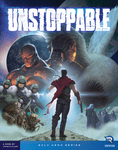
That is another way to get multiple uses out of a single card. Um, I think many buttonshy games do this as well as other examples in that video. That is also something that I will be talking about today. I'm talking specifically about on the the standard front face of the card that there are multiple cards built into that face that you can play for the same reason. You're playing it for the same reason. So, let's jump in and talk about this. I asked our panelist about this topic and got a few different answers. One of them was from Aaron, our solo gamer panelist, who talked about the game Unstoppable, which I haven't played, but does look like a fascinating game. Aaron says, "And this literal deck builder by John Declair, you are fighting to protect the world from an evil threat. Your deck is not only uh comprised of cards to help you fight these evildoers, but they are also the evildoers themselves. One side of the sleeved card is for you and the other side is the foe that you need to defeat.
You start with three cards in your hand. You then reveal the top three cards of the singular deck that will be your foes for that turn. You will then draft another card from the market by taking a a face up card and putting it into a sleeve with a with a face down enemy card and place it in your hand, which as I read this is a really neat combo. Like you're you're creating both the enemy and the card that you want to use at the same time. You just added a new power that you for you that that'll ultimately become a more powerful enemy when you discard the card. Not only that, but you can upgrade each card twice. There's a whole row of upgrade cards in the market. By upgrading your powers, you also upgrading the enemy. But be mindful with upgrading or you might find yourself under the thumb of your new evil overlord. If you defeat a foe from the threat pool, you take that card, flip it, and you have your power card back into your hand. Strategize which enemies to take to get the cards back that you need to survive the invasion. Enemies left standing at the end of the turn will attack and deal you damage. Um, so I think that's part of the core choice.
Whenever you create these cards, you're deciding which enemies to leave out there and which enemy to imp to bring into the card, but you have to deal with that enemy later, too. If your health hits zero, it's lights out for your hero. With such juicy decision-making, four heroes to choose from, and three different villains to take down, there's a lot on offer in this relatively small box. Yeah, this does sound fascinating to me. I included it lower down on the list because it isn't exactly what I'm going for, but I thought it was still worth mentioning because Unstoppable does build multiple cards into a single face of the same card. You're not quite playing those cards in the same way. Like whenever I play a card in Unstoppable, I'm not playing it for um for the the core ability or the enemy. It's uh if I don't play it, then the enemy is coming into play from what I understand. But it is very close to that. And I think it's a great example to include here because uh the cards aren't preprinted with multiple cards in the same face. You are building multiple cards as you acquire them from the market um into the same face. So I think that is a good addition from Aaron.
Thank you for including that one. And another one that is kind of honorable mention category because it doesn't quite do what I'm talking about in this video, but I thought it was a good suggestion from panelist Dylan our heavy gamer. This is Star Wars Outer Rim. Dylan says, "This might be a stretch because you don't quite play or use these as multi-use cards, but from a design perspective, the layout of the outer rim cards is a really nice way to integrate the stories, encounters, and missions into the game. This allows you to collect crew, bounties, and cargo without the need of additional cards, components, or story books. Everything is built into these cards themselves. The planet encounter cards will work in a similar way, and even the market cards have two sections. One of that's what I'm showing on the on the screen here. Um, one of which will provide instructions for moving the patrol ships around and keeping the map dynamic. So, you're putting multiple functionalities into the same card, essentially a multi-use card.
Dylan says, "I think the card design works well, works in this game exceptionally well. Everything can be tucked and everything serves to create an immersive sandbox experience. I love this game when I want to just play it play in the expanded world of Star Wars and the card layout really serves that goal." So, yeah, thank you Dylan for picking these cards from Star Wars Outer Rim. I have played Star Wars Out of Rim. I agree that the cards aren't exactly what I'm going for in this video where there's multiple cards built into one face, but there are multiple functionalities built in into the same face that help facilitate the world building, the story. I So, I think that's another worthy mention in this video. Okay, let's inch a little bit closer to this. It was actually quite difficult to come up with a top 10 for this video. This next pick is Watergate. So in Watergate again is a is a little bit of a stretch but you are playing a card on your turn and you are either playing that card for the event here or you are playing the card for um for the tugof-war side of the game. So you're doing two different things but oftentimes they overlap with each other. Sometimes the event will have to do with the tugof-war track itself. Um so the the tugof-war portion is up here or you're playing it for the event. So essentially, you have built two event two cards into the same single card face. They're just doing one is more simplified and streamlined. One is more text heavy. And honestly, I think that's a good way to go if you're trying to build multiple cards into the same face. Um rather than giving the player a ton of text to read, maybe some of the text is upside down or whatnot. You're you're giving them some text and then an
icon that's easy for them to see. Um and they're interacting with different spaces of the game, but not always. Sometimes they can interact with the same space as well. So, uh, similar to to the Star Wars example, I think this is also a good way to build a lot of theme into the game. When you have the freedom of of text, then you have a lot more freedom to build a more thematic ability into the game. Um, whereas with icons, you have a little bit less design space there. Um, so Watergate, I think, does this quite well. At number eight, at number seven, we have Dune Imperium. I put this lower on the list because it is debatable as to whether or not this actually belongs on the list for this purpose. But on your on your turn in June Imperium, you are playing a card or cards from hand. Typically, you are playing a single card from hand and then placing a worker. But there are there is a type of turn in June Imperium where you're just playing the rest of your cards left in hand to gain their bottom benefit. And that's what I'm showing here. So every card, I think space travel, this is a particularly good example here because this shows both. If I play the space travel card from hand and if I have workers to place, I would gain this gray benefit and then I can place a worker on one of the spaces that show this icon.
Or if I don't want to place a worker and I'm kind of ending, it's kind of a pass turn, but it is a real turn in the game. I can uh reveal, say this is a reveal turn. I can play all of the cards left in my hand. Say it's all these cards and I would gain the benefit at the bottom of the card. So each of these cards is essentially two cards. It just depends a little bit on when you play them. And I do really like that it gives you a choice of uh it it kind of streamlines the deck building element. So you usually in deck building games you are playing all of the cards on your hand on every turn and it can be a lot. Uh, I think games do a pretty good, this type of deck building game does a good job of streamlining that process. So, you're basically just adding up a few icons. You have a few resources to spend on one thing, a few resources to spend on another thing, and maybe there's some text on the cards to read. Duty Imperium does this differently. It says, "Okay, we don't want you to try to play every card on your turn. That's too much.
Instead, we're asking you to in general just play one card. Or if it's a reveal turn, you are just revealing these cards and using them to either contribute to combat or to contribute to the cards that you're going to acquire on that turn. So, I I really like this streamlined system. One card or just a few basic icons to accumulate at the bottom. Um, it's almost like the reveal turn is more similar to a standard deck building turn than the other than the main turns that you're the more meaty worker placement turns that you're taking in Dune Imperium. So that is Dune Imperium. Another way to build two cards into a single face of the card coming in at number seven. At number six is a game that I haven't played, but I thought it was worth mentioning here. This is Witchcraft and this is also in the line of games that includes the game Resist.
And what I think I I'm fascinated by this game. I really want to play this game. I just haven't played it yet. But what fascinates me is that every card in the game, each all these character cards have two cards built into a single piece of cardboard and you are either playing them as a hidden character. you have you are hiding who they really are in a way or you are revealing them for a powerful magical benefit in witchcraft. You're revealing them as a witch. So there is a witch hunt happening in this game and that's why you might want to stay hidden. You're less of a suspect if you are if you are hidden. Um but you are more powerful more vulnerable but more powerful if you reveal your true identity. And in this way, I this is why why I wanted to feature this game because not only does it feature two cards in the same face that you can play on your turn, uh depending on how you've decided to play them, uh and once they're revealed, I believe they're revealed for the rest of the game. Not only that, but it works so well thematically here. Like it isn't just a way to pack more stuff into the same space. This is a real thematic reason to put two cards on the same face of a single card. Um because thematically one one is hidden, one is revealed. So, I I am enamored by this concept of of uh of not just saving space, not just giving players choices, but having a thematic reason to put two cards in the same face. And that's why I wanted to feature Witchcraft or Resist, a similar game in this same line of games.
At number five, I have Gloom Haven: Jaws of the Lion. And I think one of the reasons this game became so popular so quickly is its dual use of cards on. And in fact, every card has even more uses than this. But on your turn, you are playing one of these cards to steer your character um and having them do have them do a special ability. Each character has their own special deck of cards, and you're either playing it from the top of the card. The top of the card is usually an attack ability, or you're playing it from the bottom of the card, which can be a variety of abilities. Usually, it's a little bit more defensive or movement oriented, but it's two cards built in the same card. So, in in in one set design space, you're deciding the main thing that you want your character to do. Or you can even ignore both of these abilities and just use it for a basic attack or a basic movement. Those are built into this uh graphic design right here on the card as well. Uh but yeah, I think this is a really clever use of uh of of of the single space, a single face of a card in Gloom Haven Jaws of the Lion.
um in that you are giving your player giving your character options even as you play a single card. And the reason kind of this game builds two things into the card instead of having these broken up into separate cards is that there's a mechanism in Jaws of the Lion and Gloom Haven where you are choosing the you choose the card and that card has this uh initiative number and that determines the the order that the players will be operating including the enemies any characters will be operating in that given round. ucing that uh uh secretly and simultaneously. And so within that same reveal of that number indicating if you want to essentially go slow or fast, you still give yourself two options to choose from based on the other cards that come out. So I might play this card, the 77, as a slow card, thinking, okay, everyone else is going to swoop in and attack and then I'll hit them with a I don't know, a ranged attack after they swoop in and do that. Um, but then you all the other players might reveal like 80s and 90s and so suddenly you're going first and that's why it's good. The card lets you pivot and think on your feet a little bit and switch to the other ability if you really want to. So I think in that system I think this is a really clever way to integrate two cards into a single card face in Gloom Haven Jaws of Lion.
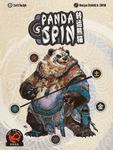
At number four we have a relatively new game to me. Panda Spin. So Panda Spin is a card shedding game. you're trying to get rid of all the cards in your hand. Um, but you play it kind of tricktaking style where each player is going to put one card into play card that they're hoping to get rid of. And if they are ba basically if you are not successful at getting rid of the card, if you didn't play one that ends up uh uh sweeping that that trick, if you don't end up essentially taking that trick and thus getting rid of the card, you take the card back to your hand, but you rotate it so that uh the blue face of the card is face up. And the these cards are beautifully designed. Like there there's foil, there's enamel, there's texture to them. And they actually feel fancier after you spin them around, after you flip them in your hand. So it turns a a slightly feel bad moment in the game.
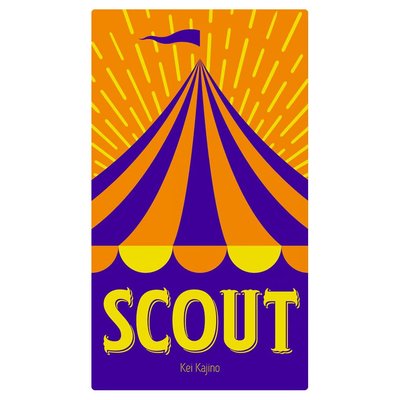
You've given up a card. Uh you've given up that information and yet you didn't win that trick. You don't get to actually shed that card. It turns that into a good moment because suddenly you have a more powerful card in your hand. You have the more powerful version of that card in your hand. So, at any given time in the game, you can't play it for the for for either side. It's just the cards the the way that they're currently facing in your hand is the way that you can play that card. And they get more powerful as you pull these cards back in the hand. Whenever you play a more powerful leveled up version of a card, you can't ever get that back to your hand though. That is gone from your hand afterwards. So, that also moves you closer towards shutting that card out of your hand. That is Panda Spin at number four. Similar to that is the game scout. So in scout you also have a hand of cards. It's also a shedding game. Um and what scout does is it's actually very similar to Panda Spin except except that you're not leveling up your cards.
Instead, when you get a hand of cards in Scout, you decide right away which way you want that hand to face. You can't rearrange the cards. You can't flip cards around because every card is two cards. This is a five and a one. This is a one and a 10. This is a nine and a five. and you're deciding at the beginning of your hand which way you want those cards as a group to be oriented. And then whenever you take a turn in scout where you can't instead of playing a card that you're going to take the a card that was recently played, you can put that back in your hand oriented wherever you want in your hand and oriented either way. You can have it face the nine side or the five side. And in doing so, you're trying to create kind of runs of cards or sets of the same card. Uh, I think this is I mean Scout is a very very successful game in this way. It's a because of this clever element of building two cards into the same face and I love the flexibility it gives players to create those sets of those runs as they're pulling cards back into their hand. Plus, it's just fun at the beginning of a hand of cards to decide, okay, am I going to face the whole hand this way or face it all this other way instead?
That is Scout at number three. Next up, we have Magic the Gathering. And I have a few examples here because Magic has done some pretty cool things, but I'll end with this one. Uh, let's start with this one. So, Magic has has explored this space of building multiple cards into the same face of a card. Magic has also done the thing where they put cards front and back. Not exploring that here today. I'm using the same face of the cards. And actually, I should mention one of the reasons I'm doing that today and focusing on the same face is that uh I like the I like being able to shuffle cards without uh with all cards having the same back. It's one of the great things about cards. They're easy to shuffle and they all if they all have the same back, then they're even easier to shuffle. If you have cards with different backs, then oftentimes you need sleeves or you have that information, you have some information added information of what you're looking at on the back of the cards. So, I think one of the big assets of cards as a component is that all backs are the same. And so, if all backs are the same, what else can you do in the design space for the front of the card? That's why I'm exploring this today. And Magic is definitely a big inspiration for this.
So, one of the original types of split cards were like this. This is odds and ends. It has two completely different cards built into the same card. And whenever you're ready to play it, you can choose that for this phase. You can pay a blue mana and a red mana. Or you can play three colorless, a red mana, and a white mana. There's a little bit of overlap here. So most likely you would draft this, for example, in a red deck. But then later on, if you decide to go blue or white, that's when that's the side side of the card that you actually use. Or maybe you'll go blue, red, white, and play this card. Either way, based on the current circumstances, it gives you a lot of flexibility based on the current moment or your drafting strategy. Now, this evolved a little bit. Um, here's the other do this in different order. So, this evolved into a a different type of card in um I think Eldrain. Yeah, Throne of Eldrain was the set here. This card, Order of Order of Midnight, you can play it as a two two flying creature. One colorless, one black mana, two two flying creature, or you can kind of send this card on a journey. So, instead of playing it as a as a creature, you can play it as a sorcery. Send it on an adventure. One colorless, one black. When you do that, you return target creature card from your graveyard to your hand. And then, if I remember correctly, okay, then then you'll exile this card. Then you may cast this creature later from exile. So, you're actually getting two plays of the card out of the same card if you want to do that. So, if you need it as a creature early, do it. Play it. Or you can play it for this sorcery and then play it later from exile. Um, I think
this is another really clever way. And this actually tells a little bit of a story, too, built into this card. I think that's really clever. Two other examples for magic. One are these cards uh from a set that I didn't play much of, among an Egyptian themed set where you can play it like this. You play destined and after you play it as a destined, it's an instant. It would go to your graveyard and then from then on in your graveyard, I believe this is the one that you play from your graveyard. Yeah, Aftermath. You can play this card lead from your graveyard itself. You're playing it as if the graveyard is an extension of your hand in this case. I think that is really really clever to build that um expand the hand space into the graveyard itself. And last, I didn't play this set at all. Um what set is this from? I don't know if it says it here. It's it was kind of the mystery theme set. So this one you're playing um one of these two rooms. It's like you're investigating or entering one of these two rooms, the Smoky Lounge or the Misty Saloon. And uh what does it say? I'll just read the text here. you play play it for either half, gain that benefit. The that door unlocks on the battlefield. As a sorcerer, you may pay the mana cost of a locked door to unlock it. So, it's like I'm in the Misty Saloon, but the door is locked to the Smoky Lounge. I don't get it for this benefit. Um, but then I can unlock the other door.
And it even has an unlocked benefit. This one says, "When you unlock this door, create an XX blue spirit creature token with flying. There's a ghost in the room where X is the number of unlocked doors among rooms that you control." Uh, this is a a very interesting system. I have not explored this system at all in playing Magic, but I think it's a really neat example of an ongoing split card um in in the the mystery solving set of Magic the Gathering. But finally, uh oh, and actually, I want to add this. Uh this is from Caitlyn, our digital gamer, mentioned Magic as her pick. She says, "One of the first sets that got me into Magic the Gathering was from," and let me put this one up on the set uh on the screen. Here we go. Oh, no. This is the example she's referring to. Um, the gathering was from the Rabnikica block circa 2014. So, yeah, I think this card is way back from Rabnikica. I love split cards with the fuse mechanisms like like toil and trouble. Um, she got out of Magic Gathering for a bit was but was re introduced to it by her husband. One of the sets that she missed, Ammonet, has split cards. This is the one that she was referring to with the aftermath mechanic allowing one half of the card to be played from hand and the other half to be played from the graveyard.
And last up as my top pick is the one I used as an example. This is forest shuffle. So, forest shuffle has a bunch of cards that are uh in fact I think every card in the game that isn't a tree or a bush or a plant. Um, a tree specifically is a split card where you can play it for the top half of the card or the bottom half of the card or the left side of the card or the right side of the card. And you show that, see if I have a photo here. You show that by sliding it under the tree card and it remains there for the rest of the game. I think this is so clever. I've really enjoyed exploring forest shuffle for this purpose and really it feels like whenever you gain a card from the forest row in forest shuffle that you're gaining two cards and at that moment you might think okay I'm going to play it for the bird but when it comes time to actually play the card by that time you may have changed your mind about it and you might want to play it for the bottom part of the card. It gives you a lot of flexibility and room to pivot your strategy. Skyler our family gamer also picked for shuffle and she said for shuffle is a big hit in my family. The cards are split either vertically or horizontally, forcing choices between different animals and plants, meaning you are always weighing the immediate benefit of one side against the long-term potential of the other. And that is the case with many of these cards. Some of them have like big scoring long term if you really focus on like butterflies. But the other side of the card might be something that's more beneficial in the immediate short term.
And you might think, okay, well, maybe I'm not going to see a lot of butterflies. I'll go for this this uh this mushroom instead and get an ongoing benefit or an immediate benefit. Uh, Caitlyn says, "It's a great mix of strategic and whimsical at the same time. We love that this game is compact, compact, and easy to teach to different ages." And that's true. You can fit a lot in the box when instead of having 200 cards, you can have a hundred cards and each of them is two cards in one. The tucking mechanism is intuitive and the theme of building your own forest complete with diverse floor and fauna is wonderful. I completely agree. I am enamored with forest shuffle for this reason. And uh yeah, th this is one of the games and the the game that got me really thinking about this topic actually was a prototype that I played with a a game designer friend where they had two cards built in the same face and I was like, you know, this is just really cool. I really like this mechanism. I want to see more of it. So, I thought I'd talk about it and research it and see what other games had this mechanism of two cards built into the same card face. Um for shuffle certainly got me thinking about it heavily for the first time. Magic a little bit as well.
I think it's a fascinating design space. I have certainly explored multi-use cards. Cards that you're either playing or maybe you're like tucking them somewhere. Expeditions has this for example. But the idea of building multiple cards into the same face, especially it has a thematic reason like witchcraft where a reason for the cards are are split. That is really really fascinating to me and something that I want to explore as as a desire. I'd love to hear your thoughts about this. If you can think of other games that do this, building multiple cards into a single card face, um, let me know about it in the comments. I'd love to hear about that. And one, I will mention it. It It doesn't really make sense for this list, but uh I was playing Star Wars the deck building game the other day, and in that game, you're only ever playing the card for one purpose, but when the cards are in the galaxy row, you can interact with them in a different way that you can remove cards from the galaxy row due to something that's on the bottom of the card. Um, and I think that's really just a clever design space. it it is different than this, but I wanted to mention it just to because it it could have some overlap in this multiface design space as well. But yeah, let me know your thoughts, your examples, your favorite games that are new to this and why you like uh this when you see this in games, what it is that you like about it. I'd love to hear more about that in the comments below. Thanks.