Barony, En Route, Ito, Llamaland, Noch Mal - Ranked & Reviewed
Games in This Video
5 games are featured in this video — they unlock as you watch.



Transcript
Hey everybody and welcome to another Chairman of the Board ranking video. This is where I take a look at the last five new to me board games that I've played and I rank and review them in order of preference. And I have to say this episode might have the highest mean average of five games that I've done yet because all these games are pretty damn good. Um, some of them absolutely excellent. But before I get started on those games, I want to give a shout out to the show sponsor keender.co.uk UK who are my go-to online retailer. And if you use the link in the show notes or the QR code, then you can get 5% off your first order. At number five, I have KnockM So Good. Uh this is one of the old school roll and write games by the great marker and Inca brand. So some great design pedigree there. And this one is fairly minimalist as you are just trying to complete rows and columns as well as colors which are scattered throughout these rows and columns and before your opponents do. And the way you do that is through drafting dice. So every round there's going to be a big cluster of dice rolled. Some of them are going to show colors. Some are going to show numbers. You're going to draft one of each of those and then you're going to say draw tick off, you know, four blue squares or two yellow squares and so on.
Um there is some restrictions or there are some restrictions where you cannot overspill. So you know if you have a group of three yellows that you need to do, you cannot use a four for that. So you you do have to you know abide by those restrictions which can slow you down. And there are also bonuses scattered throughout as well which will give you these really powerful uh benefits if you select another dice which will let you blow up any four squares in a in a cube or tick off any three in a row or maybe just tick off these stars which will give you negative points at the end of the game if they're still on your map. Uh so you know fairly straightforward stuff but there is a good sense of urgency you know trying to reach those rows and columns before your opponents do to get the higher amount of points available there or also further bonuses which I've already mentioned and it's just a really nice tense little package. you know, the player interaction is fairly minimalist that you are, you know, when it's not your turn, you're still taking turns, but you cannot do exactly what you want because, of course, the active player is going to choose their dice first and you can choose what is remaining. Um, some good little pathways you can go down as well.
You know, do you want to focus on those rows? Do you want to focus on the columns? Do you want to focus on these hearts that will increase the yield of points that you get when you complete those columns? And it just has a little bit of everything. And again, it definitely feels like it's from those prime years of those roll and right games coming out thick and fast, but this is definitely a quality one. Now, I never played the original Nokmal or Encore, which I think it is also known as, but I think this is like 90% the same. There's just a few extra bells and whistles added in, which I think definitely help. You know, without it, it' definitely be a bit more of a a primitive design. Um, you know, not not negatively not negatively speaking, but I do like the fact you do have those extra options which don't feel overwhelming. There's just enough going on here and I think it just about ticks the uh the sweet spot for me. So, you know, really enjoyed this one. I'm definitely going to play it a lot more.
Um, the fact it came in number five is simply down to the other games being better and that is, you know, really highly speaking of the other games rather than speaking negatively about Nokmal. So, good. So, if you could find this one really cheap, I would definitely say pick it up, especially if you like your little roll and write games. So, that is Nocal. So, good at number five. At number four, I have Llama Land by Phil Walker Harding. Now, the box itself says this is a familyweight game, and it certainly is that, but there's enough here to be appealing to more experience experienced gamers, too. Now, this is a tile placement resource management game. as you are building up this landscape as you know spreading wide as well as building up trying to cover up these different icons on your tiles uh to collect the relevant resources and then cash those resources in against these contracts. The contracts will deplete in value so you do have to uh be quicker than the other players to get the maximum amount of points or as many points as you can. But there are other things you need to consider as well. So, for example, you can cover up these other icons, which will give you these special cards. They'll act as kind of little engine building benefits, which can let you convert resources into others, or maybe when you cover these two um icons in a single turn, you'll get an extra one uh and so on. This game also has a fantastic uh endgame goal scoring action uh in it, like something that's a little bit different than the other stuff you normally see out there.
So, every game I think there's seven objectives put out there on the display which everyone can go for. Um, but it's not like a lot of other games where once you've completed it, you can then get the maximum amount of points and then it'll get get less and less as it goes on. This one you actually can claim it any time and then work towards it. So, you're almost like wagering on yourself to be able to pull off uh these objectives. And there are simple things and mostly link with the, you know, the scaling of those tiles. You know, it might say you will have, you know, three llamas on level three or have, you know, six llamas not on the edge of your board and so on. Um, so this game also has a nice little um restriction on it where if you complete a contract, not only will you get those points at the end of the game, you also have to place a llama on your map, which again will tie in to those objectives, but it'll also kind of act as a blocker on your board as well because you can no longer build on top of that particular space. So, you need to place it quite savily out of the way knowing that it's not going to be an obstruction later. Um, you know, I tend to like these games where you do um place tiles on top of other tiles. Of course, they're all in weird and wacky shapes which makes it a lot harder to slot together. So, think of games like Miyabi. Think of games like Number Nine.
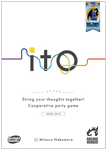
This games has that feel to it, but with a more familyfriendly, breezy vibe, but with still a good degree of tension in the background by trying to opt those objectives before the other players do. Um, I really liked it. I think it was extremely pleasant and enjoyable. Um, it was one that my girlfriend just picked up on a on a kind of a whim really at the bring and buy at the Yuka Games Expo and it definitely um blew my expectations out the water. I thought it was a really nice game. So that is Llama Land at number four. At number three I have Itto. So this is a cooperative party game that is very easy to pick up and play. Uh so you are working with your teammates to try and build this almost timeline um based on these number cards that you are distributed at the start of the game. Um but they are going to be tied into a certain subject category that you need to try and discuss and you know place things perfectly. So for example it might be something like well popular TV shows or just TV shows and then everyone's given you know one or two number cards depending on how difficult you want to make it. Um and then basically you are trying to um place these cards out by assigning these numbers to that category. So for example, if you have a really high number, you might say something like, you know, Stranger Things, you know, it might be in the '9s. But the trick is on where the game becomes interesting is when you don't have the extremities. When you have games, you know, in the 30s, 40s, 50s, or 60s, that's when it gets really interesting for me. And it's always in fascinating when you can place things just right and everyone just knows where
you're thinking and feeling where these different cards are going to slot in. So it feels a lot like, you know, wavelength if you're familiar with that party game, but a more kind of streamline card driven version of it. So easy to jump in and out of, easy to just pick up out of the box and just get it played. Um, and for me, I don't really see another party game this year holding up to Itto. It just seems to um just do everything it needs to do perfectly. I think a lot of party games maybe try a little bit too hard or a little bit too rinse and repeat. This one still feels familiar, but it feels like it nailed the formula perfectly. Um, and you know, I love party games anyway, and this one is going to be a hallmark of my collection for for many, many years to come because, you know, I tend to like these games and with a big kind of width and breadth of um different categories to play with. There are so many different variables you can play and experience with your friends here. So, highly recommend Itto if you want a good party game in your collection. At number two, I have on route. So, this is almost a flip and right style game. It's a route building game where you're trying to get these tourists of different colors to visit certain landmarks on these famous um you know maps of famous world places. You've got London and know Paris and you know New York all the all the big hitters. Um and you're doing that through this really interesting drafting system where you can use a card from your hand and then each of your
neighbors also gives you a card that you can choose from. So, you have to use your own, but then you can select one of your neighbors. And those cards are going to show you two coordinates which are going to show your starting point or where you're going to plot these different um these different tourists onto your map. And then from that point, you can then draw a route basically going from edge to edge of these different squares. So, you can draw two lines if you are touching the square that you've just plotted or you can draw one line anywhere. And as I said, you are trying to get your blue tourist to visit all the the blue locations. You're trying to get the red tourist to visit the red locations. But there are some other things you need to consider as well. In fact, a lot of other things pulling you in different directions. So, first off, you have yellow locations that will give you just pure points. Uh you have public objectives that you're trying to race for or not not trying to race for, but you're trying to win in the different categories. So, it might say things like, well, what's your biggest loop on your route? or how many turns do you take on your route? Uh, and there's even map specific endgame objectives like for example on the on the London map it might say how many times do you walk across the river temps uh and so on. On top of that you have your own personal player objective where you want to hit certain checkpoints uh on your map as well. Um, and on top of that, there are famous landmarks on the map which will kind of increase the yield of points as the game progresses if certain cards are drafted. So, for example, you again, if someone keeps visiting the the Tower of London, then
those points are going to go up and up and up, which might try and force or maybe um prompt the other players to make sure that their route goes past the Tower of London. Now, once you've done your 10 rounds, um this is my favorite part of the game, actually. you are going to plot your final route. So you can only ever have one route with a start point and an end point and any kind of side routes or little um little diversions you've taken will have to get rubbed off the board meaning that all that effort was completely wasted. And as you can imagine you know your ideas and your you know what your strategy was might change as those coordinates are coming out throughout the game. So, you do need to be prepared to pivot here and be prepared to sometimes um just forsake some of your scoring for for better scoring. Um there's also some really little cool little twists in this game.
Like for example, you can use subways. So your your route can go into a subway, then come out of another one. Um and so on. So they definitely thought of everything here. And for a standard flip and right style game, this one's pretty intense. There's a lot going on here, you know, more than your average one. But I think by a game or two, you start to really appreciate the amount of different things you can go for because you're not pigeonholed to do a certain thing. You know, you can dip your toes into all the different scoring categories or you can really try and tunnel vision on doing something in particular. The variety is fantastic. You know, you can play with a really basic introductory map. Again, you got your London, you got your Paris, you've got this huge New York map which uses all the different um special rules. Um, and this game kind of is a a one-stop shop for all of those root building mechanisms that I kind of love. You know, I really love root building games.
This one does a really good job of again adding so many different elements into the game without feeling overwhelming. I think at first it can feel a little bit fiddly um and a little bit, I don't know, a little bit clunky, but once you go through a few rounds, you understand how that drafting system works. Uh, you understand how the plotting system works and the final route system. Um, it's actually does a really good job of creating its little niche in the hobby space for me. So, I'm thoroughly enjoying this one at the moment. I'm I'm excited to uh, you know, dig into more of those maps and see what they have to offer, those extra little bells and whistles, um, of those different maps. And it's just a really nice game. And I like the little bit of embedded player interaction through that drafting system. You know, when it's when it's your turn, your neighboring players have a vested interest in what you're doing because you're going to play your card down. then they might think, you know, I I love that three, but I want to be on plot 32, so I'm going to give my two card, but do I want to risk my two card because my opponent on the other side might give a better card and therefore I've wasted my two card and it's not going to get selected and I've thrown it away. So, I really like those little little niches in this game that make it more interesting. So, and it also doesn't outstate its welcome. It's only around, you know, 40 minutes to play. It scales well because everyone's, you know, invested at all times and yeah, it's just a thoroughly enjoyable experience. So that is on route at number two. And finally, at number one, I have Baron. Now, I do have the new royal edition of the game, but I haven't
tried any of the new material. I've played only the base game, so I won't be commenting on that extra stuff. But Baron is an older game. It's a a dudes on a map game, which you can probably tell from the the look and the aesthetic. Um, but it doesn't have all of the area control tropes that you'll normally find in this style of game. So, you're not trying to control regions. Um, you're not overly incentivized to be aggressive and attack other players. Um, but it does have this kind of cold war feel to it as you are on the kind of Mexican standoffs everywhere. But this one, you are trying to traverse the map with your knights and then you're trying to set up villages and harvest the resources from those particular um plots on the map. And there are several different types of terrain, ranging from how you can move through them, but also ranging on how many resources they will give you if you build a village on them.
Um, but even the more fertile lands do have their weaknesses because they are a bit more vulnerable to the other players attacking. But what you're trying to do and how you're trying to win this game is you're trying to get as many resources as you can and then you can convert 15 of those resources or 15 points worth of resources into your next noble rank. And you're trying to climb through the ranks and reach top rank before the other players do. Um, or that will at least trigger the end of the game. Um, but this game probably has the best use of terrain in a in a war style game that I've ever seen because everything has its strength and weaknesses and strategic positioning is paramount in this game. So, I love the way that um, yes, the the meadows are so uh, fruitful when it comes to resources, but you can very vulnerable to attack.
You've got the dense wooded areas which are you you can move through them but you can never build castles on them meaning meaning that you'll never have a spawning point there or you've got the mountains which can only ever hold one unit at a time meaning that you can build nice blockades that stop people going through and build like nice defense walls uh and so on. Um, I also thought the game struck the balance of how many units you have just perfectly because you need to be making sure that you are exploiting each of your knights as much as you can because not only are they going to be your aggressive troops to try and attack opponent's villages and take their resources that they've not cashed in yet, but you need to use them defensively to prevent them coming into your borders. And they also convert into villages. Um, and as soon as you convert them into a village, then they're taken off the board, meaning that they might have to travel again from your castle, which might be a while away. So, this game is so beautifully minimalist and the actions you can choose are are so easy to understand.
You just move troops around the map, spawn new troops, convert them into villages, convert them into castles, or even have like watchtowers which will act as blockades as well to stop people from from traveling through that zones. But again, I this game really evokes the feeling of being like a general to me. You know, I love the way that, you know, I'm I'm using my troops here to defend my walls, meaning that I'm weaker here. You know, everything has an opportunity cost, which is what I love about it. You know, when we set up for the first time, we're thinking, well, why don't we just set up in the in all the big meadow area? Yeah, you might want to do that, but you need to be prepared that you're going to have to spend most of the game holding your troops back, protecting the land you already have, where another player might be just walking around. Yes, they might have more barren land, but they're getting it more unopposed and could just mop up that way instead.
This game is just wonderful to me. This is exactly what I like. Uh the combat system is so streamlined as all it all you do is if there's ever two opponents or sorry two two troops against one then the two will win. Simple as that. There's no fiddliness. There's no dice rolling. There's no little graphs and charts you need to refer to. You can resolve it in a heartbeat. But it just works and it doesn't take away from any of the excitement and it really is more of a game of positioning and savviness than anything else. So, for me, I've got no idea why this one hasn't passed my table before this because, you know, it has the look I like. It has the, you know, the the style of game that I like. And from early impressions, you know, bearing in mind that I've not played this nearly as much as some of the other games I'm going to mention now. For me, this is kind of on the Mount Rushmore level of area control dudes on a map game. Now, I put this one up there with games like El Grande, with games like Wenstein. Um, it has that real traditional Euro rich, timeless feel to it, which are the games that I want in my collection. So, cannot wait to play more of this one. Scales great because, you know, more players, the bigger the map. And it's punchy as well. This game only takes around an hour to play, which I think is remarkable. But it's strategically rich. It's got depth. It's got layers. And the the management of everything is just down to you. And that is what I love about Baron. So I could not recommend this one enough. If your
tastes align with mine, I think you are going to get a lot out of Baron. And again, I highly recommend it. So that is Baron at number one. So there we have it. That concludes another video. As I said, probably the highest caliber of games I've ever had on a top five video. I hopefully you've enjoyed it. If you have, please be sure to hit like and subscribe to the channel and check out my other content, too. But for everybody else, I will see you next time on Chairman of the Board.