Top 10 Two Player Board Games of 2025
Games in This Video
6 games are featured in this video — they unlock as you watch.


Transcript
Hello, my friends. I cannot believe 2025 is almost over already, so it's time to start doing my year-end reviews of my best games of the different categories. Today, we're going to be looking at my top 10 two-player games. Yes, there were a ton of great two-player games that came out this year. So, here we go.
Before I get to the moment you've been waiting for, I wanted to tell you about the sell trade program at Noble Knight Games. Now, as gamers, we all have games that are cluttering our shelves that we either don't have the right group for or might even not like it. Well, now you can turn those unappreciated games into cash or store credit. Noble Knight Games buys thousands of games and gaming products. It's easy to send them a list of the games that you'd like to sell or trade. Now, they'll send you a quote and even pay for the shipping of the games. Get treated and paid like royalty while you sit back and collect cash or store credit. To get started, click the link in the description of this video or in that upper right corner there, and then click the sell trade button.
Number 10. Number 10. Number 10.
This first one is a competitive trick taking game. Now, two-player trick- taking games are becoming more and more popular, and I'm glad because I love them. Uh, and this one is a small little game called Tango. Now, in this game, unlike most trick- taking games with two players that need used to use like a lot of special abilities and such to make things work and make it feel tense, this is very much like a classic feeling trick taking game. It's got a nice clean look. But the thing is no abilities, just suits and numbers like normal trick taking, but you're going to have a hand of cards in your hand, but you're also going to have cards in front of you that are face up. And so you can see your opponents, you can see theirs, you're going to play a card from your hand. The other players going to play a card from their hand. Then you have to play one from in front of you that that's face up, and they have to play one that's in front of them face up. You got to follow suit if you can. There is a sort of trump suit. It's called like the style suit. Uh, and so you can basically see what they might or have to play, and that really makes it super crunchy.
Also, the twist is the higher cards actually get you negative points if you win the trick. Really low cards get you more points if you win the trick. So, you're trying to win tricks, but the ones that actually score you points, not negative points, which is harder to do. And the loser gets to possibly change the style trumpsuit every round. So, it's a very clean, classic feeling design that is very impressive that what they can do with just standard trick taking. It's super crunchy, super thinky, awesome little two-player uh trick taking game, Tango.
Number nine. Number
this next one is a small little filler game called Garden Rush. It's a cute little game. It's got some nice wooden tiles. there's going to be a row of of tiles coming out and these are different vegetables and you're going to be plucking them from a specific spot and placing them in your garden. Now, if you pick one that's in uh if you put it in the same column that it was in, you get to place it face up with two of those vegetables showing. This is important because if you place it anywhere else, you flip it over, there's only one vegetable showing. And that's important because you're trying to line up each of these vegetable types into specific patterns. Now, it's very flexible. They all have multiple patterns. You can rotate them. And on your turn, instead of pulling a a a uh you know, a tile, you can basically harvest them and get points for them, one for each tile. But the ones that only have one item on them get removed from the board, the other ones that have two items flip over. So basically, if you get one in the same column and it has two vegetables, you're essentially going to be able to use that one twice. This game is huge in sort of looking at what your opponents do and trying to combat them, playing as much defense, and taking tiles they don't want uh that they do want that you don't want them to have more as much as getting the ones that you want. But there's also special spots on your board that you can play for special abilities to trigger. There's also an advanced game that has some extra special ability tiles in certain ways you can affect the other player more. It is a very clever, thinky little, it's a light game, but it's got a lot of sort of player interaction there. Great little quick sort of spatial tile laying but hate drafting game. Garden Rush.
Number eight. Number eight.
This next one is a Rhiner Kitia. Uh this is as far as I remember this is a brand new game. It feels like a classic game like pretty much all designs do. And like most Kitia games, this has a scoring twist too. There's five different gods of tiles that you can win. And if you win one of each of the five and the other player doesn't, you win regardless of what the scores would be. But if both of you get them or neither of them get you, you go to final scoring. So what you're trying to do, it's an abstract tile laying game with some abilities. So you're going to be placing a tile of your of your color in one of the places that's next to something else that's, you know, specific placement rules. But once a row or a column is filled, the winner, whoever has the highest in that row or column gets first choice of the tile that's at the end of that row or column.
And some of them are very high points. Some of them are negative points. Some of them are those gods that you're trying to get. And so it's and each of these tiles, most of them have abilities like flipping a tile, flipping your opponent's tile, moving a tile, moving an opponent's tile. And so you're trying to jockey to get you're working on points, but you're also have that tension of needing five gods to possibly win or stopping the other player from getting it. beautiful Kitia game uh Iliad
number seven.
This next one uh is absolutely beautiful. It's got stained glass. It's got awesome miniatures. It's called Enthrown. This is from Smirk and Dagger Games. This is a quick game. This is like a 10 to 15 minutee game that you will play more than once in a row. I say to play two out of three for this game for sure. It is a game of intrigue. You are secretly one of these pawns that look awesome and so is your opponent. But each of those uh pawns has a card and at the bottom of that card, it has the quarry. You want to the way to win is either get your person into the center of the board or get close enough next to who you think your opponent is and try to attack them and kill them and win. Or if if all three characters that are in your quarry that are attached to your secret character get killed, you also win. So you're but no pawn is owned by anybody. You might be moving your opponent's pawn and not even knowing it.
They might be moving yours. It's a game of intrigue, cat and mouse, head games trying to make them think you're this person when you're really not. Um, but there's a really the star of the show is this awesome action selection mechanism where as you take an action with somebody, it moves to the bottom. And there's only certain spaces towards the top that you can use to attack or to get into the middle and win. And so as players are killed, they get flipped over, which gives you more options because basically the action selection mechanism sort of slides down. It is a fantastic clean game of uh, you know, uh, bluffing, double bluffing, and intrigue. It is fantastic and thrown.
Number six.
This next one is a game from um co-designed by Bruno Catala. Um it's called Legions. It's part of the Abyss Universe. The Abyss, the big board game, and then there was um Conspiracy Abyss Universe. This is Legions. This is a two-player sort of line battle game. Think of Battle Line a little bit or Shot and Totten where there's five different areas. is you're going to be playing cards simultaneously playing cards uh at the same time as your opponent flipping something over. The lower number gets first choice, the higher number gets to be the hammer to see which color is going to get attacked this round. You're trying to gain three in a certain uh column because then you get to summon a hero and score points because you're trying to score the most points in the end unless one of you get five banners. There's an immediate win condition if you get five banners. Um there's also all these heroes have special abilities that do different things. uh each of the uh area majority lanes. If you have a majority of those, you're getting a special ability, but at the end of the game, those majorities are points. Lot of stuff going on.
Iconheavy game, but lots of depth here for such a quick 20minute game in that Abyss lineup. And I've already reviewed this. You can check my channel for that. Legions.
Number five.
This next one is a standalone expansion. So, it is a game. You can just buy this on its own. It's called Compile Main 2. Now, Compile Main One came out last year. Um, and this basically uses the same exact mechanisms just with new protocols. The way this game works is fascinating. There's it's a two-player game that obviously all these are that you're trying to basically be the first to compile all three of your of your protocols. Now, you'll be drafting or selecting these protocols that each come with sort of their own deck of cards and you shuffle them in and you have a hand of cards and you're trying to play these cards and they have different values, but each of the cards have different abilities. Some of them trigger when you place them. Some have ongoing abilities, some have different times where they trigger. Uh, and you're trying to get to have a line to have more than 10 and value and have more than your opponent. And then on your turn, you can compile flip that one that lane over. And once you flip all three of yours, you win.
But there is tons of depth there as to which card you play when, which ones combo together well, which which protocols combo together well. But also, if you have if you're leading in two of the lanes, you gain a control card that when you when you refresh your hand or when you when you uh compile, you get to rearrange any one player's protocols. So, a lot of little tricks you can do here to hey, swap one that you've already done with one you haven't already done and now you're almost ready to do that one or your opponent's getting ready to do one, swap it on them. The game is quick, it's it's deep, and it has tons of replay-ability. And this second set is, I'd say, as good as the first one. Excellent. Compile main two.
Number four. Four. Four. Four.
This next one is also a standalone expansion. Uh, this is a standalone game in the Mindbug universe. This is Mindbug: King of Tokyo. Makes sense, right? Mindbug is co-designed by Richard Garfield. King of Tokyo is designed by Richard Garfield. So, now you have Mindbug, which is I've been touting for the last few years, one of the best probably. It's my favorite sort of two-player combat card game. Although you can play with three to four players, just mainly two-player game. The twist of Mindbug is you're playing cards very simply. There's only one deck of cards. You don't have to worry about buying or constructing decks or none of the CCG chasing cards. There's a deck. It's shuffled. You randomly get cards. On your turn, you're either playing a card, no resources, no costs. Play a card. Um or attack with a card. If you have more than somebody else, you defeat them. If they if or you can hit the opponent for for health and they run out of health, you win. It's very simple. The twist is you have two mind bugs that allows you to when somebody else plays the card, you can play a mindbug and you summon that creature as if you were the one to have played it. So, you're trying to draw out the opponent's mind bugs when they think that you're doing something great when you still have something left in the tank afterwards. But this mixes that with King of Tokyo, all the King of Tokyo characters, there's now power cubes that you can get from certain cards that allows you to get power cards like in King of Tokyo and use those for immediate abilities, sometimes ongoing abilities. Uh you're going to be some of the cards have you roll dice that you can also roll and that's going to get you different things like more more value to attack or those energy cubes or things like that. It's basically blending King of Tokyo and Maybug and
it's fantastic. I've already reviewed this and uh you can check that out on the channel. Number three.
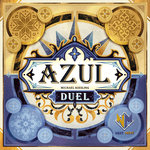
This next one is Azul Duel. The two-player version of a duel. Azul. Now, I am a big fan of Azul. I've I was just lukewarm on it when it first came out, but having played it over and over and over and over again, all the different versions of it. It's one of my favorite, you know, sort of lines of games, if you will. in this. It's different because now you're drafting four spot dome tiles to make your board, which means your board is going to be different every game and you can rotate the tiles and do different things. So, you're setting up which tiles that you're going to be drafting to put on these dome tiles to sort of score like standard of Zul. Some of those dome tiles have wild spots, which means any color can go on your board. Now, you're gonna be drafting tiles as normal to place on your board, but leftovers instead of going to the middle go on top of each other and you get to choose. And this is huge because once all the uh the leftovers are gone, um you know, you're going to be drafting chips to help bonus chips to help fill a color row. So, it's very interesting because now when you take something from a factory, you're deciding what order they're stacked in. And so, you can help yourself out. You can hinder your opponent knowing that they want those ones. is another layer of depth in getting those. Also, the bonus chips now you can use as a substitute for another color. Another layer of depth. The dome tiles, another layer of depth. It takes the original Azul and makes it deeper, deeper, deeper in three different ways.
And I don't think I would ever play regular two players again. I have to play this one. I've reviewed this. Check it out on the channel. Azul Duel
number two. Before I get to this next one, I wanted to let you know that I'm going to be launching my season 14 Kickstarter for my YouTube channel to help raise funds for the channel. Now, this is the main way that I'm able to spend as much time as I do creating content for you. Now, there will be some awesome board game promo cards and some game bundles to get, and I'd really appreciate if you click the little eye in the upper corner there and click to be notified when the campaign launches, or you can go to kickstarter.com and search for Gameboygeeek season 14. All right, this next one is a straight up no luck logic and deduction game. And I love logic and deduction games. This is called digit code. A tiny little game. It's really amazing. It's kind of like a code 777ish where you're asking questions and they're telling you the answers.
Basically, each of you will write a three, you know, a code down, two, three digit, two lines or three digits and you're trying to basically guess the code the other player has. And on your turn, there's different types of questions you can ask like, hey, in this row, how many sort of things are filled in in this column here? Uh, in this one, is are there even or odd amount of them done? Uh, is it these numbers? Are they even? Are they odd? All these different ways that you can ask the questions, but it's no luck. Unlike some of these other games like Code 77 where you rely on like lucky card draws as to what the question you can ask. There's certain set questions you can ask, but you can ask them in any order in any one that you want on your turn. And it's fascinating because you're just trying to narrow down and learn through deduction what is the code and you're trying to be the first one to do it.
It's if you're looking for sort of a quick 15 to 20 minute filler game that's that's deduction, no luck, crunchy but simple mechanically. Oh man, this thing is excellent. You can also play this one, you know, with friends online. A friend of mine, Sam, has this as well, and we were sort of playing this over FaceTime the other day, and it's it it works. Uh, and so, Digit Code, if you like, logic and deduction, two-player games. It's fantastic.
Number one,
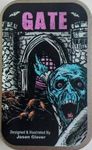
before I get to the moment you've been waiting for, I wanted to let you know that Game Toppers is giving 15% off premium game mats and accessories specifically to my US and Canada audience using code game boygeeek 15 off for a limited time only. hear more about this at the end of my final thoughts. All right, here we have a game very loosely based on a very classic book. It's Gatsby. Now, this is designed by my favorite designer, Bruno Cthala, and his tag team partner, Ludic Malblanc, one of the most underrated game designers in the history of board gaming. This is a quick 20 to 30 minute sort of filler game. Uh, but oh my goodness, this game it has intrigue because there's different characters every game and some of them are removed and you don't know which ones are removed and you're trying to get like three of the three of characters of the same sort of colored background or five different ones to win. Um, and if none of those things happen, you go towards the end of the game and then you score points. So throughout the entire game, much like many of Bruno's designs, there's this tension of immediate victory conditions versus do I go for those or do I go for points?
Which one am I focusing on? As the game goes on, I can change. But in this game, essentially, it's like worker placement game where there's like different sort of areas you can go to. You go to the cabaret where sort of an abstract game where you're trying to connect one edge of the board to the other edge of the board but possibly getting certain circles and and activating extra abilities or you're trying to go up this track that that the sort of the building track and again getting different abilities, getting different characters or there's the horse races which essentially is an area control battle but again which one do you go to? Some of them give you abilities, some of them don't. and you're trying to to to win these different battles in all the three different areas to gain characters which will give you stars which are points but also again trying to get those immediate victory conditions. There's also some special tiles that you can get that give you some some good abilities triggering and comboing abilities and turns to do all these powerful things and to to hinder your opponent. This game is it's basically an abstract game with worker placement, area control, going up a track, and and a little abstract puzzle allin-one. And it is absolutely fantastic. I have I've just been blown away by how good this game is. It was my most anticipated for Gen Con. It lived up to the hype, even surpassed it. If you're looking for a two-player game that has a little bit of everything, lots of intrigue, Gatsby's it.
Well, I hope this helped you find out about some two-player games maybe you hadn't heard of or maybe if you have, maybe you've learned a little bit more. Now, I've reviewed most of these on my channel. If you want to learn a little little bit more about them, even more than what I've said here, you can go check those out. Uh, and this has been a Game Boy Geek, breaking down barriers, growing relationship with board games by helping you find the next one you love. Game Toppers upgrades every game you play, being the one table to rule them all with game toppers, leg kits, dining covers, premium game mats, and more. And for a limited time only, my US and Canadian audience can get 15% off their premium game mats and accessories using the promo code game boygeeek 15 off. Also, go to gamettopperslc.com to check out all the options or for worldwide late pledges of their recent 5.0 Kickstarter.