How Trick Taking card games work *Top 10 mechanisms*
Games in This Video
10 games are featured in this video — they unlock as you watch.







Transcript
hi I'm Adam in Wales and this is my board gaming vlog and today we're going to be talking about trick-taking card games this is a celebration of trick-taking games because I have two trick-taking games that are coming onto the market over the coming year the first one will be coming up very soon and that's pick Coco from brain games this trip taking game will be released at the UK games Expo and then distributed worldwide after the second game I can't talk about just yet but it will be coming up in a year or so now trick-taking games are the most ancient form of card games dating back to the 10th century in China and they're the most common games that you would play with the traditional deck of playing cards so they include games like whist and hearts and contract Bridge and euchre these are all trick-taking card games that have been played a lot over the last few centuries now I'm not going to focus particularly on the traditional games and this isn't truly a top-10 trick-taking games this is a top 10 style of trick-taking games top 10 different mechanisms used in trick-taking games and specifically in modern trick-taking games so let's start off by taking a look at what trick-taking actually means what does it involve in a trick-taking game each player has a hand of cards and the starting player leads a trick by playing any card from their hand onto the table then each player in turn plays a card from their hand if possible each subsequent player must play a card matching the suit of the starting players card this is called following
suit if a player is unable to follow suit because they have no such cards in their hand then they can play any card many trick-taking games feature a suit which is more powerful than all the others this is called the Trump suit when all players have played a card then the trick is complete and the player who played the highest-ranked card in the lead suit I either suit matching that of the starting players card usually wins the trick however if a trump card has been played into the trick then the player who played the highest-ranked trump would win instead the cards from the trick are collected by the winning player and this is called taking a trick all games differ in how the players win points from their tricks now most games are going to follow that same formula of following suit and using Trump's and the trick winner taking all the cards from the trick but there are different types the first type is plain trick taking this is where every trick that you take will generate one point or will be of importance based on how many tricks that you've taken not based on the ranks that are involved within that trick and this is fairly uncommon in modern trick taking games you tend to see it more in traditional trick taking games but it's actually in a way that my game pick cocoa works let's have a look at stick L now as a side note stick is the German word for trick so you see this in quite a lot of trick taking titles and stick also means a prick or a sting so in stick L we see all this artwork of needles and and and quills
from a porcupine or a hedgehog I guess on the artwork that's besides the point let's look at a way the game works stick L and plays like a regular trick-taking game except that players don't need to follow suit each player can play any card from their hand at any time and any card which is not a card of the lead suit so anytime that a player is playing a card which doesn't match the starting players card then that card counts as a trump unless it's a zero at the start of each round every player is going to choose one suit which they're going to call their misery color and this is going to be displayed to all the other players after all cards have been played from the players hands and each player scores one point for every card they've taken from the tricks however each card of the misery color scores the minus points instead and the number of minus points is determined by the rank of the card after five complete rounds the highest score wins now you'll notice it in stick Elm that you don't actually have to follow suit in this game and that's true of the earliest trick-taking games up until about the 15th century there was no concept of following suit and it was around the 15th century that trumps were introduced as well now most of the time when you're playing stick L it only matters how many tricks you take not the actual value of the cards within them unless you're playing in your misery color then it becomes a point trick-taking game and that's our second category point trick-taking games are games where
the actual specific rank of the card matters in terms of scoring so let's have a look at black spy by Alan moon black spy is a fairly traditional trick-taking game it plays according to standard trick-taking rules apart from it doesn't have Trump suits in it however there is something special about the black suit these cards are cards that you don't want to take if you take with black cards from a trick then they are going to score you points and in this game the lowest scoring player at game end wins the game the black spy cards are the most dangerous of all these ones which are ranked seven right in the middle of the pack they score ten points each but spies of other colors each lose a player 5 points this game features a scoring bonus where a player who plays particularly dangerously and ends up collecting all 16 of the black cards actually ends up scoring zero points while all the other players take the penalty and score 60 points this sort of bonus for risky play features in many trick-taking games is commonly called shooting the moon now black Spy is a point trick-taking game similar to hearts or pinochle or briscola those traditional sort of games but like hearts and like a stick Elm that we saw before this is also an evasion trick-taking game which is our third category of
trick-taking games in evasion trick-taking games sometimes you don't want to win tricks sometimes winning tricks can be bad because it's gonna score you negative points let's look at another example full gherkin from freedom and fries in full gherkin there are no suits just the numbers 1 to 15 each represented four times the starting player can play any card from their hand and then each subsequent player must either play a matching or higher numbered card or they can play the lowest card from their hand the play wins the trick by playing the highest card then leads the next trick and the only trick which matters for scoring is the seventh and final trick of the round the player who wins this trick must take the number of cucumbers indicated on their winning card and when a player has collected five cucumbers after two three four rounds then they're eliminated from the game the game is won by the final player remaining fun fun is based on a traditional trick-taking game called five called cucumber cucumber it I think is there it's very popular in Scandinavia and this is a small class of trick-taking game it's called final trick games so in final trick games it's only the final trick of the round that actually matters with regards to scoring and in many of these games you want to win that final trick of the round in from gherkin you want to you don't want to win that final trick it around cause
it's gonna score you negative points let's have a look at another evasion game this one called the bottle imp has been recently re-released the bottle imp is a trick-taking game with no trump suit the twist in this game is that the highest played card does not always win the trick in fact the player with the highest card which is less than the current prices of the bottle imp wins the trick and they also win the bottle imp itself which they don't want the bottle is then placed on to that winning card and that indicates its new price at the end of each round players count up the victory points on the cards that they've won but the player that owns the bottle imp at the end of the round doesn't score their own collected cards instead they take penalty points from a small collection of cards called the imps trick these cards were discarded by all players at the start of the round and after several rounds the player with the most positive points wins the game so the bottle him and and particularly front gherkin are quite light games I think you should know that going in full gherkin in particular is very very chaotic and quite dependent on luck a lot of players say that there really is no skill in this at all I would slightly dispute that I think there's a degree of skill but you into something very very simple very very light and this can be the problem with trick-taking as a mechanism is it's very dependent on what you're dealt what your hand of cards is as to whether you're going to do well or not and the way that many trip taking games solve
this problem to make them more strategic is that they introduce bidding so at the start of the round you predict how you're going to get on how many tricks you're going to achieve what cards you're going to win what colors they're gonna be in so this is called contract trick taking and it includes games like Bridge in P Co Co each player has their own cards fanned out in front of them to represent a Peacock's feathers hence a player can see all of the cards in the round except for their own players bid on how many tricks they think each peacock around the table will win normal trip taking rules apply except that when it comes to your turn to play a card that card is actually selected by the player on your right a further twist is that some cards are multicolored representing three different suits the players who make the most accurate predictions score the most points and the highest scorer at the end of the game wins so now you can see that's my game of course P Koko I can't show you a physical copy of yet because I haven't actually got one I'll be seeing it soon the same as anybody else when I get to that convention seeing it for the first time and getting a copy in my hands now this is an example of a contract trick-taking game where we bid we predict how well we're going to get on and and then we score points depending on the accuracy of our bids other popular ones initial honor of wizard is a very popular modern one from amigo and the very similar game skulking from
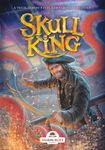
Schmidt spiel in skull King each round of trick taking lasts a different number of tricks so in round one each player only has one card in round two they have two cards and so on until the tenth round with ten cards and then the game is completed in each round players declare how many bids they're going to win by simultaneously stretching out their fists and then stretching out fingers from those closed fists several cards have special powers which function a bit like Crump's in a normal trick-taking game so for example pirate cards beat all other suits except for the skull king card and the skull King card will beat every other card except for the mermaid the escape card will never win a trick and the scary Mary can count as a pirate or as an escape card now with skull King as I've shown you there this game features quite a lot of special powers on some of the cards and while that feels like a very modern sort of innovation you actually see it in quite a lot of traditional trick-taking games that the jack or the queen or the king will have some sort of special power and here of course we've got a nice themed attic version of that one game which takes this to the absolute enth degree you know really really pushes this thing about special powers is the game Chronicle in Chronicle each card has a special ability which often activates the moment that the card is played if a card is played off suit ie it's not matching the card played by the starting player then that card is placed
facedown and then its power does not activate any cards which are taken in a trick a moved face-up in front of the player they're now called allies and each round there are one or more objectives that the players are trying to achieve in order to score victory points usually relating to the allies that are in front of them the card abilities often mess with your own or with other players attempts to fulfill these objectives they might discard cards or swap locations or disrupt the allies in front of the players another game which has special powers in it for the different suits is the game claim now this is a fairly recent game and actually this is a two player only trick-taking game which is something that's really uncommon in the genre you don't see the most most rating games of the three to five players sometimes stretching to six but it's very rare to see a two player only one in fact claim was released last year along with a very popular one called Fox in the forest which I haven't actually played yet other ones which I think work particularly well to play our potato man which I'm going to show you later and hagas which is a climbing game I'm going to introduce you to climbing games later but those are both excellent two-player trick-taking games as well claim is played in two very different halves in the first half of the game players each reveal a card in an attempt to win a central revealed card essentially this is a paired back auction whereby players build their hands for use in the later trick-taking
game which makes up the second half of the game in the second phase of the game players play a series of tricks following suit where possible and gathering the cards from the tricks that they win putting them into their scoring piles their playing was the majority of the cards from each suit at the end of the game scores 1 point per suit and the highest scorer wins examples of the suit specific powers are that the Knights will always beat the goblins regardless of value and Undead cards score points in the first half of the game unlike all other suits the dwarves are collected by the player who loses a trick rather than the player that one and so on now with claim we're straying quite far from that traditional format of a trick-taking game and actually all different aspects of trick-taking games designers tend to play around with so we've seen fun gherkin which doesn't actually feature any suits at all we've seen stick Elm where you don't have to follow suit and actually let's have a look at the game potato man in potato man you are not only do not have to follow suit you are not allowed to follow suit it is mandatory that you play a different suit to any other card that's already been played in that trick let's take a look at it in potato man the starting player of a trick can lead with any card from their hand and unlike most trick-taking games subsequent players are not allowed to follow suit indeed each of the four suits may only
appear once within each trick if any player has no suitable card to play then the round ends immediately hence the length of any given round is totally unpredictable the highest-ranked card will win the trick as normal but the very highest ranked cards the evil potatoes are always beaten by the very lowest ranked cards the potato men the winner of a trick receives one sack card in the color that they won the trick with different colors have different distributions of numbers hence the more difficult colors to win tricks with will score more points from their sacks the player who collects the most points from sack cards at the end of the game wins the game pala which is probably quite hard to get hold of at the moment which is a shame is one of the more complicated trick taking games but it's really really innovative in this one you can actually change the suits by merging cards together so you can take a red card and a blue card and make that into a purple suit it's a really intriguing idea so let's take a look at how power works in pala there is no Trump suit and players are generally required to follow suit where possible in this game suits are either primary colors so red yellow blue or secondary colors so purple orange or green if a player leads with a primary color subsequent players must follow suit if they're able to if they're not able to then they can play any card or add a second primary colored card to an
existing card smearing the colors to make a secondary color and then play a second card matching that secondary color so for example a player might add a red card to a previously played yellow card changing the lead color to orange and then play one of their own orange cards in addition if a player leads with a secondary color and subsequent players may choose to follow suit or they could combine two cards together to make the mixed color which matches that lead suit the highest card in the tricks final color will win the trick and there's a system of bidding at the start of the game and players can choose to either aim to win tricks as in many contract games or in a different version of the game they might aim to lose tricks as in evasion games the game diamonds experiments with when you're playing off suit so what happens if you can't follow the red suit and then you can play any card but additionally you're going to get some sort of special action as a result and the whole scoring system is based around when you play those offsuit cards and the actions that you take in diamonds players are required to follow suit as usual and there are no Trump suits in this game when a player can't follow suit then they can play any card and they actually receive an action dependent on the suit of the card that they've played if they play diamonds then they would take a diamond token from the supply and they would put it safely into their vault where it can't be stolen if they
played a heart card then they would take a diamond token from the supply but they would only get to place it in front of them not safely in their vault if they played a spade then they can move a diamond token from in front of them and put it into their vault and if they played a club then they can steal a diamond from in front of another player the winner of a trick also gets to take a suit action matching the suit which originally led that particular trick and after 10 rounds of play the player with the most diamond tokens wins and tokens in a player's vault scored double points shaf of shoten plays with the idea of giving the players a little bit more information and they would normally have so in this game you can see the card backs of all the other players and that will demonstrate each card back is colored to show you the color of the card front although you can't see the ranks of the cards so you've got a little bit more information on which to make your predictions and on how to play the other players how to drag cards out of their hand and force them to then play off suit or prevent them from doing so shava Shelton has a system of ranking Trump's wear by color and number cards are shuffled and laid out at the start of each round the colors closest to the left Trump the colors to their right and the super Trump's ie the cards which have the number and color indicated Trump all other cards in the game sharp Shoten is a contract game and before each round players predict which card color they will take the most cards in
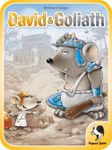
and which card color they will take the fewest cards in scoring is based on the accuracy of these predictions trick-taking works in the usual way following suit where possible but in this game players can tell what color cards are the players have in their hands by looking at the card backs the winner of each trick takes all the cards in the trick plus one bonus card of their choice from the supply after several rounds the highest scorer wins the game David and Goliath plays with what happens when you collect a trick so in this game one player doesn't just take everything from the trick but the trick is broken up in the cards distributed among the players with this clever scoring mechanism David and Goliath is a simple trick taking game with no trumps and where players are required to follow suit where possible the twist is what happens when you take a trick unlike most trick taking games the player of the highest card does not take all of the cards in the trick instead the player of the lowest card first takes the highest card and then the player of the highest card takes all the other cards in the trick the scoring is based on the face value of each card collected throughout the round but if a player collects more than two cards of one particular color then all cards in that color score only one point instead of their face value and to close this category of more experimental trick
taking games some games have a sort of make your own rules variant in them so so we have games like yet and on the cards and the dwarf king where the rules are variable depending on the cards that the players play and so you can actually create you know each round will play very differently the rules will be different the scoring will be different let's take a look at stick meister which is from the design of freedom and freeze who is known for these sort of audacious experimental projects it's a bit like a trick-taking version of his massive board game 504 a sort of a little workshop of how to create rules for a trick-taking game stick meister uses standard trick-taking rules following suit trumps highest card wins etc but for each round the rules of play and the scoring are altered by the players each player has three rule cards in hand at the start of any particular round and they allocate one of these to that round and these determine the ranking of the trumps or some aspect of gameplay or the scoring of the round after several rounds of play the highest scoring player wins you'll see that my own game pick Coco that we looked at earlier actually twists just one aspect of trick-taking so it stems from a single idea really what would happen if we played a trick-taking game where we couldn't see our own cards and this is
how I think a lot of people design trick-taking games just make one or two minor tweaks and the whole experience is changed some trick-taking games use that sort of trick taking formula to drive a different sort of game often these games require you to play tricks and then that the the order of you know you're sort of ranking within that trick will determine the selection of cards that you're then going to use in set collection or something like that I mean examples are the games Honshu and primal flower Minh really here the trick taking works like a form of card draft and I've seen quite a few reviewers actually say they don't think these should be considered trick taking games at all I disagree going back to the sort of 10th century games as I said before these games didn't feature following suit they didn't feature trumps and things like primal flower Minh and Honshu really Hart back to that earlier form of trick-taking but with a real modern twist on it so let's have a look at those games primal flower Minh is a trick-taking game in so much as the playing cards are ranked in each trick a single card is played by each player and the highest card played gets the greatest benefit and leads the next trick but it differs from other trick-taking games in that there's no obligation to follow suit there are no trumps and the cards from a trick are distributed among all players not all going to the one player on a player's turn they play a fruit
if they have any then they can add one or more PI cards to increase its value and the great thing about adding the number pi is that it's not a whole number so it prevents ties between the players when everyone has played a card then the player of the highest card gets first choice off the cards from this trick to add to their own display then the second highest player chooses and so on until all cards are distributed the player of the lowest card receives a plum card from a separate deck in addition to a card from the trick this order also dictates the order of play for the next trick with the player of the highest card leading players are attempting to build sets or melds of fruits sometimes all matching fruits sometimes all different fruits which will score them victory points later in the game several cards have special powers awarding a player PI cards or stealing cards from other players or giving the player a watchdog to protect their fruits from theft by another player Honshu is a trick-taking game without soups or trumps where each player plays a single card on their turn and like pi meld Flaman these cards are then distributed among the players with the player of the highest card getting first pick and so on the order of ranking also dictates the order of play for the next trick and as a mechanism whereby players can boost the value of the card they've played this time by adding a resource cube subsequent
players can also boost the value of their cards but they must play the same color of resource cube as the earlier player ie they must follow suit the set collection aspect of Honshu is where the game comes alive as players use their cards to build a city always overlapping at least one square of a previous card and areas of forest town and lakes all scored differently at the end of the game production squares produce resources for use in later tricks and unused resources can be scored at the end of the game by moving them onto matching factories so since the trip taking games first arose in the 10th century in China they've evolved in a very different way throughout Asia then they've evolved throughout Europe so in Europe there was the introduction of trumps and following suit around the 15th century in a 17th century we get the introduction of bidding and contract games meanwhile in Asia the trick-taking games evolved into a sort of subset of trick-taking games called climbing games in a climbing game the the aim is not to win a trick and then score points from that trick but the aim is to be the first to get rid of all your cards so let's have a look at a recent climbing game a very good one called ladder 29 in ladder 29 each player has a hand of 13 cards and throughout each round they will be racing to get rid of all the cards in their hand as quickly as possible
scoring maximum points for running out of cards first second and so on on a player's turn they can lead with any single card or with a pair of matching cards or a triple or four of a kind or a run of three or more cards in sequential order sets like this are called melds in trick-taking games each subsequent player must play a higher ranked meld of cards of the equivalent type to the starting player for example following a pair with a higher pair alternatively a player may pass after all players have had an opportunity to play then the starting player may play again and the trick continues until all but one player has passed the last remaining player then leads a new trick the round ends when only one player remains with cards in their hand there are several special cards in this game so the chief and lieutenant who are the highest ranked cards but they can only be played alone as single cards not in pairs not in triples not incest or melds of any kind the rookie is low ranking when played alone but it's very high ranking when you play a pair of rookies the dalmatian functions as a wildcard when it's used within a pair there are also limitations on players abilities which are chosen by the players at the start of each round and generally the more severe the limitation
that you select the greater the point scoring opportunities are awarded to you later in the game another example of a climbing game is haggis which is a two or three player climbing game which is really fairly traditional it looks very similar to a traditional card game and actually it has something very similar to trumps in it it has bombs where you can put together a particular combination of cards and then play that to end the trick immediately and then continue from there so that's a slight sort of similarity to the other type of trick-taking games that use trumps the most famous and popular example is the four player game teach you which is played in two teams of two so it's a partnership game and you see that in quite a lot of traditional trick-taking games as well so things like bridge partnership games now I'm not particularly familiar with partnership games I find it hard to get that sort of game to the table because you need a very specific number of players and often these games really benefit from a whole group of players who know the game very very well and have studied it and learned the strategies learn how to communicate with their partner learn how to give messages and so on so I'm not really into all of that but one partnership game that I do like very much is the game Frank's zoo each card in Frank's zoo indicates an animal and the animals which rank above it the starting player in a round plays one card or a set of matching cards a meld subsequent players
can either increase the rank by playing the same number of cards but with a higher animal or increase the number of cards by playing a larger set of the original animal or they can pass players continue playing into the trick until all players but one have passed and their players score points according to the order that they run out of cards with the first player to run out of cards scoring the most points in later rounds players can form partnerships based on the scores that they've made so far in the game in the partnership rounds both partners score based on their ending positions but individual players also score for the cards that they've taken with lions and hedgehogs having specific scoring criteria partners can also ask for help from the other partner during a trick so this means a player could play a small set of cards and then ask their partner to complete the set by adding more cards if they have them but players do not know which cards are in their partner's hands so there we go that's a not quite exhaustive but hopefully a pretty thorough guide through the modern trick-taking games I hope I've mentioned most of the relevant ones from the last few years I know that there were quite a few that came out last year and I'm sure there'll be many more this year that you know haven't played yet and I haven't been able to mention and I hope you find it interesting either as a designer or as a player if you like the video please
subscribe to my channel Adams board game Wales follow me on twitter at board game Wales on BoardGameGeek I'm Adam 78 thank you very much for watching all the best