Why I Love Board Games from Japan & Where to Find Them! 🇯🇵




Transcript
If you examine my board game collection, a significant proportion of the games are designed by European game designers, and that's because I really love those old school Euro style games, ones where there's a lot of strategy, you collect a lot of victory points, and multiple paths to victory. However, the last couple of months my focus has really shifted towards the Japanese game market, in particular, Japanese games designed by indie publishers, and ones that I've never heard of. Not sure if you've heard of all of them. And if you've been following me on YouTube shorts, you might have seen some of the ones I've been showcasing recently. And so it got me thinking about what differentiates the Japanese board game market from the European and Western style board game market. And in this video, we'll be sharing five reasons why I love collecting Japanese board games.
Hi, my name's Danny. I'm an avid modern board gamer from Australia. I'll share my passion for this hobby with you, my friends, and my family. Come and join me for this journey. And don't forget to subscribe for more wholesome board game content.
Now, one of my biggest dreams is to visit the Tokyo board game market one day and explore what sort of games there are to offer. But if you're like me and you live overseas and getting that plane ticket, especially with fuel prices right now, they're a little bit higher than board game prices, actually. Um it's a little bit harder, it's a bit of a hurdle to get through in order to get to the games that you want. Now, a lot of people have been asking me where I get my Japanese games from. Well, my primary source was actually two places I often look for Japanese games, and that is Amazon Japan, which anyone can sign up an account for. However, there are certain particular games where they will deliver to your country and certain games where they won't deliver. So, it is really down to the particular seller on the Amazon Japanese marketplace whether they're going to ship to your location or not. But, the primary place I go to is a place called Suruga-ya, which basically is a online and they've opened a couple of physical stores in Japan.
Basically, it's like a collectibles shop where basically they sell, you know, miniatures, they sell all these like Nintendo games. But, they have an incredible tabletop and card game section. In fact, card games is a separate category from the tabletop game category. And so, if you look up board games in that category, all of the games on there are second-hand. And something that's really what I find and I really appreciate is that a lot of people a lot of Japanese gamers will often not just, you know, donate a game. They'll try and keep a game in pristine condition and then try and resell it before moving on to the next game. So, therefore, their collections kind of stay a little bit more compact. But, yeah, Suruga-ya is a place that I go to and I could literally probably talk for about 20 minutes about this. But, I often look through the games on there and do a little bit of research.
In terms of how I pick the games, often I'll use Google Translate or often highlight the Japanese name of the game and put it into the Google search and look for pictures of the game or sometimes they might even have an English translated rulebook that's not necessarily on BoardGameGeek. And so, while a lot of us often go to BoardGameGeek first, with Japanese games, they often have a Japanese Tokyo market page where you can actually look up the game because they're going to be selling the physical copies of the game at the Tokyo market and the Japanese game market often have like a page that goes with it. There is this other website that often has like it's almost like a Japanese version of BGG which uh often lists a lot of uh Japanese board games where users can upload their photos. I'll try and put the link below uh to what that website is. It The name of that site has left me for now, but Suruga is particularly good because not only do they offer regular free shipping campaigns. Yes, free shipping. Uh and they've actually extended their coverage to where they ship to. Uh I think it's only one Japanese yen to ship one particular purchase parcel. So, if you bought 10 games, and that's how I've done it, often bought like five to 10 games, you just pay the one uh Japanese yen shipping fee for handling basically.
And often they'll have bulk buy discounts. So, the more games you buy, the greater the discount they'll take off your total price. And because a lot of these games are second hand, they're incredibly incredibly cheap. So, there are certain games I've got even on this shelf for like 15 Australian dollars. And you know, if I were to look for some of these games on eBay, first of all, they might be hard to find, but second of all, the prices would be through the roof. So, Suruga has has honestly been one of the best websites that I've been to. And it's pretty much how I acquired most of these games. But it does require a little bit of patience, a little bit of sifting through um and trying to translate things and seeing what the game actually does. But for me, that's the fun of it. I love looking for that buried treasure. So, yeah, and I've discovered some really, really fun games. And if you look on there and you're like, "Oh, there's a game that I really want, but it's not there." Go back in a couple of weeks because they're always updating new second hand games that are being added.
In fact, there are ones where I've bought and I thought, "Oh, there's no more copies of it." And 2 weeks later, there's another copy on there. So, like Perfumery, uh Astrios, that they they it's a very active webpage. On to my top five things that uh have me addicted to Japanese games. First thing is, I want to show you a game that I got recently. It's not a Japanese game, but it's going to illustrate my first point. This is Moon Colony Blood Bath. And uh a lot of people have heard about this game recently, mainly because you kind of build up an engine and then you kind of deconstruct it. But, what I found was that when I packed my game away, look at the inside of this box.
Now, there was an insert in this box, but I've actually thrown it out because I often like to have my own little separation containers. But, look at the amount of air space that is in this box. This box literally could have been a quarter of the size. You've got some player boards, a deck of cards, and some tokens. And so, when you look at games like that, and then you see a Japanese game like this one, which is Acony즘, which is a tile-laying game, and you look at the thickness of the box and how the game designers try and pack everything into this very thin space, the one thing that has me addicted about Japanese board or board games from Japan is their compact designs. The fact that I can fit 20 games on my dining table, and if I had 20 kind of games from the western part of the world, they would literally take up, you know, a big portion of my Kallax bookshelf. And so, you know, I got this other game recently called Luminous Spell, which is actually a tile pushing game where you cast spells by pushing through these beautiful, like, window pieces. But, the game itself has been compacted so much that they've thought of every way that they can use to save
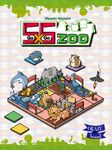
space. And I think part of Japanese package and game design is all about maximizing the use of the material and making sure that there is no wasted space. And so, a game like this is probably going to come off my shelf more often just because of its compact and thin nature. I've got a few other games like 5x5 Zoo, which a lot of Hisashi Hayashi games come in these compact boxes, and then I think, "How How can you fit this massive Euro inside such a small box?" And then when you lay all the pieces out on the table, you're like, "Oh my goodness, they really, really fit so much in." And that's one thing I've really, really been addicted to the fact that I can fit a lot of these games on my shelf. It's less about, you know, box presence or shelf presence and more about, "Ooh, these are small games that you can carry with you. These are small games that you can get out. And these are small games that you can just, you know, keep on your bookshelf, as well." The second thing that has me addicted to games from Japan is the fact that a lot of these indie publishers and indie game designers there really love to push the envelope in terms of the mechanics. Um these are people that are self-publishing or self-designing and self-releasing and investing, you know, their creative effort into these games.
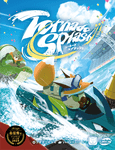
Uh they often have weird, quirky mechanics that often are strange mainly because it was a cool idea that they thought of or it was something that was different to what they would normally do. And so, one of the things I like are the innovative mechanics that a lot of these Japanese games present. And they often um for example, in this one, Naya's Quest, it's all about cats trying to compete to try and catch this koi that's in this central pond. And what you're doing in this game is you're rolling these dice, and the dice give you particular movement actions that allow you to move your cat across this common grid. And then when you capture the koi, you can also battle other cats to try and steal it from them and take it to your home. The fact that uh that's a mechanic that I don't often see in a lot of other games. Uh there's another game called Tornado Splash, which is all about laying cards and you're kind of racing jet skis with each other. Or there's a game up here called Grave Keepers, which is all about tending to uh different graves and then using the grid of gravestones as a way for creating deck synergy and collecting different little spirits.
There's so many really cool uh innovative mechanics that I think are often expressed through these small Japanese box games. And often when I play some of the bigger box years that I've got in my board game collection, uh a lot of those bigger box years often have a big set of clunky mechanics where you're set collecting over here, you're moving up tracks over here, and then you're, you know, converting resources. A lot of these games basically focus on one core mechanic. If it's like Thief and Sheep, it just might be laying a card, moving your sheep. That is it. And that's the core central puzzle to it. Or it might be succulent garden, where you've got all these different plant pots, and then you're placing succulents out of different values, and whoever finishes the plant pot gets to keep the pot and all the succulents that other players have contributed. But the power of your hand decides the order in which you fill those succulent pots. There are some really, really cool different games that I think should be highlighted more. And because a lot of these games and the rules are in Japanese, there is a little bit of a language barrier where you have to kind of go through and try and translate the game, try and work out, you know, what does this rule mean? Are we playing this correctly? This is a game called Limitation, where there are five rockets, and you're building rooms on
the rockets, and then you're housing your astronauts. But there's a particular limit to the amount of food each rocket can have. And there's also a car a room capacity. And if you have certain astronauts on a particular rocket that flies to a particular planet, you can score points. But each of the different astronauts that you put on there have different values. So there's a little bit of area control. Each of the rooms that you can add to a spaceship have different powers, different abilities. It might increase the food capacity. It might include crew members. It you need an engine. Or it might allow you to move an alien to someone's ship, overloading that ship and causing all the players on that ship to not score points. There are so many really cool quirky games that honestly, it's it's a whole 'nother world that I think after 10 years of, you know, collecting board games and playing board games, the Japanese board game market is quite interesting to me at the moment. And I'm really, really loving just the simplicity of the ideas that these games have. And so, my third point is that the simplicity of the way these games are expressed compared to the depth ratio means that these games from Japan often have a simple learning curve, yet they're hard to master. Now, this simplicity {slash} depth ratio is often
seen in some of the bigger box euros. So, if you've ever played Yokohama, or you've played Nippon, or Sweet Land, those are games where the rules are of a medium level, but once you've got the hook, the ratio of depth of those games is amazing. Like, Yokohama is a brilliantly designed game. The idea you've got different locations, you're putting little helpers, and you're moving a person around to different parts of the map, and the power of each tile is um determined by the number of helpers you have at that tile. And so, that creates this great sense of interaction. That one core neuron joining expression mechanism just really makes a lot of these games from Japan brilliant. This one is called uh Bokosuka Chess, which is actually based on a video game, I think from the '80s or '90s, but uh it's actually a twist on chess, and there's little terrain things, and each character's abilities, and then each of some there's some characters that are locked in a prison, you have to break them out.
There are some really great games that um really are simple to learn, but the depth and the interest level that I've uh found from them have found that there's these really cool hooks that really draw you into the game itself. And so, I really appreciate that um a lot of the designs are very accessible, but also quick to just get into and engage with. The fourth thing I want to mention about games from Japan is the fact that they have very quirky themes. Um a lot of Euro games often focus on the idea that, "Okay, it's set in this historical context." Or you've got these resources and you're trading them in. Or you've got cute themed little animals, which Japanese games often do. But, I think what I really like about Japanese games is that they'll go with any theme that really works with the mechanic. In fact, I've got a game in my collection called Zombie Snowball, which is kind of based on those pachinko machines, which is basically like you're dropping these little silver balls and they go through these little um nails and then they ping pong down. And so, Zombie Snowball is a game where there all these zombies are climbing up this ramp, and you've got these little workers at the top, and you're moving a worker to different spaces and dropping this silver ball down the ramp to try and knock them out to stop them from overriding the farm at the top of the hill. And so, that, whilst it's a very
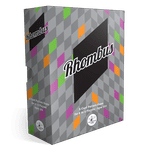
dexterity based game, just fits so thematically. This game here, it Ajisai, is all about the color-changing nature of hydrangea flowers. And, you know, if you've done a little bit of high school you can kind of grind down the petals of the flowers and turn into like a litmus indicator, which will tell you whether something's acidic or basic. But, here the designers harness that into an abstract game where if you place a particular color petal, it's going to change the petals around it. And so, then it becomes this area majority abstract game. Or it might be Mushroom Soup, where you're brewing mushrooms, but it's a game of deduction about trying to work out who has which particular suit of mushroom and which player has which value of mushroom and trying to out-deduce them in order to create the best combination. And so, I just love that. This game Rhombus here is basically only got, I think, like 20 tiles, or no, 26 tiles.
And you're basically trying to create regions of exactly 10. And when you create that, you win the game. And [clears throat] that's basically it. You're putting these little rhombus-shaped dominoes to create these little areas, and the patterns on the dominoes give you alternative ways to score. So, if no one creates that area of 10, whoever connects those together will get a certain level of points. And the simplicity of that and the quirkiness, even though it is an abstract game, uh something about it just really draws me in. The fifth thing that I'm really intrigued by when it comes to Japanese games is the fact that they're really deep into creating power suits and card play and trick-takers. In fact, there are so many trick-taking games and variations to uh the trick-taking mechanic that uh they're basically spawned like hundreds of different variations of it. So, trick-taking, basically, someone plays a lead suit, all the other players need to play a card that follows it. If not, they can play any card from their hand.
And whoever has uh the winning suit or the high suit will take all the cards. And there's a variety of different ways you can play with that mechanic, whether you don't want to win tricks or you want to guess or predict how many tricks you want to win, or there are tricks that you can play uh by creating a legacy of tricks, I don't know. But they love trick-takers. The other thing I've also noticed is that they love when you've got like a regular deck of playing cards, where you've got hearts, diamonds, clubs, and spades, they love the idea of games that tap into having a full house suit, or having a straight, or having a flush. And so, I've got games like Maneki Cat Collection, where you're basically bidding on different cats, but then you're creating like a poker hand level of, you know, cat combos. And if you've got the most powerful level, you get more points, or you acquire little cat tokens that give you points at the end of the game. And so, a lot of games like Mushroom Sort also tap into that power of your hand. Do you have four of a kind, or do you have, you know, one of every color, but it's the same number? Um they often love playing with the idea of suits and ranks, and outranking other players by having a combo of cards in your possession. And so, that is a common thing I've seen across a lot of Japanese games, and I think part of it is more
because it has that classical feeling that you're playing those traditional playing card games, like Texas Hold'em poker, or blackjack. And that's why games like Flip 7 are so popular, because they tap into those old school mechanics that we are really, really familiar with. And they also have that level of interaction about them that means that you don't always just feel like you're playing on your own. And so, a lot of Japanese games, especially the smaller box games, will use that mechanic. And so, there's a game here called Marine Go Round, which apparently is very similar to backgammon. It's an adaptation of it, but it's got like a food chain theme. And so, a lot of these games are inspired by those classic casino style games. And sometimes, um there are twists on those casino style mechanics where you go, "Oh, this game is just a variation of hearts." Or this game is a variation of Blackjack. Or this is a game that uses, you know, um, trump suits. I really like that because it's like, yeah, a lot of the games that people are familiar with, they've now tried to incorporate them into more of a approachable and non-gambling style theme to them. I just wanted to share some concluding thoughts about games from Japan.
Um, I just really think that a lot of these Western games that we buy, uh, a lot of them really fight and prioritize shelf presence. You walk into the department store, you walk into a your local game store, and you you're caught immediately by like this giant long box or a Gloomhaven style box or, you know, Lost Ruins of Arnak level box. And so a lot of those will often compete for our vision space. Um, what I really like about games from Japan is that because they're published by indie publishers, they kind of have that little homely feel about them like, you know, do you decide to go to a fast food chain for lunch or do you decide to have a home cooked meal? And sometimes that home cooked meal is something that you really or I really crave for. And so I think these Japanese games have really reminded me that games can come in all shapes and sizes. They can really appeal to that feeling that I have when I have a home cooked meal. It's like, ah, this game is literally as the game designers and publishers intended. Because a lot of these, um, modern widely published games often go through like a big vetting process or the original concept of the game has been changed in some way or the theme um of the game is not what the game designer intended. And so, the thing I
really like about indie publishers, and this goes to for all indie publishers, is I just love supporting a dream. The idea that if you have this idea of a quirky game like Zombie Snowball, then create it. Don't let anyone get in your way. Or if you have a a game which means, you know, you want to put octopuses on Mars, then make that game. Actually, I think that might exist Cosmic Octopus, I think. But yeah, like I do feel like there are there is space in the board gaming world. And And this doesn't just apply to Japanese games. I mean, like Moon Colony Bloodbath, this is a pretty unique game. Uh I just think it's a reminder that yeah, if you have a quirky game, just make it. If you have a quirky idea, you know, you can craft something that other people will enjoy and find intriguing. In fact, the weirder and more quirky the theme, the more I'm probably going to buy the more it's probably going to go in my collection. So, what did you think of the reasons that I presented? Are you someone that's never looked into games that originate from Japan? Um are you Have I piqued your interest? Let me know or share your story about your experiences with games designed in Japan and how they fit into your wider board game collection. Now, if you found this video super helpful and enlightening, please consider liking and subscribing to my channel. I'd really, really appreciate it. Also, uh please consider
buying me a coffee a month by heading over to my Patreon page and uh you can support me over there. Thanks once again for joining me for another Board Game Sanctuary video. I hope to bring you another informative and light-hearted video in the near future. This is Danny signing out. See you soon.