Beyond Solitaire Podcast 253: Alisha Volkman on The Game Crafter
Games in This Video
6 games are featured in this video — they unlock as you watch.




Transcript
The Beyond Solitire podcast is proudly sponsored by Central Michigan University's Center for Learning through Games and Simulations. Their newest project, Line by Line, is a game about poetry and it is live on Backer Kit on October 20th. It is an adorable game and I've interviewed the designer in episode 236 of this very podcast. So check it out. And for now, let's get on with the show. Hey gamers, this is Liz Davis from Beyond Solitire and this is the pod of a very special guest. This is Alicia Bulman and she is the marketing and community manager game crafter as well as an artist and game designer. How you doing today, Alicia?
I'm good. Thank you, Liz. Thank you for having me.
Yeah, we've met a couple times now. now. So, I ran into you at Protospiel and we met up again at Gin Con.
Yeah. Yeah, that was a surprise.
Hey, it's a small world. Um, so, uh, for people who are curious about your game design life, uh, what are some designs you might be known for?
Sure. Um, so I I've been doing this for a while. I'd say maybe like 15 years. Um, mostly in the indie space, so I've worked with a lot of smaller designers. Um, some of the bigger ones I might be known for is Adventure Tactics. I did some work for their like tiles and their backgrounds and some of their items. Um, that's probably the biggest one I'm known for. There's a lot of smaller ones. Um, I should say there's a lot of smaller ones like 150 or something to my name. Um, I think some of the early ones was um like uh it was called like honeybees. Um, there was oh shoot there's so many it's hard to remember. Um, Alice in Wonderland. It's almost like, "Oh, I should pull my portfolio because I have all of them listed." Um, recently, uh, Maze Craze, Monster Highway, um, there's some that I don't even think came out yet.
Uh, nope. Sheep, uh, Sheep Baboon came out. So, there's those just a couple, you know, small ones. Um, but yeah, so those are kind of what I've been doing for at least my illustrator stuff that's in other people's other people's stuff, but I do a lot of my own stuff, too. Um, not not nearly as known as some of the other people. Um, I uh I did my own small card game called Armor Up and I'm working on um I had done all the art for a game that's getting published soon, but we decided to go with a new artist just cuz I just don't have time at the moment to update it. Uh that's been picked up by Whiz Kids. Can't talk too much about it because they're doing some stuff with it. Um, I had a game called Underlings of Undering published um back in I want to say it was like 2015ish. Um, and then I'm pitching Wormy Boys. Uh, it's a really ridiculous looking worm game. I'm pitching that to a couple people right now. Um, so I've kind of got my hand in lots of pies. I help people with their games. I do some of my own games. So, it's been a lot of fun.
That's awesome. Okay. So, um, when you were working as an illustrator, did you always want to be a game designer, too, or did you get the bug by illustrating for games?
I kind of got the bug. So, I started out with just like a random person I found at a game store, was looking for an artist, and they were hiring a bunch, and I'm like, "Oh, I'd love to be one of your artists." And it's like, "Oh, if I want to be in the game design world as an artist, I should have a portfolio. I'll just design a simple game, and then I'll start having like my portfolio." Well, then I of course you design one game. you have to design more than one game. Um I even like my first Kickstarter I did on my own was like 25 backers. Like I said I like I have a tiny goal. I succeeded. I had like 25 backers. I was so excited. Um and yeah, like you design one game, you're you're stuck. You're you're addicted.
Yeah, I uh I still only have one tattoo, but that is not true for games. Um, I all my tattoos are video game related, uh, oddly enough. Um, but that's my that's one of like four shelves of games I have down here. So, definitely have more games. Tattoos. Uh, so, um, just to check in since we saw it at at Proishfield, uh, how's Wormy Boys doing? So, tell people what it is.
Uh, yeah. So, Wormy Boys is a flip and right um where you're uh drawing like cute, adorable, sometimes kind of weird, freaky worms, um based on some um polyominal shapes and patterns available to everybody and you're all kind of going for the same quests trying to make uh the worm with most eyeballs, the worms with most curves, the longest worm. Um it's going great. I've had it blind place a couple times. It's been doing good. I want to adjust the scoring a little bit and I think like three nights ago in my sleep I had like the perfect idea. So I got to go get that tested which is happening at Profield Madison. I'm going to test that out and see how it goes. Um cuz the game is fine right now. Like it plays fine but could it be better? Maybe. So uh it's doing great. It's um I it's ridiculous. My current thing is like if you're a publisher maybe you shouldn't change the theme because it's weird and maybe that's good.
where normally I'm like do whatever you want with it. So, um yeah, that's pretty much Wormy Boys. It's just a really weird game about drawing ridiculous worms.
Hey, you know what? I think that there's a lot of room in this life for the ridiculous. Um so, you also work for Gamecfter. So, how did that how did that come about?
Yeah. Um so, back in uh post precoid times, um I was um just using the GameCrafter like everybody else, right? printing prototypes, hanging out in the community discord, making friends, and this kind of stuff. Um, and because I used it so often, like I had no problem helping people out in chat who needed help. Um, one day I got re uh was reached out by Heather, the customer support supervisor at the time, and she was like, "Hey, Alicia, um, my other customer support person is going on maternity leave. Would you want to come in as like a part-time customer support person to help us out?" And I'm like, "Uh, yes, absolutely." like I'm doing nothing else better with my life right now. So, I'm just like, "Yeah, like I'll come do that." So, I just jumped in as like part-time customer service. Um, soon after that, I um started helping out with their concierge service. So, that was that was a lot of fun, just kind of helping people with their files.
Um, that's kind of how I got started there. That's really cool. And also for people who don't fully know what Gamecfter is, like maybe you've only ever bought a game at Target. Um, what is the Gamecfter and how does it help our community?
Yeah, absolutely. So, the Gamecrafter is a print ondemand service, which means that you can print your board game with us and you only have to buy one copy. You don't even have to buy one copy. You can just print some cards. You can just print your rule book or a box. You don't even have to print your whole game. Um, it allows you to essentially make your prototype for your board game. Um, whether you want just something really uh rough and unpolished for testing that isn't index cards or you want a nice shiny polished prototype that you can bring to a convention and put in front of more people to try to pitch. Maybe you're a small indie project. Um, just something that maybe just because sometimes some play testers are like, "Hey, you know, I can't quite get past your index cards or I can't quite read your handwriting." Um, or like these card sleeves are finicky. So you can get like a nice printed prototype that you can easily shuffle and play with. Um, personally that's what I use it for. I usually print just like a ton of prototypes. Um, I am obsessed with pretty prototypes. So um, I know a lot of people are. Uh, so the community uses it a lot for that reason. Um, but it's also not just prototypes. You can print your final print run. They do bulk orders um, discounts up to like a thousand units. Um, you can also fulfill your Kickstarter through the game crafter. So, it's meant to be a really great kind of one-stop shop for us small for our smalls, right? For us people who aren't printing, you know, 10,000 copies. It's a nice small place you can start your own publishing company and and get your start there. A lot of people get their start there and then go on to be much bigger and start printing, you know, big print runs in China. So,
on top of that, we also try to always give back to the gaming community. Every year, between like 60 and 90 events, we sponsor every year. Um, if you go to a ProSpeel and there's a table full of blank parts and random game pieces, that's us. Those are things we sent to those conventions. We're like, "Here, game designers need this. Take it." Um, so we're also trying to do that all the time. And we try to go to conventions and and help people with their stuff. And we're always putting out um random content to try to teach people things about game design or things that they might not know they need to know about being a game design publisher or being small and indie. Um, so apart from just making your game, we try to support you, you know, from start to finish in like your whole design journey from getting the game to you as a prototype, getting it out to your customers. Um, we give you a platform to sell your game on if you want to. Um, and then we also try to just help you outside of that at your conventions and things like that.
Okay. So, uh, one of the questions I have then, so you you know, Game Crafters for the smalls, um, what is considered a large print run on the Gamecfter?
Sure. Um, anything over I'd say a thousand units. um a thousand units we can pretty much handle. Anything above that becomes a little more difficult just because it's a lot more games, right? And um we want you to have the best options for your games. So, we have this thing on our site called a manufacturing agreement where if you're running a Kickstarter or some sort of sale for your game, we will help promote that sale for you and you sign a little agreement that says in exchange for us promoting it, you'll print your game with us because of and this has nothing to do necessarily our limitations, but because we want you to do better um at 400 units, we're like, "Hey, we'll still promote your game. We'll still promote your product. You are out of the agreement. You are not stuck with us. If you want to go print 5,000 units somewhere else, you can do that. Um, because around 400 units, you can start printing in China at like 500, right?
So, we let people out of the agreement. So, while we can easily do 500, we can easily do a,000. We could even do more than that, we can't give you a discount past a,000 cuz we're print on demand, right? We want to get, you know, small runs is our jam. That's like what we do best. So, um, anything larger than that, we're like, "Hey, we can do this for you, but have you considered maybe getting a better price and more units somewhere else that might help you just do better in the long run?"
Oh, that's really interesting. Um, and then, you know, so I actually did not know the Game Found could be used to support a Kickstarter. Like, that's very cool. So, do y'all also when when that happens, are you like a one-stop shop where people can print with you and then you ship it out? Do they still need to do like warehousing? Like how does that work?
Yeah. So, we offer a couple different options depending on what you need. Um, the most common one is our BOAF or bulk order fulfillment system where you take the like the spreadsheet from Kickstarter, the spreadsheet from Gamefound with all your backer information and you have to do a couple small edits and then you upload it to the system and it essentially will take that uh backer's shipping information and then what they ordered and then you assign that to like a game that you have on our site and then you just we tell you like the shipping cost, you pay the cost for manufacturing, the bulk order and the shipping and then we just send it out to everybody, all the people on your There's no additional fee for that. It's just as if you were buying the bulk order, you pay for the shipping and then we just take care of the rest for you, getting it out to all those people. Um, we do have warehousing options. So, if you want to do that, plus, you know, keep a bunch of games on hand. Um, even sell those on our site if you want to or sell them to other places, use us as a distributor, hook us up to Shopify and sell through Shopify, which can hook up to like Etsy and eBay and Amazon.
So, we have that as an option if you want to use that. Um, some people just store their games with us in general. Um, but we have smaller options if you just want to essentially print on demand your games. So, you're just like, I want to buy and have you guys print a,000 units and I want you to ship, you know, 600 of them out to all these people and then ship 400 to me. You get that thousand unit discount and we just do all the shipping for you. And then we also handle all your customer service. So, um, people place orders for your game with us. We handle the customer service. If something goes wrong with the shipping, we help handle it. So, you also have our support team to back you up when you do stuff like that.
That's really interesting. And then gamefront, I mean, GameCrafter is also basically like a storefront, too. Like, I've bought a lot of individual games off of the game crafter over the years. So, um I guess how does that work? I know that you have sold your own kind of prototypes that way because I bought one. Um but uh how do you you know if you want to set that up you know how does that work and you know what kind of commitments have you made when you put your game in the store like that?
Yeah. So it's actually really simple. So your only real requirement is that you've ordered a copy of your game because you should really see it in person to make sure that the colors look right and there's no like weird drift thing happening or like your stuff is set up correctly. Um sometimes you don't see that typo until you've seen it in person, right? So, you look at your game and then you're like, "Perfect. It's ready to sell." You just go back onto the site because the game you ordered is still there. Uh there's a sell tab. You click on the sell tab and it's just like here, set up your price, set up uh whatever you want your um vitals to be, like how many players, how long does it take, what age is it for, um set up your shop page, add a video, um pretty much just make like a nice little sell thing, and then you hit the publish button, and your game is live on the site. Anybody could buy it. Um so, it's it's really really easy. Um, and then what makes it great is then you can then promote that wherever you want. What's even better is there's no commitment. You can take it down at any time. We claim no ownership of your game whatsoever. It's yours.
It's your copyright. It's your game. You pull it down whenever you want. Um, you make sales. We pay you royalties. Um, there's but that that's pretty much it. We don't like require you to do anything other than like have a copy that you could have reviewed yourself. Um, and then yeah, you take it down, it's yours, you put it back up, whatever you want. Um, it makes it really easy and I would say like less stressful than being like, "Okay, I need to go put up a Kickstarter page. I have to commit to all these people. I have to like, you know, I'm going to show this to everybody." Or you can just like, "Hey, I'm going to put up this game here. If it doesn't sell, it doesn't sell." Right? You're you're taking that pressure off of you. Um, you can kind of gauge the market. you can, you know, maybe have a couple friends and family buy it, maybe build a small little community because I mean, word of mouth is really how games sell these days sometimes where it's like, "Hey, did you try this game?" So, it's a nice little small um easy way without a ton of pressure on yourself to kind of put your game out there. Um, that said, a lot of designers have kind of blown up by doing that. We have a person who stopped doing Kickstarters and exclusively sells on the Gamecfter now. Um, and he sells just tons and tons of copies of his game. And it's just taken a lot of pressure off him because he doesn't have to like have to worry about running Kickstarters and managing all his backers. And then now when people buy his game, if they have a problem, they don't have to go to him.
They go to us. They're like, "Hey, this is missing like two dice." And we're like, "Oh, I'm so sorry. Here, have those two dice." Um, they don't have to worry about that as a designer, right? We can take care of that for them. So, it is um I know I do it anytime I have like a game that I think is finished, I'll throw it up there. It's like I'm not pitching this one. maybe people will like it. Um, and so that's what I do. Or occasionally someone like Liz is like, "Hey, Alicia, can I buy your game I played at Brofield?" I'm like, "Sure." Yes. You know, there's many ways to acquire games. Um, so my own personal experience with the game crafter has just been through getting prototypes printed. So, you know, David Thompson and I have done um all of our big like night witches prototypes uh that we used for testing and for pitching and stuff through through y'all. And uh one thing that's very funny is that uh because the files very clearly say Night Witches, it was very obvious like what the game was about. And we had, you know, uh every single time I've like got a Night Witch thing, there's been like a note that has some Sabaton lyrics on it hidden somewhere in the packaging.
And I personally find this delightful and I love this. Um, so I guess the question is like uh how close attention are y'all paying to the things that we send in because uh you know it's like you send something off and it's like okay like is somebody just gonna like is just be like okay computer do it and like they hit print or like you know what's there's clearly a personal touch there.
Yeah. Um well I do see every order that comes in and who it's from. Um I review them occasionally but also we have someone who checks games for copyrights and like maybe some weird file issues. So, you might get an email from him being like, "Hey, do you know your card has no bleed?" You might want to fix that before this order gets printed. Um, but on top of that, um, once your game actually hits like the production floor, um, once it's like either about to be printed or being printed, there's like, you know, someone there's a person there seeing it on the screen and then seeing it print and then they're like, "That's cool." Um, and that happens from time to time. or we get like um a really cool IP and they're just like um are we supposed to print that? And so occasionally it's just like hey uh customer service, can we print Pokemon the drinking game? No, we cannot. Please don't print that. Um so there's definitely lots of people involved. We are a small company. Um and you know bigger companies uh that print you know thousands and thousands of units the whole process is mostly machines. For us, it's a person has to print something and then move it from the printer to the next machine and then sometimes they have to like, you know, flip depending on the machine, they have to like, you know, change out sheets and so they're seeing pretty much your whole game. I think the only thing they don't necessarily look through is like your rule book because that's kind of printed in like a whole thing and then a machine folds it and everything. So, there's a couple things where they may not see the whole thing, but generally they're seeing like a majority of your game and they're also mostly gamers, so they're just like, "This is cool."
That's really fun. I you know it's I did not realize there was that much like one person's kind of looking at maybe multiple parts of of of a prototype.
Yeah.
Um how many how many people's games can you deal with at once? Because actually the one time we didn't use the game crafter or something was because we just didn't we couldn't do the wait time. So like you know there is a wait time for these things because there are lots of individual people with little print runs who want their stuff done and there's limited person power to do it. So um you know realistically you know why is that waste time there and like how many projects are y'all doing all the time?
Yeah. Um well we're usually doing quite a few at a time. I'd say probably around a hundred but it mostly depends on what those projects are and what machines they're using. Um so cards way faster. We have machines that like you know print and cut cards very very fast. Um, but if you need like your if you need a whole bunch of chits, the machines we use for chits takes a while to cut. Um, I was uh kind of um stress testing the machines when we first got them and it took two hours to cut my puzzle. So, it takes it can take a long time depending on your cut file and what you're cutting. So, we can only go as fast as our machines will allow us. Um, and then of course we need people to run all the machines. So if you know our team if like three or four people call out sick or if all of a sudden everybody's got the flu, things slow down a bit. Or if you know two of our printers break down, we're down to one printer. We had to wait until those are fixed and we're slow for a bit. So um the queue is there for a couple reasons. One, we get a lot of orders. We do them in the order they come in and machines are only so fast.
So, if um you know, someone places an order for 1,000 units and it's going to use up one of our uh one of our cutters, that cutter is essentially down for several hours because it's cutting that. So, we're down to two for all the other orders. Um and that's something that's kind of it's not fun. Um because we all want our thing, we want it now. Um which is why we have our urgent queue, but even that it, you know, it's still machines only go so fast. So, if you're urgent ordering and you're urgent ordering a thousand units, well, the person behind you in the urgent queue is going to have to wait for your thousand units. Um, so it's it is sadly a uh is something that happens. Um, and it's something that's going to happen when it comes to a small even with a small company. We've recently brought in more machines to make it go faster. We're bringing on more people, but that takes time, right? We got you got to wait for the machines to show up. You got to set machines, train people on machines. So, uh you can almost call them growing pains, but um yeah, the cues are there just because I mean things take time. Um but thankfully hopefully we can start making them a little faster so it's not so crazy. Um of course holidays are around the corner so things are going to get crazy again but um yeah I mean it's kind of how it works. Interesting. You also mentioned okay if you you can't print an IP I guess. Why? Hey, like if you just made something for yourself, there's all kinds of stuff that nobody's ever going to actually sell like sitting around on BG or like you can make that stuff. Nobody stopping you if you're not trying to sell it. So, what are the actual restrictions around what you can print at the Gamecfter? And I guess why
if it doesn't seem like it's for wider distribution or something like that?
Yeah. Uh, that's a really good question. Comes up a lot actually. Um, people may not think of it this way because you're like, "Oh, this is for personal use." Yeah, but we're making money on you printing that IP with us. Um, which means we are now in trouble for printing that. Um, and we would like to not be sued by Disney. Um, that's kind of like one of our goals, right? Let's not be sued.
Yeah, that'd be great. Yeah.
Um, and while you're like, oh yeah, I'm not selling this. It's not for distribution. But you're just like, post on Facebook, hey, check out this really awesome prototype I got from the game crafter and it's Harry Potter. Um, so it doesn't mean you're not going to show people or share people or it's going to get around somewhere. And there are some companies that are very ligious and they will go after anybody. Um, so we have to be very careful with what we do and don't allow. Now some publishers, actually lots of publishers have IPs and we will allow them to print those especially if we know they have that IP. Um, some publishers were like, I don't know if you have this IP. Here's like a, you know, a contract to make sure that we're not in trouble for this. Um, but when it comes to essentially anybody who's just like, "Oh, I just want to print this for personal use." Yes, but we are a commercial printing company, you might not get in trouble for it. We would get in trouble for it. Um, and it's one of those things where we also can't necessarily prevent you from trying to sell it on our site once you've bought that copy because, right, you only need one copy printed and then you can just sell it on the site and there is no review process after you've bought that one copy. So, you're just hitting that sell button and it's up on the site now for sale. So unless someone sees it, we're not going to know you're selling Harry Potter the awesome game of awesomeness on the site because no, like someone has to tell us, right? We're not going to necessarily see it. So we have to be very careful what we do and don't allow because there's always that chance that now that we're not reviewing your game because you bought a copy, you might just decide, oh, you know what? I want to buy 10 of these for my friends.
And then we're like, oh, sorry. So there is um there are legit reasons behind it. Um, and it's it's no fun. Um, cuz there's times where it's just like, "Oh, I just want to print like my own expansion for this game I have and it's just for fun." Yeah, but what if I decide to print it for all my friends? So,
yeah. Oh, that makes a lot of sense. What are some other I guess reasons why Game Crafter wouldn't print a project? I'm sort of curious like because it seems like print, you can demand anything like
Yeah, pretty much. We are pretty loose with our guidelines. Um, depending on most new uh accounts are have like all their safe searchions turned on by default, but we have a lot of adult content on the site, a lot of mature stuff on the site. Um, but on top of that, the only things we really don't print are things that are illegal, um, or like, you know, defamatory, um, hate speech, anything, um, that is just not appropriate. Um, and I'm not talking like like you can print mature content. You just can't be like offensive. Like no hate speech, nothing illegal. Um, you know, and that's really it. Like from there, you're pretty much allowed to print whatever you want. People print political games. People print stuff that you're just like, you're maybe not the best person, but I like you can print it, I guess.
Um, so it's, you know, we really don't have a whole lot of restrictions. It's just like don't get us sued and don't do anything illegal. That's pretty much where our our boundaries lie.
Yeah. I mean, that seems fair for a print on demand company that's supposed to like be for everybody. Um, but uh I guess then a question I have is so you must have a lot of people who are maybe this is their first time printing a game and learning how to get all the graphic stuff lined up and learning how to do cards. So, um, how do you guide people through that process so they have like a good first purchasing experience with y'all and like get things done correctly?
That is a really good question. It is a bit challenging because there's a lot that goes into making usable graphics and um something that uh we've been working on recently because it is it's probably one of the biggest hurdles for people is like how do I even get my graphics to work or how do I make graphics or I have graphics, how do I get them to work? Um, so we're working on making essentially like a uh wizard or a tutorial to help people through that process. Right now we just have a lot of help pages and videos. Um, but even that it's like someone's like, I don't even like own an image editor. Like I don't even know like I just don't know where to start. Some people just use AI which is fine. Um, but even then AI is rarely going to make it the correct size or understand what you're asking. Um, so we do have like our concierge service which we can help take your files and then get them formatted and uploaded correctly for you. Um, but we also want people to be more self-sufficient. We're like, "Hey, like yeah, I'll help you through this, but you want me to teach you how to do this." Um, but even then, we're working on a whole system to be like, "Hey, let's walk you like let the site walk you through how to do this properly."
Um, so you don't have to worry about being like, "I need a whole another person." Um because yeah, we have a ton of help material, but even then it's like someone's like, I still don't understand what bleed is. I still don't understand drift. Um and so it's one of those things where it's like if we can have something actually walk you through the process and maybe help you with those files, I think that'd be better. Um but right now it's just a lot of help stuff and then our support team who's available pretty much all day and then myself who does the concierge stuff who kind of like, hey, just give me your files. I'll take care of it for you. Don't worry about it. Um, and then the other thing that y'all provide, and I know because uh the leader office ordered a big pack of this stuff recently, although my own prototypes are just sloppy. I'm like, "Okay, index card thing stolen out of another game box." Um, but uh you can get like blink prototyping stuff. Yeah.
Like you just get blank chits. Uh I think that we ordered some like skulls or something for fun. There's like some skeletons. So like what kind of range of things do y'all offer? like I guess in that department and like why do you choose what you choose?
Yeah, absolutely. So, we have an absolute ton of blank. Any pretty much anything we have printed, we can have blank. Um so, uh like tons I think we've got like 20 different sizes of cards. Um all of them can be blank or printed. Um we've got a absolute ton of boxes. All can be, you know, blank or printed. Um different size mats and different size chits and different shapes. And you can also get stuff custom shaped if you want. Um, so pretty much anything blank that you might find in a normal game, you can find on our site. But we also have over 2,500 game pieces. So, you know, pawns and tokens and and random shapes and icons and things cut from acrylic and things of wood and things of, you know, I think there's some Peter miniatures on there. There's just so many parts um that some people like uh will buy our we have grabbs of just random parts and we're like, "Here, have a grab bag of some random stuff. be inspired. Um just and we're always adding more stuff. I'm constantly getting boxes in the mail from my warehouse team being like, "Here's some new stuff we added." And I'm like, "These are cool." Um so like yeah, we get uh just a ton an absolute ton of stuff. And these are the kind of stuff we send out to things like Protospill where it's like have all these cool bits cuz you're going to be inspired and you're like these are awesome. Cool skulls, cool like random electricity icons and like uh they're like ID cards.
There's so many random things on there that you can pretty much find anything you need for almost any game.
Um, how do you review what new things might go up for offer?
Yeah. Uh, I get a random message on Slack from my CEO and he'll be like, Alicia, what do you think of this thing? And I'm like, he's like, "Do you think we could offer it?" And I'm like, "Maybe. It's cool." And he's like, "Okay, go find out if we can get it inexpensively." And I'm like, "No one will return my emails." and he's like, "Okay, never mind." Um or or just occasionally it's just like they just pop up on the site and I'm just like, "Oh, I didn't know we had this." Um so it just depends because also sometimes publishers will have leftover inventory. They um some publishers keep like excess stock of stuff if like a person's like, "Hey, my game was missing this." Or, "Hey, do you have extras of these?" Publishers have those. They send them out to people and after a while they're like, "We're no longer supporting this." And then they just some will give them to us.
Sometimes I'll reach out and be like, "Hey, can I buy your access stock? Um, and then you'll we'll just throw that stuff up on the site. Um there's like some Charter Stone miniatures used to be up on there like the Charter Stone uh bunny cat thing. I can't remember if it's a cat or a bunny. The purple thing like those were up there for a while. We had um stuff from a bunch of other games. So we sometimes just get parts from other publishers and we throw that up there or we're like, "Hey, I saw this really cool thing. Do you think this would be a cool part that we could have on the store?" So, it's it kind of just it's kind of random to be honest, but yeah, we're always adding new cool stuff.
That's really awesome. So, you and I have crossed paths a couple times now, and the last time I saw you, it was at I guess like a networking event to help um marginalized gamers um
you know, approach design more successfully, more comfortably. Um so, you know, you and one of your job titles is community manager. What how do you I guess approach that as a representative of the game crafter? Like how do y'all invite people into the hobby?
Yeah. So, it was something um that I didn't know was even available at Gen Con. Um but my production manager who I brought with me for Gen Con was like, "Hey, I saw these events. I want to go to them." And I'm like, "Then go to them." And she goes, "Will you come with me?" And I'm like, "Yes, of course I'll come with you." Um so I was kind of following her around cuz I was teaching her essentially everything about the board game world. um because she knows absolutely nothing and I'm just like you need to learn. So I was teaching her um and that was my main reason for being there. But while I was there I'm like oh like there are I I'm so used to seeing like women in game design support and stuff like that. But that's not there there we should do more. There should be more and there isn't. And so I've actually been looking into recently, I actually had a meeting with my CEO on Monday or Tuesday sometime this week and I'm like, "Hey, so we're talking about like marketing plans for things to do with the gamecraft." I'm like, "We should be supporting marginalized groups. Like we aren't and we should be." And I'm like, "We should be doing like we should be promoting people marginalized people's games. We should be doing sales for their games so their games get promoted more. We should just be like posting newsletters about it. like we should be talking about it more and offering them more support so they can get more views on their eyes.
Um we should be offering them resources and connections to that they might not have or might not know that they have. Um and we had talked to a bunch of publishers who were like, "Hey, like what can these people and what can you do better to help these people? What can they do to help reach out to you better?" And just like trying to help figure out what the industry needs and how to make that better. Um because it was just not that many years ago where even protospiels I'd walk in and I'd be like one of two females and I'm just like okay. And now what is it? It's been maybe like 10 years and now it's like 50/50. And it's like okay we're doing better but we're not doing great. Like what else? Like we need to be doing even more outreach. We need to be bringing more people in making more people feel welcome. And so that's something I'm working on right now is like, okay, what can Game Crafter do? Not just for ourselves, but for everybody in the industry because we run Profield Madison. So like we can help like in the actual like community. Like what can we do to make this better? So we're working on it. We've got I got to do have a couple more meetings with my CEO, make sure I can get approval, but there's definitely a lot more I want to do to be like, how can I support you so you can be the best you can be and we can make sure that everybody sees that you're awesome. So also, you know, Gamecrafter is kind of a company that anybody can use from like more established people or like maybe you're just using for prototype, you know, you could sell. So you have this like, you know, when you talk about a marketing plan, you've got a lot of different things that you could talk
about, a lot of different kinds of audiences you reach. So how do you, I guess, balance that as the person who is the market person?
Oh man, it's tough. And I am gonna be honest, I'm not amazing at it. Um, I've been doing it for about a year and um, I took over this role from Tavis. He was our um, he was one of the owners and so I took over his role as the like the marketing person. Um, and I came from just being like the customer support concierge person. So I'm just like I'm kind of new to this whole marketing thing. Community I got like I got community down. Um, I'm good at, you know, meeting people, bringing them in, making them feel welcome, but marketing that, like getting those people in front of me so I can do that is my is the hard part. Um, so recently it's just been uh some social media pushes, some newsletters, but I really want to like get my feet on the ground. So, starting at Protoil Medicine, I'm going to start asking people what, you know, like give me information on what I can do, what what you need, like what do you need, what are you missing, and then what can I do to make that better? and they might not know that, but I'm gonna figure it out whether I need to do a bunch of research or talk to some professionals or what what have you. Um like I was talking to the um people who ran the DEI at Gamma. Uh I've talked to a couple of people who have ran that committee and I want to talk to more of them so I can figure out what to kind of do to kind of help because I mean obviously if Gamma's doing it um awesome but also maybe we need some people outside of Gamma doing it because Gamma can't be everywhere, right? So, um, the marketing thing is something I'm still learning, but I think if I can get those people in front of me, whether I need to do it on on the
internet or on my feet, I'm going to do it and, you know, I'll figure it out as I go.
How many um conventions other than Proto is the Gamecfter present at? Like, I mean, are y'all going to be at PAX because they have like is it is it specifically where there's unplugs? Are you just kind of going to a variety of things? Um we are at uh maybe not an actual presence like we might not have a person at all of them but pretty much if there is a game designer event um we are going to have something there. Um usually blank components maybe stuff for like maybe giving out gift cards for raffles or like prizes for for game jams. Um we pretty much have a presence at most game designer events. Um the ones we tend to go to are Proto Spiels in the Midwest. Um, our CEO JT this year was like, I'm gonna go to every protospiel and he pretty much went to a proise spiel like every weekend um or every other weekend like this whole year. Um, so he tried to be at a lot of them. Um, I tried to hit um I hit Gamma, I hit Gen Con, which I was my first time going to Gen Con. Um, I was trying to go to UNPUB and I wanted to go to a couple I go try to go to a lot of Midwest Pro spills.
Um, I had I have to cut a few short next year because I will be having a kid and that makes it much harder to travel. Um, so like I won't make it to Gamma next year because I will be like nine months pregnant and that's just not ideal to fly.
Um,
yeah. Like I don't want to be like at Gamma being like great I'm going into labor. So um, so
it's a real time game. Alicia you Um, but I do I do try to hit like the big ones. Um, and then a couple like the proto spiels and I wanted to go to a lot of unpubs, but it's one of those things where like I have to balance uh getting my work done and also going in and having fun at these events. Um, so yeah, if there's like a game designer event, we probably have stuff there that you can just take for free. Um, and then pros bills, at least in the Midwest, we're usually all over. Um but yeah, it's kind of about where you see us.
So when you um so people who are listening to this podcast, some of them will be very familiar with the game crafter, some might not be, but um what is I think what are some of the things that are the most surprising to people who are kind of new to the game crafter and learning about game manufacturing for the first time? Like what are some of the common stopping points where people get stuck?
Yeah. Um, the main thing that I see people get stuck on is the images. And we talked a bit about this is like getting your images where they need to be to upload because we are very specific on how we take your files. Um, and that can be a big like stopping point for a lot of people because they're just like, I don't even know how to do that. Um, and that's also because most people don't know that when you're going into trying to be a game designer, you kind of and or even if you want to be like a small indie publisher, you kind of have to be everything. You have to be the designer, but you also have to be, you know, the business. You have to learn how to do the design. You have to learn how to do the marketing and the taxes and all that kind of stuff. Anybody you don't want to have to pay to do something, you have to learn to do, right? Um, and that's where a lot of people can kind of get stuck. They're just like, "Okay, so I'm doing this and I have to get my graphics together." And then from there, it's like, "Oh, well, now I need to sell it. It's for sale.
How do I market it?" Um, and like even like I said, marketing is hard. Marketing is something that there's a lot that goes into it that a lot of people don't know. And now you have to be the marketer for your game. Because while we might bring in some eyes, unless people know your game is there, they're not going to know that what they're looking for, right? They're not going to know they're looking for your game. So marketing is kind of the next thing a lot of people get hung up on. And then a lot of people might not realize that if you're selling your game and we're paying you royalties, you're running a business. So maybe you should like get a business license. Um maybe get some liability insurance. uh which I don't think you would need, but maybe you should think about it.
Yeah.
Um so it's like there's a lot of little things where it's like, yeah, we make it really easy, but there's a lot of things outside of that, outside of the game crap that maybe you weren't considering, you know, your marketing, your your business, your how do you tell people you have a game or do you have a how to play video? Have it reached out to reviewers? Um so it's like, yeah, we can kind of make it easy. um your images might stop you up a little bit, but once you've kind of got your game going, there's a lot of other stuff you have to figure out. If you want to run a Kickstarter, you have to learn how to run your Kickstarter page and then you have to learn how to use our fulfillment system, which to be honest is just a spreadsheet. It's very simple. You're just filling out a spreadsheet and uploading it. Um then it's like, oh, did you plan your Kickstarter? Did you check the shipping costs before you did your Kickstarter? Because you can essentially upload like we have like fake spreadsheets with like addresses all over the world. You can upload be like hey here's what my shipping costs are to all these different places. Did you check your shipping costs? You knew what you had to charge your customers. And so there's a lot of places you can get stuck which I am working on making easier. Um cuz right now I will admit you go to the game crafter you're just like huh. And we're like yeah here's everything we do. And you're just like I don't even know where to start. So I'm making that I'm going to make that way better for everybody. But um it is it's those little things where even if I give it to you really easily and as you come into those things um it is a lot of stuff where you're like, "Oh, I didn't know I needed to know this." Um and that's something that I think a lot of us run into, right? We don't know what we don't know. Um but yeah, I think
that's kind of those are kind of like the main things I think people kind of get hung up on. Yeah, fair enough. Uh, and then for people who are maybe just talking about the Game Crafter or are not super familiar, uh, what do you, if they could, if you could have people come away knowing one thing about y'all and your work from this podcast, uh, what would be the big one for you? We're here to make your game come true, right? We're here to put your game in your hands. And that's that's what we're good at. We're good at kind of giving you We give you your baby. Wrap it up. Here's your little baby. That's what we're here for. We're here to help you get that baby in your hands. So, you know, you are an illustrator, you are a game designer. Uh, how has your work with Gamecfter impacted that part of your life? Um, it used to be awesome. Um, because I could be like, "Hey, do you need help getting this like printed? Let me upload it for you. Let me print it for like let me get it printed for you. Let me just take care of that for you." Because I knew how to do it. And um I had because I did like their concier stuff, I had admin access so I could upload it for them even. I didn't have to just give them the files and say good luck. I could just upload it for them and be like here here's the game on your account. You're all set.
Purchase it when you're ready. Um now that I'm the marketing community manager, I don't have a whole lot of time anymore to do that. So I take on a lot smaller projects or a lot less projects. I'm doing one project this year for somebody. Um they'll be running their Kickstarter, I think, in a couple months now. But um I've reduced that significantly. I even uh I used to be up on the site. We have a a couple help pages with like graphic designers and artists from the community who you can contact who can essentially not just make stuff for you, but help you get it on the site. Um I took myself off of that because I just don't I I feel like it's a disservice if I'm on there and I'm constantly telling you I don't have time. So I took myself off of there. Um so it's it's reduced it a lot of how much you're going to see me out doing other people's stuff. Um, which is sad, but uh it also means that I can help people in other ways. I can help people through the actual game crafter get their stuff um and make the game crafter better for those people versus actually like doing it for them. Uh like doing their art, doing their files. I can start making things better from the inside out.
Makes sense. So, I know you just told me that you don't have as much time as you would like. However, you are a gamer and so hopefully you're finding some time to game. Uh what are some games that you've played recently that you really enjoyed uh or that you know brought you some excitement?
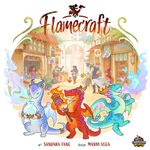
Yeah. Okay. So um we just had game night uh like last weekend and we played a couple cool games. We played uh Flamecraft. Um we play which I always enjoy. Um Potion Explosion. Oh, what else did we grab? We just finished King's Dilemma. Um which is a legacy game. We um Oh, what else did we pull out? There were so many games.
I mean, had a big night.
Yeah, we were playing a whole bunch. Um, but on my free time outside of game night, me and my husband will play um Slay the Spire. We've been enjoying Slay the Spire.
The board game.
The board game. Yeah. So, I started with the video game. And then I started playing Slay Spire 2 and I'm like, we're getting the board game cuz I heard it's amazing and it's also just like the video game. And it is. It's great. It's an amaz It's an amazing game. It's an amazing deck builder. So, um, if you haven't played it, I recommend it. is expensive, but if you like deck builders and if you've played the video game, I recommend. So, that's probably one of my favorite ones recently is Slay the Spire.
Nice. It's also good to know that like you get your money's worth out of it because I've almost bought it a couple times and been like, "Wow, that's pricey." Um, so good to know that if you go for it, there's a lot in there.
Yes. Uh, and then I know that you're also a video gamer. Uh, any good video game recommendations?
Oh god, I pulled back out um, uh, Boulders Gate 3. I've been playing Boulder Gate 3 again for like my fourth playthrough, I think. Um, I've been playing that and to be honest, I've been doing a lot of like mindless bro. Uh, just cuz it's like what's something easy that I can just play, turn my brain off, and then like walk away and come back. Um, I also played the new Hellraiser demo. I loved it. I'm excited to try the whole game. So, yeah, that's kind of what I've been up to.
Fantastic. Uh, and then if people want to follow you or your work online, uh, where do you like to be found?
Yeah, so pretty much everywhere. I am just Alicia Vulman. I'm Alicia Vulman pretty much everywhere. Um, and then if you want to just contact me, my website is aliciadosart.com. Um, you can see like some stuff I've drawn, some graphic design. Um, I have free assets up on there if you want to just download some free stuff to use for your prototypes. um because I rethe my games a lot and then I just give away the assets because I'm not going to do anything with it so you can have it. Um so yeah, anywhere online and then my website.
Fantastic. Alicia, thank you so much for coming on and talking to us about your work. I feel like um I've learned a lot just from from hearing you tell us about it. So
Well, I'm glad I got to do this. I love talking. Sometimes it's hard to make me shut up. So I'm glad I got to be here.
Hey, it's never a problem. you just do all the work for me on this podcast. Um, but everybody out there, I could be anywhere online as Beyond Solitire. Uh, please like, subscribe, comment, ask questions, and most of all, happy gaming.