Board Game Highlights Episode 5!
Games in This Video
8 games are featured in this video — they unlock as you watch.


Transcript
Hello everyone. I'm Tally. This is Farrell. And we're Board of It. And welcome to our series Board Game Highlights. And this is episode five.
And we have an action-packed episode for you. We've got
as always.
Yeah. I think we've got two previews, I think, and a work in progress. So, what more do you want?
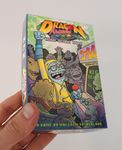
Yeah. So, we're going to talk about all these games and let's just jump straight in with our first review of Dragon Academy, the new expansion for Worms. And Dragon Academy is the first expansion to Worms from Stone My Games. And we did a buyers guide for Worms, Finnspan, and Wingspan. And I think we both agree Worms's our favorite. Y
so it was nice to get back to it. And what the expansion adds is well it's very much a combination of more stuff expansion alongside fixing things you probably didn't know weren't
proper expansion.
So the first thing is you have a new fifth kind of type of dragon whereas you had large medium small and hatchling
now you have fledgling which is like a teenage dragon. Mhm.
And they have these uh basically every time you you kind of send your explorer to them, you spend something and you train them and then when you've fully done that, you kind of unlock a good power, you could say. So they take a bit of work, but then they have good powers. And they also score for how many of them there are in your board. So you could also lean heavily into that by only recruiting them and get a lot of points.
Uh although you wouldn't have a lot of actions. I guess because you need to work to unlock them. So, that's one thing. The other is the fact that now rather than just getting the same amount of coins, which are your action tokens, uh, every round, you kind of do a worker placement at the end of the round to pick what you want. Um, and I heard that this was because there was kind of some complaints of the game being over long or rounds lasting too long. M.
So, it's kind of like cutting down the actions players can take while still giving them resources because now you'll get less coins, but you get a choice of what resources you want. And it's quite nice because you can pick what you're deficient in, I guess.
Yeah.
And then I think lastly, you get a lot of new um kind of stuff basically. So, you get some new normal dragon cards, you get some new scoring tiles for the end of round objectives, you get some new guilds, which I think are quite interesting. So yeah, what did you think?
Yeah, I enjoyed playing with it. I have to say the fledglings part you I have a trait where apparently I don't lean into the expansions whenever we try
you avoid them.
Farrell is like straight in for any kind of expansion. You like immediately interact with it. Yeah.
Um but in my defense, I just never really had any fledgling cards, so I can't really speak too much to that. I think you did. Maybe one came up that I could have taken. So yeah, can't say too much on that from my personal side, but I did really like the new resource selection system at the end of the round because I feel like you have that little bit more flexibility in what you can work with in the next round, which allows you to I think
for me at least choose more what I was going to lean into, if that makes sense, rather than just ending up with maybe one dragon card that I ended up like have to play. I I felt like I had more resources
so that I could strategically choose the combinations that I was kind of going after.
Yeah, I get that.
Because that allowed the flexibility
even just if at the end you get kind of five coins and another dragon card. It just saves you from having to go through the cave uh to get more dragon cards just to get one more if that makes sense. So able to I feel like it was more flexible and I could do more and make like more interesting decisions
based off like not just having nothing else to do.
Yeah.
Well, yeah, I agree that it makes the actions you do more impactful.
Yeah.
Because sometimes you might just be it won't be always, but you might be, you know, one short of a cave card
and then you're like, well, I don't have anyone in my cave, so I'm basically wasting a whole action to get like one card. maybe go up on the dragon track and that's it, right? Whereas now you might be able to get that at the end of the round since you up for the new round and then you kind of don't have to do this substandard action and you can focus on what you're good at and that's quite nice.
Exactly. Yeah, that was the highlight of the expansion for me.
I really like the uh new guilds as well. We've obviously there's a few of them only played with some but they're they're quite interesting in in I think they go a little bit weirder.
Yeah. Yeah. So, I quite like there's like a gambling one and I'm a gambler so I really enjoyed where it's kind of like you
like one of them is you draw I think four cards at the end of the game score two of them and of course they could all be worth like one point or they could all be worth six points and
and that's quite fun basically. Uh, and the others are a bit like that as well,
turning things into other things with the Magicians Guild. And
yeah,
so yeah, I think it was a a really nice little expansion. I think it it did well to
sharpen the game up
uh in ways probably we didn't really know needed sharpening, but
I think glad to have it. And it's one of those expansions as well, should say, that it it fits right in. So if we taught Worms to someone new, you would never know it was an expansion. Yeah, definitely. It just fits kind of right in basically and there's no extra rules overhead except for the fledglings and how they work.
Yeah.
I think one thing actually we didn't mention that's new is some dragons you can play for free if you meet certain conditions.
Yeah.
And I didn't really see them, but I thought you had some of them at least.
I I did get some into my hand. I didn't end up playing them in the end. not because they weren't interesting. I really wanted to at some point again think ties into what I was saying before. I felt like I had more to play with. So, I just ended up playing another card, but I really wanted to play
one of them as well. It just didn't uh end up that way and the other one was better. But yeah, I think they're also
yeah,
pretty interesting as well. So, yeah, it's just
giving you more more. Right. If you've played Worms, then I think this would always be a welcome addition just to shake things up, basically.
Yeah, exactly. So, if you if you really like the game, then fully recommend it. Uh if you're indifferent, I don't think it's going to necessarily solve anything unless you had like that one issue that the rounds were too long,
but really recommend it. Really like it. And just to note, this was a review copy from the publisher. So, next up, we have a little review of Offender, which was very kindly sent to us by the publisher, which is Osprey Games, and it's for one to four players.
Yeah. So, this is a nice little tableau builder and it's got quite a nice theme where it's the day of the dead and you're kind of honoring your dead relatives and you're trying to and I love the competitiveness of this premise that you're trying to make kind of like a better shrine than anyone else in your family to like have the most dead relatives come and visit.
Uh, so I really like that and you do that by meeting their conditions. uh they have kind of all kind of conditions which boil down to each card will have a color and a symbol on it and a lot of it will be this person doesn't want this symbol next to them or this person only wants these two symbols surrounding them uh and that kind of thing. And you're essentially drafting from a central marketplace each round and then playing one of the kind of cards you have in your hand down your tableau. And as you fill up the board, you're able to place candles which will give you kind of extra scoring opportunities. Uh and essentially once you've fully surrounded a relative and then if you've met their condition, you can flip them over and then you know you're going to score them at the end. So there's also a really interesting economy of maragolds where you start with some maragolds and the first card in the marketplace is always free to take but if you want to go beyond that you have to spend maragolds as you pass over cards. Uh so it you can become limited in what you can take or you become maragold rich and this is balanced by the fact that you can also as well as the candles put these in when certain spaces are surrounded by relatives uh for extra scoring opportunities. So it becomes like quite uh a tight economy.
Yeah.
And I think that's something I actually really enjoyed and I think that elevates it. I think two things elevate it above being a standard you know Tableau builder. put things here to get points in the best way. And one is the fact that it has a weird shape cuz usually this is done in like a 3x3 grid.
And this one is kind of like a weird shape where some people will only have two people potentially adjacent to a pyramid basically, right?
Yeah. And some people will have like six or eight adjacent to them. So obviously the level of difficulty for people can be a lot harder. And then is this Maragold economy which I think makes things really spicy and interesting in that you use these in different ways.
Yeah. No, I agree. I think that's something that uh we particularly enjoy because we're mean mean people and it's the thought of I really need that card. It's the one card that I need to complete like a perfect scoring for a relative, but that means I've got to put three maragolds down and I don't want the other people to get the marrow golds.
So yeah, that's really fun. No, big big fan of this one. It really is quite brain burning I would say.
Yeah,
because there is a lot going on because the scoring can be really quite different and into playing a lot. So, you just can get to the end of the game and you think that you've got like a perfect shrine and everyone scores for everyone else, but then you then you realize that someone didn't want an orange like relative next to them and you see it and you're like, "Ah, god damn it." So yeah, it's very puzzly and thinky in that way. I think you really have to make some tough decisions sometimes about sacrificing some of the scoring in order to get like better scoring. So, there's certain slots on there
where you'll get double points if you manage to satisfy the conditions of that relative and you manage to flip them over,
but then you might place them and the person that everyone next to them scores for them, but then it means that you don't score for them around it, right? So, you always try to think, okay, could a better card come out for me that I can get a perfect scoring or should I just play one down now and kind of sacrifice it? So yeah, quite a lot of decision- making and just puzzling out. If I put them there, then they'll score there. And yeah, it's
yeah, really good one. It's kind of we played this with um some friends and they also really enjoyed it.
Was a big hit I think with them.
I think it's a really nice one because it is like solo what you're doing on your own tableau, but there is that element of interactivity with the marketplace. So you are a little bit engaged in what the other people are doing because you've got your eye on that one perfect card. Yeah.
And you're thinking, "Please don't take it. Please don't take it." Right.
Well, in the same manner, and this is more interesting with more players, uh you can be kind of directed in what you take. You might know that you want one card a little more, but if there's a card with three Maragolds on it and you're like, "Well, that's a lot of Maragolds. I'm going to take that
because you know I have a card to play this. I don't like one to play this turn.
I can just have it kind of sit there.
But you know that's quite an interesting decision.
I just think yeah it just it does what it does very well. And I think although it is brain burning,
there's only like three types of requests that the family members have.
So it's quite simple to understand, just difficult to execute.
Yeah. Yeah. Uh, and I think on part because it's like this random marketplace and it's moving and you know, you're not going to have a perfect scenario where you can kind of perfectly
Yeah.
I think unlike we've been playing Castle Combo recently, I feel like there you can usually score everyone in some way, even if it's less or show off.
But here, I think you'll always have games where you you're going to have like three relatives who haven't scored. So,
yeah. Yeah, 100%. But no, I really, like you said at the beginning, really like the theme, the aesthetic. It's just it's just a nice little game, you know?
Yeah, I think from my perspective, you it's not going to be a game that's probably in my top 10 of the year or something like that, right? But
as I said at the beginning, it does a lot to elevate it amongst other kind of um games of its type.
Yeah,
I think has an excellent production, great theme. I love it as well. And I think what is particularly cool is uh it has a really nice score pad where it's kind of like a representative of your player board with all the little bits and pieces and then you um you kind of fill it in portrait by portrait which is I think quite nice and it makes what would be a very complex scoring quite simple.
Yeah.
So yeah. So friend I think we fully recommend it if you like these tableau builders. I think is great at any player count. Although that maragold economy pops a little bit more with more players.
Uh our friends really enjoyed it. So if it's at all interesting to you, fully recommend it.
The friend. Now we have a preview of Fetching Feathers, a game for two to four players. And this is a prototype copy. Uh but as you can see it's it's pretty much there. Uh but things might change during the campaign.
So Fetching Feathers is a tableau tableau builder like set collection game and as you maybe can tell it's about birds. So you kind of are card drafting in the beginning and you have different cards. Some have birds on them which have kind of different scoring conditions on them and some are location cards. And the birds all want to be fed a certain type of food which is relating to the location cards. The little twist is that there's a summer and a winter season. So on the location cards in the winter the birds might be able to feed on fish, but you kind of do one round where you place all of the birds in their right locations to get the food that they want. But also, you're trying to think about where they should go alongside other birds because some scoring is dependent on like the the peacocks score more if they're with the puffins or something like this. But then once you place them all, you do a first round of scoring and then you flip the location cards to the summer and the food that's available there changes. So you pull up all of the bird cards, you do another round of drafting and then you go again. So it's and then that happens again with one more round.
Basically, it can either be summer or winter going first. But yeah, it's a tricky one because you'll get more and more birds and you also do get more location cards, but they can be a little bit more sparse. But you can layer them up together. So you could have um a winter card with a leaf available for food and a fish. So you have one set of birds on one side and they can only ever go with their like. And there's also limits like there can only be three puffins on the same space but another type of bird might want to be alone but either side of the locations and then you're yeah it's all about trying to make sure that they are fed the right food
but you've got to consider you're going to flip them basically so you go all again and it can just be quite difficult and again another little bit brain burning one you think I've got the right amount of food and location cards for my birds and then you start putting them down you're like oh no I don't have a stake.
So, yeah, and it's the the drafting part as well because there might only be one location card in the let's say second round of card drafting with a stake and if someone takes it, you've got to wait until the next round basically until you get that.
The last game we played, you literally did that. You drafted the only state card.
Yeah, it was ruinous.
And if you can't place the birds in your tableau in the moment, then you basically have to pass them around to the next player and then you you actually lose them forever. So yeah, making sure that you have enough food for all of the seasons and trying to maximize the different combos for like how the birds want to be placed together.
Yeah. So a lot of interesting combos because the birds themselves will score some points, but then as as kind of a base, but then they also will always have a special condition that might be I want to be at a place with a fish and a meat.
Y
and then they score two more points per one you have. So, it's quite interesting because they can flock together and be stored on the same space. So, then you're trying to do that, but then also you're trying to meet these secondary conditions. And this is where the trick with the twisting of the food comes in because you might set up uh you know, you might spend your precious kind of food cards setting up for the scoring, then they switch and then next season you don't have that anymore, right? because it's gone down to to blow and uh it's it's like a a really nice little puzzle.
Yeah, it's a tableau builder in in when you first kind of start playing it, think, okay, I'm just putting some bird cards down and they have some combinations, but that location thing is just really like a nice twist on a typical tableau builder.
So yeah, I really enjoyed this game. We showed it to a friend. She also really loved it as well. Mhm.
So I think if you enjoy Tableau builders then this is one that we would recommend.
Yeah. I think I mean probably one thing I would say is that the artwork is pretty terrific as well.
Yeah.
I really enjoy that. I think in terms of this drafting tableau builder it's not I think you know let's say the best example I've seen. I think it's very good. I think it's a great pub game.
Yeah.
You know it's not anything novel.
No. But it is a very nice game and because the campaign is going to be together with the next game we're talking about which I think is quite a special game we both really enjoy.
Uh it's probably worth picking up to be honest and we hopefully will have a link to that campaign down below
in the description.
So that is Fetching Feathers a really nice pleasant tableau builder with great artwork and mean drafting
and burps. Herbs. Now we have another preview of a game called Dot from the same designer publisher as Fetching Feathers, but this one is we really like it. It's a very fruity little number that we've really been enjoying. It's a two-player exclusively game and it is kind of like very weird but very fun and very like pokery but
quirky
but quirky. I think that's a really good way to put it.
So, you both have an identical kind of deck of cards that you're going to shuffle up
and then you're going to have three star cards uh which are also identical on both players but those you get to pick from rather than drawing randomly. So each turn, there's going to be three rounds. You're going to draw five cards and then take one of your star cards that you pick and then you're going to keep three of them for yourself and you're going to put three of those cards in the middle. Uh as will the other player. Now, why are you doing that? Because on each of these cards, they have like three rows. And on each row is a certain type of symbol. Blue, black, red. Uh, and and what you're trying to do is this weird bluffing game where in the first and the third round, you want to be you want to have or be the furthest away from each color as there is in the middle. So, if there's one blue in the middle, you want to have like seven and the other player has five blue cuz then you're further away from one.
In the second round, you want to be closest to whatever is in the middle. So, you're kind of both setting yourself up and shedding cards into the middle to to set yourself up to kind of meet that condition, but obviously you don't know what the other player is doing.
And it's very difficult obviously to win all three. So, are you focusing on one color? Are you spreading thin?
And it's just a very weird little game.
But it's really funny and like bluffy and pokery and silly.
Yeah.
Yeah.
Yeah. It's a really interesting one. And I was trying to think about like can you actually strategize on this one because I think that I'm strategizing.
You can card count. I think though that's the thing because you don't go through you don't reshuffle the deck or anything. So once you know the cards you can like know what people have played and card count.
True. Yeah. Because I think that I am every time I'm trying to select like just to say in the first round when you should have the biggest difference, I'm trying to put all of the cars I have that let's say have the most black symbols in the middle and leave myself with no black symbols. But you could do the opposite and then you end up. So I'm like, can you really forecast it or do you just go with the flow and just vibe and just have fun? But you're right, like if you were super smart, you could
predict may by the by the middle or last round at least, right? what is going to then come up. But even so, it's so difficult to choose. You're getting rid of half the deck, right?
Yeah. Yeah.
And the cards are sometimes quite similar. It could just be the difference between having like two black symbols or three black symbols, and you're just like, ah. It's surprisingly one of those games where it is just some cards, but you're really like, "What shall I do?" Like, you know those games that we always say make us laugh like the king is dead. Yeah. where you're just pushing cubes around a map, but then we're all like I feel like that with this game, like which cards to play. Yeah, I do think this is very unique and novel and just honestly a lot of fun.
Yeah, I think there's so many great parts. So there's the spicy fact that when you you play your cards, so you put the cards in the middle and you put your cards in front of you, the ones in the middle go away, but your ones stay in front of you, but then your opponent gets to kind of snipe some out of your tableau based upon
uh the round more or less. But then it's interesting because you can see what players already have in front of them
and that kind of affects how you might play in the second round and the third round. And then there's like things where if there's a a tie and nobody wins that. So when you win a color, you get a token and first of five wins.
But if nobody wins it, it kind of doubles in the next round. So then there's two tokens and that's like really spicy as well because then it's like everyone's going for that color, right? And then the mind games really come in. So
yeah, because sometimes like you say, you will never win all of them. So you're having to think like should I just sacrifice this round because I know pretty much that I could get the red token because I have a bunch of red symbols and there's like hardly any going into the middle, whatever.
But yeah, it's just knowing like how to do that and how to go about it. But then it all could just come crashing down if you like inaccurately predict or remember what your opponent has or what they're going to put into the middle basically.
Yeah. So check out the campaign again. We'll try and put the link below if we have it. But I really really and I think we both do recommend picking up DOT. I think it's Yeah. I mean, one of those games you play and it it feels kind of novel and fun and it's a game that we know we're going to, you know, bring on holiday and play a lot in the future. Uh we really really recommend it and enjoy it.
Yeah. Don't think we mentioned which publisher it was, right? It's unfringed things.
Yes. Now we have a review of Tenia. This is a heavy euro for one to four players, maybe medium medium to heavy euro. And it's set in old school China, which uh sees you as kind of different, I think, families trying to gain prestige with the powerful families of of the era uh by kind of helping out in a lot of different ways. um by kind of taking up kind of government positions, by helping build the wall against nomad invaders, so on and so forth. So, the way it works is on your turn, uh you're going to have kind of one of three options. You can either basically pay some money and send someone out to get resources and they go on these little barges uh which have limited space and then if you get knocked off they come to your player board where they become like a different type of worker and you can do special actions unique to you. Mhm.
Or you could take a turn by going to uh a specific region and there you can kind of put a worker on a building which will give you some sort of special power or if there is kind of a port in that region, you can sell goods for a lot of bonuses. And then you as a third action can send people up to the wall and you can either decide to to spend food to kind of garrison the wall with soldiers or you can actually build defensive elements of that wall. Uh, and kind of whatever you're doing of those last two actions, you're going to be getting influence and you're going to be moving up tracks and you're kind of competing for points on the tracks because you want to be the highest and you're competing for presence on the wall because every round uh or well specifically when the nomads attack, which is kind of like randomly because there's different sections of the wall and they kind of move up different tracks at different speeds.
But whenever it's attacked, you get a lot of points for how much defense you've contributed. And then also if you lose any troops. So there's this weird like area majority part in that section every round where you're kind of fighting to be the most prevalent because then you get a lot of points in the game.
Yeah.
Yeah. So maybe just to start with talking about some things that we really enjoyed about this game. So definitely the points of interaction were quite fun for us. So, like you mentioned the barge, you they have little uh 3D barges, which is also very cool.
But when you send a worker there, like you said, the you can only hold it can only hold three and then the one on the end gets bumped off. And that's important because you sometimes want them to get bumped off because then they come to your board and can do these other special actions. But the bad thing is if you don't have anyone on the barge when it comes to income, you won't get income of that resource. So, it can be very fun to uh bump your opponent off the barge, let's say. Sometimes I was just doing it for fun. Didn't even need that resource, but I wanted to bump you off knowing that it would like negatively impact you. We like that kind of thing.
But also the area control around the wall is very interesting as well because
yeah, it depends on um how many pieces you have, right? like in each section of the wall in terms of buildings or troops uh as to whether you're like the most present in that area, but if there's a tie, it's the person on the the troop on the left that will
kind of win left most will like win the presence.
So, it's quite fun to keep going there and like loading up the war and it's just getting like more and more troops, but it really depends on how strong the nomads are, whether it even like kind of matters in the in the end, right? Well, I think the thing that's interesting is how the troops when they attack, if if just the walls themselves don't prevent, then the soldiers start dying.
Yeah.
And what's interesting is that the soldiers are the tiebreaker, like you said, but they're only temporary, whereas the walls are permanent. So, it's kind of like this this this like balance of which one you go for because you can be strong there every round if you have the walls, but if it comes down to a tie, you're not getting anything. And it's really interesting little
I think what I really like about the action selection is I think yeah it's for most of them right maybe except the barge but anyway you if someone's already taken a regional action then you have to pay more or even if like however many pieces are there even if it's your own right I think it well maybe it depends per action it's like a different payment system
but either way in a region let's say if there's already someone there, you have to pay more to also go there. So, it really forces you to consider, do I want to pay that bit extra to go there or could I wait until next round and I'll just go and do this other action in another region which is free, let's say, or you have to pay less.
But then maybe that's a little bit suboptimal because you really wanted to go to the military station because you wanted to get your troops out on the wall because the nomads are going to invade. So I really liked that um decision space as to which actions to go in because it costs more more people have gone there. And then when you take the put someone in a governmental position they um get like assigned to a building which will either give you a a passive or an income bonus
and think they were particularly interesting to us because some of them
could be you know giving you a discount on buildings for the future for example. So if you go there pretty early, that can be a really strong advantage. And I think it's quite interesting that the first person that goes there pays x amount, but then any like subsequent rounds, the price also goes up. So again, it's all about like balancing how much things are costing in terms of money or resources and kind of how badly you want to go there or maybe doing something else cheaper. And yeah, so I think the decision space and the action selection is really interesting. Yeah, I think the buildings in particular as well are a real kind of excellent example of of interesting elements. The powers were all very interesting. You know, there was one that I had in in I think our second game
where basically I didn't have to pay to go to spaces where other people were. So, suddenly I had a lot more money that I could spend on all of the other stuff you spend money on. And that was quite cool to have that little niche. And a lot of the buildings are like that. So, I really like that element. Another thing that I really liked were the objective cards. So, you can get some extra scoring, actually quite a lot of scoring in uh some parts.
I know you're going to maybe say something in the next session about what we didn't like about the objective cards. But for me, what I found interesting about them was you either try to keep them for the scoring or you can actually discard them to get resources. And the resources are can be relatively tight. So, I just thought that was quite interesting because I was looking at my objective cards thinking, hm, should I try and complete this objective towards the end of the game or am I nowhere near it, in which case I can just discard it to get that one extra stone that I might need in order to yeah, go and build something on the wall, for example, cuz it's not super easy to get more objective cards. You can get one or two extra throughout the game. So I found that quite a interesting little spicy point as well because it can really help you do like maybe one or two actions in a better way but then you're sacrificing a bit of scoring.
Yeah, I agree. I think it's quite a nice decision. But moving on to I guess uh some things that are problems with the game. So, it sound like we really liked it. And I think the point we would make is that it's a very pleasant game to play, but we also found it very generic.
Mh.
I think it was it was something that we were like glad we played, but then we would put it away and not think about it anymore. I think the problem it has is there's no rounded edges. Everything it's doing has been done before.
Uh, so there's no sharp edges. It's like completely smooth. like there's nothing to grab on to. Um, and and I think we both agreed that, you know, we have a lot of heavy euros being people who like heavy euros. It would be bottom of the pile just for that fact that there's nothing to to pick it out.
Yeah.
Uh, and then I think a kind of second point of that is this is a game that says, you know, one to four players, but really it's a three or four player game. And I know why they've done that because they'll sell more copies if they say you can play it at two, but you have to run it with a bot. And and it's not one of those bots where they just take up a space. It it's quite clearly emulating a third player like in all manners.
So then the issue is you basically are playing a three-player game or you have to play a three player game, two player at two. And the issue is I ran it and it's simple to understand what the bot wants to do. Like that part is very simple, but for some reason the bot does like four actions every time it takes a turn. Whereas, you know, we might take one, right?
Yeah. Uh sometimes you get to take two depending what you're doing, but it will always take four kind of more or less full actions or moving up different tracks or putting something here. And you end up spending more time on the bot's turn than your own if you're the one running it. And by kind of, you know, last couple of games I was getting a lot of like mental overload from doing it and taking longer than my own turn. So, I can't really recommend it as a
two player,
but then that kind of compounds that for us. We then would also never show it to people, three or four players because we'd rather show something with a bit more
teeth.
Yeah,
I guess.
Yeah. And then I think the final point that kind of soured it for us was uh realized after a few plays that certain elements at least seem really unbalanced. So for example, you have these powers uh when you get the workers on your board that we talked about and each player board is double-sided. So there's quite a lot of variety.
Yeah, that's true.
And I think the variety doesn't come out as balanced. For example, in the last game we played, my best power was a power that was basically there to solve a problem neither of us ever experienced,
whereas your one was like double a specific bonus you get on the tracks, which is like really good.
Yeah.
And you can see quite easily they're not the same. And then coming to the objective cards,
looping back,
we realized that because you you got this bonus to take an objective card and then take another one basically. Uh so you ended up with so much. We realized that you can just look at the objective cards and you're dealt them randomly at the start, three of them. And some of them will cap you at like 14 points if you're the highest player on multiple tracks, whereas other ones will give you 20 points for doing something. Uh and just as a kind of clean comparison, you had one that if you had um uh people in I like certain sections of the regions, right?
Yes.
Certain regions of the board as governors.
Uh you know, you basically for having four people in these regions, you'd get 17 points. If you had three, you get 12 points.
I had a card that said get two points for every governor you have.
Mhm. So I'd have had to have nine governors out to get what you needed for four, right?
And it's this kind of thing where Yeah. So it kind of soured it a bit because you do get so many points from these objectives. You got like 64 in that one, right?
Yeah.
And I think I was capped out at like like 35 or something even if I'd fully, you know, achieved.
Yeah. Yeah.
So yeah, I think that kind of soured it because they they contribute so much. So, I think those are our thoughts on Tenia. So, if you have any questions, ask us. But yeah, that's our review. The final game of this video is going to be the RPG Spire. And this was a review copy we got from the publisher, and it's what we're currently having a campaign of. Mhm.
So, Spire is set in kind of a mile high city in a fantasy type world where uh the players will play as D, a kind of suppressed race of elves uh by the Elier, who are the high elves in this situation. And you play kind of revolutionaries fighting for your rights and freedoms and to take back the city into your own hands. And yeah, you're you're the player.
I'll go to the player first.
Yeah, we're currently running um uh a campaign. And yeah, so so what do you think as the the player?
Very hard to describe, I think. So for me, it's not something that I It's really difficult. I don't want to say I'm not enjoying it. It's just not one of my favorite RPGs that we've played so far, but we haven't finished the campaign, right? So, the thing for me, this is so personal preference, but I think I prefer when we play RPGs that the worlds are a little bit more relatable to me. When it's a little bit more like fantasy like this, I really struggle I I've personally really struggled to like get into my character. And I think half the fun that we usually have, more than half of the fun that we usually have with RPGs is like really the role playing part, right? And just being a little bit silly and having a lot of fun with it. I'm just struggling right now to embody my character. Maybe that's my fault for creating one that I can't like embody, right? But I don't know. I'm just finding a little bit difficult to think of what to do in the moment and then you as the game master is looking at us all like keep sending these memes, right? Oh, when the DM is like very obvious where you should go and the players are all like, "Haha, let's go off and do this instead."
That's what it's like for you right now, right?
But it's uh sometimes when you're like giving the prompts, yeah, you're right. You probably are leading us and it's very obvious, but then the adventure part is like not there. And then you're saying that you created like a a path that we should go down and we just go off completely somewhere else, right?
But then it almost seems too obvious that like what we should do.
Yeah.
Yeah.
You with me?
Yeah. No, it's just it's it's like Yeah. the classic thing that any games master will know where I had like two pages of notes of like the, you know, kind of branching of like where the five different places they could start and follow cuz you're kind of unraveling a mystery and working up a chain of people. And I was like, well, obviously they're going to continue working up the chain or they're going to go after the serial killer, which they wouldn't show up about last time and I hadn't prepared at all. So, I had to be like, "Wait till next time."
Yeah. That that was what was confusing to me. You mentioned the serial killer, but then every time that we wanted to investigate, you were like, "No, no, no, no, not now. Don't mention it then. Like, why did you mention it?"
This part of the story, I just didn't think you'd like instantly dive into that at the expense of like everything else.
Yeah.
Obviously, incorrectly. But yeah, it was just like I'd set up the serial killer. I'd set up like this meeting that somebody had agreed to. I'd set up the the chain like where you'd left it. and then you just all like went off and like wanted to talk to someone who hadn't even like thought about.
Yeah, I think it in a way like you said, you're supposed to go up a chain of people, but then it feels narrow in a way then. Okay, then let's just go and meet this person. Let's just go and meet that person. Oh, and then you meet another person. Maybe that's on us that we should do a better job with those things like being more imaginative. But to me it just feels like one note a little bit. But then I do fully accept that I think we could do a better job of thinking outside the box
a little more. Sure.
Yeah. There's a lot of like the only option you do is talking to people as opposed to doing things.
Yeah. But that's what I'm kind of feeling right now is that my character sheet and like the abilities that they have isn't like lending itself to me who maybe struggle sometimes to be imaginative and think outside the box. It's not it doesn't it's not coming like easy to me.
Yeah. I think your problem is you've like created almost like a distraction character
like you're very good at creating a scene or like distraction like
in that sense. Yeah.
acquaintance of like whatever organization you want to
lean into, right? You can only kind of like
Yeah.
distract.
Yeah. Yeah. Yeah. For sure.
Which is like tougher, right? If
But I do think even though I'm not someone who leans more into like fantasy worlds, I do think it is still very cool world. I have to say like I can really imagine it. Um and I did like I looked through the book a little bit but you're more familiar with it but just the way it's described and
yeah I can really sort of imagine what everything is looking like and I think that's like quite cool.
Yeah. So I think from my part it's actually a little bit annoying cuz I think there has been Yeah. Like obviously you I think feel a little bit frustrated with how to use your character. I think another friend kind of wants to go back to what we were playing before, Shadow Dark. And so, but yeah, so it's been not like the best kind of experience, but for me, I really enjoyed running it and the story and like putting it together.
Yeah.
So, now it's like a bit of a weird
not impass, but Yeah. Like I enjoy it, but then I don't know how much everyone else is. No, I definitely would give it like it's not that I would like never play it again, but yeah, I thought I think it's interesting enough and I think the world is like very cool like I said that I would would give it another go. Maybe now we've played it once and it's more obvious that it is there is a very obvious easy path. We were trying to like over complicate it. Now that we know that maybe if we were to like do it again it would be
less friction.
Yeah. I also think though that uh well, no spoilers, but I think next time we'll start uh it'll be more interesting immediately because you're going to like new places, I think,
if if you don't immediately drop what you were doing last time and go off some other direction. Yeah, like you did the second session, right?
But yeah, so this is a work in progress. Hopefully, we'll have a full review coming out, but just wanted to put a few words to it. And yeah, that's our video. That's our board game highlights. Please ask us any questions you have about any of these games. We really appreciate you watching. Please consider subscribing if you enjoyed this. And we'll see you next