A guide to solo, analog, dungeon crawls (solo RPG)
Games in This Video
6 games are featured in this video — they unlock as you watch.



Transcript
Hey everybody, welcome back to the Dungeon Dive. Daniel here. I hope you're doing well, and if you're not, I hope you are soon. So, many of us growing up played a lot of computer and video games like Bard's Tale, Wizardry, Might and Magic, and various rogue style games. Games like these took the core elements of Dungeons and Dragons and focused purely on the dungeon crawling aspects and pretty much created the blueprint for modern dungeon crawling games. Games in which a hero or a party of heroes moves through a dungeon room by room, level by level, avoiding traps, fighting monsters, unlocking doors and chests, looking for loot, leveling up, finding better gear, solving puzzles, and trying to survive.
Sometimes the heroes in these games are allowed to leave the confines of the dungeon to maybe rest in an inn or a tavern, and sometimes they're not. Life is cheap in these games. Survival is difficult. Danger lurks around every corner. The games I'm talking about in this episode offer that kind of raw dungeon crawling experience on your tabletop in an analog form and often at a fraction of the cost of a comparable board game, and they take up a lot less space on your shelves. These games are often on the slower side of things and can be a little more contemplative and relaxing as they often involve a lot of dice rolling, looking up charts, drawing, and bookkeeping.
Most can be played with just some graph paper, a few dice, a pencil, and an eraser, and some can be augmented with other components to change up the feel. So, I've been wanting to do uh this video for a really long time, and it's taken a ton of time and effort to put everything together. So, I hope you all appreciate it. Uh but in in this video, we will be taking a look at eight different solo tabletop RPG dungeon crawls and talking about each in detail. The games we are looking at in this episode are A Torch in the Dark, Caves and Catacombs, D100 Dungeon, Four Against Darkness, 2D6 Dungeon, Cairn, Mausoleum, Marching Order, and Notequest.
I am hoping to present this to people as a kind of a beginner's guide to get into this style of game and as a way to introduce people to the kind of game that they might like. If you're thinking about getting into this style of game, I am hoping that in this video, I can present to you enough information to where you can make a very informed decision. So, as we talk about each game, I will be discussing a handful of topics. First, we will go through some opening thoughts. Then, I'll talk about life in the dungeon, life outside the dungeon, the complexity, the expansiveness, the character creation and progression, and some closing thoughts.
And I've randomized the order that we will be talking about these I'm not putting these games in any order, and I'm not really comparing them against each other. This isn't a ranking video. I really enjoy all of the games that you see on this table, and I think they all have something to offer in this little kind of a sub niche of our tabletop gaming hobby space. So, the first game we're going to take a look at is Caves and Catacombs. So, I'll be right back. Okay, so Caves and Catacombs, the first game on this list. Uh this is from Gustavo Coelho and from Castle Geek, and this is available on itch.io. So, you can think of Caves and Catacombs as basically HeroQuest without the board, but it also has rules to play using the HeroQuest board.
Uh this game can be played in kind of a board game style or a more typical game dungeon crawl game where you roll dice, look up charts, and you draw your own map. Uh this has some light role-playing, and you can introduce some of that as you are playing with skill tests and with different things that maybe the rules don't necessarily cover, but you might want to add. It also has a little oracle, and for those of you who don't know, who maybe aren't familiar with solo tabletop RPGs, oracles are things that can kind of simulate the GM, the Dungeon Master, the Game Master. You can ask questions, and a simple oracle can give you some answers. And so, it's a very easy way to add some role-playing to your dungeon crawling. I think Caves and Catacombs is a really good game to be introduced to this space if you're coming from more of a board game background, and it also has enough to offer to people who are more more versed in this style of game. So, life in the dungeon. Life in the dungeon of Caves and Catacombs is pretty typical. You are doing your typical things in a dungeon. You are going on quests, and there are different ways to create quests here, such as the creating the quest tables. You can roll up for your various types of the dungeons. What is the dungeon made of? What is the dungeon theme? Who are the What's the dungeon background? And then, you can also come up with a goal by rolling on
these tables. And so, there are a lot of possibilities to generate quests and to generate different dungeons. You will be looking for artifacts, or you will be looking to have special encounters with kind of bosses or mini bosses. As you're playing the game, you will be moving from one floor of a dungeon to the next, and while doing that, you will be rolling up on these charts to come up with what kind of segment you are going through. Are you exploring a corridor? Are you exploring a room? What's the size of the room? Is it tiny or is it huge? What's the shape of the room? What are the room contents? There can be furniture in the room, just like HeroQuest. Uh the room can be empty. There could be a threat or a special encounter. With encounters, you will have a lot of combat encounters with things like death knights, mummies, zombies, skeletons, goblins, orcs, lizardmen, and minotaurs.
Again, very very similar to HeroQuest. Um if you own the new version of HeroQuest and maybe you want to get more into some light role-playing into the light role-playing side of the hobby, this might be a really cool supplement to to augment your games of HeroQuest. And so, you will be going through a dungeon, looking for treasure, looking for loot, trying to survive, and trying to get enough things to progress your game going from one dungeon to the next. However, Caves and Catacombs does offer things to do outside of the dungeon, and that would come in the shape of this Into the Wild supplement. And I guess we're kind of covering the expansiveness of this game at the same time. So, if you buy this on itch.io, you will also get the Into the Wild supplement. And in this supplement here, you will add an entire hex crawl kind of sub game to your games of Caves and Catacombs.
Using the Into the Wild supplement, you will need some hex paper, and it's very easy to print. If you don't have a a tablet of hex hex graph paper, you can go on to just just Google hex paper, hex graph paper, and you can find websites where you can actually print your own hex graph paper. But in this supplement here, you will be out in the wilderness, and you will have to uh go through different terrain, different biomes like deserts, forests, grasslands, mountains, swamps, and water regions, looking for towns, looking for ruins, and actually looking for the dungeons that you will explore using the base rules in Caves and Catacombs. And while you are exploring the wilderness, you will have encounters with with different types of NPCs, different types of places, and different types of encounters depending on the biome that you are in. So, this adds a whole another layer to the game, and I think these two things combined do a really good job of giving you that kind of overall RPG feel where you are moving through the wilderness and looking for dungeons, going into dungeons, finishing the dungeon, coming back out, heading to town, and leveling up your character and kind of creating the story of the character and the story of the world as you go.
All right, in terms of complexity, this overall list, I'm this is going to be on a rating of 1 to 5, and this is only relative to the games on this list. So, there will be at least one game that is rated a one, being very simple, and there will be at least one game rated a five, which is on the more complex side. And so, as far as complexity goes, I am giving Caves and Catacombs a two. Um it's pretty approachable. It's simple. If you've played a game a board game like Rune Bound second edition or third edition kind of a hex crawl board game or you've played a game like Hero Quest, you will feel right at home with Caves and Catacombs. If you start getting into some of the lighter role-playing elements of this game and you're only familiar with board games, you may have you may struggle a little bit. And when this game was first released, there were some issues that I had with the combat, but those have been completely cleared up in this newest version. And this is I'm not sure which version this is, but if you go to itch.io and you buy the game, every you will always get the most updated version. And once you buy the game, you will have access to each version as it is released. And Gustavo does a really good job of addressing any issues that might come up. So as far as complexity goes, this is on the lower end of the spectrum. Now we've already expansiveness, so now let's look at
character creation and progression. And I always like to look at a character sheet when I'm talking about these kinds of games. I think looking at a character sheet is a really interesting way, a very easy way to get a good overall idea of what kind of game you are playing. Even when I'm looking at previews for video games, especially RPGs, I always like to see the menus. If you see the menus, it's kind of like looking at a character sheet and you get an idea of the kinds of things that you will be able to do. So characters are pretty simple in this game. Again, they are very similar to Hero Quest. You have an attack value, a defense value, a life value, and a value that you keep track of the number of spells. You might have some advantages and disadvantages which will give you bonuses on your die rolls.
And then you have a spaces to keep track of your equipment, your various notes, your spells, your name, your archetype, and your level. So as far as the archetypes go, those are your basic classes. And in the base game here, we have bards, we have clerics, druids, fighters, rangers, thieves, and wizards. And then the Into the Wild expansion does add a few different classes here. We have rangers and druids. And so there are some good examples. There are some some good choices to be made. And each one of those classes does offer up its its own series of abilities and skills and your basic attributes and spells. So there is a quite a bit of variety and there are some good ways to level up your character and you can also progress by gaining experience points or experience in the dungeons and then finding new loot and gear. So I would say that character creation and progression is pretty basic in Caves and Catacombs, but it's also pretty interesting.
Okay, closing thoughts on Caves and Catacombs. I think this is a great entry for someone looking to dive into this subgenre. People familiar with Hero Quest or basic kind of a hex crawling board games like Rune Bound, I think they'll feel right at home in the dungeons and right at home in the wilds. People who have a good foundation in these kinds of games, I think we'll have enough here to explore and enough to offer up a whole bunch of many many hours of entertainment can be had from these two books and they're also incredibly affordable. And that's really one of the best things about these kinds of games is how affordable they are. And these are just zines that I've printed and I have a video showing how to print your own zines. It's a very simple. It doesn't take a lot of crafting ability. I'm terrible at crafting stuff.
And so you know, if if I can make these books, trust me, anybody can make these books. But I've had a lot of fun playing Caves and Catacombs and that is especially true if you own some of the Hero Quest stuff and using your Hero Quest stuff to help augment these games and combining the two, I think is a lot of fun. So Caves and Catacombs, I think is a really cool and fun game and I've had a lot of fun playing it and I'm looking forward to more because I know Gustavo is kind of constantly working on his games. Okay, next up we have Note Quest and we'll be focusing mainly on the expanded world version. And this is from designer Tycho Hunnes and Green Little Thing Games and this is available on DriveThruRPG.
So Note Quest is a really basic game and I think anybody who's into board games will have no problem learning the rules. It's very easy. There are a few little abstracted things that might not make sense just because of how simplified they are and that's mainly in the combat. You don't even really have a combat roll in Note Quest. You do damage, the monster does damage, and you hope to survive long enough to repeat the process. And I I think maybe some people from a more traditional RPG background might find Note Quest a little basic. However, I think it's that basicness. I think it is the the the ease of play that is really its best quality. It's a very easy game, but it's also very easy to get lost in the world because there aren't a lot of complex rules to to get in the way. So life in the dungeon of Note Quest is pretty basic. You will be going through a series of dungeons and as you go through the dungeons, there are different dungeon themes. So we have things like palaces and crypts and tombs and sanctuaries. And each one of these will have its own set of tables that you will use to roll on to determine what you encounter. You will have your different segments. You might have a chart for secret passages or traps or monsters. Different stuff that you will
find in the rooms, different types of rewards, treasures, wonders, and magic items, your different bosses, armor that you can find and weapons that you can find. And so each one of these different themes will have its own set of its own set of tables. There are temples, there are prisons. And then in the expanded world, we also have more deadly dungeons. We have things like sewers and citadels, pyramids, ziggurats, laboratories, the necropolis, the entrails, and a mega dungeon and a cave. There's all kinds of variety in the dungeons. The things you do in the dungeons are pretty standard.
You move from one section to the next. You find secret passages, you have combat, you look for loot, and you fight monsters, and you hope to survive. There aren't a lot of stat tests. There aren't a lot of you won't have a lot of opportunities to to kind of role-play on the fly in this game. It is a very standard kind of directed dungeon crawl experience. So the expanded world version does offer up a whole world, a whole life outside the dungeon. And I just lost my space, so let me find that that section here again. So the expanded world version. So like like Caves and Catacombs and its Into the Wilds expansion, this expanded world version of Note Quest adds a whole hexploring segment to the game where you will need some hex paper, some hex graph paper.
And you will be going through different terrains like plains, mountains, forests, swamps, deserts, and water regions. And you will travel from one hex to the next looking for cities, looking for ruins, and again trying to discover those dungeons that you can then go into explore. And one of the things you're trying to do in finding those dungeons is getting gold so you can go back to the cities and the fortresses and you can buy more torches and more gear that will help you have a better chance of surviving in the next dungeon. So it's really cool. I I recommend that if you get into Note Quest, if you want to get into Note Quest, you can get the basic version which is just the first few pages of this PDF for free, I think. And then the expanded world version is only a few bucks. I recommend just going in for the full expanded world version and starting with that. So as far as complexity goes, I'm giving this game a one. So this is by far the easiest game to get into on this list. The character is very simple.
You have just a couple of stats. There really aren't any stat tests. There's not a lot of mechanisms. The only thing you really need to worry about is while you are playing is making sure you roll the right dice and look up on the right table in order to draw your map and in order to have the right encounter. And that is basically it. If you get into the expanded world version, there is a little bit more because of how the different deadlier dungeons work and because of some of the hex crawling and the different places you can go in the overland. That adds a little bit of complexity, but not a lot. So if you're looking for a really easy, really simple, straightforward introduction into the tabletop solo dungeon crawl world, this is the game for you.
As far as the expansiveness goes, we've talked about everything that this game does have to offer, and that is the basic game and the the expanded world expansion. And so, there isn't a lot to this game. It's self-contained. It's small. It's direct. And for some people, that is a bonus. Some people might be left wanting more. I have actually created my own little expansion, and this is kind of a work in progress. I'm not quite sure how much longer or if I'll develop it anymore, but this is available to Dungeon Dive patrons. And this is a simple RPG system for Notequest. And it's just some rules that adds a little bit more complexity to the character, such as some stats. And this was actually one of the very first times that I used the athletics, brawn, concentration, and determination that I'm still using in the game that I am creating today, um A Land in Peril. And so, this is kind of the genesis of A Land in Peril here. And I added just the ability to add a little bit more complexity in the combat and some more complexity in in stat tests and saving throws to add a little bit more of the RPG uh side to this game.
But yeah, if you're looking for something simple and something that is closed and direct, then you might want to look into uh Notequest. And uh that also goes for character creation and progression. When you create your basic character, there are a number of different different classes that you can choose from. And where are those classes here? So, we have a you combine a race, a class, and some spells, basically, and that is your character. You have everything from simians, uh pixies, gnomes, uh humans, dwarves, halflings. And then for classes, you have things like noble, scholar, blacksmith, hobo, gravedigger, and so on. But if you get into the expanded version, one of the things that the expanded version does is it uh adds a whole bunch of uh different characters. And some of them are more experimental.
Uh where is that big uh So, we have these prohibited races. And this says that these races were ideas of users in the Facebook group and have no description other than their own name. Use them at your own risk. So, we have things like a steambot or a dolfman, a geckoid, a frogoid, a doggo, a a Martian. So, all kinds of different characters with different HP and abilities. And then also a whole bunch of advanced classes, adventurers, uh goblinators, miners, a hotep, a dragon slayer, a guard. And to advance in a class, you have to pay some money. You have to pay some gold. And so, the expanded version also offers up some expansions, some expanded ways to uh to to progress to to progress your character.
So, overall, I think Notequest is a lot of fun. Uh this was a an earlier game in this space, and its longevity, people are still playing it, people are still discovering it. And I think that says a lot about the game. If you're looking for something really simple, something really straightforward, and something that you can be up and playing in no time, uh I I think you could have uh you would have a hard time finding something better than Notequest. It's really fun. It's really simple. And it's really inexpensive. Like I said, just a few bucks for the expanded world version, and I think it's totally worth it. I want to get my uh copy more professionally bound, like spiral bound. Um I I find because you do you do kind of flip back and forth a lot in the book. So, having a nice copy of this is pretty important, I think. And from what I can tell, this is only available in PDF. I don't Well, I haven't checked Lulu, uh lulu.com, the print-on-demand service. I'm not sure if this is available on Lulu. But uh I'm just going to take the PDF down to um a copy center and just have a nice spiral bound book made because I think that would get me to play Notequest a lot more. And this is also highly recommended for people who like that kind of rogue-lite experience because uh this game is all about just really quickly creating a character and seeing how long they can survive. And what's really cool is when your character dies, your next character can actually do a corpse run of your old character, and they can go back to the spot where they died, and they can pick up some of their gear and some of their
items. And so, that does add some cool world progression or some some legacy progression to the game. And so, that is another really neat element of Notequest. Okay, next up is uh one of the big uh popular games in this subgenre, and that is D100 Dungeon from Martin Knight and MK Games. This is available on DriveThru. Some of it is available on Gamecrafter. And I think you can still get free versions of an older version on BoardGameGeek. So, D100 Dungeon, as the name suggests, uses all D100 rolls and lots of lookup tables. And D100 Dungeon can be kind of a straightforward, kind of typical tabletop RPG game, where you are rolling your uh D100 dice, you're looking up tables to draw your dungeon. Or it can be played more like a board game using the mapping game. So, the mapping game is available on DriveThruRPG.
And this comes with cards and tiles and chits and things to make the game more into a a board game style dungeon crawl. And I have a a very detailed series of videos on the on the mapping game. So, if you're interested in that, you can check that out. So, D100 Dungeon has a little bit more going on in terms of bookkeeping than your typical dungeon crawl board game. But nothing anyone familiar with games like League of Dungeon Ears, Dungeon Universalis, or Folklore: The Affliction won't be able to handle. But so far, this is the most complex game that we've taken a look at in this video. So, Life in the Dungeon. Life in the Dungeon involves a lot of dice rolls. So, you will be rolling a D100 a whole bunch of times and looking up on a whole bunch of different charts in order to find all of the various things that you will discover in a dungeon. And if you're not playing the map making game, then you will be drawing your dungeon. So, we have tables for armor, for boots, curses, doors, encounters, things you find, geographic anomalies, your hero path, your items, investments, legends, mapping, things that are needed, parts, quests, races, spells, treasure, A B and C values, weapons, all kinds of different charts. If you like lookup charts, this is a fantastic game. And it's one of my favorite things to do in games. I like rolling dice. I like looking up charts and then determining
and and reacting to what I find. So, we have all of our mapping pieces here. So, when you roll a D100, you'll look up what your map with the room looks like, what the corridor looks like, and then they are put into these color categories, where you might find nothing, so it's more of an empty room, or you might have an encounter or geographic anomaly, or some kind of um side quest. And there are just all kinds of different things that you can discover as far as the geographic locations, there are barrels and mushrooms and locked chests and fountains and uh magic circles. So, all kinds of cool things, all kinds of interesting things to find. There are a whole bunch of different traps and encounters and different doors that can be trapped or jammed or locked.
Different types of curses you might stumble upon. There is so much to do in the dungeon, and this gets really close to being kind of a dungeon simulator. So, if you want to get into the nitty-gritty of life in the dungeon, then uh this might be the game for you. Now, the base game, as far as life outside the dungeon, really doesn't offer much. There are a few little things that you do in between each dungeon. However, D100 Dungeon has one of my favorite expansions of all time, and that is the D100 Dungeon World Builder. And this takes life outside the dungeon to the next level. Once again, this is kind of a common theme. This seems to be a a pairing. This is a a classic pairing in the tabletop RPG space of taking the the uh the graph paper based dungeon crawl, when you're when you're inside a dungeon, and pairing that with the hex crawl, when you are outside. A bunch of the games that we are looking at today do this. And I think D100 Dungeon does it probably better than than just about any other game. There is an example back here. Where is that example of kind of a a hex world that uh that Martin Knight has made for this game.
And there are all kinds of subquests and side quests and main quests that you can discover while you are playing in the world and building your world, moving from hex to hex. Uh there are tons and tons of different types of encounters that you can discover and different NPCs and creatures and things, uh different types of environments to explore, different types of settlements to find. Uh this gets really really complex and really good. I love the layer. I would not For me, now, these two games, D100 Dungeon and the World Builder, they are connected. I would not play one without the other. Actually, I that's not true. I would actually play World Builder on it by itself just to create a hex world before I would play the base D100 Dungeon by itself. But my favorite way to play is to combine them together. But when you combine them together, there is a lot of bookkeeping.
There are a lot of things to keep track of. You have to keep track of time on a calendar. You have to keep track of your quests because some quests will expire after a certain number of days or months might pass. Certain things in the world will happen as time passes. And so that does add to the complexity level. So I would say that D100 Dungeon is is towards a four in terms of complexity, especially when you start adding in that world builder expansion. And as you take a look at the character sheet, you can see that there is a lot more going on in this game. There's a lot of stuff to keep track of. There's a lot of bookkeeping. The rules aren't quite as concise as they could be, but there's also just a lot going on. And I think the game handles its mechanisms really well. Just know that that if you get into this game, you will be keeping track of a lot of stuff, especially if you add the the world builder. So as far as expansiveness goes, there are a lot of expansions for this game. So we've kind of taken a look at two. We have the D100 that the mapping game, which adds, like I said, a whole bunch of cards and tiles and chits and things if you want to turn this more into a board game style dungeon crawl. We have the world builder. And then we have the Adventurer's Companion here, which adds a whole bunch of stuff to do, a whole bunch of charts and adventures, and adds more things to do in the overall world, and more of the lore to experience that Martin Knight has created. We have the
Dragon Armor. This is an adventure book. And so this adds kind of a paragraph style adventure. So if you want a more directed experience, you can check out the Dragon Armor. And then we also have the second part here, which is the the Dragon Returns, which is another kind of paragraph adventure that adds all kinds of detail. So if you really want to get into the lore and the world that this game takes place in, then both of these are good for you. I think there is also at least one or two other expansions that I don't have yet. I feel like I have enough for this game already. I probably have too much. There There are things that I will probably never see because of all of the variety and all of the things that just these books that I already have have to offer.
So as far as character creation and progression goes, as you can see, the character sheet is pretty complex. And there is a lot to keep track of. Character creation is pretty simple. You have a few basic classes. You're kind of your your your three basic classes, basically. A warrior, a thief, and a wizard, and a magic user. There might be some others in one of the expansions, but as far as the base game goes, that's basically it. You only have three stats, strength, dexterity, and intelligence. And depending on what character class you've chosen, one of those will be your main stat. But you do have a lot of slots for items. So you need to keep track of what you have on your head, your back, your torso, arms, hands, your off hand, your main hand, your waist, legs, feet, neck, and your rings. It's kind of a paper doll system, kind of like, you know, Diablo or something. And each one of those items will add stat bonuses and will have a certain amount of armor that it can protect you against. You have basic skills like agility, aware, bravery, dodge, escape, locks, lucky, magic, strong, and traps. And you can keep track of your experience as you as you as you use these skills, you will fill in these pips. Then as those go up, certain things will trigger and you will become stronger. You need to keep track of time because you need to keep track of your light sources and your food and that kind of thing.
You have a spellbook. You have a backpack where you can store your items. And you also need to keep track of your combat and things that you have done because as you have combat encounters, as you have a certain number of them, you will gain certain bonuses. So character creation is relatively simple, but character progression is more on the complex side. And I really do like the character progression in this system. It's small, it's incremental, but it feels like you are working towards something. And when your character gets more powerful, you can really feel it feel it. So closing thoughts. D100 Dungeon is a fantastic game. I think the base game is really solid. Just getting the base book, you'll have a lot of game. This you'll have hours and hours of fun in this game. But if you want to expand it, there are all kinds of things to expand it with. I recommend if you pick up D100 Dungeon to pick up the world builder set along with it. With these two things, you could play just these two books for probably six months to a year and keep seeing new things and keep discovering new adventures and having new kinds of fun. The dungeon crawling is pretty straightforward.
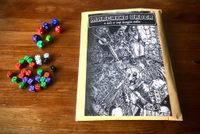
You won't be surprised by the kinds of things you find in the dungeon. If you spent any time in any game in a dungeon, you will feel right at home in the dungeons in D100 Dungeon. But in the world builder, you might be surprised. And as you start connecting the dots to the various places that you've discovered in the world, and then seeing how those interact with the dungeons, you can really create an interesting world and you can create interesting stories on the table. The world really the game really opens up when you combine these two. And it's kind of it's kind of an exponential expansion. It doesn't just make this game a little bit better. It makes the game a heck of a lot better. So I recommend D100 Dungeon with the world builder. These two books here, you will have so much fun. Okay, next up is Marching Order from James Crane and Crumbling Keep. And PDFs are available at crumblingkeep.com.
And there is a new expansion coming. And I think with that expansion, I believe they will offer up some of the physical components again. Just a quick glance at what's on the table right now, I think you can tell that Marching Order really is the most stylistic game that we'll be taking a look at in this video. It has a really cool vibe to it. It's a little something it's more similar to something like Dungeon Degenerates: The Hand of Doom, but it's all in black and white. But it also has that kind of similar vibe as maybe war Warhammer Old World, that kind of mud, blood, and style theme. But there are all kinds of really cool things available for Marching Order. And I think Marching Order is a it's a great entry point for people who are coming from a board game background or or a video game background. Because not only is Marching Order inspired by old style dungeon crawling RPGs, but it's also really inspired by The Darkest Dungeon video game. And you have that same kind of battle line, that same line, two battle lines of your your heroes and a battle line of your of your opponents, and they are fighting in a dungeon. And spacing really does matter.
So life in the dungeon in Marching Order, it's basically more of a paragraph style adventure game because you will take a book, and your book will have your your your adventure book will have a number of different adventures that you are going through. And the dungeon is already created. And so you aren't creating the dungeon while you are playing this game like you are in D100 Dungeon or in the other games that we've taken a look at so far. But you are experiencing a dungeon that has already been created. So this has a more of a guided narrative feel. And the dungeon isn't just a whole bunch of random events. This is a a dungeon that has been created by a human, by a creator. And then the player is experiencing that. So it's kind of being guided by the book acting as your GM, like a choose your own adventure.
And this is pretty cool. It does limit a little bit the replayability because there isn't an infinite number of things that you can roll up on random charts. And so you will be experiencing kind of the same thing over and over again. However, this game does offer up some more crunchy, more kind of video game like, or more board game like combat to where you will be thinking about the combat a little bit more. It's a little more important. There are a little more tactical decisions to be made in the dungeon. And there are a number of different adventures that you can get. So we have this one. This is the base one. This is the the first book. And then we also have the the Master of the Onyx Tower. So this is a series of quests that you can go on. And those are all created.
And then there are also these little expansions that you can get. I guess we're kind of talking about expansions now as well. So we're kind of mixing life in the dungeon with the expansions the expansiveness. But these are called the quick and dirty expansions. And these are little kind of little one-shot adventures, little one-shot dungeons that you can play in in a few minutes. And so you can also download these. And the physical versions of these are these pamphlets that you fold out. And those will have all of your encounters and all of your dungeons just on one sheet of paper. So these are really cool. I like this. I like this kind of stuff in this game. And like I said, this game does have that that real kind of stylistic approach that we aren't going to see in a lot of the games that we're taking a look at. And to continue on the combined topic of expansiveness here, we do have a new expansion that is coming out soon.
And this is actually a preview copy. And this is called Neck Deep in the Sewers of Rotbottom. And so what this does is this adds that kind of random element. And so some people have been wanting a way to generate random dungeons in Marching Order. And now with this expansion that is coming soon to crowdfunding, you will be able to do that. You will have charts to come up with your rooms, with your corridors. Uh it's very similar to some of the games we've looked at already. And then you can draw your your uh custom maps. You will have a a table for your monsters, a table for your traps, for your loot, and all of that stuff. So, if you want to create random dungeons, then there is an expansion coming for you. Okay, so life outside the dungeon in Marching Order is grimy and dirty and gross, and you will be hanging out in the city of uh Rotbottom.
And uh let me see if I can find that section here in the book. So, there are a few things that you can do when you leave the dungeons. And let's see, here we go. So, we have the Rotbottom services. Uh you can recoup, you can get drinks, you can have a room at the inn, you can go carousing, you can visit a light coach, uh you can have your characters resurrected. So, there are a few things to do. It's not an extensive section, but there is life outside the dungeon, even if it is just basic. And all of it does have that kind of gross, dirty, kind of metal, punk rock, grimy theme to it. As far as complexity goes, I'm giving this a 2.5. It's kind of right in the middle. Uh the dungeon crawling part is relatively straightforward, and especially because it's focused on those paragraph-style adventures, kind of like a choose-your-own-adventure.
So, Marching Order on that side of things, on the dungeon crawling side of things, doesn't require a lot of input from the player. You won't uh exert a lot of effort. You don't need to draw your dungeons. Uh you don't need to come up with why the dungeon exists. You don't need to come up with any of the narrative, with any of the fiction. The fiction is all there. Everything is created for you in Marching Order. But, where the complexity comes in is that combat. Because you do have these combat cards, and you will kind of keep track of your characters. And your characters will form a battle line. And just like in Darkest Dungeon, you will have uh four different heroes, and you have, you know, front, and then middle, and then rear, and then you will also have all of your enemies will be the same. They will be on the other side of your battle line. And so, they can act, and then they will have certain ranges where they can hit certain characters. When they take their action, you will flip over your character to show the dark side, to know that they have already taken their action. And so, there is a lot of tactical uh there are a lot of tactical decisions to be made in the combat of uh Dark of Darkest Dungeon of Marching Order. And I think that is really where the complexity comes in.
So, character creation and progression. Uh this is a interesting game on this level. You need these large uh character sheets, these rogue sheets, where you can print out from uh crumblingkeep.com. And these will have all of the information for the various rogues that you can hire. And those will correspond to their their page in the book. Uh let me find my base book here. Uh here we go. So, we have all kinds of different rogues that you can hire. And you need to really think of this in terms of your party composition, not just in terms of your individual heroes. But, the different kinds of rogues you can hire, you can hire an alchemist, you can um an archer, barbarian, a construct, a cosmic marine, a doctor, a knight, a musketeer, a sellsword, a thief, torchbearer, and a wererat rogue, and a wizard. And each one of those will have a certain number of stats that you have to keep track of, a certain number of actions that they can do, a spot where you can keep track of their equipment and their conditions, and then their qualities. So, these are cool things that they can do, and then their flaws. And these are bad things that can happen when you roll the die.
And I think this is one of the coolest things in this game. I love this part of this game. So, as you get flaws, you will fill them in on this chart over here. And at the end of every character's turn, you roll the die. And if you uh match one of those numbers to one of those flaws, then that thing triggers. I think that is super cool. I love that. It adds that kind of character flaw random element that you have to deal with bad stuff, very very similar to dealing with all of that bad stuff that happens in Darkest Dungeon. So, I think the character uh the character the the the character level of this game is really interesting. Even though you don't have a lot of say in how you create your characters or in how they progress, it's still really really interesting to play each of the characters, and putting them together in a party, coming up with interesting uh combinations to create an interesting and efficient party is one of the coolest things about Marching Order. So, I think more so than any other game that we're talking about today, Marching Order is all about style. It's all about the vibe.
It's all about its theme and its mood. It has an interesting and unique location in Rotbottom. It it feels more like Dungeon Degenerates. It's in that kind of metal, punk, that kind of grimy space. It has kind of a wicked sense of humor, sometimes juvenile, sometimes gross, uh sometimes a little edgy, but it never feels uh mean-spirited. And as you can see, it has a great style, a great look. Um it does, for a small game, for a smaller game, it does take up quite a bit of space on the table, because you are dealing with these larger printout character sheets, and you do need four of them, and you do need all of this information. And so, this is a small game that does take up a lot of table space. I am really looking forward to seeing how the sewers uh the the neck-deep in the sewers of Rotbottom, how this expansion unfolds, and what else uh Crumbling Keep is going to add to this game. And I know that James is constantly working on this game. He is a really really devoted creator, and um I I really like the world that he has created, and I like the game so far.
It's interesting, it's fun, it's different, and it just has a really cool look and a really cool vibe. Okay, next up is Carnathus Into the Midnight Throne. And this, of course, is from Alex T and Black Goat Entertainment, available on DriveThru, on itch, I believe, and on Amazon. So, you can get this just about anywhere. And I just did a really really big epic uh review of Carnathus. And so, if you want to know more, you can watch that. But, this is the game that I would recommend to uh seasoned tabletop RPG dungeon crawl vets. That was a mouthful. Um it feels the most crunchy. It has a lot going on. However, that's not to say that this wouldn't also work for someone coming from a board game background, especially if you invest into the card expansions. And if you get the card expansions, which we'll take a look at in a bit, uh those actually kind of turn this more into a card uh a card game or a board game. So, Carnathus is a kind of a mega dungeon crawl, and it's very typical. You are rolling dice, looking up charts or drawing cards, and going deeper and deeper and deeper into a dungeon, and trying to survive. And of all of the games on this list, uh Carnathus is the most complex in terms of life in the dungeon. This really is a dungeon simulator.
And it's all about survival. It's a dangerous game of brutal survival. It focuses on those elements of survival. It focuses on those elements of danger. In Carnathus, you will really feel like you are in this dungeon with all of these various events, monsters, encounters, traps, corridors, rooms, and all of their various descriptions. There is so much going on in this game. Um another thing that I think this game excels at, just uh we'll go ahead and get straight to this point, is for the price, all you need to play this game is this base book. It's one book, and it has so much game in this book. Um dollar for dollar, bang for your buck, uh you cannot go wrong with Carnathus. The amount of stuff that Alex poured into this game is just incredible. And it's not all just crunch. Some of it is just theme. Some of the the description. You have a whole chart of these description these these uh when you go into a room or a corridor, where you you were you will roll on a chart to uh get some theme uh stuff, like an eerie aura permeates the room, where the empire once sought answers from a cryptic and enigmatic oracle. Well, what does that have to do with anything? That's up to you as the player. That's where the role-playing comes in in Carnathus. And Alex is really good at coming up with interesting worlds in which he sets his games, and it makes them very easy to role-play, because they're very interesting, and they will uh they they
they will allow your imagination to run free. Life outside the dungeon is completely nonexistent. Uh once you get thrown at the beginning of this game, you get your character gets thrown into the dungeon, into the dungeon of the Midnight Throne, and that is it. You will never see the light of day, unless you die and your spirit goes off somewhere else. But, uh this is a game that is 100% focused on surviving in a dungeon environment. So, don't think you're going to escape the confines of a dark dank dungeon in this game. I don't know if there will ever be an expansion that brings uh some life outside the dungeon, if your character will ever get to escape and find out what exists on the surface. I have no idea, but right now, that does not exist. As far as complexity goes, I'm giving this a five.
So, this is the five on this list. This is the most complex uh game that we will be talking about. And I think we'll just kind of go into I think we'll combine this with our character uh, creation and progression because that is where a lot of the complexity comes from. And so as you can see just looking at the character sheet, we have a one, two, three, four page character sheet will you where you will be keeping track of all kinds of stuff. So we have different stats, health, toughness, ether, sanity and magic resistance, damage modifier, exhaustion, your light source is very important to keep track of. You have a whole bunch of different skills. This game is really uh, governed by its skills, acrobatics, athletics, blade weapons, bludgeoning, dodge, endurance, medicine, perception, resolve, reason, scavenge, shafted weapons, stealth, thievery, unarmed combat, and you will need all of those. You You will test all of those in a game. This isn't one of those games where it has a bunch of skills that you never use. Uh, when you decide to choose one skill over the other, you are making a very important decision because rest assured that skill that you chose not to put points in will come up and it will bite you in the ass.
Uh, there are personal goals. There are achievements that you can achieve. Uh, the character creation is a really interesting because there are all these uh, masteries here. So we have uh, things like the brawler, the arcanist, the bulwark, uh, the duskblade, the emissary, the ritualist, and each one of these will have a certain number of powers that you can unlock. They will have a a chart here for a D6 background to add some lore to that, but what's really interesting is you won't just choose one class. You will choose two classes when you create your character, so you combine those to make a a really interesting combination. And then throughout the game you can find amulets that will unlock a third mastery, and those amulets can be swapped, so you can kind of constantly be tinkering with your character with your character build while you are playing. You have different weapons. We have all of these different damage vulnerabilities and resistance to things like acid, air, arcane, holy, fire, infernal, narcotic, piercing, poison, psychic. There are madness and perks and all kinds of things you have to keep track of with your gear, with your armor. Your armor can take damage. Uh, you have to think about where you are storing your items.
It's very complex. The character uh, part here is is very complex, and the progression is interesting and cool. But uh, yeah, there's a lot going on this game and a lot going on in this game, and a lot of that does have to do with the character creation and the character progression. As far as expansiveness goes, there is one expansion zine out so far. So in Carnathalos, there are different domains, and those domains are governed over by these different uh, domain lords. And this expansion adds a new boss and it adds a new domain. Uh, the domains can interact with each other. So it's not just you're not you aren't just going from one domain to the next. You might find a new domain, but then you can uh, go back to the old domains that you have been in. So this really is a mega dungeon that you will be fully exploring. But this one expansion adds a whole bunch, and then of course, there are all of the nearly what I think over a thousand cards that you can buy. And these cards are available on DriveThru.
And what these cards do is these cards take all of those charts in the book and put them in cards. All of your bestiary, all of your dungeon cards, all of the things you'll discover, all of your events, all of your descriptions are in cards. And so instead of rolling dice, you can just take your deck of cards and you can uh, draw a random card and shuffle. Now what's really cool with the deck of cards, and you guys know that I love uh, decks of cards in games, is you can create your own subset. And so if you want to take uh, a table that is normally a D100 and just maybe whittle that down to a D50. And so you only have 50 things to choose from. And so you can kind of tailor the game to how you want to play it. And I think that's really cool, and the cards are nice, they're well made. They're the typical kind of DriveThru RPG style of card. But um, I think this is really neat. I think that Alex took the time to put all of the information from the base game onto those cards is really cool. They are not cheap though, so just know that going into the game. And also know that they are entirely unnecessary to play the game. All you really need is this single book here, and you will be good to go. And as far as closing thoughts on Carnathalos goes, yeah, like I said, bang for your buck, I'd say that it's impossible to do better than Carnathalos. This one book, it's under 20 bucks. I think it's maybe 12 bucks for the PDF, maybe 15 uh, dollars or so for the print on demand from Amazon, but this offers so much
game. And then the expansion too. If you just combine these two books, you will have hours and hours of dungeon diving fun. Um, it can be difficult. It can be difficult to survive. And if you find it too difficult, you can just house rule it, you know, you can take that RPG style of this game and just tweak it a little bit to become the more close or closer to the game that you want. If you are really into character progression and character builds, if you like tinkering in games like uh, Dark Souls or like Baldur's Gate 3 with your various builds, uh, man man then this is the game for you cuz cuz combining those masteries and tinkering with your masteries and your abilities adds so much to this game.
Okay, next up is Four Against Darkness, and this is from um, Andrea Sefilagoy and Eric Bouchard and from Ganesha Games, and this is available on Amazon, on Lulu, and on DriveThruRPG. So Four Against Darkness is kind of the granddaddy of all of the games on this list. It was the first in this space that I was aware of and the first that I played. Uh, I started very early when there were only a handful of expansions, and holy crap, are there a ton of expansions for this game now. And uh, coming from a dungeon crawling board game background uh, with the history of role-playing, I felt right at home with Four Against Darkness, and so have many other people. This game is incredibly popular. Uh, this is a perfect place to start with these kinds of games.
So I'm jumping around a little bit in terms of what I'm talking about, and right now I'm going to uh, combine complexity with expansiveness. And I'm moving around these topics because it's kind of impossible to talk about Four Against Darkness without first discussing these two things. So as far as complexity goes, the base game itself, I would say it's probably about a one in terms of complexity. Maybe a two, I'd say a two. It's a little more complex than uh, than uh, NoteQuest, but not by a lot. And so if you want something really really simple, you could just get the base game. However, that complexity jumps exponentially to a five when you start adding in a whole bunch of expansions. And if you think I am kidding about the number of expansions for this game, I am not. I'm going to just show you all of the expansions that I own, and this isn't even all of them.
We have Scavengers of Rune, The Dreadful Dozen, Warlike Woes, Be The Breachers of the Bone Belfry, The Buried Secrets, The Ordeal of the Magic Tower, The Bone Cult of Tharlathala, The Caverns of Chaos, Delvers and Wanderers. I have two copies of that for some reason. Zealous Zoves, uh, The Digressions of the Devouring Dead, Heart of the Lizard, Mountainous Mayhem, Fortress of the Warlord, The Crucible of Classic Critters, Four Against the Abyss, The Audacious Adversaries, Four Against the Netherworld. I'm not even halfway done. Lost Temples of Cora, The Courtship of the Flower Demons. That is for a different game. Very similar, but this is for Alone Against Fear. We'll talk about this game in another video very soon. We have The Lantern Zine issue number three. That is for another game.
This is for another game. I keep them in the same stack, but these are all somewhat similar. So I guess I was a little bit more than halfway. But uh, those are tangentially related. Uh, we have the uh, Samora Island of Secrets. We have Tales of the Adventurer's Guild, Wayfarers and Adventurers, The Concise Collection of Classes, Fiendish Foes, Lairs, Dens, and Burrows, Dark Waters, Caves of the Cobalt Slave Masters, The Knight of Destiny, uh, The Three Rings, The Lantern Issue One, The Lantern Issue Two, and Dungeon Atlas. But that's not all. We have our base game, we have Twisted Dungeons, Twisted Minions, Twisted Final Fights, Twisted Hordes, Treacheries of Troublesome Towns Tome One, and Treacheries of Troublesome Towns Tome Two.
So those are just the expansions that I own, and there are quite a few expansions that I don't own. If you want to experience something in Four Against Darkness, I bet it exists. And the scope of things that exist, that things that you can do this game gets pretty wild. And just also know that some of the expansions are a little more adult orientated. Uh, you will have some things like sex and drugs and things in some of the expansions. And most of those more adult uh, themed expansions are written by Eric Bouchard. The game gets kind of weird and and wacky at times. But if you want to keep things kind of a more normal, then just avoid the things some of the things that that he wrote. Life in the dungeon in Four Against Darkness is is pretty uh straightforward. You will take a party of four heroes and you will be moving through corridors and rooms uh fighting monsters, looking for clues and traps, and trying to survive the level, trying to get more things so you can survive more dangerous levels. And there are very basic things that you will do. You will roll up on a chart of rooms and corridors. And then once you enter one of those rooms or corridors, you will roll on a chart to see what you find.
You know, we've talked about this already before. You have different minions and different bosses and different quests, different rewards, and different things to do. Life in the dungeon gets a lot more interesting once you start adding in the expansions and things like Twisted Dungeons and Twisted Minions, Twisted Final Foes, and Twisted Hordes. Uh these things here together, I think these should be bought at the same time. And I'm kind of jumping around topics a lot with Four Against Darkness just because it's so hard to talk about just the base game. But uh the base game, the base book is lacking. There There isn't a lot of variety just in this base game. Uh if you were to buy just the base game of Carnath Allis or just the base game of D100 Dungeon, there is a lot more to do. The base game uh Four Against Darkness is is is pretty simple. But if you add Twisted Dungeons, Twisted Minions, Twisted Final Foes, and Twisted Hordes, then you have a lot to do. And I really think that these books, these five books here should be combined into a new starter book. That would be fantastic. It would be really hard to beat uh this collection. But if you want to experience more of a life in the dungeon, then there is so many things that you can buy to do so. And if you want to experience a life outside the dungeon, then you can get the two newest expansions. Or I'm sure Wait, I'm sure there are actually newer expansions. Uh these are probably considered old by now.
But uh these are the Treacherer the Treacheries of the Troublesome Towns, Tome One and Tome Two. And this is uh these books are for leaving the dungeon. And so now you can create all of your towns. You can go on urban adventures and town crawls and find all kinds of NPCs and all kinds of different things to do outside of the dungeon. And so this is really the first time that there has been official expansions for things to do outside of the dungeon. Uh there are some fan-made expansions where you can explore the wilderness. And some of the official expansions you will be exploring the wilderness, but you explore the wilderness in a very similar way that you explore the dungeons. And it still feels like a dungeon. I should say that there are also a number of card expansions, card-based expansions that you can buy from DriveThruCards.
And these include all kinds of monsters and adventures and all kinds of things that you can add to your game. So again, yeah, just just so so many expansions. This has to be one of the has to be one of the most expanded tabletop games I have ever seen. And it it it starts to get a little overwhelming. I don't know how much more new stuff I'm going to buy. I don't think I definitely don't need any more new stuff. But the books are often cheap enough that they're kind of impulse buys, and they are fun to buy and fun to read even if you don't end up incorporating the different elements in the game. But each of the expansions adds classes and monsters and rules and things to discover and things to find. I I I just There's so much to say about Four Against Darkness. It's kind of crazy.
And I've said a lot already, and I do have a really detailed playlist of for for this game. So if you want to learn more, you can look at it there. But as far as Yeah, as far as complexity goes, it ranges anywhere from a one to five depending on what kind of expansions you've added. As far as your character creation and progression goes, this is actually really simple. You will take a party of four. You always need to have four characters in your party, but it's very easy to manage your four characters. You will have a class and a level, and you'll have an attack and a defense, and some abilities, and maybe some spells and scrolls and some powers that you take up along the way. Uh bookkeeping is pretty minimal in this game. So keeping track of everything is pretty simple. Don't be afraid of having to keep track of four different characters. All four characters in this game are more simple. It's It's simpler to keep track of all four characters in this game than it is a single character in something like D100 Dungeon or Carnath Allis. And you will also keep track of your encounters because as you go through encounters, that's kind of how you level up. When you have a certain number of encounters with minions or a boss encounter, you will have a chance to level up your characters. And as your characters level up, they will go through different books. And so there are books for levels, I think it's like levels one through five and then six through nine and 10 through 12 or something. And you can progress through the books as you go. Uh some of the expansions also add
in uh campaigns, like kind of a long campaigns and kind of like these open world campaigns, like Fortress of the Warlord. And this is for characters of level four or higher. And uh this is a huge huge kind of sprawling epic campaign that has all kinds of things to uh to discover while you are playing. So yeah, if you want a game with a lot of expansions, if you want to really uh modify the game and tailor it to to become the exact kind of game that you want, then Four Against Darkness is is for you. It's a really cheap game to get into, especially if you just buy the PDFs. But the books are also really inexpensive. They're pretty well made. The rules for the base game, uh they really need to be rewritten. And a lot of the rules that were introduced in a lot of the supplements, I think should be included in the base game. So I would like to see a deluxe version of the base game made, a new updated version. And I would love to see all of the twisted expansions combined into a single new kind of deluxe uh base book. And these together, man, you would just have hours and hours and hours of awesome fun. So yeah, Four Against Darkness.
Uh everybody knows about this game probably, but it needed to be included on this list. It's a great game and I highly recommend it. Okay, next up is 2D6 Dungeon, and that's from Toby Lancaster and DR Games, and that is available on DriveThruRPG and itch.io. Uh 2D6 Dungeon, like the name says, you will be rolling 2D6 a lot and looking up tables and and having adventures in a dungeon. Uh games like Four Against Darkness and D100 Dungeon have sometimes been referred to as roll and write dungeon crawls, especially by people more familiar with board games because a large part of these games involves rolling dice, looking something up, and then writing down the results. And that can also describe 2D6 Dungeon. Uh you could say that 2D6 Dungeon is a complex roll and write with a layer of RPG-ness added to the top.
So life in the dungeon. Um if you like looking up things on tables, 2D6 Dungeon is the game for you because you have your base game here, and this book contain all of your rules, all of the things you need to do while you are in the dungeons. Then when you are in the dungeons, you will take your Tables Codex, and you will roll dice, and you will look up all of these random things on these tables. This game has so many tables. Uh is there even a list of everything? But we have We have tables. We have armor tables. We have enchanted tables. Uh magic potions, portcullis tables, recovery tables, starting armor, starting scrolls, values, gems, traps, and just so much stuff. There are I think there are uh 10 different levels uh to this game. Is that right? Oh yeah, 10 different levels. Each level has its own theme. So we have the entry, the domain, the crypt, the haunted, the infernal, the cultist den, the menagerie, the monster maze, the cursed, and the dungeon lords. And each one of those tables has or each one of those dungeon themes has its own tables that you will roll on. And then the then there are also generic tables that you will use for everything. Yeah, so here we here we have all of our tables.
So we have all of those, all of those, all of those, that, optional tables. I just tables up on tables up on tables of things to discover in this game. Uh this game probably has the most looking things up. And so it can be a little on the slow side. But if you like that kind of contemplative nature of these games, that kind of a slow style play, then I think you'll really enjoy the life in the dungeon in 2D6 Dungeon. Now life outside the dungeon as of right now is pretty limited. In uh the base game here, there are a few things that you can do when you leave the dungeon, when you go to town in between floors, and all of that is included uh here in Leaving the Dungeon.
And so you can uh liberate prisoners. You can sell items. You can go to a market and an engraver and herbalist. Um in the evening, you can go to a tavern and get involved in tavern um exploits. You can have an arm wrestling competition. And so just really basic things to do outside of the dungeon. However, and I guess we can talk about expansions right now before we get to complexity. There is a new expansion that should be hitting soon. It was recently crowdfunded. And that is an Into the Wilds style expansion where you can now leave the dungeons and you can explore the Overworld. And you can have adventures outside the dungeons, discover the dungeons, and then move into the dungeons. There is also the Layers expansion. Which adds some different levels that you can go to and some different dungeons that you can explore. And there are also some card supplements that you can buy that will have all of your your bestiary. And so these are all of your monsters with all of their basic stats. And this is really really handy. And the cards are separated into their level and into their domain. And it has everything on these that you need to to to control your monsters when you have combat. And combat is one of the most interesting things in this game.
In terms of complexity, I'm putting this kind of right smack dab in the middle at a 2.5. This is the slowest playing of the game simply because of the abundance of tables to look up. But the rules are relatively easy, especially the dungeon exploration rules. What gets a little more complex is the combat. And the combat is actually, I think, one of the most interesting things about this game. Because you have a lot of different ways to mitigate your luck and to use your your your skills in combat. A lot of these kind of tabletop RPG dungeon crawls, I think the combat can get a little boring because there aren't a lot of interesting choices to be made in the combat. But I really really enjoy the level of complexity in the combat in 2d6 dungeon. And I think it is a lot of fun.
Character creation is relatively simple as is character progression. There isn't a lot of progression. You're not learning a lot of new skills or abilities or anything like that. And your characters really don't have any stats. Here is a character sheet. You have your health points, your XP, and you have your shift value, and your discipline value. And your shift value can help you in combat and your discipline value can help you outside of combat. And then you end up with a with a bunch of things called maneuvers. And these are the different things that you can do in combat. And depending on what you roll on your dice. And then you can mitigate the luck of what you roll by applying your shift value. And you want to try to hit these different target numbers for your maneuvers in order to trigger those maneuvers. It's it's really cool. But you also have a place to keep track of your magic scrolls and your armor, your magic potions. And then your treasure. And there are some gods that you can worship so you can get some of the favor of the gods as far as um some special powers go. And then you have a few places to keep thing keep track of your heavy items, additional notes, rations, and some other things.
But it's a relatively simple game on the character level. And I think that's good because of the more complex combat and because of the amount of things that you need to keep track of while you are exploring the dungeon. So all of those combined together, I think, gives us about a 2.5 on that scale. So closing thoughts on 2d6 dungeon. There's an element in this game called inventive usage. And that is described in the rules. And that gives the player the freedom and guidelines on how to handle things not strictly covered by the core mechanisms. And this really does open the door to more role-playing possibilities. And I think it's a really clever way of straddling the line between board game and RPG. If you want to play the game as strictly a roll-and-write survival dungeon crawl, you can do so. You can ignore that that that inventive usage rule. But if you want to explore the world and you want to explore more of the things that you encounter in the dungeons, the things that don't have those mechanisms associated with them, then you can use that inventive usage rule and apply some more role-playing.
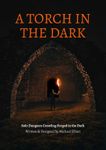
And it's just really fun. You can you don't have to choose one or the other for an entire game. You can decide to interact with something and have a little bit of a role-playing experience, or you can ignore it and just move through the dungeon. 2d6 dungeon is really fun. I love all of the charts. All of the charts are really really interesting. You're always discovering new things. It's super fun to look stuff up. And I also really enjoy the combat. I think this has the best combat out of all of the games that we are looking at today. Okay, the final game in this video today. And that is A Torch in the Dark. And that's from Michael Elliott and Not Writing Games. And this is available on itch.io. So out of all of the games in this episode, A Torch in the Dark is the least like a board game and is the most like a modern indie style journaling game. You're still creating a character and exploring a series of dungeons, but this game isn't concerned with the mapping. It's not concerned about the little details in the dungeon. This isn't a dungeon simulation game. It is focused on one encounter after another, similar to something like a card game like Escape the Dark Castle. Because you will be using a standard deck of playing cards to determine what you encounter. In that sense, I think this is a perfect entry point to a different kind of tabletop RPG dungeon crawl.
So as far as delving into the dungeons in this game, there are nine different dungeons that you will work through in order, starting with the Vault of the Viscount Allard-Hound, moving through the Necropolis of Lord Admiral Jeffrey Whistle, or the Mausoleum of Count Edvorg Turnbull, or perhaps the Catacombs of Lord Commander Sigvard Bane. And each one of these different dungeons will have a lookup chart and you will draw a card. And then you will look up what that card does and you will have that particular encounter. And the dungeons will have a certain goal that you are looking for. And usually that goal is associated with one or more of the face cards. And so you go from one encounter to the next. It's kind of a point crawl. You don't need to worry about drawing rooms or corridors or worried about individual spaces or individual traps. You're just worried about the highlights. This is a point crawl in the sense that you are moving from one highlight to the next.
There isn't a lot of downtime in these dungeons. You're never going to draw a card and it's just going to say nothing has happened. Nothing has happened. In some of the other games that we've looked at that rely more on on random elements, you will go through long periods of time where you don't discover anything interesting. The dungeons are empty. And that's okay. It's okay for a dungeon to be empty. But in a game like this, it's more of a highlights game. You're kind of playing through the highlights of going through a dungeon. As far as the outs life outside of the dungeon. So actually, we've already moved through our life in the dungeon. But as far as our life outside the dungeon, uh pretty basic. And that is that is covered in the section in the rules about downtime. And when you leave the dungeon after you have discovered its its final conclusion, and you've you've completed its objective, you move into the downtime phase. And from here you can do a number of things. You can recover, you can resupply, and you can rest. Basically, you're making your character you're healing up your character in a number in a number of ways so that they can survive the next dungeon. But you aren't exploring a city. You're not exploring a wilderness. That just is kind of outside of the scope of this game. I think the complexity of the of this game is kind of interesting. For people more used to modern indie RPGs and journaling games, I think this will come in at a one or two. But for people more used to board games or RPGs with a more strictly
defined set of mechanisms, this might be a four because of its somewhat foreign concepts. It requires a lot of input from the player to connect the dots and to kind of come up with the fiction of why they are encountering all of these things one after another. You will get the most out of this game if you journal a little bit and if you explore your character through fiction. A lot of this game relies on fiction, not on rules. And some people do have trouble with those kinds of concepts. They don't know where to start. They don't know what to do. They think they're breaking the game by just making up a story. But that's what these kinds of games are for. And that's what these kinds of games excel at. So if that is a little bit intimidating for you, just kind of go with the flow and see where it leads you. You might be surprised. As far as expansiveness goes, I don't think there are any expansions. Nothing that I know of. This is a one-and-done book.
It's 30 or so pages. It's very narrow in scope. So if you want something that you can just get one thing and have a complete game without needing to worry about anything else, then A Torch in the Dark is your game. As far as character progression and creation goes, again, it's kind of that narrative focus. Very very light on the mechanisms. And you're really just kind of keeping track of a few things. You'll have a name and you'll keep track of how much stress and corruption you've taken. And then you have a number of different skills and conditions. And the skills are very narrative focused. A lot of this game has to do with risking it, pressing your pressing your luck or or assembling a dice pool, I should say. And you assemble a dice pool when you have to overcome a challenge depending on how many skills you have, what your level is, and your items. So, everything is narrative focused. If you have the skill of acrobatics of then and you are trying to jump over a pit, then you will add one D6 to your dice pool. If you have a rope also in your possession, then you can add a D6 to that dice pool.
You look at your inventory, you look at your skills, you look at your companions, and if those things will help you, then you get to add dice to your dice pool. Now, as far as the skills go, uh this book doesn't say, "Okay, if you are a warrior, take these skills. If you are a thief, take these skills." It's really up to you. It's up to you to define your character, to define the fiction of your character by the skills that they have, by the items that they find. And this the book does have examples of each, but these aren't the only skills. These aren't the only items that you will find. When you fail a roll, you also need to come up with some kind of fiction about what happens. Maybe you lose a skill because you got hurt. Maybe you lose uh something in your inventory. Maybe one of your companion dies and so on. So, a lot of the work a lot of the the work as as far as mechanisms go, it it does require more input from the player than the other games on this list. But, that is also freeing because you can really just go with the flow and you can get into the story. You can get into the things that your character is experiencing and it really does help to come up with a journal and I think that's why this game is more of a journaling game because you'll get more out of it the more you put into it. As you start writing about your character, how your character learned the skills, what kind of inventory, what kind of gear your character found, what kind of items, you know, what does this magic sword do? What What did this magic uh sword come from? How does this sword
help you? Uh what is it good against? Who your companions are as you find these companions. And what happens to them when they die. And you really can by the end of a game of a Torch in the Dark, if you keep a little journal, you will have something pretty interesting to look back upon and something very memorable. So, this game really is uh quite a bit different than the other games on this list. It's a different kind of tabletop RPG dungeon crawl, but I think it's one worth exploring and there are some other games in this space. Well, all right, everyone. That was a long video. I hope you all enjoyed taking a look at games like A Torch in the Dark, Cairn, Shadows, Four Against Darkness, 2D6 Dungeon, Caves and Catacombs, NoteQuest, D100 Dungeon, and uh Marching Order. Uh this is a really interesting subgenre of the tabletop gaming space and it's a it's a subgenre that I know a lot of us like. It's a subgenre that I like a lot. I think there's a lot of creativity in this space. There are a lot of interesting things. One of my favorite things about these types of games is that I can just go on itch.io, I can go on DriveThruRPG, I can go on uh Print and Play uh Studios, is that what it's called?
Uh but there are a number of different websites that you can just go to, you can find one of these games, you can get the PDF and print it, and you could be playing in a matter of moments, a matter of minutes. You don't even need a printer. A lot of people just play these games on their computer. I like to make my zines because I like the physical thing. Uh but and they're they're all uh pretty affordable. And so, you don't need to spend uh hundreds or dozens uh hundreds of dollars to buy expensive board games to have these kinds of experiences. Uh you can have a very simple, very complex, and very inexpensive experiences with any of these games. And a lot of these games do offer the opportunity to expand upon the base game. Something like Four Against Darkness or D100 Dungeon. Uh these two games have a whole bunch of stuff. And so, you can devote a lot of time, a lot of energy, a lot of money into turning these into more of a of a lifestyle uh game, a game that occupies all of your time.
Or you can play a passing game like A Torch in the Dark for just a one-and-done little experience or something more in the middle like Caves and Catacombs. Or if you have a HeroQuest and you want to introduce a little bit of RPG elements into HeroQuest, you can use Caves and Catacombs to augment that. And then there are the the games that have a lot of style and a and a really cool atmosphere and vibe like Marching Order. Or there are also the the games that really focus on that kind of dungeon simulation like Cairn, In the Shadows, and 2D6 Dungeon. All of these games have something really cool to offer. They're all a little different, but they all have things that are in common. And it's just such a fun little space to explore. So, I hope you guys enjoyed this video. We will talk to you later. Bye-bye.