Let's Talk Board Games #34 - Pirates of Maracaibo, Alpina, Odin, Seaside, & Chu Han
Games in This Video
5 games are featured in this video — they unlock as you watch.


Transcript
Hi everyone, my name is Monique and I'm Naveen from Before You Play and welcome to another episode of Let's Talk Board Games where we talk about a few games that we've been playing recently. Yes, today we are going to be talking about five games. Um, no specific theme or vibe again in this episode. Maybe a little bit of Oceanish. I think they've were all released in 2024. All released in 2024. Truly what we're doing right now is we're trying to get through the games that we have that were released in 2024 so that we can do maybe a proper top 10 later in the year. Released in the US in 2024. I think there's a caveat. Yeah. So I believe all of these titles today, all five of them were released uh last year. Could be wrong, but we'll see. Uh but they are a wide range of weights. Some of them are very light and then we have one that is on a slightly on the heavier side. But first, today's episode is kindly sponsored by Bezier Games, who are launching a Kickstarter in April for volume 2 expansion maps for their game, Magv Metro. Yes, Magv Metro is back with six new expansion maps. In Maglev Metro, players utilize state-of-the-art magnetic levitation technology to build a metropolitan rail system, transporting workers and robots beneath the city. A first volume of Maglo Metro expansion maps were released in 2022 and featured a wide range of maps including mechs, monor rails, as well as Mars. And now Bezier Games is launching a Kickstarter in April for volume two of their new expansion maps ranging from microscopic nanobots to
spooky ghost trains from the netherworld. And so with this latest expansion, the total number of maps for Maglo Metro will be 14 for gamers to explore. Yeah, we've actually done a full two-player playthrough of the base game over on the Watch It Play channel. So, if you are interested in checking that video out, we'll link it in the description. We do have plans to do two new playthroughs featuring maps from this new expansion. So, if you are interested in the campaign, please check out the link in the description down below and be sure to hit the button so you'll be notified when the campaign goes live. Also, stay tuned for those new playthroughs that are coming out and thank you so much to Bezier Games for helping sponsor this segment. All right, thank you so much. Now, let's go ahead and talk about some games, shall we? Before we get started, of course, we do have to mention that all of these games that we are featuring today were sent to us from the publishers. All right, so the first uh couple of games actually were sent to us from the same publisher.
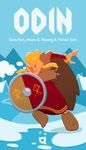
These both Alpina as well as Odin are from a publisher called Hellbatique. This is a publisher that is kind of near and dear to my heart. Both of our hearts. Yeah. Because even before we started making content, the very first time we went to Essen Spiel, they always have a booth there and they are very known for having small box games like this actually. Nice art. This is component bigger boxes that I've seen come from the publisher, but it's usually yeah really beautiful art. It's usually uh simple rules and really really interesting cute gameplay. So these two are from uh Helvetique. Let's go ahead and start with Odin, shall we? Yeah, let's talk about Okay, so Odin is a card game and I believe there are three designers, Gary Kim, Hope, Huang, and Johan Go. And this is a ladder climbing, handshedding game. Something similar to a game such as Scout, but a bit simpler. Now, in this game, there are a total of six different suits, and each suit is numbered 1 through nine.
Now, at the start of the game, players will have a certain number of cards in their hand to start. I don't remember the exact number now, but basically, your goal is to completely shed your hand of cards. you want to get rid of your hand first. And so the way that the game works is whoever starts the round will start by playing one card in the center of the table. Then the next player must play a hand of cards. And when you play a hand, it can only be either the same size as the last hand that was played or one greater. Right. So if somebody only plays one card, that means the next person can play one or two cards. Yes. Exactly. But if you play more than one card in your hand, all of the cards either have to have the same value or they have to be all of the same suit. Yeah. So you can play either like a two two or like a two three red.
Something like that. If you do play a hand that is greater than one, then your hand must be a greater number than the last hand played. And in this game, the value of your hand is not the sum of the numbers. You literally have to arrange your cards in uh in order from in descending order to make the greatest number. Yeah. So if you have like a if you're playing a twocard hand Yeah. and your number is like 96, then you're playing a 96. You're not playing a 69. Exactly. If you play a hand that has a 4, three, and a one, your your value is 431. So that really only matters if the the size of your hand is the same size as the previous players. You just have to make sure you're beating them in rank. Then after playing a hand, you must also take a card from the previous hand that was played. And you can choose which card to take and the rest of the cards from that hand get discarded. So there's only ever going to be one hand on the table at any given time.
Alternatively, if you can't play cards from your hand to form a hand that beats the previous one, then you can always just pass and then it would just go into the next player's turn. And if at any time all players pass except for one, then that ends this hand. And you basically start a new one with that person playing one card again. And you keep on playing this way until one person has played out all of the cards in their hand. And at that point, all players who still have cards in their hand scores one point per card. And you basically play until somebody has hit 15 points. And whoever has the lowest score wins. So, you do not want to have points in this game because of course you want to get rid of your hand. Yeah. Because you're shedding your cards, right? So, if you're shedding your cards, you have zero points. Uh which is exactly what you're looking for in this game. Very, very light game. Very casual friendly uh friendly game. At two players, you actually remove two of the suits. So, there's only four uh suits in play. So, that kind of creates a little bit more of the not I don't want to say tension, I guess, but kind of like it's not as open. You don't have as many options to create hands. Yeah. other player counts, you you use all of the cards. So, um it plays up to six players in about 15 minutes and that's about it. That's about right. That's about right. And so, it's very very light. Uh very simple, but very enjoyable. Yes, I really really like this game. I was very surprised by it. It's such a small I mean, all of the hell batique boxes are like this, but you know, it's a card game and it's it's shedding. I really enjoy hand shedding ladder climbing games. Yeah, I love Scout. I'm one of the people who really loves Scout. And the thing that I like
about this is it has a similar feel, but it's much simpler. You don't have to worry about, you know, the card, you know, there's there's none none of that extra stuff. It's literally just do you have cards of the same color or the same number and can they form a larger number than what's on the table. Yeah. So it it kind of borrows a little bit of the mechanism from scout like where you can pick a card from the center of the table but you must do it in this one versus in that one you're like you're doing it to try to improve your hand in scout and also trying to help let let the next player beat the the hand that was there before. None none of that is is is the reason why you're doing that. This is just to kind of keep you so like you played three cards, now you go back up one card. Four cards, you go back up one card. But you keep that in mind. So like you see the hand that was played before you and that'll, you know, influence your decision as to which cards to play because you know you're going to have to pick up one of their cards. Okay. If you're like, I could really use another red because we're on like four and I really need an extra red so I can play on my next turn. So, and if you ever start a round uh and you you have all cards of the same color, you don't have to play just one card. You are allowed to play out the rest of your hand. So that is one of the ways in which the hand ends. Shoot the moon kind of thing.
Yeah. Yeah. It's just so it's like you have luck driven all cards of the same color unless you strategically plan for that. Anyway, it is very simple like we're mentioning, but I really really enjoyed this game. This is definitely staying in our collection. It's such a take up a lot of room. Yeah. And it's an easy one to bring around. You can play up to six players and it's it's it's card shedding. This is like one of those games that like when you're at a convention and somebody kind of knows the rules for a somewhat medium weight game and they're like, "Why don't you just play something while I refresh on the rules?" This is that game that you would play with your friends while that person is trying to figure out. I'm always looking for games to fit a specific scenario. This is that game. There you go. Hey, I know how to play it. I could teach it to you in 5 minutes. You You just need 10 minutes to refresh your rule book. Cool. There you go. So, yeah, that is Odin. All right. And the other Helvetique title is a game called Alpina. So, this game is actually designed by Luke Ramond of Sky Team Fame. Sky Team Fame. Yeah. And so, in this game, uh, the game actually comes with a deck of these square cards. And each card features one of three types of animals. There's a bird, which is very specific bird. Yeah. A deer. A deer. A deer. No, it's a goat, antelope. Okay. A shamwa. And a frog. And the these are very specific animals that were chosen for the region that this game was based off of in Switzerland. And so each player also has a certain number of hiker meuples depending on player count.
Now the goal of the game is for you to score the most amount of points by building this 5x5 grid of cards together and placing your hiker meeples on the different cards that will score you the most amount of points. So, it's a competitive game, but you are contributing to the same 5x5 grid every time you take a turn. Because in addition to an animal on those cards, they'll also feature one of three different types of terrain. And on the bottom of the card, each card has a specific scoring criteria. And it'll be stuff like you score one point for each hiker mele that's in its column, but above in the in the upward position. Yeah. Or like one could be uh score two points for every other type of terrain going to the right relative to this card that you just placed. Yes. Or maybe score two points for every bird card that has a hiker meuple on it that's in the grid. So it's it's all different types of varieties of scoring like that.
Now the way that the game works is each player will have a hand of six cards and on your turn you'll play a card to the grid and it has to be orthogonally adjacent to one that's already there. At the start of the game, we do start with one shamwa, which is that the deer, that goat antelope animal in this center of the table. And so, you do have to place your card orthogonally adjacent to one that's already there. And then you may optionally place uh one of your hiker meuples either on the card that you placed or one that's orthogonally adjacent to it. Right? So, if there is a scoring criteria that's already out there and you're seeing that it is starting to rack up points, then you can place it as long as it's orthogonally adjacent to the card that you just played to the one you played. Yes. Uh, yeah. So, um, you know, you have to balance between I think this card's good, but I don't think it's that good for scoring right now. So, maybe I can get circle back around to it. Maybe it's like that card like score two points for every bird that has a mele on it. Like, well, it's way too early right now. If I put that out right now, Mo'Nique will then make sure that every time she puts out a bird, she won't put a mele on it so that I can't be scoring on that. So, as the game kind of unlocks and kind of opens up, there's a lot of like how how much are you scoring? So, if I put this card out here in this area, that's actually really good for you. So, I got to I got to hold that back. So, there can be a little bit of like AP inducing, like just a very tiny slight bit, just enough to think about. It can become a little tactical, right? like you're trying to score points for you. You don't want to feed into the points that
your opponents are potentially scoring. Yeah. So, like the the example that you had uh happened in our most recent game where Mon'nique set it up where um she had a scoring criteria at the very bottom and and the the scoring said for every mele that is actually on a card above uh you'll score I think it was two points for her or something. It was pretty lucrative and she was making sure that she was constantly orthogonally going up. But then there was something there. She put that in a spot that she knew I was going to want to continue to to feed into that and I was like, "Well, I have to get my points, too." So, we kind of like give me points. She Yeah. She's like, "Well, if you want to score your points, then you're going to have to definitely feed into mine." So, very, very clever play. Uh um with just the small decisions that you have to make uh can be quite meaningful, though. It's a very clever design. It's so simple.
You're literally placing a card, maybe placing one of your hiker meuples because you only have a certain number of them, but you know, you're definitely putting out a certain number of cards. So, you also know in your mind like every second or every, you know, a two-player game, there are only like three cards or something that I I don't know what the math is, but you're basically mathing out how many I can stand to not place a mele on. There's going to be uh in a two-player game, there's uh 25 cards. One the game starts with, so you know, you're going to take 12 turns. But you have eight meles. So that means four cards that you play. You're not going to you're not going to put a mele out. Yes. And you want to make sure you put out all of your meuples. Yeah. I mean, you definitely want to do that. At the end of your turn, all you do is drop a new card. So you always have six. And the game ends as soon as the last card in that 5x5 grid is placed. Yeah. And that's it.
Yeah. So if you have two meeples left and you're taking the last turn, you made a mistake because you're not putting out one. So uh clever clever little game. Played really well at two. Um I think it plays up to four. Yeah. And so um we only played this one at two. Yes. It is more open, you know, at two. I imagine at four, you know, you'll have fewer meeples, but you'll also have less control over where certain things go. But I imagine maybe you'll see um more openings. Like, you know, again, we've only played it at two, so we're definitely just going back and forth trying to uh seek out opportunities and block each other out, right? So yeah, I'm actually very interested to see what the three player game is like. I feel like four would be kind of like you're waiting so long for your turn that you can't really set up like or there's going to be too much AP like where you're like well for every water okay I don't have that much control. I feel like at three it's like you're just waiting enough time for it to get back to you to influence the overall board.
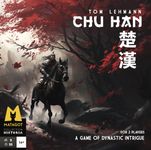
Yeah, that would be interesting. So, um yeah, I'm curious to see how it plays at that three player. But I really really enjoyed it. I didn't know what to expect, you know, based off of just the back and seeing that you're just making sort of a a grid or a tableau of cards, but it was very thinky for such a small quick game. Yeah. So, yeah, good for families, short, quick, just like Odin. That is Alpina. Okay. The next game we are going to talk about is a two-player only game, a card game designed by Tom Lemon, and it is called Chuhan. Now, if you know this designer, he did uh Race for the Galaxy, Roll for the Galaxy, and The City, I think, is another one that we covered. The City is like a smaller card game. Smaller card. We covered it on the channel. Did we do a playthrough of that? We did. Yeah. Yeah. That's why I shouted it out. Uh so, this one is a two-player uh card game. Uh and it's a shedding game. You want to get rid of your cards. Uh similar to like Odin, but doesn't play at all like that. No. So, this is a game published by Mato, by the way. And the game comes with a deck of cards and they're numbered zero through nine. But it does this kind of thing where there are nine ones, eight twos, any kind. They go in the opposite direction, right? Yes. There's only one nine in the game and there's also only one zero, but the threes specifically and the sixes have special abilities.
Now, at the start of the game, each player will have 15 cards in our hand. And like Nen was mentioning, this is a handshedding game. We're trying to get rid of our entire hand first. And so the way that the game works is if you are the first player in the round, you're technically leading and you can start by playing a power that's called a lead power. So some of the powers on the cards will be specifically lead powers that you can only play if you're leading the trick. Then before you play a card from your hand, and this is for any player, you can always take one of these tokens that are called RIT tokens that allow you to draw two cards from the deck that is still on the table. Again, keep in mind this is a card shedding game. So, your goal is to try to get rid of your entire hand, right? But maybe you might want to do that if you're looking for certain values and you just want to be able to increase the values of your hand, then you have to play a hand of cards. And in this game, you can only play cards of the same value.
Correct? So, if I were to lead and play four ones, so then it would go to Naveen to respond, who must then play a hand of cards that are higher value, but the same size hand. Yeah. Yeah. So if you played like four ones, then I could play four twos, four threes. Yes. So on so forth. Yeah. You couldn't play four nines though because you also have to keep in mind that the taring the tearing there's only one nine. So I couldn't play uh four eights because there's only two eights in the game. Yes. And that is something big that you have to consider the card counting aspect keeping in mind what are the possibilities that he could even play. Now there are other tricks to the game such as those threes and sixes because some of them do have reactionary powers. Some of them have powers that will allow you to break the rule where where you don't have to play cards of the same value. You can just play all cards of different values, but they'll take on the value of the lowest valued card. And that's important because twos are also special because if you are ever able to play a hand of at least six twos, then you'll score one point per card in that hand. Which means if you play a hand of six twos, you're going to score six points immediately. Or if you're able to play a hand of seven twos, that's seven points immediately.
So if you're able to couple that with that power, that lets you play all different valued cards, then you can score a lot of points that way. Yeah. And by the way, there is no suits in this game. It's all just uh numerical values. So um that that's why you only have to focus on the actual numbers and the quantity of those numbers that you're playing. Um you are playing up to I believe 31 points. Yes. Uh the first person to actually hit 31 is the winner of the game. And so it's going to play over several different rounds. The way that you score points is whoever is the first player to shed their hand completely, they'll score one point per card that's left in their opponent's hand up to a maximum of five plus one point for each Rit token that the opponent took. So RIT token again is on your turn right before you play a card, you can take this Rit token, put it in front of you, and you get to draw two cards from the the draw pile, right? So, you're kind of taking your chances with that because you're also potentially giving your opponent points if they happen to uh shed their hand completely.
Yeah, because you could have like a a single two and you're like, I can never get this thing played unless I'm the lead player. So, how am I going to get rid of this? Well, maybe I could draw a couple twos and then I can play two twos or three twos when the time is right. But like I was mentioning, there are powers in the game that help you do things in unconventional ways. So, as an example, the zero, by the way, is considered to be a wild. you can pair it with any card and it just increases the the size of that hand by one. So, if you were to put it with two fours, it's now a hand of three fours, but you can't play it on its own. Um, there's also a six that has a power that lets it beat the single nine. So, if somebody played a nine, then you can literally play that single six and it would beat that. Some powers allow you to pass uh giving the opponent a certain um amount of points but allowing you to take the lead. Yeah.
So, like say Mon'nique played four fours and I have nothing to beat that, but I have that one card that says I can play this single card, take the onus off me, I pass, and now Mon'nique has to beat her own hand. Yes, that's a different that's a different one. Yeah, like that. Uh, so there's there's little things like that that kind of throw a wrench in this. So, it's not just playing just like these like massive cards, right? But that's essentially the heart of the game. you're, you know, it's simple in the sense that you really are just playing the same valued cards and uh the same size hand, but you're trying to find other ways to win the hand by finding those powers and sort of being sneaky in the way that you can uh shed your hand quicker, I suppose. In addition, there's also a campaign. Uh there's a historical backdrop to the game that I think is a bit lost on us. It's definitely in the rule book. So if you are interested in the there's actually a historical guide in there's a separate rule book that kind of talks about the history of the ch and the hans and kind of um historical backdrop of China. So if you are interested in that or if you are a history buff uh then there is definitely that resource in the box for you. Yes. And there are different uh campaign uh situations or or campaign modes I guess in that historical pamphlet. So and I think it has you know thematic implications. We did not try those. But the game also comes with a deck of event cards that you can play with and we did play with those. So basically each hand you draw a new event card and sometimes it changes the way you score. Uh sometimes it it change. There was one that we played with that uh you had to remove one of
the rit tokens because there are only six of them I believe max and you remove one of them. Instead you put two cards face up from the deck and instead of taking a rit token to draw cards you can swap one of the cards from your hand with one of those two face up cards. So there are a lot of different things or sometimes the events say calm no effect. So there's essentially no no event that round. But that is essentially it. Like Navine was mentioning, you play until somebody scores 31 points. So what are your thoughts, Naveen? Ah, what are my thoughts? Uh me first. I will just lay it out there. I do not like this game. Oh, okay. Um the decision making, the the way you just get 15 cards if you can get a nice hand uh where you don't have to tap into the the rit well and draw more cards. Like if I start the game with like five ones and I'm the leader, well, I can just get rid of one third of my hand right there and then I don't have to deal with the ones anymore at that point. As as long as I don't just draw a single one, then I'm kind of in trouble right there. Um, if you have a lot of the threes, then you are going to be uh having more of the say on the powers. So, I just I just the card distribution is just not dynamic enough in my opinion. I just feel that like okay, I got four of the fours. That's great. this is a great time whenever we're going to play the four cards at once. I'll I'll just unload this right now. And I just never felt like I was being cunning or like really outwitting you even with all those powers. Like I would use those powers and I just was like, but I I just have that power. It
just I it was just given to me at the beginning of the game. I didn't I didn't buy it from a market because I had to manage my money. I didn't have to do any of that. You checked your privilege. I just I just had privilege. like I just got that card that said this one beats your nine and that's it. And there's a one card that's in the game. So I for me personally I just didn't really see it in that way and I actually did well and I I was I was actually yeah Naveen was doing well. I was doing well and in winning the games and especially the first game the first game I didn't really catch on to the card counting aspect. You really have to keep that is something my brain always does is card count. Uh, I I anytime I play games like and I'm fully aware of like the count of a card. That's just kind of how my brain works. I kept taking rits and I was like, wait, of course I'm not going to get more because there's no more. There are no more of this value. There's no more fives cuz I N just played four of the fives, you know. Yeah. Yeah. I don't I don't card count. But I definitely think that I enjoyed it more. Um I I still am not completely sold on the game. I do see what it's getting at.
Like it really just wants you the the basis of the game is very simple. And when I was reading the rules, which were a bit difficult to understand, by the way, when I was reading the rules, I thought you're just playing the same valued cards, it doesn't really seem like, you know, there was much more going for it. But then when you mix in the powers and the timing as to when you use the powers, then I I do sort of see that that tension of like you don't want to give away too much, that kind of thing, cuz your opponent can just come around and if they happen to have the card that you know you don't have. Yeah, there's some cards that that that like have powers that like cancel the power of of your opponent. Yeah. And it's just like I have that card, so like I'm just going to use it on you. Yeah. And now there's nothing you can do about But maybe I know you have that card. Okay. So it's a two-player only game. And but there there is a third deck that's like 16 cards deep. Yeah. It's like third doing the rits a lot then it's not like you're going to really see all of those cards. But by by doing rits and grabbing more cards, you're if I end up shedding my hand, I'm going to score more points because you've taken on more rits and you probably have more cards in your hand at the end. So I don't I just I don't know. I we played it several times and I just Not sold. I'm not sold. I definitely wanted to keep playing. Like I was like, can we please just continue playing this game? I really want to see I really want to get a feel for it. We played it several times. We did. Yeah.
Yeah, cuz you know with with games like this where there is some sort of like backdoor strategy, you want to play it more and more just so you can sort of feel what it's getting at. I definitely like I felt like the most recent game that we had it it was very close at the end. Yeah, it was um where Mo'Nique had a card that said from now on all points are scored double. Yes. From the there's there's there's a card that uh that basically unlocks that. And so we were going back and forth and it was kind of it was kind of interesting there. But then it got to a point where I could like autoshed my hand. There was nothing you could do about it and it was you just couldn't undo it and then it just got to the end. I got to the end and I was like that was cool leading up to it but at a certain point that was just it. Yeah. So the events do make it more interesting. I do think that you know pulling an event that sort of changes the way the game plays uh make it a little bit more interesting but I think it might just not be for us. Yeah, I definitely thought it was more interesting than Naveen did. Like this one's really not for you. I think people like this game. Also, one cool thing that I will say is if you are a fan of it. There are very nice components in here. So, you can play with like a nice layout or they also include a travel tuck box which you can actually take uh and you have the full game in just that tuck box. So, you can you have travel with it. Yeah, you have a travel version of it in here with the main version. So, if this is something that you really like and you and you want to play a two-player game, this could be right up your alley. Well, there you go. That is Chuhan. Please let us know what you think about it, uh, if you played it before. But there you go. Yeah, let let
me know. Convince me. Tell me tell me what I'm missing. You don't have to convince him. Everybody has If you have played this game, I do want to know what it is. Uh, cuz Mon'nique was like holding on to something there and I want to know what that is. Exactly. There's a part of me that likes it. There's a part of you that likes it. Yeah. And I'm curious what that is. Yeah. All right. Next up, we have a lighter game. This is a game called Seaside, and it comes in this bag so that you can bring it with you to the beach, I'm assuming. Uh, this is a game published by Randolph, and it's designed by Brian Burggoyne. And in this game, the game comes with 70 of these tokens, and you remove a certain number of them depending on player count because the game can play, I believe, up to five players, and it really takes about like 20 minutes. So, it's a very fast sort of push your luck set collection. And uh over the course of these 70 tokens, there are actually, I believe, seven different tokens. And each token is double-sided. So, one side will show a different type and the opposite side will show a different type, and you won't know, you know, you won't be able to guess what's on the opposite side. Yeah. You just draw one from the bag, and then you make a choice between the two sides. That's right. On your turn, all you do is you draw a token from the bag, you decide which side of the token to resolve, and then you do the thing. And tokens are either going to be placed in the ocean in front of you or in the seaside, which is in your play area, depending on the type of token that you resolve. So, three of these tokens are things that feature uh creatures like crabs, shell, oh, shells, isopods, and isopods. Those three tokens
when you resolve them get placed into the ocean because other tokens will allow you to collect them from the ocean. as an example, the sandpiper, which is a type of bird. Uh when you draw one of those, you get to collect as many isopods isopods. Yeah. From the the ocean as you'd like, and you actually stack them. And but the thing is, if ever you have a stack that is smaller than the rest of the stacks that are in your seaside, you have to discard these smaller stacks. Yeah. So, these are stacks of that bird uh on top of the the bug. Several isopods. Yeah. So, it's only stacks relative to the other bird stacks. Yes. Yes. Exactly. So, if you had uh three size twos and then you were to create a size three, then you have to discard all of your size twos. And you wouldn't want to make that size three because the object of the game is for you to essentially have the most amount of tokens at the end of the game. You're trying to find a way to hoard everything. Uh because you basically get one side. Yeah. On your seaside cuz for every token you have, you get one point at the end of the game. Yes. And it's actually not points. At the very end of the game, you're supposed to stack up all your tokens and whoever has the tallest stack. You like build it like a sand castle. You do. Now, speaking of the sand, there are other types of tokens such as the beach which allow you to take shells. Yep. So, just like how there's those isopods, the beach token, uh, for every beach token you already have present, you get to grab a shell from the dead center. So, if I have three beaches and there's four shells in
the middle, I can take three of those shells. take three. It's not up to the other ones. You can decide how many. You'd always take them. You'd always take them. Yeah, exactly. There are also uh waves which uh require you to flip over one of the beaches that are on your seaside. You can look at all the beaches to see, you know, what the opposite sides are, but you must flip one of them over and resolve that new side. Yeah. So, if you flip it over and this this uh beach used to be um a shell or was a shell on the other side, now you flip it over, it becomes a shell. Now, it has to go into the dead center. So you wouldn't choose that one is your only choice. And finally, there are also rocks. And rocks operate in pairs. So the first rock that you take does nothing. But the second rock that you take now allows you to take all of the crabs. Crabs. The crabs that are in the ocean. And the third one that you take does nothing, but the fourth one that you take allows you to take the crabs again. So, you always want to get your rocks in pairs so that you can uh but you want to time it so that there is actual crabs in the dead center because there's no crabs in there. All you've done is just put together two rocks.
Yes. And I should also mention those three uh types, the isopods, uh crabs, and shells that you're you're putting in the ocean. Whenever you do that, you get to take another turn. So, it's not a complete loss of a turn. You just you toss it into the ocean and then you draw a new token from the back. Yeah. Because if if you made the decision to just toss it in a higher player count, it's not coming back to you. So, yeah. It's like you're wasting a turn. It's there's a little symbol that basically you have that universal gamer like take another turn on it. So that's the reason why you would throw something out there so that you can potentially catch it on your very next turn. Yeah. So that's essentially it. It's very simple. Uh the game ends as soon as you've drawn and resolved the last token from the bag and the player who has the most number of waves in their seaside gets to collect the rest of the tokens from the center of of the ocean. Yes. And in the case of a tie, then you divvy them out. evenly.
But that is essentially the game. Mhm. Yeah. You just want to uh stack them up and then whoever has the most tokens overall is the winner. Uh very very light game. Yes. Whoever has the tallest stack. Yeah. You're supposed to technically stack it and put it all together and see who's the best. Yeah. All the tokens are the same size. So it really is whoever is the most. Yeah. Light game. Uh simple family game. Um very easy to teach. It's it's way more complicated. um just from us verbally saying it versus you could literally just teach it like this one does this, this one does this. Okay, you ready to go. Um but yeah, it's uh it's simple. Um I liked it. I think it was it was a fine game. Um nothing like to scream about or shout on the top of the mountains, but I did enjoy my place. Yeah, it is push your luck. It's just push your luck, you know. It's very very quick. It's like Naveen said, this is a very light family weight game, but it's very cute. The components are cute. The tiles are really nice. Um, I enjoyed it for what it is. I think it does what it does very well, and I do think that it would probably play better at higher player counts. I don't think it's a great two-player game, and I think it is one of those things where you travel with it, and then you kind of play something nice and light and casual, and in that moment, you have a cute little fun time.
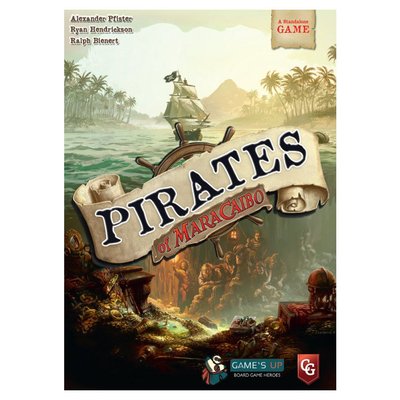
Yeah, pretty much. Yeah. Uh, not much more to say about it besides that. Yeah, that's essentially it, honestly. One for the family and, uh, one that we're probably not going to pull out, just the two of us, though. Yeah. Yeah. Like I said, not not the best two-player game, but especially if you have like five players and you just want to play something really quick, this is perfect. Yep. So, anyway, that is Seaside. Okay, the final game that we want to talk about today uh was the one that we wanted to talk about in our last episode of Let's Talk Board Games, but we just wanted to play it a few more times and so we have done that. This is Pirates of Marrabo. Yes. Uh designed by Alexander Fister. Uh we did a entire Fister series. So uh if you are interested in some of the other games that we have played, we have a whole playlist on this uh channel which you can check out. Uh this is uh published by Capstone Games and it is a 1 to four player game and it says it takes about 25 minutes per player uh which is a lot lighter than mebo which is the game that this is kind of titled after. Right. If you are not familiar with Alexander Fister as a designer, he is known for heavier games and medium heavy. Pretty heavy. Like Marbo, which is the game that this is sort of a spin-off of, is fairly heavy.
Oh, yeah. Uh these are long games. You know, he's also designed Great Western Trail, Blackout Hong Kong. Um Mombasa/ Skyines, Isle of Sky, which is one of our favorites. That's right. There are some lighter titles um in his line, I guess, like Isle of Sky. There's also Cloud Age, which was a very uh uh lighter strategic title. And now there's Pirates of Maribbo, which like we were mentioning is a sort of standalone spin-off of the original game. It's a relative of the original game, I would say. Yeah. So, in Marrabo, which we actually have a playthrough of, uh you are going around Maribbo and you're visiting different locations and you're trying to collect cards. It's a very heavy long long game. In this game, the board is completely made of cards.
There's actually no board. Now, I do want to mention that the pictures that we showcase in our episode are going to show a playmat that does not come with the game. We just happen to have the playmat, but uh you know, if you don't have that, then you would just arrange the cards in different columns exactly the way that they're arranged on that mat. And so, there is no board that comes with the game. But basically, what you're doing is the game is cleared over the course of three rounds. And each round, you're going to on your turn sail your ship up to one to three spaces. And in this game, spaces are adjacent cards. So, they can be adjacent uh horizontally or vertically. But the main rule is the last card that you land on has to be at least one column closer to the right. Yeah. Because the very very rightmost space is Marbo. So, you can go like in the same column, you can go up up and then one step towards Maribbo. Yes. But you always have to end up just one column closer to Marrabo than you started your turn. And uh there are three different types of cards in the game. There are locations, uh there are residences, and there are improvements.
And depending on which card you land on, then you resolve the card. Now, the locations and the residences, you know, you're going to lay out these cards, and uh those are the two types of cards that will not change the entire game. Thematically, they're they are where they are. They're like an island. It's it's physically stuck there, right? Location cards provide you with the main types of actions that you'll be uh utilizing throughout the game. Residences are endgame scoring criteria. So, there are about like four of them maybe that that are laid out uh throughout the entire game and you'll see them at the very beginning so you kind of know what to gun for. The game comes with a bunch, but at the beginning when you're doing that setup of the lattice, you'll only play with about four of them. Yes. And then the improvement cards will either give you immediate benefits or ongoing uh sort of engine building abilities that you can use when taking actions. Now, the main types of actions that you'll see on these location cards are going to be stuff like raiding, which will allow you to roll these three raiding dice and gain uh one of the three types of treasure in the game. Yeah. So, like there's a the white dye goes with pearls. Uh the green is like with emeralds, and then there's gold for gold. Yes. And when whenever you take these uh these treasures, you're going to place them on your your player board, which is divided by the three different types of treasures. And there's also a line because you must place it above the line because it's considered to be unburied. There is another mechanic in the game that will allow you to bury treasure because buried and unburied treasure are different things in this game. You'll score more points if they are buried versus uni. You want to get them buried. Yes. But at the same though
at the end of the game, these treasures are going to be a sort of multiplier depending on the value that the treasures hold at the very end. So the game has three different islands that feature one of these types of treasure. And you can't actually land on the islands. You have to sort of sail around them. But basically, there are also opportunities throughout the game for you to add more treasure to those islands. And at the very end of the game, these islands will determine the value of each treasure that you have. Yeah, it's actually kind it's it's not a supply and demand thing. It's actually like it is kind of well, it's the inverse, right? So, typically like when there is a lot of supply, then the value goes down. But this one, the more supply there is on the island, the more valuable it is as a multiplier versus supply and demand. It would be the less uh supply there is, the more demand there is, and so the value would increase. So, it kind of goes the opposite way. Why is because whenever you raid and take treasure, you're taking from these islands. So the more that the people have, the less valuable the treasure is. Like the more the players take from these islands, the less valuable the treasure is because so many people have that type of treasure.
Okay. Okay. So that is the way it values the treasure. But like I was mentioning, there are ways that you can add more treasure to these islands. Yeah. Cuz when you bury it, uh, you can actually cover a spot and it basically allows you to take one from the supply and put it onto the island. So depending on how many cubes are on the island, it'll have a specific number of points. Yes. And that is going to be your multiplier for how many of that particular type of treasure you have. And so that's just one of many ways that you can score in this game. This game is a point solid. You will score. There are many different ways to score points. And so that is just rating. You know, rating. When you roll the dice, you'll have a certain amount of raiding points. You know, without getting into the specifics of the rules, but one of the main reasons why you raid is to get gain those treasures. In addition to uh burying treasure and gaining them, you'll also be able to explore, you know, take the exploration action which allows you to go around this map. That is something that I love. Marbo, you know, a lot of the mechanics in Marbo are sort of uh condensed into very simplified versions and and combined into this game. And so that exploration piece is part of it, but going around the map is actually quite lucrative because there are like four rivers along the map and at the end of the game, you'll score four points for each river that you were able to cross. In addition to the fact that whenever you move around the map, the last place that you land on, you gain the benefit of that spot. And some of them are great, especially um when you need them the most, I guess. I mean, some could be like a double shovel, which is like berry berry, and that could be really big for you. or some can
be just gain a treasure or gain a lot of money. Like that's another way that you can gain money. So, there are a lot of different benefits, but that is another uh sort of main thing you'll be doing. You also start the game with a quest card, which is basically your own private endgame scoring. And you'll have opportunities throughout the game to gain more of these cards and uh one of them is on one of the locations. But those are the sort of the three main things that you'll be doing when visiting those locations. Yeah. In addition, whenever you visit a location uh before taking its main action, you can also upgrade your ship. And so, this is actually a part of the game that I thought was kind of cool. Each player has their own ship, and it's broken up into, I believe, three segments, and you have this menu of different upgrades that you can uh take. Yes. And uh whenever you upgrade, you have to start from the leftmost section first. As soon as you are able to meet the criteria for crossing over into the next threshold, then you can start upgrading in that section. And these are going to be lot a wide variety of benefits like just gaining you a bunch of money or some of them give you ongoing benefits like now you gain a $1 discount every time you purchase a card or an additional rating point whenever you go raiding. Um there is a benefit that allows you to purchase the front of the ship which is it called the mast. Yes. I don't remember what it's called. Yes. But the game comes with several of these tokens that feature different types of that mask.
I'm going to call it a mask. It becomes your own personal uh asymmetry. Yes. When you buy one, but also really cute because there's like a mermaid or there one has like a unicorn and there's like a bunch of different ones. I thought that was a really funny thing. And when you when you purchase the upgrade, it it kind of slots into your ship like a puzzle piece. Um you also have the ability to put out your own black market tiles, which you can place out onto a location that doesn't already have one. And whenever you visit that location, it'll either give you points if you are able to meet its criteria or uh it'll let you bury treasure depending on which black market tile you you placed out. And finally, the last type of cards are the residences. And like we're mentioning, there are only a few of these that are laid out on the board, but basically they give you endame scoring criteria that are really strong because they're multipliers. Definitely something that when you go into your game, um if you're like, "Okay, there's a lot going on." take a look at the residence cards because those are you're probably going to try to do at least two of them and start working on that and start working on them and be like, okay, like if if it comes down to choice A and choice B, well, choice B goes along with the residence card that I think I can score, right? So, it's going to kind of drive your path along with those quest cards that you have. Going back to the quest cards, by the way, uh there's two ways to score them. There's the lesser uh top and then the the more lucrative bottom way. So that is also another kind of like decision point at the very beginning of the game. You're like, "Okay, this wants me to get a bunch of people. I'm gonna find improvement cards that have the people symbol on it and at least just gets you kind of moving in a direction." Yes. Yes. All of these things, they just help you give you a
direction. So it's not just this like total overload of options and you know, you have a goal from the very beginning of the game. And with the residences, they cost a lot of money. you know, you have to pay a certain amount of money to put one of your tokens on there, but now it's a multiplier at the end of the game. So, one of them might score you, I think it was like six points for every river that you cross. And that's in addition to the four points that you are already scoring because of the base scoring rules. So, if you know you're going for that, you're like, noted, I'm going to walk a ton on that track cuz I'm going to get 10 times four, 40 points, you know, in this game. So, our scores are pretty high in this one. Yeah, scores are pretty high. And unlike the improvement cards, the residences, like we're mentioning, they do not change. The improvement cards, whenever you buy them, they actually come off the table and then you replace them with a new card from the deck. So, those are constantly changing, but locations and residences stay the same, right? And that's essentially it. As soon as a player has reached the very rightmost uh port, I believe, then everybody has like one more turn and then that player will move into Marao and that ends a round.
And you know, there's a little bit more to it than that because there are a lot of different benefits that you'll see on various parts of the board as well as the ship. But those are the main concepts of the game. As soon as the end of the third round hits, then everybody goes into final scoring and then you score for everything that you've amassed throughout the game. Final scoring is is a little bit tedious. I will say there's there's quite your sweat handkerchief. There's quite a bit uh going on especially um cuz you're going to score during the middle of the g in during the game but at final scoring you're like oh my gosh okay done when when like you're finished and you're like wow that was a lot of points that came in everything scores you points like everything everything that you do I gained a treasure that's going to score you something at the end of the game so there's a lot of score there's a lot of points to be had and even though it may have sounded complicated it's actually not and that's what I appreciate about this game I I like the board Americao. I like the rondelle thing that um Fister does like with Great Western Trail. I really think that he does that well. So, I think that the card layout is just okay. Like moving from column to column.
I do think that it simplifies the game a lot more. And I think that's a good thing. Yeah, it's all it's all laid out for you. You can see it all there. Uh, one element that we didn't uh, touch upon is if you ever go onto a card where another player is, then you owe them a dollar or one coin. If there's multiple players there, then you owe everybody a coin. And that's not horrible in a two-player game. I imagine at four players because the board state doesn't change. You know, it's still the same number of cards. So, I imagine at higher player counts, that would be a stronger point of contention. But uh like I said, this is basically a lot of the major mechanics that you see in Marrabo condensed and simplified into a faster game, a game that's easier to set up, easier to digest and teach. Definitely. And it's just easier to synthesize because you're not like there's a lot of tension in Marbo. There's a lot to consider. It's really heavy. And that's why I love Marbo. Uh you don't have a lot of that in this, you know? This one's a lot more free flowing. This one is like we'll kind of get in each other's way, especially with the timing element of the game because you can move one to three. So if you're if one player is like, I'm just going to go one card to next to next so I can take a bunch of actions. Well, one person can go three, three, three and get as close to Marbo as possible. And that kind of speeds up your clock like, oh, I really want to go and roll some dice and that's really far away. So now I got to bail on all this other stuff that I was planning on doing. Yeah. And I will say that is a major aspect of Marbo that I liked a lot. the anxiety of like, oh my gosh, this player's gonna end it and I have so much more I have to do. Yeah. And it's it it's sort of like that in this game.
Like it definitely still has that aspect, but it's not as bad. Not as bad. No. I I honestly don't mean to keep comparing it to Marbo. Maro is just one of the games that I really love, but I just can't help but see similarities. But I mean, it's in the name. It is in the name, but this game stands on its own. Like, it is meant to do something different. It's meant to do what it what it is doing exactly. And I really liked it for that. I will say it it uh Okay, last time about Marbo. Maribbo is very tense. You're you're like I hope they don't ruin the the war track. Oh my gosh, I worked so hard on that. Yeah. You know, here it's like I'm going to go and do this thing and oh, you got that card that I wanted. It's okay. I'll go and get that card over there and I'll roll some dice and oh, I'll modify that dice. And so it's it's more casual feeling. Yeah, it's more casual. Um definitely uh lighter in terms of like uh like that brain heaviness that you feel. You don't like after Mariba you're like sitting back and you're like dissociate for an hour. Yeah. This one was like, "Oh, that was pleasant." You know, that that was nice. And I think that's the point. Yeah. You know, it is a more pleasant experience. Uh there's not a whole lot of pain, I guess. Like the upgrades are free. like you're just you're getting something every time you take a turn. But I honestly think that's a good thing because Maribbo is so difficult to get into. You know, that is not a game that we play often at all because of that. It's something that we we would love to play dream of playing again, but we know how difficult it is to get into a game like that and to
really commit the time. Whereas this is so easy to just get out, get into it. You sort of have a lot of the feel. And for a lot of people who don't want to play a game like that or who are not heavy gamers, this is going to be really lovely for them. Yeah. Uh playmat is very good. Uh so I I will say if you are a fan of this game, if you've played it and you like it, I do recommend getting the playmat. Normally like playmats for me is kind of like h like I don't really care. Where am I going to store it? Yeah, it it's it's a board. It becomes a board. It becomes a board. It helps, but I the only thing is I wish it could fit in here somehow. It unfortunately cannot fit in here. So, we have a playmat that's just like it's going to have to be in the corner for a little bit until we figure it out. Um, but um, you know, moving up to three cards away, very, very simple concept. Everything is laid out for you. You can try to, you know, plan your moves, especially at a two-player game. If you, if I see Mo'Nique has kind of gone to the north, and I know I'm going to take a pretty south route and go around an island, I can kind of plan out and be like, the worst thing she can do is go one, two, three, and then I can counter that and go 1 2 3. So, you're not really into each other's face. Not too much. I will say surprisingly for how many cards are out there, um there's not too much AP in terms of which cards I'm going to take.
The AP I get is which upgrade am I going to do? Yeah, sometimes you're like, wait, do I need three coins now? That is so the one time to get three coins. Is three coins right now better than having a card discount forever? Like, oh my like what? Yeah, that is so true. The upgrades are I have no idea why. But not in like a it's not a negative for me. It's like a how the heck did that become such a hard decision for me? Because all the cards are good and it's either you have the money or you don't. With the upgrades, you want to make sure you time them right. Yes. But anyway, this game is all about building. You know, you're just constantly creating this this path that you're trying to to maximize the entire time. You're just trying to acquire things that'll meet your quests, get more quests, acquire things that will continue to meet those, and then secure the residences that give you the most amount of points. Like that is the game in a nutshell. Yeah. Um, for me enjoyable at two players because of the time. Um, four players, you're just waiting for that many more players to take. Yeah, that's just going to be I mean it's 25 minutes per player. Yeah, it just it literally adds per player and then every single AP decision is per player. So I think this is probably a two-player only game for me, which is great because it's just the two of us right now. So true. Uh, so that works out. Um, yeah. So overall overall I enjoyed it. I definitely love Mariko more, but they are different. very different feel. Marbo is in our top top.
Yeah, that's like I think this is like in our top 50, right? It had to have been in there. Yeah. Yeah. So, it's a pretty difficult comparison, but for what it is, I think they did a great job. Still enjoyable. Yeah. So, anyway, that is Pirates of Marrabo. Well, there you have it. Those are some of the games that we've been playing recently. Now, we have been playing a ton of games lately. So, we do have plans to do another Let's Talk board games probably in the next week or two. Yes. At the end of next week. At the end of next week. Like we were mentioning, we are trying to get through as many of the games released in 2024 that we have as possible. Uh we're trying to do a better job at playing more games this year. More and more and more. Yeah. So, we are playing a lot of games right now. Um and so, um if you have played any of these five games, please let us know in the comments down below. Let me know what you think about Chuhan, please, if you have played it, please convince me like tell me like what what am I missing there? Give the man some peace. Give me some peace. Yeah. Um, and thank you so much to uh, Bezier Games for helping sponsor this video. We really appreciate that. We do have those Mag Love Metro uh, playthroughs coming out in the future. Uh, thank you all so much for watching the video. We hope you enjoyed it. If you like to see more videos like this in the future, please consider subscribing. Thank you. Bye.