Let's Talk Board Games - Episode #45 - Games We've Played Recently
Games in This Video
4 games are featured in this video — they unlock as you watch.



Transcript
Hi everyone, my name is Moni and
I'm Naveen from Before You Play
and welcome to another episode of Let's Talk Board Games where we talk about a few games that we played recently and our thoughts on them. It has been a little bit difficult to play games for fun. Yeah.
As of late, this summer to be exact because, you know, not too long ago, we had a baby and
10 months now,
babies get bigger.
They start having you know, minds, plans of their own,
teething, teething issues,
all sorts of stuff. Yeah.
And so, uh, it has been a little bit more difficult to play games for fun,
but we did play some. And so, we're going to be sharing them with you all today.
1 2 3 four. We have five games, uh, total today. Two of which are extremely similar to each other. And you'll figure out which ones those are when they make their way onto the screen. Uh, these are shorter games. Uh, not the big heavy long, you know, 2-hour epics.
T the season for us right now. But we did want to talk about these five anyway. But first, this episode is kindly sponsored by The Awkward Yeti for their new game, which is currently on Kickstarter called Organ Attack: Below the Belt. Organ Attack is a Take That Style card game where players use real medical conditions and diseases to attack their opponent's organs while trying to keep their own intact. Each player starts the game with several organs, and over the course of the game, you'll launch medically relevant attacks until only one player with organs remains. I've actually played the original game with some friends who work in healthcare, and they found it to be a very silly yet uh surprisingly aggressive take on organ destruction. So, now they're back with a new standalone game in the series called Below the Belt, which features reproductive organs, bringing a special new set of medical ailments to the game.
Just like in the original, the game comes with a deck of now reproductive organs and attack cards, but the premise remains the same. to be the last player standing who still has organs.
Organ attack below the belt is live on Kickstarter now. So if you are interested in the campaign, there's a link in the description which you can check out. And thank you so much once again to the awkward Yeti for helping sponsor this episode.
All right, thank you so much. Now again, we are going to be talking about five games today and we do need to mention that all of the games we're featuring were sent to us from their respective publishers as review copies.
So let's just go ahead and start with a couple of allplay games, shall we?
Sure. So, we have two games that are small box size but
two-player only.
Very different.
So, let's start with the slightly bigger one.
Slightly chunkier one. Yeah.
Still small. This is Grunts. Grunts. So, Grunts is a two-player only game. Plays in about 20 minutes according to the box. And it's allegedly
designed by Carter Scott.
And basically Grunts is a tactical would you call it a chess style game?
Yeah, I would say it's like a chess style more than checkers. Um,
if we were to compare the two,
if we were to compare the two,
you are compos you're opposing armies and so one player is a blue player, the other is a green player. Each player has the same set of components though like your army is comprised of several grunts which are like the soldiers like your ponds.
You have one captain, you have like three different types of vehicles. There's like tanks, trucks, and uh different types of airplanes. And then you also have a bunch of attachments that go on these vehicles. And the game truly the object of the game is to either be the first player to score three victory points by controlling these certain spots on the map. Or you want to get your captain over to the opposite player's HQ, which is a very specific space. And if you get your captain there, then it just ends immediately.
It's a very specific space, the furthest distance you could possibly travel with one individual. And so that person, they're they're going to have basically a bullseye on their back because you don't want to let that happen to you. Right now, the way that the game works is each player will be taking turns. And on your turn, you can either move once and deploy twice or you can move twice and deploy once. And the thing is each different type of component in the game moves in a different way. So, your movement is going to be dependent on if you are moving the grunts or your captain or a truck. And the uh the rules for deployment is also dependent on what you're going to be deploying. So, there's a lot of moving pieces in the game.
Yeah. like the vehicles are customizable. So like just knowing like how those interact and how they work, how you comprise them, and then also what kind of attacks they can do and kind of how you can protect certain pieces. Uh that can get a little bit uh confusing at first
because each piece moves, deploys, and attacks in a different way. I mean some of them have similarities but this attacks especially like certain uh types of vehicles are protected from other types and stuff like that you really have to there's a bit of learning curve.
Yeah it's like fighter airplanes uh when they travel over different vehicles of your opponent
they do not uh destroy them. They have to be a bomber. So you have to be aware of that. So it's like which particular type of unit do you deploy? How do you move them around so that you can try to protect those spaces that your opponent is obviously trying to grab so they can score points? Yeah. But also try to make it so that you're not only defensive, but also you have to be on the offensive at the same time.
Yeah. So, there's definitely, like I said, there's definitely a learning curve. Like the first couple of games you're trying to figure out like, wait, what does I mean there's a good player aid, but the first couple of games you're definitely trying to familiarize yourself with the different uh components and what they can do.
Basically, how they interact and
how they interact. Like uh in our first game like we we just restarted like halfway through like
oh oh that's bad. Let's this let's just start this over. Like that was not a good opening move. Clearly like one of us is not doing well.
Because not only are you trying to figure out like what does what? But also strategically what is this game wanting me to do? Because especially your first game I feel like the first player can like really push up and then the second player is like
what am I supposed to do? And that's just sort of how you kind of learn the game. Yeah. Right.
Yeah. Exactly. And like if if you're not aware of like how exactly your units can get attacked,
you know, and you just put yourself into harm's way. It's hard to kind of just rebuild and start over when they already have like these positions.
Uh the planes are fairly interesting in this game. They they all they they basically it's all on one horizontal surface. But the planes,
it's like um it's like a cloth mat.
It's like a canvas like mat. And um but the planes they they they sit on this map, but it's almost like they represent being up in the sky because there's these little cloud positions. Uh, and you basically have to move diagonally from place to place.
Um, and so you just go like in a straight line and everything like you go over like you strafe and you attack at that point.
Um, deploying the planes was like a tough like decision point for me in this game. Like I couldn't figure out when exactly was the right time because they get kind of stuck the way they move. They get stuck on these like tracks.
And so sometimes like your opponent knows like well your plane is over there so I'm just going to move my tank over here and so I'm going to get keep it out of harm's way. and you're like, "Oh, I wasted this time."
And there's also an attachment that defends against the planes,
right? Yeah. There's like anti-aircraft guns. Yeah. So, tactically, it's kind of difficult. Especially my first couple games, I really really struggled. Like, I
did. I really did. Like, I'm no reason why we had to restart the first one. I was like, "This is bad."
It was tough. Yeah,
it was tough.
Um, so like the first two, three games, it's still like I was like, man, just getting beat down. And I'm like, I I see what the game wants me to do. I just can't formulate a plan.
Uh, but as you play more and more, that plan starts to unfold. But then as you play against, you know, the same person over and over, they start recognizing what you're going to try to do. And that's kind of where the headiness comes in.
Yeah, it's very, it can be very heady. It's one of those games where I imagine the more you play, the more the feel of the game will sort of evolve.
Yeah. We never had a game where somebody got their captain to the other end because clearly that's something you're going to want to avoid. Yeah.
Uh as the defender, not allowing somebody just to kind of march their way in. Uh but it is a pretty clever game. the way everybody moves and the way all the pieces interact. It is fairly thematic. Uh I do like the uh aspect of the modifying the different uh vehicles.
The attachments the attachments are magnetic. The components in the game are really nice.
Um I just I think the artwork that are on the pieces themselves is super cute. The art is is adorable. The the mat it kind of it doesn't really like lay flat. I don't know. Maybe you can iron it.
Yeah. If you put like some like heavy like paper weights on the ends then maybe. But
yeah. So like putting your pieces your pieces are like lighter than the mat. So that is a little a little bit of a thing. But other than that, I actually really like the game. It's so much game in such a small package. I do think it's it is for a specific audience. It is very tactical. You know, there is a lot of tactical
to the game. I was very surprised by that. I feel like that this is one of the crunchier games that I've played at least recently that comes in a box like this. It says that it plays in 20 minutes. I don't think it does. At least not with us.
Yeah, we were we were finding ourselves having like probably 35 minute long games, but we're like really thinking like Yeah, we were really thinking it's like, oh man, like on my turn I it's on your turn, you're only moving two and deploying or moving one deploying two, but it's just like which unit. Okay, you've put that out. Am I just going to try to counter what you're doing? But then now I'm not progressing my game.
Maybe we're just overthinking everything.
I think we're overthinking it for for the most part
because it's like if you mess up this one turn, it's like not forgiving, you know? Yeah.
Then that's like a weak point. Then now you can exploit that.
Well, uh, one thing we didn't mention is, um, so your grunts and your captains, when they get destroyed, they go back into your supply. But your vehicles, if you ever have a vehicle destroyed, then it's out of the game.
So, you know, you only have so many trucks and so many tanks. And so, if those get wiped out, then you're like in a terrible spot because you need those big guns to try to help like defend and kind of mow down your opponent.
Yeah. And I think I struggle that with that with the scarcity aspect of games like this. But in general, I really enjoyed this one. I think I probably enjoyed it more than the Vene. It's more of my style of game,
I think. So, yeah, it it had a little bit more abstractness to it than my liking. Um, I did like I I really like the theme and like everything that's going on and I think that the vehicles like the way they operate is very thematic and I like seeing that in such a tiny box game.
Uh, but for me strategy-wise, it was just like accessing a part of my brain that was just like
discomfort.
Discomfort. Yeah, exactly. But I do appreciate what the game is and I think there is a market for people who like this game. Uh I might not be the target audience for it. But still I can respect everything that this game is trying to accomplish.
There you go. That is Grunts.
Okay, moving on. The next game is another allplay title. This is from their tiny box series, two-player only, and it's called Le Chocolat by Mashu. Uh this game is, like I said, two-player only. Plays in 10 minutes. It could actually technically play in five minutes. It is a I split I choose game technically. Uh and basically yes the theme of the game is there's like chocolate. Some are face up, some are face down. They have different components of chocolate like uh I don't know what is it like nuts and
how dare you. Naveen is the chocolate lover. I am the chocolate lover.
I just want to say we have
nuts and fruit. I think
several games that we want to get through.
There's fruit in it.
And Naveen singled this one out. He saw it in the stack and was like we're playing that. I saw two-player 10-minute tiny box.
Let's be honest, he saw the chocolate. Naveen is the biggest chocolate lover.
If you if you [clears throat] want to design a game that is going to get me to play it, it's probably going to be a chocolate theme. So,
so this is an ice split. I choose.
I may choose if it gets down to it, right kind of thing.
This is an ice split. I keep on splitting until I have to choose. And you basically start out with one big bar of chocolate. And on your turn, you have to split just something
into two sides. And if ever you end up on the table with a piece of chocolate that is three or fewer actual pieces,
you have to take them all.
Think picture it like a Hershey bar. Like you know how like Hershey has like these little like different pieces? That's what we mean by pieces.
Yes. And so the thing is each time you play the game, there are 10 scoring cards that come with the game and you're going to play with one of them. And that scoring card determines how many points each of the different features on the chocolate are. And these are going to be like different types of nuts. I think there's fruit.
Yeah, that's what I was saying. Fruit. That's what got me hung up. I was like saying Yeah, there's like
fruit and nuts.
Fruit and nuts. Yeah, exactly.
Different types.
Orange and chocolate.
Nine is very particular about his chocolate. What What do you What do you What fruit do you have fruit?
No. No. No. Well, fruit strawberry, but like you don't put strawberries in. They do orange and like raspberry.
You put the chocolate over the strawberry. Yeah, none of this. That's not bar.
So if Naveen designed his scoring card, all of the fruit would be negative negative points because some of the scoring cards do have negative points. Some of them have a certain amount of points for having the most of a certain type.
The very first game we played had like really punishing negative scoring. And I was like, is that really how like I think we scored like -20 to like -40
because
that particular game was meant to be like that though. The game ends as soon as all of the pieces of chocolate have been taken. It's a two-player only game, so all of the pieces will be divvied out to someone.
So, in that particular game, it was like it was definitely a race to the bottom. It was who is going to score
the least negative.
The best. Yeah, the best negative. There are also some uh some sneaky tiles in there cuz there there are some that have like a blank side on one side and you won't know what it is until you take it.
And then some tiles are blank on both sides and those just don't score you any points. they just get removed. So, there are some little tricky things in there. You know, it's it's not as simple as it seems, but it is very simple because it really is just splitting.
I mean, once you know the rule set is like this is what you're scoring,
you want to get the big points and you want to avoid the small points or the negative points.
Split, split, split. If ever there is three or less because of your splitting, uh you must take the chocolate. And so your opponent is going to try to put you into corners where it's like, "Yeah, well, I know that orange is negative 10 and it's next to a macadamian, which is like plus five. So here you go. Good luck." Like, how are you going to split it now on your next turn?
And it's tricky.
It It can get tricky as it like as you start whittling down because you're trying to force the bad stuff on your opponent. Um
and then you sometimes you don't see something and
and your opponent is like, "Well, now you got to take that." And it's like negative 30 points. So be cautious of that. But that is pretty much the entire game, frankly. pretty simple game. Um, for me it's like this is purely just like a like a inbetweener game. Um, this is
I feel like the tiny box line is sort of like that anyway. Like
card games
truly like travel games, right? Like they're meant they're in tiny boxes. They they're so easy to bring with you
despite having a bunch of pieces like you can play on a tiny little section of the table, you know? So this is truly a travel game. Extremely light,
very casual. So almost imagine like you're playing a casual game with somebody maybe you're having a conversation with and you're just going to you're just playing a game at the same time. Like it kind of has that feel to it
where you have the conversation around the game but not so much like [clears throat] you're not head like head down like just like super focused on it. Uh it it says it takes about 10 minutes like setup of the actual round is part of the part of the 10 minutes. It's very quick.
Yeah, it plays extremely quick.
You'll probably play a couple of games of it, but that's pretty much it. You know, for me, I thought this one was just okay. Um I do like I split you choose. I think I feel like it's been a while since we've really played a true like [clears throat]
good one that I like New York slice. I liked animals on board.
Animals on board.
Animals on board.
Probably super out of print,
but these are all actually these are all I spelled you choose. So I feel like it's I I can't remember the last time I played an I split I choose game.
Yeah. I must take kind of thing. Yeah.
Uh but again, uh it's very light. It's okay. It's it's the theme is really what dragged me into this. Um, probably not one that I'm going to be pulling out very regularly though, but I'm glad I tried it anyway because my curiosity has been satisfied. That is Lead.
All right, moving on to the next game. This is another two-player only game. So, Naveen was right. I guess they were all two-player only except for the last one which you'll see
which are this is actually a two-player version or spin-off,
like a dual version.
Another game that came out several years ago, and this game is called Bunny Kingdom Down. Sorry, I almost couldn't read it.
So, Bunny Kingdom Town is two-player only game that plays in 30 minutes according to the box. And this game is designed by Richard Garfield who also designed the original game just called Bunny Kingdom.
And Magic the Gathering
and Magic the Gathering amongst other things. I think King of Tokyo. Richard Garfield has plenty of games.
Lots of different style of games. Yeah.
Yes. Uh this is also published by Lo, same publisher. Now, before we talk about this game, just to preface it a little bit with the original game, Bunny Kingdom was a game for more than just two players, and it's primarily a drafting game.
Ideally for three and and and up.
Yes. Yes. Yes. Ideally. Oh, yeah. I would not play that.
Can you even play it at two? I've never played it at two.
Three or four only. Yeah.
Okay. You really want to play like I would max that out. Like the reason why is because there is a main board that is this kingdom and it's a grid. That's important because the grid is is labeled. So, like all along one side are letters, along the other side are numbers. Because the game comes with a deck of cards that correspond to each of the different plots on this map because over the course of the game, you are drafting these cards and placing out your bunnies to claim those spots and only one person can claim a spot on this map. There's a lot of other things going on in the original game. The scoring is kind of wonky because there's some math and some hard to see. It's
been a little while since I played it,
but I really really like Buddy Kingdom. That was one of the the games that I really enjoyed sort of getting into the hobby.
That was one of our not I like it was like that next step up game once we were like fully actually into the hobby and we actually played it a lot.
Yes. Um
we even picked up the expansion for it. I think it was like Yeah. In the sky, something like that. But we never played it.
You know how it is.
It's just one of those things.
You get it.
If we pick up an expansion to a game, you know that we really liked it. So that's like one of the things that I remember the most about Buddy Kingdom. So, fast forward to today, there is this Bunny Kingdom Town that we were highly anticipating because it's a two-player sort of rendition of that game. The difference is that in this game, you are building a town. It has the same sort of uh feel in the sense that you have a board that all of the plots are part of a grid and there's also a small deck of cards where each plot is unique in the sense that only one player is going to be able to build a building on each of these plots. But instead of a drafting game, this is more of a tile laying game, tile purchasing game where each turn you are required to take a building tile from the board and put it into your reserve because you have plans of building them building it at some point.
And then optionally at some point on your turn, you can construct these buildings using the plot cards. And the amount of money you have to pay depends on where the plot card is in the display.
Yeah. So the display consists of like a row of cards and the ones to the far left are like four coins and then it gets cheaper as it goes down. Yes. And so like if you want to build on the cheaper areas, it just like if B2 is in the far right, then it maybe only costs one coin. But if you really want to build like in a really optimal spot, but it's going to cost you four coins,
then you got to pony up and you got to pay those coins. Which is interesting because that means that in this game cost is not dependent on which building tile you're taking or the quality of the building or what it can do for you.
Location location
not even dependent on the location. It's dependent on timing of where the location is in that grid. You know what I mean? Because it's not like like there are certain buildings that can only build be built on water. And it's not that like the water plots are more expensive than the others. It's just where it is purchase row along that row that purchasing row. You're not actually even required to build any buildings on your turn. It just at some point if you would like to build them, you can. And you can build several of them if you have several of them in your reserve and as long as you have enough money to do so. Now, when you build these building tiles, some of them will give you an immediate benefit. But what you're really aiming for are these buildings that allow you to activate the neighborhood that they're in. And neighborhoods are going to be uh areas of contiguous buildings adjacent to each other,
clusters of your buildings.
Yes. That all belong to you. The buildings that you can activate will give you stars and it'll basically score points for the number of stars multiplied by the different number of building types in that neighborhood because that is also an aspect of the game.
Yeah. Each neighborhood you want to diversify the types of buildings that are there. Yeah. And but you also have to make sure that you're the one that's get. So that there in lies kind of that whole like which plots you can actually build when you have the money that to build because not only are you taking the buildings you want for their scoring ability, maybe their uh activation ability once you actually put it into play, but now you want to make sure you can pay the right amount of money to build it in the right location when the [clears throat] opportunity is there so that you can actually have this diversity of different buildings.
Yes. On top of that, you can purchase upgrades, which are basically like these tiles that give you either an immediate or an ongoing ability. And each round, we will also be drawing these request cards, which is something similar to the original Bunny Kingdom game where you you had these cards that you could draft that basically give you endame scoring depending on if you're able to meet its criteria. Right.
And that is also in the game, which I actually thought was interesting. Yeah, I do recommend if you are going to play this for the first time, just shuffle them up those like endame scoring and just take a look at a couple of the cards
so you can kind of get an idea like as to what exactly you're trying to score.
The possibilities
the possibilities like like some of them is like have buildings go from like the very top of the of the kingdom all the way to the bottom. So it's like if you get that midway through
that might not be something that you can physically do, you know. Yeah, that's true. because there is this like this element of like this you have to build out these bridges to cross over the river there's a river that cuts through
that cuts the board in half
um there are like a couple of bridges there's also a different uh setup cards that come in the game so each time you play the game you might have a different starting setup which will really uh dictate how the game sort of plays out but that's essentially the game because this is more about having the resources to build these building tiles and trying to get as many of these request cards fulfilled um by the end of the game to score these points
yeah game plays in about 30 minutes. I think that's pretty accurate. The first time it it took us a little bit longer. So, if you are looking for like a 30-minute experience, this does hit the mark there. The one thing for me that got a little bit tedious was every time you place out a tile, you're like looking and seeing how everything is going to score. Over time, like you're going to recognize like, well, this is how many like crowns I have in this spot, so I know my multiplier.
Uh, but just sometimes like the board can get a little bit messy and you're just like, where exactly does that neighborhood end? And oh, interesting. Oh, that river. Oh, that river cuts it off. Shoot. I was planning on having that building across the
Oh, yeah. I do remember you kind of struggling with like figuring out like what where your neighborhoods were.
Yeah.
I didn't have so much of an issue with that. I I guess I guess it's just a difference on quick glance
analyzing the board. But there is a little bit of upkeep, which I f found to be a little bit tedious, like moving the cards over all the time, filling, you know what I mean? and that that was just it felt a little bit more laborious than it needed to feel, I guess, for a a game like this. Um, in general, I did think that it was fun. It sort of had some I I like the similarities that it pulled from the original Bunny Kingdom. Like the thing that I really liked about the game in general was the fact that each plot was unique. Like you were purchasing a plot. Same thing within the original Bunny Kingdom. I thought that was interesting that you're kind of like really having to think of the spatial aspect of where you're going to put your bunnies. It assigns value to certain things that didn't have value in the beginning of the game. You know what I mean? Like maybe we didn't care about F9, but because I have the building to its left and now to its right now Naveen does not want me to get F9.
Yeah. And again, all the building plots uh there's like four or five on display at all times. So it's like we're using this by this is all on a shared board by the way. I don't know if we mentioned this. Like it's not like I have mine and Monnique has hers. So, uh, basically like if I know like Mon'nique really needs that F9, I have nothing to do with it, but right now it's cheap on my turn. I'll pay two coins so she can't just score eight points. It's going to waste one of my turns right now,
but at least, you know, I can try to protect like from her from scoring something really really big. I will say the the cards um the what are they called again?
The request cards.
The request cards, it's hit or miss. Like sometimes like especially in the mid game when you draw something and you're like I will not be able to complete this. That's too bad. And
it's a part of the game.
It's just a part of the game.
That's a part of Bunny Kingdom too. It's one of those games you just kind of like let that slide off. It's it is what it is kind of thing. You kind of do what you can with them. There aren't a whole Well, no, actually there are a few opportunities. You always draw one of these cards every round. Y
and there are also some like upgrades and stuff that allow you to draw more of them throughout the game. So you can end the game with quite a few of them. And there are also some cards that reward you for having like solitary buildings, like if you don't have like a big neighborhood. So, it's just a way for you to be able to do other things outside of the regular room.
I did appreciate the fact that there were cards that were like, you know, the game wants you to build build as much as possible in one neighborhood and then move on to the next neighborhood or, you know, have multiple neighborhoods. But I did appreciate the fact that they had the the inverse of that like where it's like you want a loner building here. If you can pull off this laner building here, then you're going to score a decent amount of points. So that I do appreciate that that also exists in the game.
And there's a lot of variability each time you play the game. You'll have a different set of upgrade tokens because you kind of flip them over. They're double-sided. You'll have you'll play around with the different setups. You know, each game will feel a little bit different. In general, I enjoyed the game. I actually think it's not bad. I I don't I didn't love it. I liked it, but I didn't love it.
Yeah, I can see. Okay, you convinced me to say the same thing.
What?
Liked it, didn't love it.
No. Speak your truth.
Yeah. No, like I I don't think it Oh, that challenge. Um I don't know. For everything we we talked about, I do like the simplicity of it. The one thing that is the reason why it's not love it is the tedious aspect of those little things that I was talking about.
But I mean it the experience is over in 30 minutes. If this dragged to like that 45 to an hour every time I played.
Yeah.
Then it would go from like like it to just like average.
I think for me it was the money part like having to buy the building.
You know what I mean? You mean
like having to Yeah. The resource aspect of the game I thought was I don't know. There was something about it that I was just kind of like
that's the thing that like takes away the drafting aspect of it, right? Like that like
I like the drafting.
I really like the drafting of
honestly I was kind of hoping there was some sort of clever drafting because like Bunny Kingdom is a drafting area control game.
Yeah.
Uh the the original game. Uh and so I was hoping going into this that it was some take on drafting, but that's just my expectations. I mean, I have to assess the game for what it is.
Yes. So, they did a little bit of a pivot and they went with a different mechanism. Now, we should have mentioned this in the beginning, but clearly we're biased because we like the original so much. And I just don't see a world where we can like approach a game like this completely separately knowing
just like an isolated
like being Yeah.
It's almost better if like you didn't know Bunny Kingdom and then came. And that's important for us to say because if you've never played Bunny Kingdom before and you're approaching this like brand new just its own independent design, then it's it's a lot of what we're saying is going to notatter apply. You know what I mean? So, this is just how we experience it.
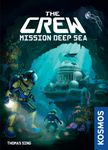
Um, but like I said, I really I still enjoy the game, just didn't love it. So, anyway, that was Bunny Kingdom Town. If you happen to play this game, we would love to hear your thoughts in the comments down below. But there you go. All right, our last two games that we are going to talk about right now are technically cooperative games that play up to five players. Very, very similar and why I'm bringing both out at the same time. This is The Crew Mission Deep Sea, which we finally got played. And also the newest one, The Crew Journey to the Ends of the Earth. Yes.
Uh both by Cosmos Games and both designed by Thomas Singh,
I think. Is this also Thomas? Oh, yeah. Thomas Singh. Yes. Yes, you are. You are correct. I don't know what I was thinking there. Um, they both play in 20. No, this is 20 minutes. This says 30 minutes. I had no idea, but there you go.
There you go. That's the difference.
This is actually, if you've never heard of The Crew before, very popular game. They are fully cooperative trick- taking card games. The original is called The Quest. We always get this wrong.
The Quest for Planet 9. Is that what it's called? Did I nail it this time?
Yes.
Anyway, that was the original, The Crew. That's the one that started it all for the crew. Then they came out with a sequel, The Crew 2, which is The Crew Mission Deep Sea. I had played this one before, but Naveen had not.
Yeah. Earlier in the year, we had discussed in some video. Um the games that we like wish or like want to play that like we like vowed to play.
This was one of them for me because I am a big spoiler alert. I'm a big fan of The Crew. Yes.
Uh it is one of my favorite trick- games and so uh I knew I wanted to get this played and then this came out after we made that video.
Yes. that we mentioned that I wanted to play this and I was like, well, of course I want to play this also.
So, you figured, you know, if we're going to play this, we might as well play them all
because we need some context, you know what I mean? We need to see what the progression felt like. We also played them at two players and the two-player game is different.
Wildly different. It's it's a it's a different style of trick taking game for sure.
Yes. Now, the way that the original game worked, the game that started it all, um, is there's a log book and you're going through different missions. And the whole thing about the cooperative aspect of this game is that the original game had a deck of cards and a deck of smaller cards that mirrored the larger deck of cards. And they are the tasks. And depending on which mission you're playing, you'll have to draw a certain number of these tasks. And each player will go in like roundroin style claiming one of these task cards that have been laid out and you're basically vowing that you'll win a trick with that specific card in it.
Yeah. Without giving away any information about your hand.
Yeah.
Uh so it's like you look at your hand, you're like, I'll be the one in this game to win the pink seven. It really depends on the mission that you're playing. Like because sometimes it's like
you need this to win before that before this. So there's there's a lot of different little things like that. highly recommend playing that first one if you haven't played it.
It gets wonky. It does play around with sequence and you know sometimes you're forced to take a task that you don't have confidence in but you're just the last person to have to take a task and nobody knows what everybody has in their hands, right? And it's like, well, now I need to take this. I don't know if I'm going to win it and I have to win it last. Like it's like that kind of game. Yeah. And the further you get into the mission book, the harder the missions become.
They get much more challenging. Yes.
Yes. And then there's all sorts of, you know, like extras.
I love the flavor story. The flavor.
I love the flavor story in in these kind of games. Yeah.
Well, if you love the flavor story, then it continues in The Crew Mission Deep Sea, but now you're in the deep sea, so it's a little bit different,
but also still similar in the sense that there are task cards, but now in this game, they are unique tasks. It's not just like a mirrored deck like in the original game. So they're going to be true tasks like the
it could be like I will not win any greens.
Yes.
It's like well I have the nine green that's bad. So I need to find myself shortsuited in something else. Dump my really high value green and then I'll [clears throat] be good at that point.
Yeah. So it does take the original game and it just changes it a little bit. It makes the tasks more interesting basically.
Now The Crew Journey to the Ends of the Earth. This is the newest version of The Crew, the third installment. Some may call it the fourth because there was another sort of spin-off that I don't think either of us have played,
but truly the third and this is very new. In this game, the thematically you are journeying uh across different lands like it's like a large journey
perhaps to the ends of the earth
perhaps.
Some may consider it to be the ends of the earth.
But really the way that this game works is you no longer have a log book. And we're not going to we're not going to give away too much of it. Um, we're just going to sort of give you the gist of what they were getting at. You no longer have a log book that has missions and narrative. They're stages. There are 25 different stages. It's still a booklet, but now each stage is like a map, and you're trying to basically get from one end of the map all the way to the other end of the map before the time runs out.
Um, and so there are a lot of differences in this version. I feel like
not real time, by the way, the time runs out. Yeah. So, so the tasks that you take in this particular game have a certain amount of difficulty value and depending on how difficult it is, it's going to propel you if you're successful uh along this like pathway of this map.
Yes.
So, you're trying to beat this like auto timer that's going to like if you take it slow and steady, you know, you might not play enough rounds before the time runs out.
Yes. Now, this one is very different. I feel I feel at least um from the other two.
It's still trick. It's still the same mechanism.
Yeah. It's actually still like the same deck of cards, frankly,
just different art, but same like colored suits and stuff. I feel like this game was very similar to the original, just that the tasks were different. What are your thoughts on that?
Uh, in terms of just like
the original. Yeah.
Yeah. Like of the three, like which two are sim are more similar? It's this one and that one.
Yeah. Yeah. Yeah.
Um because of the Yeah. I think because of the way the tasks work and then like the log book and all that stuff. So with this one, they took the same idea of the task deck. So you have these two, you have a you have a task deck that you split into. And each round, you're only drawing one task card, though. So that's the difference. You're drawing one task that everybody is going to play an entire round to try to complete. So that's the other difference. You have to play an entire round, meaning you have to play out your entire hand of cards. And by the end of it, you'll sort of get graded on how well you did, which is why you have to play out the entire hand, but it's still only ever one card at a time. So, the challenges are wackier. Like they it really they like took every prompt,
right, imaginable for a trick taking game, placed it in there. It's like, well, see if you can do this now. Do that with this round, you know?
Right. It's a little bit more funkier, a little bit more wonkier. Personally, I think I enjoyed The Crew Mission Deep Sea and uh Quest for Planet 9
over that. I I liked the structure of those two, like where it's like this progressive like
I the progressive like just difficulty as you get through the log book.
This one was kind of like some missions were easier than the other and it was kind of like a grab bag from the deck.
Yeah. It's because I mean similar to to this game where you're drawing from the deck, like you're still drawing missions from the deck, but the thing that I really liked about the first two is that you drew several of them and you had to draft them for yourself. So, not only were you thinking about the actual mission, like for me, it's not about just the mission that's on the the task card. It's about the sequence, the sequencing, the the well, I need to complete mine and I also have to keep track of Naveen's and this third player. you're you're keeping track of several things at once. Whereas in this one, you you have this one
just one
this one challenge that you randomly drew from the deck.
Yeah. But there's also some unique stuff uh which we don't want to go into like spoilers, but like certain stages force you to do certain things in a certain sequence without giving it away. Yeah, we can't really give away too much besides the fact that there are unique stages that do not look like the others um in the log book and they have their own rules. They're played differently. I actually like those.
I think that it's a a refreshing sort of break in between all the other maps. Um another thing that we didn't go into is each space on the map has its own sort of like penalty or application depending on what space you're on. It's because they represent different forms of transportation. Like if there's a break in the map, even if you're allowed to go further along the map, you have to stop there.
To take it slow. Yeah.
So, a lot of it has to do with just like how you're traveling along the map, which I I don't know if I found that as interesting. You know what I mean?
Yeah. Like for me, the crew, I really love the crew because of this challenge, this like brain burn of everybody has this thing that I have to keep track of and we're also reading through this silly story that's like what is the next mission going to make us do, you know?
Yeah. Uh the games play three to five players. Uh I think they're all pretty good at all player counts. I pref I personally prefer it at four and five.
You can play these games at two, but it becomes a very different game at two. Um there is a way to like lay out like a public display of cards that represents like a third player and one per one person is going to be assigned that third player. So so they'll know a little bit too much information
uh you know based off their cards and assigning the task to them. So personally for me the crew at two is even though it's playable it's not my favorite uh but I think I really like it at four and five. Yeah, I would say the four. I think four is a sweet spot for me, but the first two we have played like through a significant number of the missions at two. This one is not I feel like I just would not want to play this one at two.
Yeah, we did try it just so that we can talk on it. And
yeah, like this one you want to play with you want to play like a defin. Yeah.
Oh, and I also had a little bit of a difficult time learning the game through the rule book. So, if you feel the same way, know that you are not alone. Now, I will say that even though we both prefer the first two, and this is going to be similar to the whole Bunny Kingdom Town thing where we are playing this game off the backs of the first two and knowing that we love the first two so much. So, we're kind of expecting a specific experience.
You just want like that like one rung, then the next rung, now here's the third one. You want to keep going higher. And this did that.
That one did that. Like you want boom boom. And then this one just kind of like
it went,
you know, it went a different direction.
Yeah, exactly.
So, if you love trick taking games and you've never played the first two, you might play this one and really enjoy it because I don't think it's inherently like I do I think people are still going to enjoy it. It's just this one aspect that was that really sealed the deal for me with the other two that is not in this game. So, just I mean just be aware that just because you know we're saying these things about this game doesn't mean that it's bad. It's just a pref I feel like that's just a preference thing.
Just some of the task cards the way they came out in our plays just did not make us have that like anx that aha anxiety when you're like I need the seven pink then the eight yellow then like that sequencing just did not really like
yeah yeah
fit the form here. But there's a lot of stages in here that you know you can have fun with it. Uh for us personally or for me at least I think I like this one quest for planet 9 and then this one. Yes, me too.
In that order. Yeah.
Yeah.
And and the this inquest plan n the first one are very similar. Like on any day I can say one is better than the other.
I like the task cards in this one though. I think they're really interesting and they really like make you sweat a little. So there you go. That was the crew Mission Deep Sea and Journey to the End of the Earth.
There you go. Well, there you have it. Those are just some of the games that we've been playing this summer for fun to review. Now, we do want to do more of these Let's Talk Board Game episodes. We've had to do them a little bit more often than what we have been doing. But thanks for bearing with us in the meantime while we're trying to figure out parenthood. Uh thank you so much to the Awkward Yeti for helping sponsor this episode. We really appreciate that. Now, if you've played any of these five games that we talked about, please let us know your thoughts on them in the comments down below. We always like to read those. And thank you all so much for watching the video. We hope you enjoyed it. If you like to see more videos like this in the future, please consider subscribing.
Thank you.
Thanks.
Bye.