Top 10 Best Family Games of 2025
Games in This Video
9 games are featured in this video — they unlock as you watch.



Transcript
Hello my friends. As it's the end of the year, I've been going over my top 10 and top five games of all different categories. If you've missed those, you can check them out on my channel by subscribing. Today, we're taking a look at my top 10 family games, which essentially is sort of like top 10 light strategy games, if you will, where they're good for gamers. Gamers enjoy them as well, but they can also be played with casual people that don't play a lot of games and with older children. Let's take a look.
Before I get to the moment you've been waiting for, I wanted to tell you about the sell trade program at Noble Knight Games. Now, as gamers, we all have games that are cluttering our shelves that we either don't have the right group for or might even not like it. Well, now you can turn those unappreciated games into cash or store credit. Noble Knight Games buys thousands of games and gaming products. It's easy to send them a list of the games that you'd like to sell or trade. Now, they'll send you a quote and even pay for the shipping of the games. Get treated and paid like royalty while you sit back and collect cash or store credit. To get started, click the link in the description of this video or in that upper right corner there, and then click the sell trade button.
Number 10. Number 10. Number 10.
This first one is a Halloween themed game called Tricky Treats. This is from Cranio Creations. This game you're going to be basically dressing up uh the kids in different costumes. And this is done with a really clever mechanism of transparent cards. You're going to take these transparent cards that have different pieces of costumes, heads, legs, or body. And you're going to be mixing and matching or matching and placing them on different things. And once you have the right costumes on the right people, you're going to be going out to different places. You're going to be going out to get treats at different houses. and they want specific costumes or types or colors or matches or not matches and you're trying to get things and you're going to get more for the being the first one there, but you're also trying to complete rows and or columns cuz that's going to move move you up different tracks of different treats. But at some point, you're also going to be able to go to some of the tricky places where you might be toilet paper in their house or putting eggs on their house. uh and they're going to give you some secret goals or some goals that you're trying to unlock for the end of the game, giving you some longer term strategy. So, the game's really simple.
You're either going to a door and getting candy based upon what you've done or you're getting more costumes. But there's definitely still a lot of thinking as to which ones are you doing, how are you putting together, what do the things want, the different houses, how are you going against what the people want or the different competitors are are going for. You're trying to beat them to different spots. You're also trying to move up certain tracks of candy of the types of candy different houses have uh because they all have sort of different types of candy and you're trying to match those with your long-term goals. Lots of thinking for how light the game is. Tricky treats, lots of fun.
Number nine. Number
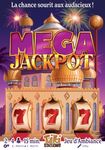
this next one is a slot machine style press your luck game where you're basically on your turn taking a couple of cards and you are flipping them over two of the three different piles and you're trying to uh match like 7 seven7 or 111. You're just trying to match three of the same things. Now obvious there's a different distribution of cards where there's a lot more ones than sevens for example. But on the back of the cards you know one of the two things that's going to be there. So, you're trying to figure out which one to place where and to do and to try to get it. If you get it, great. You get the jackpot and you collect those cards which are going to be points at the end of the game, but uh also if you collect it, you can turn those in to try to win the mega jackpot. And that's where you flip over one of four cards and you might lose those cards and not get the bonuses or you might get a huge bonus to be able to take tons of cards that people have discarded later uh earlier. Uh, another aspect is if you bust or you don't get something, you can spend one of your previously uh, gotten cards as currency in order to flip two more one or two more cards. And you can keep doing this, but every time you do it on your turn, you got to spend something that's more valuable. So, I think this is just a a blast. It's fun. It's silly. It's zany.
There's some strategy to the distributions of cards. There's some memory elements of knowing what's already come up. Hey, there's only seven uh there's only like, you know, nine sevens in the entire game. How many of those have actually come up? Do I really have a chance of getting this big jackpot? Things like that. But it is a lot of fun and you'll have a lot of laughing with it as well. Mega jackpot.
Number eight.
Number eight.
Waddle is kind of a meaner area control game. In this game, it's pretty simple. You are essentially placing some of your penguins out on the board. The board is randomized every game, which is awesome. uh how many different sort of pawns and and the way that those points uh make are different every game, but essentially you're just placing some penguins out uh on the board and you're trying to at the end of the game have sort of the most influence if you will, the most things around the pawns to get those points, but you're also building big groups and sort of network building or route building with your penguins because if you have a certain size of contiguous groups of your penguins, you're also going to get certain amount of points. So, you're trying to like surround things, but also make one or two large groups, but people are cutting each other off. Plus, you're also trying to decide, hey, this turn I have to place next to the seven pile, let's say.
But if I don't want to do that, I can say I can go, you know what? No, I'm going to skip to the next one. I'll wait for everybody else to finish their turn on seven and then I but I'm going to be first on this next one because that's going to help me build my route from over there to over here. So, it's a lot of like, do I want to play on this one? And if I do it multiple multiple times, maybe if everybody else runs away fast, or do I want to just like get out of dodge and get to a have a better turn order in something else. Some simple decisions, but it's great because it has that area control element and blocking and trying to split up other people's groups or try to make your own. Great little game, Waddle.
Number seven.
Now, the next one is Australas. Now, off the east coast of Australia in underwater superighway, a worn stretch of ocean water called the East Australian current of the EAC. Now, you're going to be basically having your sea turtles swim amidst the beautiful flora and fauna. So, in this game, you're going to be drafting dice, and each of these dice have sort of different types of actions. One of them is you might be racing your turtle down the EAC to pick up food cubes, and those are gonna allow you to collect bigger schools of fish for more points for set collection. You're going to be picking up different advantage cards with different actions. And these give you sort of different bonuses and abilities and they're also sort of an engine building component where if you now take a die of the color of that card, you get to basically use the abilities of all the color all the cards of that color underneath. So sort of teaching a little bit of engine building. Uh there's an area control element of the coral reef where you're trying to have the most or second most for points around some of those things. Uh, and then at the end of the round there's a big roll off where everyone's going to roll dice that they've drafted that happen to have numbers on them. Whoever has the smallest die is going to remove it. And you keep going to the last person standing. Uh, and that's going to get you some points, too. So, there's a little bit of everything here. There's some pressure your luck. There's some just some straight up dice rolling, but there's some planning and mitigating for some of those with some special ability cards. There's racing. There's area control. There's engine building. Like if you were like, "Hey, then let me build a family game that that kind of teaches all these concepts but still fun for adults to play with their children."
Uh the Astrellis is a great one for that.
Number six.
Number six.
The next one is Datoms from 25th Century Games. Now, in this you're creating your own microscopic mosaic based on an obscure Victorian art form because hidden in the water all around us are tiny uh life forms known as datoms. And these microscopic algae cells come in a variety of exquisite ge geometric shapes and patterns. So in this game, what you're doing is you're placing a tile, one of three tiles. Uh, and you're placing it into a central grid, a central sort of hex uh, board that everyone else is sort of building on. So it has a lot of player interaction that way, but you're trying to line up different colors and you have to match them. And then based upon the ones that you match, you're going to be taking certain types of of the shapes of those colors and placing it on your own board. So you're doing something that's that has interactions with other players, but then you have your own thing that you're kind of figuring out. And you're trying to do all these different types of puzzles on your board. There's certain spaces that only select certain types of shapes. And you're trying to do a bunch of different things like, hey, have the most different colors in each of the three main rings of your board. That's one main way to score at the end. or having symmetric matches. Like if you can match the color or the shape that is like symmetric on the other side of the ring of the same, you know, the same spot on the other side, you'll get points. If it matches shape and color, you'll get three times those points.
Sometimes you're going to be trying to have uh, you know, different types of uh things matching, some things not matching. Sometimes you're going to be want to having the most colors because there's also judges in the game. You speak, you select one per game and they have two sides, a nice side and a per personnikity side. And some of these goals, like having the most contiguous of a single color, kind of at odds with some of these other goals. So, you've got three main goals that you're trying to do, like how many different shapes in each ring and things like that. Uh, but then you have these other judge things that change each game as well. And it is quite a bit of a crunchy puzzle to figure out, I need a green square and I want to put it there. How do I get a green square? Well, I've got to line up four greens together. Where can I do that? So, you kind of figure out what you're trying to do. You work your way backwards into the abstract placement of those things. Uh, and it's a it's a really interesting game. And that is Datoms.
Number five.
This next one is sort of a card game that you're playing a little bit of an auction in a way weird way. Kind of similar to the game First Sale. This is called Wine Seller. Has some beautiful viter tray art. This is also from 25th Century Games. In this game, you have a hand of cards. And on your turn, you're everyone's going to sort of simultaneously select a card and then you all flip it up. It's like the second half of the popular game for sale. Then in order of those cards, people are going to be able to draft bottles of wine that are out in the middle of the table. There's only one bottle for every player. When you collect that bottle, you're putting it in your wine celler. At the beginning of the game, it's your only bottle. Every bottle after that either has to go on top of the highest bottle in your wine seller or on the bottom below the lowest bottle. And each of those are going to score a certain amount of points depending on where it is slotted from bottom to top in your wine celler at the end of the game. But in addition to that, you also get these client cards at the beginning of the game. And you might want to have bubbly wine or rosé wines or white wines or and you you also want to have wines from certain countries or regions. And so, not only you trying to collect to make a lot of points for your your set collection, the way that they're sort of stored in your in your seller, but you're also trying to figure out how to score the most from your client cards.
Uh it's a simple game. It's really fun. There's also an advanced variant cuz it's quite lucky. It's more of a beer and pretzel style game, but there is an advanced gamer variant where you play three rounds and the cards that you end up with are the ones that you start the game with. So, you could actually play towards, hey, I'm going to possibly score less in this round to set me up for the next round. And that makes it more of a gamer's game as well. So, it can do both things there. Uh, looks great, lots of fun, and have a good glass of wine when you're playing Wine Seller.
Number four, four. This next one was actually an older game that came out in Japan, I believe, a few years ago, but it finally made its way into uh you know, distribution in North America. So, it's it's a 2020 2025 release for us. This game is a very streamlined uh area control game. It's very interesting is that on your turn, you're rolling some dice, three dice, and two of them are going to tell you which numbered location you're going to be placing some some units. And then the last die that you didn't select will will basically correspond to how many people or units you could put in there. That's the whole game. At the end of the game, there is basically you start with the smallest number one and you see who has the most. And the player who has the most not only gets points, but they're also going to be able to sort of like get reinforcements and move them to an adjacent area. So, it has this sort of waterfall or cascading effect. And every game the r the what number is where is randomized. So, it's completely different. So, you can see these these patterns as to hey, if I win this one, I can cascade it into this one, which I already have two units there. If I win that one, I can cascade it to this one and you're trying to like build this awesome waterfall that that that triggers at the end of the game. That's so cool. There's also some special ability cards that you can play that that you play with. And um these kind of allow you to break the rules of the game. So, there's a little bit more depth there. And there's also an advanced variant with a daimo where you can have an even bigger special ability as well. But simple simple game mechanically, but oh my gosh, awesome and quick. Only about 30 minutes for a great area control game. It makes you feel like you've played a longer game.
Rumble Nation
number three.
This next one uh is called Ink. Now, this is one of those sort of game similar to say like an Azul or thing like that where it's like you're doing some drafting of tiles and then you're building your own thing. Now, this game's a lot nicer than Azul, I would say, uh because you can't really totally hoe someone by sticking them with tiles they can't have and getting a bunch of negative points. But in this game, you're moving around a rondelle and you're gathering a tile and you're putting it in front of you and you're building up this big sort of painting of all these abstract ink blotss. And in this, you're trying to basically finish uh you know, goals where they might have a circle with a number in it. And if you've made a contiguous group on that turn uh that has that many that colors in there, you're going to be able to place your ink blotss on that one and all the other spots that the the circles that are in that group. The trick is is that you start with a card that has two colors that you prefer and you're trying you're really focusing on those because you have a supply of ink uh that you're placing out. Half of that is just for those two colors. And if you run out, you basically have to waste a turn to take wild ink and move it to those ink.
So, you're trying to focus on certain things. You're trying to move around the rondelle, but you can't just jump around because if you jump too far every time you pass the start spot, you're going to get a sort of a random X that makes you block off a certain spot on a color. you don't know what it is until it comes out. Um, so the game is really good because there's also these things if you have these big turns where you have four or more that you get to do in one turn, you fire off a bonus and those bonuses change each game. They're randomized and there's lots of different ones and so you have different abilities and different things you can chain together. You can actually set yourself up to have like multiple combos triggering on the same turn, which is kind of cool. But if you like those sort of games where you're drafting things from a from a community but then building your own thing, you're trying to basically race to run out of your inks. Great game. Inc.
Number two.
Before I get to this next one, I wanted to let you know that I'm going to be launching my season 14 Kickstarter for my YouTube channel to help raise funds for the channel. Now, this is the main way that I'm able to spend as much time as I do creating content for you. Now, there will be some awesome board game promo cards and some game bundles to get, and I'd really appreciate if you click the little eye in the upper corner there and click to be notified when the campaign launches. or you can go to kickstarter.com and search for Game Boy Geek season 14. This next one was actually released last year at at Essen with a limited release, but it didn't come to retail till about March of this year in 2025 and for North America. So, this is a 2025 release for me here. Uh, this is Rebirth. This is a RER Kitia Thailand Games. I know he has a lot of Thailand games and they all feel somewhat similar but somewhat different.
Same here. But it is very good. This game has basically two sides. has a Scotland side and Ireland side. The Scotland side, the game is very simple. You basically draw one tile and you place that one tile wherever pretty much wherever you want. Uh, which sounds kind of limiting, but there's actually a it's it's still very engaging. You might be placing tiles that are food farms or energy farms next to them, and you're building contiguous groups of those because you're going to be scoring each time you place there, you're going to be scoring a point for each of your pieces in that group. So people are going to be seeing you're doing that and trying to cut you off from your group so you don't keep running away with a bunch of points. You'll be putting in things uh uh to have the most influence at settlements and your settlement tiles will have different amounts of uh you know uh influence on them. And so once it's full, people are going to get points depending on how much influence they have. There's castles there.
Whoever has the most tiles surrounding a castle basically puts their castle on there. And it's kind of like longest road and sellers katan where like you have the castle now but someone else might get more tiles than you. They have to sort of pass you having more of them and then they get to put their castle on them and that's going to be worth points at the end of the game. There's also cathedrals where like you place adjacent to gain secret mission cards. You can have there's eight cathedrals. You can have a at most eight different things that you're going to try to figure out and do and that gives you a lot of different strategy and that's going to change every game. Now the other side of the board, the island adds like public missions. it adds these round towers where there's these tower bonuses and those and when you place there you get the bonus tied to that certain tower. Uh and you might be getting bonuses allow you to score more points or draw more tiles or play a second turn in a row or getting a mission card or doubling mission points or things like that. So the second side is a little bit more thinky, a little bit more sort of bite to it. But both of these are simple.
Draw a single tile, place that single tile, here's all the goals, go and it just works so well together. And that's Rebirth
number one.
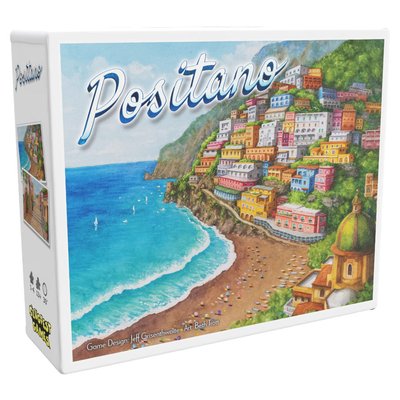
Before I get to the moment you've been waiting for, I wanted to let you know that Game Toppers is giving 15% off premium game mats and accessories specifically to my US and Canada audience using code game boygeeek 15 off for a limited time only. Hear more about this at the end of my final thoughts. All right, this one obviously is a game I love. Has a ton of interaction. It's called Positano. In Positano, you're essentially building real estate on the cliffsides in in Italy and you're trying to have the best views of the, you know, the water there. And so, this game is a very clever sort of simultaneous secret auction mechanism where things are going to be coming available, the types of tiles, and they're going to do different things. They're going to allow you to build in certain spots. They're going to allow you to build certain heights. They're going to allow you to do different things. And you're going to flip over your cards. Everyone is. And you're going to they basically have different numbers on them for the different aspects of the cards. Most of these cards are good at one thing and okay at another and bad at another. So you're trying to figure out which of these three aspects do I really want this turn like height or position or location. And so you're going to be able to maybe place first and that's important because you might want the spot that you really need to go to because you think that's a great spot or you want that spot because you're going to be able to build higher because of the special ability of that tile and you're going to be able build higher and block the person that's behind you because you're constantly trying to be able to see out um and and block people.
And the other aspect is like what kind of roof does it get? Is it bronze, silver, or gold? Well, the golds are worth three points at the end of the game. The silvers are two. The the the bronzes are one. And the higher you go, the even more points you're going to get. So, you're trying to build tall gold building tops that can have a great view of the ocean, but so is everyone else. And so, you're constantly trying to figure out what do I need right now? What based upon what's there? What are other people going to do? What is someone going to really take this location from me and block me? Yes. Then maybe I need location first, but then now I'm going to get the worst roofs, which means less points. But if I get the better points and I get blocked, it doesn't really matter. There's a lot of crunchiness that goes into this and everything that everybody does on everybody else's turn matters. Um, and there's also an expansion that allows you to play with up to six players and it also allows you to play the four player game, sort of the quote unquote long game like you can in a two-player game. Uh, it's fantastic. I do recommend the expansion just for that. If you're going to play with four players a lot, get it because it allows you to have more turns in a four-player game. So, it's a little bit evens out sort of the luck of the of the such there. Uh, but it is fantastic. Positano. Tons of interaction. If you like sort of meanness blocking with some secret auction, that is very interesting.
Positano. Well, I hope you enjoyed this top 10 uh family games of the year list. Remember, I've done a ton more of these for party games and card games, co-op games, two-player games already. You can go check out on my channel or you could subscribe to make sure you don't miss the next ones that are coming up. These are going to be the biggest ones from now on out to the end of the year. It's been the Game Boy Geek breaking down barriers, growing relationship board games by helping you find the next one you love. Game Toppers upgrades every game you play, being the one table to rule them all with Game Toppers, leg kits, dining covers, premium game mats, and more. And for a limited time only, my US and Canadian audience can get 15% off their premium game mats and accessories using the promo code gameboygeek 15 off. Also, go to gamettopperslc.com to check out all the options or for worldwide late pledges of their recent 5.0 Kickstarter.