Good Games - Praga Caput Regni, Furnace, Curious Cargo, & Blitzkrieg!
Games in This Video
4 games are featured in this video — they unlock as you watch.



Transcript
welcome to jungkook's games where today i'm bringing you a new good games vlog now in these i discuss my initial impressions about various new games that i've played recently that i enjoyed playing and today i'll be discussing these four in alphabetical order now i do want to mention that if you'd prefer to listen to this vlog instead of watch it then you can do so by searching for the jungles games podcast wherever you normally listen to podcasts now i'd also like to ask that if you end up enjoying this video that you please click the like button for down below as well as the subscribe button for the channel and if you would like to directly support the channel in the creation of videos like this one in the future then please check out johngetsgames.com support there you can find a bunch of ways that you can really help things out and some of them come with pretty cool bonuses like voting on a few of the videos that i film each month all right let's now start talking about games and the first one is blitzkrieg or i guess let's create because there is an exclamation point at the end now this one came out a couple of years ago i believe uh the designer is paolo mori who has designed many games like vasco de gama and dogs of war and lots of other ones that i can't think of at the moment now blitzkrieg is a two-player only game and i've heard good things about it um through the grapevine for a while and almost a month ago i had the opportunity to play this once so i've only played it once at this point but i really enjoyed it and i'm actually looking forward to more opportunities to play it in fact i've already tried to buy a copy of it but at the moment it seems like it's out of stock anywhere but a new production line is supposedly happening i guess i should talk about the game a little bit but obviously i liked it so much that i do want to go out and buy it
now again this is a two player only game and the tagline is it's world war ii in 20 minutes so it's supposed to be a very quick game overall and i think my one play of it was probably about that maybe closer to 30 minutes but it was definitely not a long experience now in this game you set up a abstracted map of world war ii in the middle of the table between you uh you and your opponent and all you're going to do on your turn is place a tile down onto an open theater in one of those different regions now the open areas that you can play into are at the top of these grids where tiles can go and every time one of the rows is complete with tiles from either of the players you then essentially score that row and a variety of different things can happen and once all of the rows have been scored for that area then that will also cascade into some other actions now i'm not trying to go into the details too much but realistically it feels like a serious tug of war game in fact every one of these regions has a tug-of-war track along the top of it when you put tiles down they have numbers on them usually and that is the amount of spaces you're going to move the tug of war token back towards your side and depending on what side it is at that is going to affect the things that happen when the rows will complete now again it's been about a month since i played so i'm a little hazy on some of the specifics but as far as the general purpose stuff is concerned you are really trying to just win all of the battles that you can by pulling those um tokens over to your side of the tug of war track but realistically the game is all about
having a certain number of victory points like the game ends once you hit a victory point threshold and so what that means is you can try to blitz through and get a whole bunch of points early or you could play more of a long game now in my one play i lost because i was definitely going for more of a long game experience and suddenly the game just kind of spiraled out of control i was in some really good positions in a lot of the different theaters on the map but a few of the battles resolved quicker than i expected not in the way that i expected and suddenly the game was over and i had lost so that was definitely an interesting thing to see from a tempo perspective like you can definitely think a little bit too long term and you know potentially lose the entire war because a couple of battles don't go your way even though you have a good infrastructure now whenever you place tiles down most of the spots on the board have icons underneath or on the spot where you place the tile and when you place the tile down you get to perform that action these can do a wide variety of things including moving some of the tug-of-war tokens or maybe even letting you research into more powerful tiles the way that works is you just draw a random tile out of this bag of technology and you put it into your bag and then you hope to pull that out of your bag at some point soon so you can place it out and it could definitely change the tide of the battle and your opponent doesn't really know what's going to be coming with from those so now you do have a draw bag like i said and in this game you're going to draw up a certain number i believe it's just one of tiles at the end of each one of your turns again don't quote me on some of the specifics but another way that you can actually lose this game is if you run out of tiles in front of
you now there are ways that you can actually play multiple tiles at once which does seem good in the moment but it means your hand is getting your hand size is getting lower and there are ways that your opponents could actually bomb you by placing tokens onto bomb symbols to actually cause you to discard some of your tokens and again if you have nothing in your hand then you've effectively lost the war because you have no way to actually reinforce anything so that will cause the game to end so overall that's essentially the game again at a very high level and i was really impressed by it the rules teach was very quick the game just kind of teaches itself almost with the icons and the way the board flows and while i don't play that many two player only games this one really impressed me so i do want to get a copy of this one once it's not prohibitively expensive and i i think that should be the case at some point in 2021 based off of some of the forum posts that i've seen i think that this is the kind of game that you could play a lot and really kind of figure out the push and pull and figure out how fast to go and how you know how to handle early defeats and try to go for long-term goals while also not tripping up and landing on your face like i kind of did in my play but i still had a great time doing it that's always a very good sign for a game so yeah blitzkrieg is a big thumbs up for me i'm looking forward to playing this one more as soon as i can get a copy or i could just keep playing it on tabletop simulator i suppose it'll likely be a mixture of those two so let's now move on to the next game which is curious cargo now strangely enough this is also a two-player only game i didn't plan for that to happen and actually
played this one once just a few days ago now curious cargo came out many months ago in fact i've had a physical copy in my house for several months at this point but um haven't really had an opportunity to play it now this game was designed by the same designer as pipeline and in a lot of ways it has taken the pipes aspect of pipeline and turned it into this two-player experience so you don't have any stocks you're not buying supplies and selling supplies in this game realistically it's just about the tubes that you are building on your player board trying to make long connections of these red and blue tubes trying to essentially ship them out now this game has a really interesting idea where on your player board you're going to be putting these different tiles down to make these tubes but on the left side you're going to put trucks now this is your shipping area and the trucks line up with some area where you can actually line these tubes up where i guess pipes and then if the empty cargo spot in your truck lines up with a long blue pipe all the way back to a blue distribution hub then you'll put a blue resource on that truck now you're trying to put blue and red resources down onto these and eventually when you add more trucks it pushes the first one up and if it goes too far up it actually leaves your area and then enters the right hand side of your opponent now the right hand side of your area is the receiving side so that means i've essentially made resources i've put them in a truck and i've shipped them off to my opponent and it's now arriving in their area and they will get a significant amount of victory points if they are able to receive those goods now this is a competitive
game so you do not want them to actually be able to receive these goods but the way they do that is if they're able to line up the same color pipe to the receiving area back to one of that color hubs then it will essentially suck that thing back up they can put it down onto their player board where it will be worth points to them and also potentially give them various bonuses so there is this really strange in and out thing going on as you're actually putting down these pipes on your board you're trying to send things to the left to get rid of them because you pull those off your board and you get points for that and of course you want things to go to the right so you can receive the stuff that your opponent has also made now that's very high level idea behind essentially the whole game but then when you get down into the actual mechanics of the game it is a little bit more complicated um each one of the rounds has two different phases to it essentially one is the construction phase where you're actually putting these tiles down to extend out your pipes and the other phase is trucking and within each of these phases there are yet more options and kind of things to tunnel down on the construction phase is a little bit simpler you get three action points for each action point you can draw a random tile or you could place a tile down onto your board somewhere so you're trying to work out how many you draw versus how many you place and you can store your tiles in little stacks at the end of your turn so you don't necessarily have to spend all your actions drawing because you might have some in front of you already now when you get to the trucking phase is really when the complexity of the decisions as well as the rules kicks into play um you can do a single trucking action and they
let you do things like play a trucking card to add a truck down so that you can put things onto the truck you can also um discard trucking cards to get various random tiles that you can then play later on in the game and the third thing that you can do is discard your tiles to draw a random truck card now there's no basic drawing mechanism for truck cards you will get them as bonuses for doing a variety of things and i'm trying not to go into too many specifics here but this is one of the main ways we found to actually draw new truck cards so it's a little bit funny you only get to do one of these things so you might get rid of tiles to draw a card or you might play a card to draw tiles uh and you might find yourself in the construction phase drawing tiles to then discard those tiles in order to draw a chuck card but maybe those tiles weren't really good for you so there's a lot of kind of influx and outflux of things going on you take tiles to spend tiles to get cards and everything now on top of that there are several different tokens in the game you've got these gear tokens which are construction tokens that you can spend to get some more construction actions and there are also trucking tokens that let you take another trucking action and draw a card and then there's splitter tokens that let you split pipes and the reason i'm kind of saying all these things quickly at you is because my biggest criticism of the game after playing it once is that it's not a very streamlined affair at its core this idea of like ship things to the left receive things to the right sounds super simple and elegant but when i really got into the rules and also when i got into teaching and playing the game it seemed like you know throughout the entire game we had a one page of the rulebook out in the middle of the table so that we could
constantly look back and see like okay what are our options again in the trucking phase okay it's this this or that and that's how this one works and it's not like the rules are that complicated the person i played with uh plays heavy euros all the time like who both very competent gamers but it just seemed like there was a lot you know at the end of the game i won but then my opponent realized that they should have won but they could they forgot they could spend a trucking token to draw a card and then play another truck which would have done this and that the other thing so they actually lost out on the opportunity to win because it was kind of under a couple of layers of decisions and complexity that are in this game now i think some people are going to love all of that extra complexity i have to admit that while i did enjoy this play and i am looking forward to playing it more i wish the game was more streamlined i wish there wasn't all these extra tokens all over the place i wish there weren't like all these different options to do during the trucking phase i just feel like there is a gem of a game in here somewhere that has a lot of extra rules piled on top of it but at the same time i had fun at the same time you know it was it was neat puzzling all these things together it was neat trying to figure out how i could get the cards i needed so you know discarding certain tiles that wouldn't work for my setup and trying to get new truck cards that would work um the overall play time was probably about 30 maybe 40 minutes so i don't think it overstayed its welcome and it was just kind of an odd game overall but like a pleasantly odd game so yeah i guess if my biggest complaint about the game is it's not exactly what i wanted it to be but i still enjoyed it then that's still a relatively positive thing i don't think i'm going to be rushing out to play this one over and over again
but i do see myself trying to play this one again especially with the my friend who's already played it not that the teach is very long i think i would probably teach it much faster now that i've actually played it through the game this is one of those situations where i read through the rulebook and i said okay i know the rules but i don't get it i definitely had to play through an entire game to see how all of this stuff ended up working out together and uh it did end up working out just maybe not quite as elegantly as i was hoping now i haven't even talked about the endgame scoring because it's stranger than you would expect but i don't really think going into those details are important um it's fine i have no problem with the way it scored at the end and i was certainly happy to win although it was kind of funny to find out in retrospect that my opponent could have won if they had just seen a slightly more complicated way to get through their turn so i guess the final thing that i should say about curious cargo is the fact that um this is a very puzzly game and that is something that i like specifically with the pipe puzzle i've enjoyed pipe puzzle type video games since i was a kid and i've enjoyed just about every pipe building type puzzle game that i have played board games as well like indigo i think is amazing and past tally is also an amazing pipe building style game so i was definitely predisposed to enjoying this one because i really like piecing all these things together and you know what i know i've talked about this for a while but there's one more wonderful thing about this game that i haven't seen in any game like this before and that is the scaffolding tile now in many games like this you can place tiles down onto the board and you can stack them on top of each
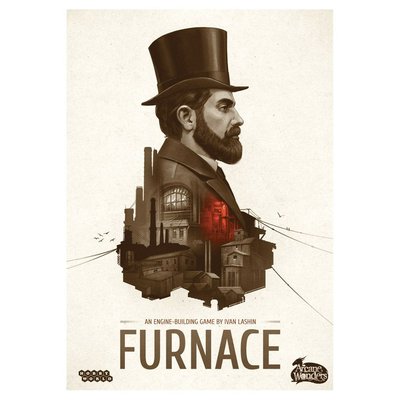
other but you're never allowed to have it kind of leaning off an edge and that same rule applies for curious cargo however you get these five scaffolding tiles which are essentially a half tile that you can use to essentially slide underneath it so it wouldn't be leaning anymore i love the fact that these are in there because it really expands the number of options that you have in these games normally you're like oh i can't place like that because it's leaning but in this game five times you can say you know what i can place it there because you slide this little sub piece underneath and then it just works out so i think most of my enjoyment of the game and my my the pleasure that i got from playing it was through puzzling all of these things out because i'm just predisposed to like it and i think the game does do a good job of that and i just love those little scaffolding towels either way i should probably stop talking about curious cargo at this point and we can now move on to the third game which is furnace now technically i don't think this game has officially released just yet but there is a mod for it on tabletop simulator and i have played this one once about a month ago and some of my friends have played this one a couple of times now i've been quite excited to play this game since i very first heard about it because the premise is pretty brilliant now the first thing i heard was that it was an auction game and immediately i was turned off i don't personally like auctions i think they're fine to exist a lot of people enjoy them in games but i'm not a big fan but then i learned it's kind of a raw style auction system instead of a normal one and what i by that i mean you have a certain number of tokens in front of you and you will use those tokens in a discreet fashion to bid on a certain thing
now in furnace you are going to lay out a certain number of these cards in the middle of the table and they have some icons on the top and some icons on the bottom now in each one of the games four rounds this is a relatively quick game uh you are going to be placing your bid tokens out which are one two a three and a four and the player who has the highest bid token associated with the card will get to take the card and add it into their tableau now that means the other people who bid on that card don't get to take it and normally in auction games those people are just out of luck but that's not the case in furnace now every single token that was put down onto that card that was not the highest will then get compensation and that is what the icons on the top of the card are so that means if i put a three down onto a card because i want it and that somebody else comes with a four well they're gonna take the card but my three goes up to the top and i will now take the icons on the top three times you multiply that by the value of the token that you put down so there are many times where you actually don't want the card you want to be outbid or you intentionally under bid so that you can generate the resources or the effects that are printed at the top of the card now once you actually buy some of these cards once all of these tokens are put out and everyone gets their cards you will then run the cards essentially as an engine and it's a relatively simple engine you are going to make various resources in some ways and then turn those resources into other resources or potentially coins which are victory points and the person with the most points at the end of the game wins so you are trying to grab the cards that will fit together well with the other cards that you have in front of you already maybe you make a
whole bunch of oil based off of some other cards that you have and there's a great card out there that turns oil into points well you probably want to try and bid really high to get that card now there is one other restriction when it comes to bidding on these cards and that is that you can never have more than one of a specific bidding token go down onto that card so that means relatively quickly your options get somewhat constrained with the cards that you're trying to go for and i think that's actually fine there are quite a few cards that you can pick from but you know it's not the biggest decision space in the world but you definitely have many different options as you're trying to optimize your overall system now i played this game once it was four players and i came dead dead dead last it was not even close all three of my opponents were relatively close up there and i was like almost half the the score of them and it was interesting because when the game was over i looked at my opponents and they for the most part had almost no resources in front of them and at the end of my game i had like 20 resources in front of me so what that means is i totally deserve to lose because the engine that i built made too much stuff and didn't turn stuff into points enough so this game is all about that balance between the two and i definitely flubbed that balance now another thing i'd like to mention is the fact that the game comes with these asymmetric characters that you can play with that can certainly uh vary the game state one of them gives that player a fifth token that they can put out to potentially uh get more compensation or buy more cards uh one of them like the one that i played actually um let me ignore the placement rules so i could double place on a spot i could go where
other tiles have been with the same number and there were a couple other asymmetries and overall i felt like mine wasn't as interesting as i was hoping it would be and i left the game feeling like in the future i would like to try the game without the asymmetries in general i do like asymmetries and i don't like blame my asymmetric character for the reason i lost i think i just didn't play very well but in this game it seemed like very quickly you differentiate from your opponents based off of the cards that you take and that seems like it might be asymmetric enough so furnace is a game that i really want to play more it's still on tabletop simulator i just haven't had a chance to play it again on tabletop simulator but this is a game that i am 100 going to be tracking down a copy of once it is available because i don't think it's currently available the reason for that is because the the bidding system is brilliant and the game is also relatively short it's like maybe an hour or so for a really thinky uh experience and even though it's not crazy complex there is definite complexity that comes into play with the engine that you're putting in front of you and there are even more advanced ways to play where you can't reorganize your cards and all that sounds crazy and honestly sounds kind of fun so at this point my impression of the game is that it is just incredibly elegant and i love seeing elegance in games by elegant i essentially mean there's no like side rules on the side there's no tacked on bonuses or anything like that it's just a very simple system that works very well and maybe that's why i feel like i don't want to play with the asymmetries because they almost mess with the elegance of
this game and i just don't see a game that is this sleek that often so yeah at some point in the future i'm hoping to have a copy of this and i'm hoping to get lots more plays because it's really easy to teach and my one play of it even though i came super dead last was still a very pleasurable experience all right it's time for the fourth and final game i'll be discussing today and that is praga kaput regni now i have been really excited about this game for a while uh for many months people have asked me what game am i most excited about for 2020 and i kept saying this game and the reason for that is because this is the newest design by vladimir suchi and also published by delicious games which is his publishing company along with his wife now the previous game that they made through delicious games that i loved is underwater cities and same designer same publisher and i still think that underwater cities is completely brilliant i played it about a month ago after not playing it for a year or so and man that game is great uh but either way that designer slash publisher pedigree was enough for me to be very excited about program regni and um i'm glad i finally got to try it um i am technically getting a physical copy of that one from the publisher so i'm excited to get that but it currently has a version of it up on tabletop simulator an official mod for it and it's a really slick mod now last week i just kind of popped into tabletop simulator and was poking around and was surprised to see it there and uh told all of my friends like hey prague is up online and within an hour i had learned the rules and i got my friends together and we played a four-player game of it so there was
quite a bit of excitement all i really had to say was same designer as underwater cities to have essentially all of my eurogamer friends rush over to try and play this game now thematically this game is i believe essentially about building up prague um in the time period of charles the fifth or fourth one of those two anyway a while ago and mechanically this game has a lot of interesting ideas uh at its core it has an action selection uh wheel up at the top of the board and you can take any of the tokens that are around that wheel and then perform one action that is shown on it each token has two different actions that are printed there but the location where you pull that token off is going to be important first of all there is likely going to be a bonus associated with it in the middle of that wheel which could be resources or potentially bonus action to get another resource you might need but then on the outside of the wheel you might have to spend resources based off of where it is or you might even gain victory points if it's farther down on the wheel so essentially this is an incentivization mechanic which is one of my favorite things in board games uh what this means is on your turn you choose one of these tokens you do your turn and then you put it back on the wheel and you spin it so that means every token that was not selected is going to slide a little bit to the clockwise side so if a token continues to be passed over by everybody it's going to continue going clockwise until it gets into the area where it's worth points and every time it goes up more and more it's worth more and more victory points to the moment where somebody says you know what that action's fine but i mostly want to do this because uh you know three or four victory points uh seems significant in the moment so
i love seeing that in the game and then what we're actually doing with this game is there are six different actions and i'm not going to go into all the specifics but the basic things that you're doing is building stuff you can build out cities on the map in this somewhat busy but beautiful map area you're going to place these cities down next to plazas and they can either immediately get you stuff or potentially get you things later on as you compete with your cubes on those cities again i'm not going to go into all the specifics this game took me a full hour to teach and you can also build walls in your own area now each person has an action tile in front of them and you can put walls around it and another thing you could do is upgrade the actions on that tile by putting new tiles on top of it now this means the actions for the rest of the game will have extra things going on but there's also a spatial puzzle here because next to the upgrades as well as those wall tiles that you put around it there are little icons and if you put an icon next to another icon you get to perform the action of both of those icons they don't have to match you if it's like a door and then some victory points you get the door and the victory points if it's a door or in a door you get two doors or i guess they're windows but either way they're a resource so you have a spatial puzzle going on over there as you're trying to spend uh your resources to actually pull all of these things together and there's also a road going down the map where you can send your person down it uh once you get far enough you actually jump onto a bridge at the very end where you can put these various tiles down that have bonuses on them and when you cover up spots on the bridge you get bonuses for those in fact there's just bonuses all over
the place in this game there are these two large constructions at the top left part of the board which is the cathedral and the hunger wall and you actually play a little mini game over there as well where you have a cube that you are going to be moving to the left or up and when you go up it might cost resources and the position of this cube will give you various end-game victory points as well as conditional victory points for other tokens so this is a system that is alive you've got a spinning gear over here you've got all these tiles and all these bonuses that you get you have mini games for your spatial area here and you've got a mini game for the walls over there and uh realistically you're just trying to get as many points as you can through all of these things and uh we played like i said a four player game event i've only played once and it was obviously a first time for all of us and the game took about 2 hours and 15 minutes which is realistically not that bad considering how many things were going on in this game now players are always going to take 16 turns so that's not going to change i don't believe with the player count so we got through the maximum player count all of us taking our 16 turns in just over two hours which is better than i thought i went into this thinking it was going to be at least three hours so it was quicker than i anticipated now i really enjoyed piecing together all of these things there's mechanics i haven't even talked about there's spinning wheels on your board and various track multipliers this is this is not an elegant game i talked about elegance a lot with furnace this is a game the reason it took me an hour to teach it is because there are so many different individual pieces and subsequently one of the people i
talked to has taught it several times as well and they said it's taken them about an hour to teach it each time as well so there's just a lot going on here and this seems like the kind of game where i want my friends to know it so we can just skip right past the teach and jump into the game because the game is actually not that long and the decisions are complex and quite interesting obviously when you take tiles you could take a tile that one of your opponents wants you know the action tiles because those actions are important when you place cities down on the map you might place a city where your opponent wants to go there's a lot of different ways that you can indirectly interact with your opponents as you're trying to modify your efficiency engines trying to get resources and spend them the best you can now i'm intentionally trying not to dig deep into the mechanics of this one because it takes so long but at the end of the game we all enjoyed it that's the short version of it i quite liked it i think everyone around the table did um one player felt like they enjoyed it but they're not sure how many times they would enjoy it another player like i said has taught it multiple times and apparently has played it many times at this point so in general it was a favorable reception from all of us it's got some pretty neat ideas i enjoy the spatial puzzle of the main board and i enjoy the spatial puzzle on your own board with the bonus actions and the walls but i will admit that there's just a lot going on you look at this map and when you look at the details of the art it's gorgeous i i love the artistic aesthetic of the game but i do kind of wish maybe the back side of the board was more muted so that you could actually see the mechanical parts pop off of the board a
little bit more but this is a tiny uh issue that i have with it overall and it didn't really impact the play like i never missed played because the art was too confusing for me to understand for example but at the end of the day i don't think this game is going to be for everyone because of the overall complexity and length of the teach but for people who are okay with a teach that long and this number of bonuses and bells and whistles and levers that you can crank this one could be a pretty big hit like i said i am getting a physical copy of it which i'm pretty happy about because this is a game that i am hoping to play more in the future i still have my copy of underwater cities and this one is significantly different from underwater cities so they're not directly comparable but at this moment i see myself having both of them at least into the medium run future underwater cities is not a game i'm ever going to be getting rid of and and i'm not sure about praga i want to play it many more times i'm not sure if it's going to be a forever game or just a game that i want to play you know five or six more times uh time is going to have to tell on that although there are a bunch of different modules and variants and stuff that you can definitely work in so i think it's probably going to be more about how often i can actually play it with different people and maybe if it's often enough that we don't have to do a big rules teach each time i can see being played more there is still that mod up on tabletop simulator and my friends many of whom have played it more since then and i believe continue to enjoy it so i'm looking forward to more opportunities to play it i've just played it the one time and it was last week and i've been kind of blitzing through trying to play a lot of different games because i'm putting together a top 10
list for 2020 and praga is certainly one of those that i i want to keep coming back to and and i'm looking forward to having the time to actually do that so yeah that is going to wrap up all my thoughts on these four games i've been uh playing some good stuff recently and and i do want to mention you know this is my second good games vlog that i've done um i've made the decision that i'm going to be talking about games that i would rank as a 7 or better on the boardgamegeek scale the reason for that is because a 7 out of 10 is good i'm usually willing to play it whereas 6 is okay i could be convinced to play it and i think for the goodgames vlog i want to talk about games that i do think are good so that means some games just barely miss uh for example um uh twa dice is a game that i played that was fine it would be a six out of ten it was fine but i didn't really go into the details of that one and dwellings of eldervale is another game that i played recently that ended up falling in at about the six mark which is why i decided i just wasn't really feeling like talking about it in the good games vlog so yeah i think that is going to wrap up everything that i have to say at the moment and that's going to bring this vlog to a close as always i'd like to thank everyone who's been supporting this channel including these producer-level patreon supporters if you too would like to directly support the channel in the creation of future videos just like this one then please go to junglesgames.com support also if you enjoyed this video then please click the like button for it down below as well as the subscribe button for the channel thanks for watching