5 Games that are BETTER than MONOPOLY
Games in This Video
5 games are featured in this video — they unlock as you watch.



Transcript
Monopoly is the bestselling branded board game of all time having sold more than 275 million copies yet among hobbyists it's also probably the most hated board game with many people across forums saying that quote anything is better than Monopoly now do people deep into Niche Hobbies like to hate on what's popular sure but in this video we'll talk about some of the reasons why Monopoly might not be all that it's cracked up to be by comparing it to five games that encapsulate the classic font of Monopoly that made it such a success while avoiding some of its pitfalls and are allog together better the first element that undoubtedly makes Monopoly such a success is that it's truly a game that anyone can play the rules are so simple and intuitive and immediately lead to tangible rewards r a die move a certain number of spaces and then decide how you want to spend your money so every game on this list has to have a similar level of complexity but that's not all because the game also has a certain element that is quite addictive it has a primitive form of what hobbyists today call an engine builder Monopoly does that because first you're buying properties then you're buying sets of properties then you're developing the properties and each time you're getting more and more money games that have an engine build are hard to walk away from because
every turn it just feels like the next turn has the potential of being so much better that's why the first game on this list is Machi cororo or Machi Coro 2 which is the revised edition of the original Machi Koro Machi Koro is a game for two to five players and almost every turn players are going to be using their money to buy a property much like Monopoly the thing that makes it different though is that at the beginning every turn the players roll dice and rather than using the result of those dice to advance on a track the result of those dice trigger certain properties to provide you with income not only do they trigger the cards that you have matching the number on the die but they trigger the same cards for everybody else at the same time so this is a game where at every turn people are receiving money for the cards that they've built so far then they use that Revenue to buy more cards and in the same way it's got this engine building effect to it now the pitfall that Machi Coro 2 avoids is that whereas in Monopoly your strategy is forced by the spaces that you land on in Machi Coro 2 you have some agency over what strategy you want to choose because every turn you can select from multiple properties this is really where all of the fun comes in because you can strategically choose cards that synergize off of each other like Monopoly the turns in Machi Coro 2 have a uniform structure to them every turn you roll the dice you trigger your cards and then you use your money to buy additional cards the progress in
the game however is marked by players who achieve enough Revenue to buy certain cards that are benchmarks towards uh triggering the end game now real quick if you're not already familiar with my Channel I want to introduce you to this rating system that you saw this is what I call the perfect board game attributes and it's how I categorize games by their characteristics of gameplay if you'd like to learn more I do have videos about rating system or you can just go to the perfboard game.com which categorizes games by their profile and you can even take the perfect board game quiz to find the perfect board game profile for you it also has deals and recommendations and videos much more on the perfect board game.com now let's get back to the list moving on to my next recommendation let's talk about another classic element of Monopoly and that is that the game has a very very light lesson in financial literacy in Monopoly it's paying rent and mortgaging properties there's just enough content in there to be instructional for an elementary school child for example but it's something that enriches the game's quality and it does this without requiring too much work on the part of the players now in modern board games there are a lot of games that will simulate an economy and to the degree that they simulate an economy me they can have different levels of complexity and how involved those games can be or
how difficult it is to learn the rules now Monopoly doesn't try to do that it doesn't try to simulate an economy it's just very basic like flat rates for mortgaging different properties and for rent at different levels so in this way I want to avoid any games that are too indepth with financial content yet get something that nevertheless strikes a lesson that appropriate for a primary school so for that uh my recommendation is raccoon Tycoon and raccoon Tycoon has stock manipulation where there are different Commodities and players have cards that they can play in order to acquire these Commodities while the prices of other Commodities are driven up so the basic lesson in the game is to sell high and Buy Low one thing I do really like about it is that it also has a similar depth and level of interaction because in addition to buying and selling commodities players also have actions that allow them to buy properties that will give them special abilities and make them stronger again it's that engine building mechanic and they can trigger an auction for railroads this is very interesting because on any player's turn if they choose to buy a railroad an auction begins and all players get to be involved in it placing bids until the highest bidder walks away with a railroad $10 $10 okay Rachel railroads score points based on set completion so the more railroads you have in a single set the more points you get much like
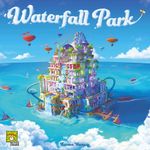
how in Monopoly if you get a set of properties of the same color you get higher value I mean there's there's a few levels in which there are similarities between the two games how is raccoon Tycoon better than Monopoly well first there's a higher degree of player agency because on their turn they have the market of Commodities that they can buy sell and trade and they have the properties that they can auction for or purchase so there's several choices on your turn it's not limited by the role of a dice that's awesome but the other thing is when you're doing these auctions it's keeping all players engaged during anybody's turn so whereas in Monopoly you roll the dice you land and there's a very passive interaction one player pays another player the rent whatever the rent is there's no negotiation involved there that's something that carries over into the next recommendation as well if you're looking for a game that involves a lot of negotiation with all players being active at all times the next recommendation is waterfall park now waterfall Park is a another property game where you're scoring points by having several properties in the same vicinity or neighborhood the more properties you have together the higher the value at the end of the game but the way that each round goes is it starts with players being dealt a random hand of properties all over the map and once these hand has been dealt negotiations begin there are no turns in this game it's just a free-for-all with with people presenting trades to one another purchasing them from another trading across the board there are no rules at all to how these negotiations to go you
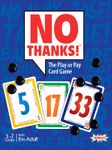
can pay two properties for one you can pay money and properties you can do anything so players are very actively involved looking at how they're going to make their trades and trying to get ahead of the competition it is it is such an active game it's practically chaos and if that's something that you're into it also plays from 3 to 5 players that's the game waterfall park for the fourth game on this list I want to talk about yet another element of Monopoly that makes it a classic and uh that is the enjoyment that one player has when another player gets hit with some pretty bad luck and so for that my recommendation is a game called no thanks no thanks is a game for three to seven players and it's probably the simplest game on this list during the course of the game players are going to be taking cards with numeric values on them and the objective of the game is to have the lowest sum at the end of the game now there is one caveat and that is if you have a set of cards that are all in a row like say 13 14 15 then the only card that counts towards your total is the first card in that Series so the way that each round goes is a card comes out and players take turns deciding whether or not they want to take the card or they can say no thanks however to pass on a card it's going to cost them something they have to pay a token onto the card and the token is essentially a a cancels out a point for
them so they're putting tokens they're saying no thanks no thanks no thanks and eventually what's going to happen is someone's going to take the card either because they want the card because it fills a set or because they want the tokens on the card which can be used later uh or because they run out of tokens and they have no option left except to take the card and that's kind of the big like you took the card kind of moment that that kind of makes the game a lot of fun but what makes the game interesting is the strategy in how you play or save your chips because you never know what the next card is going to be so you might want to keep a little reserve of chips in case the next card is very very devastating but sometimes it might be worth it to just keep putting chips on a card so that you can don't have to take it and someone else does so it's a simple game but really what makes it better than Monopoly well the thing about Monopoly is that when a player has to pay rent and they can't afford the rent the experience of mortgaging your you know selling your hotels selling your houses mortgaging your properties in order to get enough money to pay your rent is so agonizing it's so painful to do whatever it takes in order to pay your rent when you land on a hotel on Boardwalk uh but in no thanks it's it's funny but it's it's kind of painless when you run out of chips and you take a c you take a card fine not only you take the card but you can make a comeback from that because even if you take a card let's say you take a card with 24 on it well that's pretty bad but if you take the 24 and
you take 25 and you take 26 I mean you could take a set and suddenly a card that was horrible isn't so bad anymore because you've got it in a sequence you know sequence of cards that nobody else took there's a really nice way for you to make a comeback when you fall behind and and I really enjoy that so everyone's in the game until the very end no elimination makes it so much better the game no thanks before I go into my final recommendation I wanted to mention a few honorable mentions so the first two are games that you'll find if you do a search online for alternatives to Monopoly you're going to come across a game called acquire acquire is another property acquisition game um but it's a little bit um more robust with the uh the way that property and stock and money is managed in that game which is why I left it off the list however it's definitely an excellent game it also came out in the 1960s though so it's a different era of board games all the other games here are after uh the year 2000 at least so that's one the other one is the game Katan now most people have heard of Katan it's a it's also a very immensely popular game um but it's probably the second most hated game in the board game hobby uh because it's it's got a kingmaker quality to it so I left that off the list in fact I also even made a game list called five games that are better than Katan uh then finally some games that are worth considering um there's one called for
sale which I almost put on the list but I replaced it with no thanks because the two are similar in complexity and I think no thanks is more fun and then also vegetable stock which is a game about the changing prices of vegetables kind of like a simpler version of raccoon Tycoon where it has the changing Commodities and then my patreon supporters had a few recommendations as well so I want to say thank you to my patrons if you're interested in becoming a patron you can check out the description their recommendations were Chinatown which again that was reimplemented by waterfall Park stockpile which is a little bit more financially uh thematically deep maybe maybe too deep compared to Monopoly but an awesome recommendation and then another game called startups from oink games which I think is also comparable to no thanks or for sale but a good recommendation nevertheless my final recommendation is my favorite game on this list and I think not only does it embody all of the characteristics that make Monopoly a a classic game it also avoids all of the pitfalls and I just think it's a wonderfully fun game I've enjoyed playing it for years uh it's the game called Isle of Sky Isle of Sky what makes this game so cool is you're acquiring let's say properties again but in this case it's tiles you're getting tiles and all of the tiles in the game they score different points for different reasons that's what makes the
game different every time is that you draw different scoring categories so what scores you points it really depends on the game and that's got some great replayability there but what happens is you draw three tiles and then secretly you set a price on two of the tiles and you axe of the third tile so at any time during the game you draw a tile that you don't want to have you always have the option of removing it entirely that's called luck mitigation it ensures that you've got a draw that you like with the other two you put prices on those and then when everybody reveals they they lift their screen players take turns buying the tiles at the prices that were set now the cool thing about this game is if somebody buys a tile from you they pay you the price that you set that's great you make money that way but if they don't buy your tile then you have to pay that price to the bank and you get to keep that tile so this game is all about evaluating the worth of the different properties which is you know it's that's what Monopoly is about right but you don't have any dice that determine this for you you're always taking this you're looking at what scores points you're looking what other people are doing you're looking at how much money other people have it's such an interactive game everyone's doing this at the same time you're not having to wait to take turns you've got the the
the option to mitigate bad luck by having that elimination element and then you also have that enjoyment of kind of a bit of an engine where initially you're making very very little money but as the game goes on you're getting more and more money you have more and more economic power to to uh get what you really really want it's just a fantastic classic game the game Isle of sky so those are my five recommendations for games that are better than Monopoly they encapsulate that Classic Fun and avoid the pitfalls if you would consider becoming a patreon and supporting the channel this is an independent Channel I don't get paid by any Publishers to talk about these games I simply love talking about the games that I enjoy playing so if that's something you'd like to support do check out the description and uh that said thank you for watching I'll see you next time bye-bye if you're wondering what to watch next might I recommend the 18 most popular and influential board games not only is it a very informative video but it's actually my personal favorite video on the channel