5 Solo Board Games - December 2022
Games in This Video
5 games are featured in this video — they unlock as you watch.



Transcript
hi everyone my name is Monique and uh no Naveen today because today we're going to be talking about some more solo games for all of you solo Gamers out there I put out a video um a couple of months ago now uh talking about the first five solo games that really I've ever played today is kind of a continuation of that video because I've played five more and you might notice that something's a little bit different I'm actually in a different area of the house because I kind of felt like the fireplace area was a little bit too big of a room uh for me just to talk by myself so I relocated to actually our first filming area that we used to film our playthroughs in when we first started our Channel don't look back at those videos just take my word for it and if there's anything kind of wonky about the video I'm also using a different camera we're basically trying a lot of new things so please bear with me and of course happy holidays to everyone out there I'm wearing one of my meeple day sweaters this is from the meeps I believe this is last year's Design This is like their take on the holiday sweater from last year this year they had the Advent calendar sweater and this is actually not a sponsored video we just really love the meeps over here and this is a very cozy sweater and I found it to be fitting for the holiday so happy holidays everyone all right so today I'm going to be talking about five different games that I played solo recently not all of them are Solo only games some of them are higher player accounts that I just play the solo mode of a lot of these games were recommended to me so thank you to everybody out there who gave me recommendations for solo gaming especially this first one on my list which is the smallest game of the list and also one of the smallest games in our collection and it is a
button shy game called Rove results oriented versatile Explorer this is a game designed by Dustin Dobson and Milan zipkovic it's published of course by button shy they publish these uh small wallet size games they're all I believe 18 cards each and so in this game you are trying to lead a Rover through seven missions and so there is this cute little Rover on some strange Planet somewhere who knows where and they're just trying to do things like dig and jump I'm not exactly sure what their end goal is is here you want to lead them through seven missions and so the way that the game works is you have all of their command modules which are different cards in front of you and each Mission shows a certain configuration that you need to get these command modules into now each module moves in a different way so for example one module can only move one space in One Direction or one module can move as far as you want it to but it needs to pass over at least one other module there's another one that can't pass over any modules at all if you push it against an adjacent one it pushes the module with it you can probably see where I'm kind of going with this you're spending a majority of the game trying to get these modules into place to not only meet the configuration of the mission card that you're trying to fulfill but also get the Cards into position so that makes it easier for you to complete the next mission card because you can always see what the next mission card is now the thing about the mission cards is they are double sided one side shows the mission and the other side shows a certain amount of movement points that you're allowed to use during your turn so you're gonna have a hand of these cards depending on the the level of
difficulty that you choose there are three levels of difficulty on your turn you're going to choose one of those cards to play and take those number of movement points now if your configuration in front of you is already matching what it shows on the movement side of the card then you can move using the higher number of points which is super helpful basically if you are able to complete uh seven missions before you run out of everything then you win the game it's supposed to be 15 minutes in length but if you're like me and you get super analysis paralysis because of the abstract nature of this game then it'll take longer I really enjoyed this game I can see why so many people recommended it you're immediately engrossed into this puzzle of trying to get all of your modules in place and trying to be smart about it because it's not easy it's actually quite hard something that makes it a little bit easier is each module also has a special ability that you can use once during the entire game it is still quite hard but it's really fun because you're basically just trying to puzzle through it the entire time and it's super cute the artwork in this game is a adorable the different Mission cards and and the actual action that the Rover is doing on those cards really have nothing to do with the gameplay but the details just make the game such a nice little package I highly enjoy this one thank you again so much to everybody who recommended it all right moving on to my next game this is another abstract game of sorts and this is brought To Us by the flat out games team it's called verdant this is the third installment of a the abstract Trilogy of sorts there was Calico then Cascadia and now we have
verdant and this is actually designed by much of the flat out games team I believe there are there are five different designers um on this one and it's published by both flat out as well as AEG in this game you are going to be decorating your house with houseplants that is a major theme there's plants on the blocks there's plants everywhere there's a deck of cards with all houseplants illustrated by Beth Sobel who is one of my all-time favorite board game illustrators and I think this is one of the best uh Illustrated work that I've seen from her so far because I actually really do love houseplants so this theme really resonated with me and there's an entire deck of house plant cards and they are all so beautifully illustrated by Beth Sobel if you're into houseplants I already recommend that you check out this game based on the theme alone but basically in this game you are drafting cards and placing them into a 5x3 grid in your home alternating between plants and uh room cards and by the way this is not a solo only game this is a game for one to five players that also happens to have a solo mode which is what I played I actually haven't played any other version of this game besides the solo mode so this isn't going to be a full in-depth review of the game itself just the solo mode and so the way that the game works is there is a market comprised of four different columns and in each column there's going to be a plat card and a room card and a token in between on your turn you're going to draft a card and a token from one of these four columns you start the game with one of each type of card already in your house the card that you drafted must go into your home obeying some
placement rules such as the fact that it cannot be placed outside of the 5x3 grid the room and the plan cards must alternate and you cannot rotate the card now the way that the plants work is at the top right hand corner of the card there is a certain amount of what they call vertices that you need to meet in order for you to score the points in gold on the card at the end of the game and so when you place a plant card in your home you're going to first check the lighting symbol that borders the plant card with any of the room cards surrounding it and if the plant card is showing a favorite lighting condition that matches then you get a verdancy token on the plant card now like I was mentioning in order to score these plant cards you need to reach the amount of urgency as shown on the card itself so sometimes that's going to be like a emergency which is a lot and so there are also some tokens like the watering can the fertilizer and stuff like that it'll help you gain more vertices on your turn but that's basically how the plant cards work the room cards on the other hand have a certain plant type requirement that it wants you to surround it with essentially at the end of the game you're going to score one point for each plant that matches its preferred type that it's adjacent to now each room card also has a space on it for these tokens and those are the tokens that you draft on your turn if you're able to place a matching token of the same room color I believe on that room card by the end of the game then you're gonna score two points instead of one for each of those adjacent preferred plant types and that is the basic gist of how verdant works now at the end of the game there's some additional scoring such as for the plot tokens that you
place on top of the plants whenever you complete them you'll also score a set collection points for the different types of items that are on those tokens but that is the basic overview of what verdant is all about now the solo mode plays almost exactly the same way with the exception of the market so the market follows this sort of like a factory belt system at the end of every single turn the rightmost column will go away and all the cards shift down and you sort of have to refill the cards that way thumb tokens stay in the market but that happens every single round and in addition to that there's a specific rule in there that requires you to set up the plot tokens in a certain way that you don't do in the multiplayer game and then you discard them every time you are not able to complete a plant but they're not gone forever you can still get them again in the future this solo mode honestly is a little bit confusing to be honest I wasn't the biggest fan of specifically the solo mode uh in this one because because of the way that the market works it's sort of a hassle to try to to have to move the market every single turn and I had to re-read that part in the rule book so many times just to make sure I was getting the rest of it right now I don't know how they could have made this different I guess to fit it for solo so I understand why they made those rules so just a bit of a hassle is kind of what I'm getting at the game itself is fun I don't necessarily know that it'll be my favorite of the three I can't make a call on it right now because I haven't played it at higher player counts but just what you're doing on your turn drafting the cards and placing them into
a grid uh wasn't I guess the most exciting it's it's interesting it's puzzly um and there's also an advanced setup where you can use these room and plant goals and whenever you incorporate those sort of goals it does make it a lot more interesting but I really loved say Calico because of the the burn that you feel when playing that game and I also really like Cascadia because of the different animal configurations that it's sort of requiring you to do depending on which cards are in play uh this one maybe it's a fact that it's just a static 5x3 grid with alternating cards wasn't as exciting but also still fun it's fun in a more relaxing way but again I would probably have to play it with higher player accounts to feel the burn anyway that is verdant all right we are moving along and I think the sun is starting to set so I apologize if I'm gonna start battling with Lighting in here but the next game is a game called small Islands this is a game designed by Alexis hard and with art by aureli Guarino and it's published by both mushroom games and Lucky Duck games this is a very cute game this is not a solo only game also this is I believe up to four players and what you're doing in this game is you're basically building out small Islands using tiles it's a Thailand game and you're doing this to try to complete different objectives there's a whole objectives drafting mechanism in the game but basically over the course of uh potentially four rounds each player has their own objective and the objectives are typically requiring you to have certain configurations of these symbols on different Islands now
at the end of the round players will have the opportunity to score their objective by placing out one of their uh house token things on an available space on an island in higher player accounts there's competition for these spaces especially as you build out the islands in addition to that each player can only have one house on each island so once you've scored an island There's No Going Back which can be very strategic in higher player accounts because there are ways for you to sort of combine Islands making it impossible for people to place their house back on that island there's a lot of um strategizing that kind of comes into play in the higher player count game now each player also has their own ship tile and ship tiles are placed in the ocean and the way that they score is at the end of the game for each anchor symbol that is on the surrounding tiles the eight surrounding tiles you'll get one point so there's a lot of uh trying to put the the ocean anchors into certain areas and get the timing right so that you place your shift in the most opportune location in the ocean there's a little bit more to it in terms of the rules but that is a basic overview of what you're doing in the game now I've played this game solo and I believe at two and at three players and the multiplayer game is fantastic I actually really like this game it's fun it's quick and it's super duper cute the rule book is a is a little bit complicated for what it is for some reason uh I know we had a little bit of difficult time the first time we played it kind of figuring it out the solo mode though is basically an AI you're playing against the designer I think the the Solomon deck is named Alexis and basically each turn you're going to be drawing a card from the AI
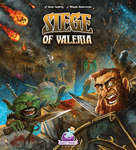
deck and it dictates where they place the tiles but the thing about that is where they Place their tiles is highly dependent on where you place yours and so I found a solo mode to be fine but I definitely enjoyed it more at higher player counts the Politics as to where you place your tiles and which Islands you continue to expand is so much more interesting in higher player accounts not only that but there is a mechanic in here that allows you to cover up symbols on the islands if you need say a different symbol to meet the objective on your card and that is a lot more interesting in higher player accounts because you're not only competing for spots on the islands but you're also competing for placement with your ship tiles that just does not come through in the solo mode so anyway this is a game that I enjoy but uh highly preferred at higher player accounts versus solo alright next up is a game that is super new to me in terms of the genre I don't think I've ever played a game in this genre before and it is called Siege of of Valeria this is a solo only game designed by Glenn Flaherty and with art by the Biko and it's published by daily magic games so you might be familiar with this series there are several games that came in this bundle but this is the only one that I've played so far and I believe it's also thematically part of a bigger world that I am also very unfamiliar with this is the only Valeria game I've ever played and so if you're not familiar with this game this is a I think it's a Siege type game I actually initially thought it was a tower defense game because a long time ago I used to play this game called ninja town on my DS which I hear that was a tower defense
game and I really really loved it shout out to anybody out there who knows what Ninja town is I thought that this was going to be a similar deal but it's not at all similar in this game you are trying to defend your Fortress against a an army of troops and Siege engines that are coming your way before the game starts you set up the Army in a grid of a 5x5 cards I believe with Siege engines all the way in the very background row and the object of the game is for you to just defeat All Of The Siege engines you'll have five of them to start the game and then you'll have a small deck of them off to the side so that every time you remove a Siege engine another one kind of fills in but you win as soon as you defeat All The Siege engines in the game now the way that the game works is I believe it's played over the course of Maximum seven rounds and each round you're going to be activating The Siege engines who will do bad things to you depending on the placement in which these cards exist on the grid then you roll all of your dice and so you have red and blue dice blue dice are I think they're called holy Dice and they can be used to fulfill uh blue dice requirements and they're also wild you can also use them in place of red dice which are really nice and then of course you have red dice which is a majority of the Dias in your pool after rolling the dice a majority of the gameplay is you attacking and removing troops and Siege engines during the round you can actually only attack the cards that are all the way in the very front and the way you attack these troop cards is by spending sums of Dice from your dice pool to fulfill the requirement now the thing that's kind of neat about this game is every time you defeat a troop The Troop part goes into your hand and
each troop card has a special ability that you can use by discarding it from your hand so a lot of the gameplay is in trying to find these different combinations of abilities that'll allow you to get more dice or allow you to Overkill and kill a Siege engine that it's adjacent to there's a wide variety of abilities that the tube cards have but they're all super helpful and super powerful and really fun to puzzle through now the thing is at the end of the round if you have any troop cards still in that very front line that's called the Vanguard each troop card will attack your Fortress by placing a uh a fire token I think it's called a Tourette token turret token each section of your Fortress Can Only Hold maximum three of those so if you ever have to add one when there's no more space then you lose the game immediately another way in which you can lose the game is if a Siege engine gets to the very front and you don't remove it by the end of the round so there are a couple of uh scary sudden death situations I guess that the game kind of puts you in because you're trying to chip away at these trip cards to try to play the long game I guess but you have to be very mindful of those two lose conditions and of course if you get to the end of all seven rounds without defeating all the siege engines that's another way in which you can lose now before playing this game I really didn't know what to expect because like I said I'd never played a game in this genre before I think the game is really clever it's uh it's really well designed and it's fun trying to put out fires and puzzle through the different abilities in order to uh you know remove those Siege engines it's really clever I do find myself about halfway through the game kind of getting burnt out on the main mechanic which is fighting through those
troops you know it's it is the same kind of defeat the troops over and over and over again and I don't think that's a fault of the game I think it's just the genre of game but if you enjoy that type of game and you're not the type to kind of get burnt out on that mechanic it's really fun you're spending majority of your time trying to figure out which dice to keep which dice to roll because there's a lot of things that kind of punish you in the game that will sometimes require you to lose a die or lose a champion because every time you defeat a Siege engine you get a champion who goes onto your Fortress that'll either give you like a one-time use ability or a one-time per roundability that's really helpful and there are also event cards that can either help you or really hurt you and I don't think you have to play with the event cards but it is a part of the main game I played with the event cards I played with everything basically and I play the game a few times and I found it to be quite swingy there were a lot of games that I lost pretty badly and then there are a couple of games that I won kind of really easily so it really just depends on what the starting Siege engines are out there which Champions you get of course the die rolls and which events kind of come up and when anyway that is Siege of valyria all right good morning by the way uh believe it or not the sun completely set and my camera died so here we are it is the next day and now we are on to the last game on our list and the last game is the heaviest game on the entire list and it is called Twilight inscription the Epic rolling right experience so this is a roll and write game based off of a really big
epic game called Twilight Imperium there are four editions of that game now and if you're not familiar with that it is a large like six seven hour Space Opera that you play with a large group of people and uh it's really fun I played it like twice but this is the Roland Wright thematic integration of that game it's not designed by the same designers from what I understand this one is designed by James niffen it's published by Fantasy Flight games in this game players take on the role of one of the factions from the Twilight Imperium universe and you're gonna be doing things that you kind of thematically do in that game such as navigating around the universe expanding going to war if you've ever played on right game before such as railroad Inc or Welcome 2 those are a couple of games that I really enjoy you typically have a mat of sorts and a dry erase marker and you're either rolling dice or you're flipping over cards in order to write on your board and just try to score the most amount of points by the end of the game in this game each player has four different mats and the different mats have to do with the different thematic aspects of Twilight Imperium such as the expansion navigation Warfare and there's an industry board which I don't quite remember exactly how that integrates and all four of these boards work a little bit differently so the way that the game works is there is a large deck of event cards and each round you're gonna draw the topmost card in that deck and everybody around the table resolves it so a majority of the time you're going to be flipping over what's called a strategy event and on these strategy event cards there's gonna be a certain number of one of the three basic resources in the game uh they each have
a name but I just kind of go by the symbol on the dice and each time you resolve one of those event cards each player is going to choose just one of their formats to write those resources on so it's not like you're constantly having to juggle all four Maps each round you're only focusing on one but there is a little bit of connectivity that they all have with each other now the resources work a little bit differently depending on which map you choose for example with a navigation mat you are trying to explore and claim the different systems which just means connecting lines between the circles and then circling the circles so that you can use those symbols for the other maths and of course this wouldn't be a Twilight Imperium game without mechatal Rex and so on this map you're also trying to race to see who can get there first so that you can score the most number of points and write your name on the other map and once you unlock the planet symbols on this mat you can use those symbols to unlock the different planets from this one with the expansion mat you are playing the mini game of trying to complete rows and columns in the different planet groups and those will give you what's called assets which are basically other symbols that let you unlock different Technologies and abilities on the other Maps you also have the Warfare mats where you're going to be drawing in the different type types of warfare units in order to go to war with your neighboring partners and that'll happen whenever the war type event comes up in the deck and then there's the industry mat where you're basically doing a bunch of Crossing off of symbols on this Grid in order to claim other symbols and it's a big symbol claiming uh part of the game now going back to the event cards after you draw in those initial resources then you're going to roll the dice that come
with the game there are two different types of dice there's a basic Dice and then the colored Focus dice all players get to draw in the resources on the basic Dice and if you have the specific color a focus die unlocked on that map that you chose then you can also draw in the resource that's shown on the corresponding Focus die and in order to unlock those dice you need to find those symbols from a map that'll allow you to unlock the dice on a different mat as you can see this is a really large game of symbol matching you have symbols everywhere and the symbols allow you to do things on other maps and you really need to play to that specific part of the game in order to be successful now this thing that's sort of neat about this game is specifically when playing with higher player counts there is some player interaction mainly with going to war as well as voting on the council events over the course of the game you're going to be generating votes in order to vote on these events and that can get quite political because the good stuff is really good and sometimes the bad stuff is really bad but I think that mainly shines at the higher than two players so far I've actually only been able to play this game solo and at two and with both of those player accounts you're required to play with an AI in my opinion it's not the most ideal way to play this game and I'm going to get into why that is in a second as for the game itself we are actually quite split on it in this household um we posted a first impression Vlog specifically for naveen's opinions to our patreon community if you'd like to check out that video we'll include a link to our patreon down below but uh just to kind of keep from paywalling too much content this is a basic summary of how Naveen feels about the game too busy it's way
too busy of a game and uh there is going to be a population of people even people who enjoy rolling rights we're going to feel the same way because this game is completely built off of these different assets which are just symbols on all these different areas of your maps and it's kind of up to you to be able to utilize those symbols to your advantage you need to be able to unlock them on different maps and then remember that you've unlocked them and then remember where they actually correspond to on the different mats to maximize your points and for me that aspect of the game made learning the game quite difficult learning the game for me was not fun but after I played a full game of it everything started to click and I kind of understood exactly what the different symbols mean on the different maps and then I started to have a lot more fun with it it's basically four mini games in one and for me I find it fun to try to strategize on one mat in order to maximize you know scores on another one and then every time I play the game I try to go for a different strategy and there are a ton of different factions in the game so you can play as a different one each time of course the first time I played I played as a lion because how could you not that lion is what drew me to Twilight appear in the first place but I do have some concerns with the game uh the first thing are these markers you do not use standard dry erase markers with the game and so the game actually comes with these like neon orange chalk markers uh and this is the very first time I've ever had to use chalk markers so I had initial concerns about uh how long they would last and how I would have to replace them in the future after doing some searching it seems like you can just get chalk markers but
um I'm not 100 sold on them just yet the good thing is they don't rub off easily because it is kind of a long game it's like an hour and a half you know this is like a full big game in a roll and ride experience and so I think it is a good thing that they don't rub off that easily but they are a little bit of a mess and uh I'm just not 100 sold on them yet the other thing is there is quite a large rules overhead and uh when people play Rolling rights you're used to playing something that's simple and quick and just like a large burst of fun this is a quite a different experience from that you're in it for a long game and everybody's you know kind of head down in their own mats every time you flip the card it's just a very different experience from what I'm used to with Roland rights and the last thing which is probably the biggest part of it for me is I'm not the biggest fan of the way that AI Works in this game because the AI is trying to simulate um a third or even a second player around the table who is just going to be doing things like racing against you for completing the objectives because each time you play the game there is one objective permit that you're trying to race to complete in order to score the higher number of points of course there's also that race to get to mechatal Rex but you're also accruing those votes to vote on Council events and you're going to war and so the way that AI Works in this is every time you roll the dice you're going to cross off on the big macatar wreck sheet the symbols that are specifically on the colored Focus Dice and the different symbols are going to affect a different track so one might affect their voting capacity one might do the Warfare another one is going to be for the different objectives that
you're going for and as soon as they reach the objective area on their track then you have to flip it over for me the problem is not so much with the objectives I think that's fine it just is mainly with the voting and going to war you know depending on how you roll the AI can really push up on that war track and it's just not the most realistic experience it also kind of leaves you feeling like you're just completely shut out of War especially in the solo mode because you don't really have a different neighbor to your left and right the AI is considered to be both to your left and your right and so if they just have a ton of points on the Warfare area then that mat is almost useless to me so not the biggest fan of the AI experience and so for me this is probably a game that I would just play with three or more players which I actually haven't done yet so I can't really speak too much on that but other than that I think my game is really fun I'm one of those people who don't mind the simple matching so much it would have been better I think if the symbols were a little bit more basic because it's not like circle triangle square it's like a green bubbly thing like if I unlock the bubbles like I unlock the bubbles somewhere else you know fortunately the assets reference sheet is fantastic it does detail all the assets and sort of where you can find them but if you're gonna play this game you have to be okay with the symbol matching uh if you play this game before I am so curious to hear what your thoughts are specifically on the solo mode but if you played at higher player accounts I would also love to hear what you think and that about wraps it up those are all five games that I wanted to discuss today if you've played any of the games that I mentioned I would love to hear your thoughts I would also love
to hear any more recommendations for solo gaming and what games are you playing over the holidays please share in the comments down below because we love hearing about your experiences and we always get a lot of recommendations from you all in the comments section but anyway thank you so much for watching this video we really hope you have a safe and fun holiday season with your friends and family and that you're able to play a lot of games because this is a perfect time to get those games played right anyway happy holidays everyone see you next time bye foreign