/pic3970233.jpg)
Small Islands is a tile-placement game in which you are daring explorers discovering a magnificent archipelago. Its islands are brimming with natural resources but also temples from an ancient and mysterious civilization. Brave adventurers, bring back to your clan wealth & prestige!
A game is played in maximum 4 Rounds. At the beginning of each Round, each player secretly picks an Objective Card out of three cards. And in turn, players draw and place a Landscape Tile out of the 5 available (2 in hand, and 3 on the table). At a certain point, another option becomes available: placing a Ship Tile. When this tile is placed, in turn, all players place Houses on the islands and earn Prestige Points according to their Objective. Then players start a new Round. When the game ends, players receive additional points for their Ship Tiles.
In Advanced Mode, Objectives are split in 2 types of cards which allows you to create your own objectives amongst many combinations.
There is also a Solo Mode, innovative for its mechanics as well as for the very concept of a solo mode in a tile-placement game. We gave it an AI with a personality and different behaviors.
Small Islands offers you even more surprises, hidden at its heart.



Mechanics (from transcript analysis)
Video topics + discussion points
Quotes (from this video)
- This is our third installment of our top 100 games of all time.
- You have some of your games ranked incredibly too low.
- The average weight of the first two were 245 and 241 and the next two jump up to 282 and 264.
- Overall average is 291.
References (from this video)

- islands
- Carcassonne
Mechanics (from transcript analysis)
Video topics + discussion points
Quotes (from this video)
- So, because of that, I actually never got a copy of it um and haven't played it.
- Um so, you drive cars around and shoot at each other. That's basically the game.
- Looks like Carcassonne with Islands. That looks pretty good.
- Do we need a card game version of it? And the answer to that is we really don't. Just play Camel Up.
- This is a war game from Don Greenwood, Avalon Hill.
- But if you like choose your own adventures type games, that's what this is.
- It is a tile laying game that is about as exciting as it looks in this picture here.
- So if you like Klask, um which is a fantastic two-player game, this is just a version for four.
- I really like awkward guests, so why didn't I play the second one?
- He gave it Seal of Approval. A seven out of 10. Well, there you go.
- I think I'm going to have to go with the Bottom of it. It is a fantastic three-player trick-taking game that I like very much and think you definitely should check out.
- If you really like what we're doing here at the Dice Tower, then there are different ways to support the Dice Tower. One of those ways is through Patreon.
References (from this video)
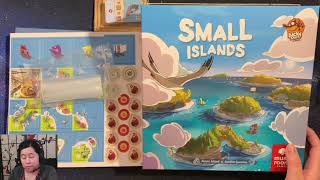
- Solo mode included
- Nice box design and production
- Large number of tiles and tokens
- Advanced mode available
- Bag storage included for tokens
- Requires reading through rules to play (rule complexity)
- Punch-out setup can be time-consuming
- Array
- Islands/archipelago
- Abstract
Mechanics (from transcript analysis)
- Card-Based Scoring / Objective Cards — Objective cards govern scoring and strategy
- Compound Scoring — Objective cards govern scoring and strategy
- Solo Play / AI Opponent — A solo mode with AI opponent to beat
- tile laying — Players place landscape tiles to build island tableaux
- Tile Placement — Players place landscape tiles to build island tableaux
Video topics + discussion points
Quotes (from this video)
- solo mode included so obviously that's the main reason why i got this game in the first place
- 56 landscape tiles that's a lot
- there's even an advanced mode that's pretty good
- solo mode is on page 8
References (from this video)

- Cute presentation and approachable
- Fast, light, and pleasant to teach
- Solid box from Lucky Duck with good art
- Very light; not for players seeking depth
- Array
- Islands / archipelago
- Three Sisters
Mechanics (from transcript analysis)
- Set collection / scoring by pattern — Players aim to maximize points by achieving specific symbol patterns on islands
- Tile Placement — Players place island tiles to build a map, scoring based on symbol density and pattern on each island
Video topics + discussion points
Quotes (from this video)
- this is the heaviest game that Luke Laurie has designed
- the table is going to explode with what you can do here
- it's a sandbox with three or four different experiences in one
- the fiction is space exploration and competition, and you are building settlements
- play what brings you joy—the core message at the end
References (from this video)

- beautiful artwork and theme
- solo mode against the designer AI
- strong replayability through multiple end conditions
- tile laying, exploration, trade goods
- island exploration
Mechanics (from transcript analysis)
- solo_ai — solo play against the designer AI with different modes
- tile laying — laying tiles to create islands and routes to explore for points
- Tile Placement — laying tiles to create islands and routes to explore for points
Video topics + discussion points
Quotes (from this video)
- you don't need a lot of games in your collection to be happy you just need the right ones
- this is board games for one today I'm going to take you through a collection
- it's a legacy game so if you're not familiar with what that means a legacy game means that you're following a story basically an adventure of sorts
- you make permanent changes to the game as you play
- it's not a competitive game this would be cooperative storytelling where you get to control The Narrative of Heroes in a story of your choice of five episodes
- I love you all
References (from this video)
Mechanics (from transcript analysis)
Video topics + discussion points
Quotes (from this video)
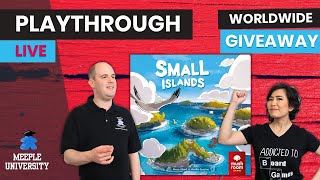
- this is a tile placement and objective scoring game
- we should be able to play this under an hour
- we're pretty much fighting for the same anchors
- this is a really lovely looking game
- it's a good filler
References (from this video)
- lovely-looking components
- quick to teach and good as a filler
- two-player implementation works well and supports strategic play
- varied objective cards provide multiple scoring paths
- scoring objectives and rules can be a bit tricky or easy to misread during play
- early placement decisions can lock in scoring opportunities and cause some frustration
- island-building with ports and temples
- Isle of Skye
- Dinosaur Island
- Marco Polo
Mechanics (from transcript analysis)
- anchors and resources — anchor symbols and resource tokens constrain placement; anchors can be manipulated and placed with rules.
- Compound Scoring — players draw objective cards that define scoring criteria for the round.
- end-of-game island scoring — islands score at various times, but each island can score only once across the game.
- Hand Management — each player has a hand of tiles; draw from a subset and place one per turn.
- Houses — each island can receive houses; there is a limited pool and placement pace affects scoring opportunities.
- intermediate scoring phases — scoring triggers mid-game (e.g., when a ship tile is placed) rather than only at the end.
- objective cards / scoring missions — players draw objective cards that define scoring criteria for the round.
- Point Salad — ships are placed to trigger scoring; ports influence end-of-round scoring proximity.
- ships and ports — ships are placed to trigger scoring; ports influence end-of-round scoring proximity.
- Tile Placement — tiles are drawn and placed to form islands; all sides must match.
Video topics + discussion points
Quotes (from this video)
- this is a tile placement and objective scoring game
- we should be able to play this under an hour
- we're pretty much fighting for the same anchors
- this is a really lovely looking game
- it's a good filler
References (from this video)

Mechanics (from transcript analysis)
- tile laying — tiles laid in the same area; rounds can end early, disrupting others' plans
Video topics + discussion points
Quotes (from this video)
- the big change here is i'm turning the good games vlog into a patreon exclusive
- the only constant is change
- i adore bunny kingdom
References (from this video)

- Relaxing/peaceful gameplay
- Turn-based and stream-friendly
- Secret objectives add intrigue
- Non-elimination and low-conflict play
- Rule clarification can be confusing; early confusion about scoring
- Initial learning curve and potential misremembering of rules
- secret objectives; island-building
- islands with water tiles; boats
- Carcassonne
Mechanics (from transcript analysis)
- boats/ships placement and scoring — After a certain condition, players may place a boat on a legal location and score by placing their house.
- End condition — The game ends when all tiles are drawn or all boats are placed.
- house placement and island scoring — A house is placed on a dotted location; islands are scored, with a total up to eight houses contributing to points.
- no hand reordering — Players cannot reorder the tiles in their hand.
- secret objectives and discarding — Players select a current objective and potentially a next-round objective, then discard one tile.
- Tile Placement — Players place one tile that connects water to water or to an island, adhering to legal placements.
- tile placement and connections — Players place one tile that connects water to water or to an island, adhering to legal placements.
- tile-drafting from a display — Each turn players draw one tile from three displayed tiles into their hand.
Video topics + discussion points
Quotes (from this video)
- it's a very peaceful looking game
- this is a really relaxing little game
- it's not directly competing
- it is available on vogue marina for everybody
- this weekend we will play a game called dunaya
References (from this video)

- Carcassonne
Mechanics (from transcript analysis)
- Tile Placement
- Tile placement with island objectives
Video topics + discussion points
Quotes (from this video)
- you guys know Seven Wonders and then I recommend you try out it's a wonderful world
- Baron Park I play it all the time
- Stardew Valley the board game which I love this game so much
References (from this video)

- easy to learn
- loose decision space on drafting
- fits a quick, social game session
- some variability can feel low
- depends on players knowing the objective cards
- tile laying, contract fulfillment
- A convention floor / casual gathering setting
- light, approachable
- Dale of Merchants (not a direct mechanic, but discussed in social context)
Mechanics (from transcript analysis)
- tile drafting and placement — Drafting tiles to form island layouts that meet objective cards
Video topics + discussion points
Quotes (from this video)
- my favorite game of the weekend was definitely Dune Imperium followed closely by Earth
- Dune Imperium has been one that I've been wanting to try for so so long
- Earth is fantastic if you guys have not seen it
- Merchants Cove base game plus three expansions
- Captain Sonar is just like a big real time team based Battleship
- I'm so so excited to try Merchants Cove
References (from this video)

- Beautiful artwork
- deep strategic choices
- Runaway winner risk if players optimize too aggressively
- Tile-laying, island creation, and objective fulfillment
- Oceanic archipelago where players explore and claim islands
- Strategic, methodical
Mechanics (from transcript analysis)
- Area Control — Place ships and huts to maximize points.
- Area control / placement — Place ships and huts to maximize points.
- hidden objectives — Secret objectives influence round scoring.
- Tile Placement — Lay tiles to explore the ocean and create islands.
- Tile-laying — Lay tiles to explore the ocean and create islands.
Video topics + discussion points
Quotes (from this video)
- Fathers and Sons should play games together so don't panic
- it's a simple idea, super fun
- Twisted chess
- it's not for your Cooperative playing Son this will stress him out don't do it to him
- Small Islands beautiful artwork lots of strategy
- I adore this game I think this is a family game and this is a father-son game
- this is a great father-son night
References (from this video)
- Beautiful archipelago artwork vs French countryside
- Secret objective system adds depth
- Players must balance completing own objectives while blocking others
- Limited placement slots create tension
- Each player has one special end-round tile per game
- Solo mode available
- More strategic than Carcassonne
- Still streamlined and easy to teach
- More complex rules than Carcassonne
- Some players may prefer Carcassonne's simplicity
- island building
- archipelago creation
- beautiful nature scenes
- Carcassonne
Mechanics (from transcript analysis)
- communal map building
- Dice Placement
- limited placement slots
- Objective Cards
- placement strategy
- Tile Placement
- Worker Placement
Video topics + discussion points
Quotes (from this video)
References (from this video)
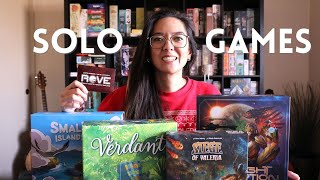
- Cute components; accessible for families and lighter gamers
- Solo mode provides a reasonable AI-like challenge
- Rules can be a bit heavy for a lighter game
- Solo mode may not shine as bright as multiplayer
- island construction and strategic placement
- Islands archipelago with a focus on objective-driven island building
- light and family-friendly
Mechanics (from transcript analysis)
- objective drafting — Each player has their own objectives drafted to drive end-game scoring.
- tile drafting — Draft island tiles and place tokens to complete objectives on islands.
- tile placement and token scoring — Place plant-like tokens and room cards with placement constraints across islands.
Video topics + discussion points
Quotes (from this video)
- I really enjoyed this game I can see why so many people recommended it
- the solo mode plays almost exactly the same way with the exception of the market
- it's not the most ideal way to play Twilight Inscription with AI
- the rule book is a little bit complicated
- I would probably have to play it with higher player counts to feel the burn
- this is not a solo only game this is I believe up to four players
References (from this video)

- Beautiful artwork
- Good solo mode
- Elegant replacement for Carcassonne
- Simple but engaging mechanics
- Variable objectives add replayability
- Risk of house theft makes it competitive
- Hasn't been played recently
- Map building
- Island building
- Carcassonne
Mechanics (from transcript analysis)
- Area Control — Placing houses on islands, only one per island, can be stolen
- Objective-based scoring — Different objective cards each round determine scoring criteria
- Tile Placement — Building islands with tiles like Carcassonne
Video topics + discussion points
Quotes (from this video)
- it's just like falling off it's just literally there are 100 better games in it
- Small Islands uh this is the one that i've been saying is a replacement for carcassonne
- way too complicated for its own good
- it is one of the most beautiful games in existence
- i still think five tribes is better than yamatai
- nations is still my preference to fruity ages in terms of playing a physical game
- really good negotiation game
- great teamwork cooperative very cool
- this is a really good solo
- the deductions are really hard it's a really tough one to do
- it's oh it's a mind bender gorgeous looking
- reef is still a really cool game
- azul is only that good at two player
- near and far still really good
- there's no reason to play that one if you have near and far
References (from this video)
- Accessible, quick to teach
- Fun thematic hook with islands
- Replayability could depend on player count and variety
- City-building on miniature islands
- Tiny island archipelago building in a playful world
- Playful and enthusiastic presentation
Mechanics (from transcript analysis)
- Resource/pointing system — Earn points through placement and patterns
- Tile Placement — Place tiles to build island networks and score points
Video topics + discussion points
Quotes (from this video)
- this thing is massive
- it's huge it's bigger than our table
- we love the game
- we're going to pimp it up
- it is a beautiful production
- we have you know the first one and now the sequel