6 Small Box Game Reviews - Trinket Trove, Cats Knocking Things Off Ledges & More!
Games in This Video
5 games are featured in this video — they unlock as you watch.


Transcript
when you don't have 20 minutes to watch a full review and you're not looking for a how to play or an hourong playrough. And let's be honest, when the interest is a little smaller, too. That's why we have six smallox games for you. Hey, I'm Alex. Welcome from Board Game Co. Today we are reviewing six small box games. We're going to have what's it called again? Yukio Yukio. I think it's Yukio. Yukio over here. We have Widget Workshops, Trinka Trove, Bacon, Cats Knocking Things Off Ldges, as well as 365 Dungeon Adventures or 365 Adventures the Dungeon. We're going to be going through all of these. Before we do though, just a note, this channel is sponsored by Allplay. If you want to go to allplay.com, you can go ahead and check out a variety of things, including these shelves you see behind me. These are allplay shelves. They are fantastic.
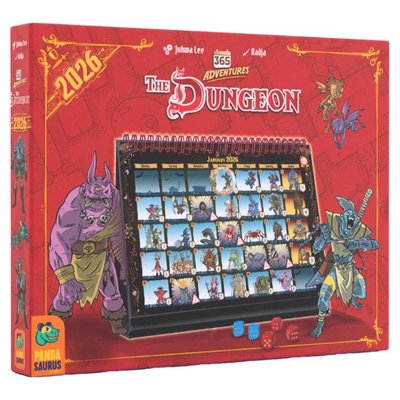
I like them a lot. I recommend them. You can check them out, as well as a variety of other things at allplay.com. But with that, let's go ahead and start off. And I am going to rank these ones. I'm going to do these ones in order from my lowest to highest ranking. Let's start off with uh Ooh, this is a tough one. Let's going to start off with welcome with 365 Adventures of the Dungeon. Although this does require some caveats. 365 Adventures of the Dungeon is a game that you're meant to be playing out game a day over the course of 365 days. You see, you have a calendar over here and you have a little token that goes around the calendar indicating your progress. Then you have these five dice and each each week has various monsters on them with various numbers and your goal is to play Yatsi. You roll the five dice and then you take a look at the week ahead. Maybe you roll a three, three, a two, a five, and a four. You take a look over here and you see this monster has a three, which means you already have two threes. You're going to take the other three dice, roll them again, and see if you can get another three. You have three rolls in total, and you're trying to kill any one monster on the week. The problem is, as the week advances, your options get smaller and smaller. At first, you have the whole week ahead of you, so you can kind of judge based on your first role what you want to pursue, but then you're down to the last day of the week. You only have one monster left. That monster needs a two. So it means you roll your dice. You don't have a single two. You're already down a roll. It gets harder and harder as the week progresses. That's the basic idea of the game. As you go through each month month, you're going to add new rules. So for example, I'll spoil the first month for you. For example, when you finish January, you enter February, you now have potions you can earn that give you a few more rerolls. So the months are going to add things as you go through it. But basically the idea is every day you roll the dice, try to kill a monster in the week, score up at the end of the month how well you did this
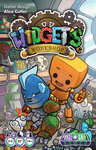
bonus points for having complete weeks and then add rules as you go through the months. It's not bad. This one is my lowest one over here. I'm going to give this a three out of five. This to me is a very very um basic Yatsi style game that felt like an excuse to have something to do once a day every day for 365 days as opposed to being an actual game that is a fully I don't know if it it felt like an excuse to have a daily activity as a game. That's what it feels like. I've played through the entire month of January as well as the first half of February. That's cuz that's when I'm filming this over here. So I've done the first month and a half. I am reviewing this not based off having actually gone ahead in time or doing the whole thing. I I' I've played this for a month and a half. Uh so I know the general idea and vibes of it. I have not gone through all the rules that will be added as you go through it. So maybe by the time you get to November, it's an awesome incredible experience. I can say that a month and a half into the game, it is a very boring yachts style game that is an excuse to do something every day. It's a three out of five. It's not bad. It's just not something that I would um specifically recommend or seek out. I think you're better off playing Wordle if you're looking for a daily activity. From there, we're going to have Widget Workshop. Widget Workshop is a game that I was kind of looking forward to because it has these like overlaying robot cards. You're overlaying these acrylic cards that are going to both paint a robot and you're doing this a kind of galaxy structure style, pulling these cards off the table to build your robots and then scoring based off of how well you complete them.
The gimmick, the gimmick of overlaying cards, that's cute and charming. The game behind it is not that great. It's mostly trying to you have a decision as far as taking face down cards or face up cards. There's a degree of guesswork based on the silhouettes and then ultimately trying to match those based on trying to get a full set or as much as possible to a full set to optimize your score. It feels a little chaotic, not very strategic, more kind of again it's it feels like if you took Groker and said, "How can we make Groker and make it more accessible for gateway gamers by removing most of the actual strategy and interesting parts of the game?" That's what Widget Workshop is. The concept of the overlaying cars, that's charming. The game behind it kind of blleh. I think I'm going to give it a three out of five as well. Again, it's not bad. It just wasn't particularly inspiring. It's fun to build your robots. It's fun to have a whole pile of cards on the table, but the actual gameplay behind it is is just okay. From there, we're going to go to Ooh, what order do we do these in? Uh, we're going to go with cats knocking things off ledges. Cats knocking things off ledges from the OP is a game of trying to have cats knocking things off ledges. You're going to be slowly building a tower.
Yes, this is a cat over here. Yes, she does. She is from my cats. She is the one most likely to knock things off ledges. But you want to be building your little platforms as you go by taking the columns and then placing platforms and then using the the the tweezers to move a cat to the top of the platform. Then using a toy to top of the platform, then using your little batting paw to knock it off the platform. That's what you're trying to do. And then you score based off of how far it fell, assuming it lands on a platform, and extra points if it lands on the matching platform for that toy. You basically play to 10 points. It's a very straightforward dexterity stacking game with a cute theme, but not particularly amazing. It's going to be another three out of five over here. It's charming. If you get if you give it enough points for charm, you're going to go to 3.5. I don't give it enough points for charm. The charm is there. The dexterity stacking game is is a very basic game that feels more like an excuse for the theme as opposed to anything particularly interesting. So, I'm going to give it a three out of five. It's cute. It's charming. It's a very basic game. From there, let's go to This is a tough order over here because I'm kind of torn between these two as to which one I like better. Both of these are going to be a 3.5. I'll tell you that much. I think I think I like Yu-Gi-Oh better. So, Bacon. Bacon over here.
Bacon is a game from All Play. Yes, by the way, AllPlay is a channel sponsor. So, obviously, if I'm rating or grading their game, take that with a grain of salt and all the biases that you need to um just be mindful of, things to be mindful of. This is a three to six player trick taking game that at first blush. When I first read the rules for this one, I was not super impressed. I was like, "Oh, it's another game of just sets." You're just creating various sets. You have these various combos you can create. You have the numbers. You can play a run or a pair or or you can play all these different combos basically. So, I can play two of a kind. We actually play you could play two of a kind. You can't play a twocard run. So, you play two of a kind, a three of a kind, you can play a three card run, a four card run. There's different options of the sets you can play. And it looks fairly basic. When I first read the rules, I started playing it. I was like, "Oh, there actually is more of a game here." Because you have a hand of cards. Then you also have these bacon cards that are wild. That's why the game is called bacon. And the wild cards means every player has two wilds in their hand. So you're trying to figure out how do you play your cards knowing that a combo can only beat a combo of the same type. So if I play two pair, you can only play two pair to beat that. Which means as it goes around the table, it's a shedding game. It's a hand shedding game. You're trying to get rid of your cards first. You can either play a better combo or you can play a special.
Special are like much better hands basically. So there's like a set of like five specials that are really good hands and then there's a bunch of combos, but you can only beat a combo within the combo it played. That introduces an interesting element of tension in the game where you're constantly choosing between, okay, great. I have this run over here. I have a fourcard run, which will be great if I ever take control. But if I don't take control, maybe it's better to split up this run just so I can play two sevens and actually just take control. So you're constantly evaluating how soon do you play your X's? Do you break up other sets in order to beat the combo currently being played? Or do you hold out so you can get a really good combo if that combo comes up or if you take control a different way? Overall, I would say that I found the actual puzzle of playing this more charming the more I played it. I do think that it's a little complex at first. It feels like uh there's a game my kids really enjoyed called um uh oh my gosh, called Jungo. And it's a very this feels like they took Jungo and just made it a much more strategic game.
Although this one came before Jungo to be fair, but it's a handshedding game with interesting elements. The main thing that the main tension point that I enjoy is the decisions as to when to use your X's and when to break up your your runs or your sets or your combos or your your pairs in order to beat the current hand I play. Overall enjoyed this one a 3.5 out of five. Then we have Yu-Gi-Oh. Yukio almost got a higher score. The problem with Yukio is I have played all the difficulties of this. I haven't played every single match. There's like I don't know 50 different matches. But Yukio is a solo game of card laying. You're basically it's very spalopless in the sense you're going to have different cards that give you different goals. So these give you different goals that you're playing with, different things you're trying to do. Have six I think I have to double check what that one is. This one I honestly I don't know half of them over here. Uh this one over here I have to I have to look at the color. I know this one. This one's going to have you doing four of that symbol in a column. This one has uh having four of any symbol you choose in a diagonal. But the way you're trying to do this, you can just choose a certain number of these scoring criteria. You can randomly deal them or you can go based off the the sets that they give you for different different difficulties. And then from there, you're just playing cards down into a grid. So, for example, if I'm trying to get that four of a kind over here, then I can do that. Boom.
There you go. I now have four of a kind. But most of the time, you're trying to build a full 6x6 grid while doing multiple conditions. So, having these four pink is great, but I also want to get the diagonal. So, maybe I maybe I do a trade-off. Maybe this is the next card I play up over here. But now, I have need to play a card over here. So, I'm also trying to build a 4x4 grid. But if I do this like that, boom. Now, I have Oh, no. I ruined that. I ruined that. No. How do I fix that? I can't I can't fix it. I ruined it. basically trying to build out a 6x6 grid with the cards while trying to achieve certain scoring criteria. I love the concept of this. I like Spalopoulos a lot. This at first I was like, "Oh my gosh, this is so much fun." But I've played every single there's different tiers of difficulty like easy, medium, challenging, impossible, whatever they're called. Uh I haven't lost this game once. I'm 99% sure I'm playing it correctly. I've read the rules again. But even the highest difficulty level, I haven't lost it. So I love the concept of this, but I actually haven't lost. And so that removes some of the challenge of it.
that dinged it down from being a what would have been a four out of five to a 3.5 out of five. Granted, you could just theoretically just keep adding scoring conditions to make your life harder and harder at a certain point. I don't know. Like I feel I feel there might have been a way to make this game a bit more challenging. I love what the game is doing. Uh but the difficulty just wasn't there. 3.5 out of five. And then lastly, Trinka Trove. This is another one like Bacon. This is this is a good reminder that do not judge a game either by its cover or by reading the rules alone. I was not excited for Trinket Tro once I read the rules. It felt like a fairly basic game and I was like, "Okay, well, is this even that much of a game?" Because in Trinket Trove, you're collecting these trinkets. You have these cards over here that have these scoring values on the side. Let me just go ahead and show you a card so you can see it a little better cuz the back of the box is not doing you any favors. So, you have cards like this over here that show, hey, this feather is worth five points if you have one, but if you have six feathers over here or seven feathers, it's 145 points. So, getting sets of feathers are very helpful. But in the game, you're going to be laying out, let's say, let's say you're playing a three-player game. You're going to basically be having these cards laid out and then playing a round card on top of here. So, you have these like kind of sets that you're going for. But then from there, players bid with their own trinkets that they already have. And those bids go onto the table where other players can take them. So, you're both trying to bid on the cards that are laid out, but also on the bids of other players. So, for example, I sit there and look at my hand. I'm like, I really want those uh feathers over there. So, I'm going to go ahead and bid a um I'm going to bid this this eight over here, which actually that's a mirror. I'm going to bid I'm going to bid this lure hoping to get that that that card.
Somebody else looking at and they're like, well, they also want that. So, they're going to go ahead and play a six and a four just to get that seven and four, which is actually kind of not necessarily the best cuz he's giving up a four. And someone else bids from the top of the deck just laying out a card and they get that one and that's their that's their bid. Then you order the bids based on most cards then highest numbers. And then from there, players can choose what they want to take, taking two pairings, not their own bid. So, for example, this player might take this and this and that's what they take from the table. and players are kind of taking the initial outlay of cards as well as the bids and then trying to create these groupings to be able to get the points as much as possible. It is one of those things where I read the rules and I just I just didn't see it working in theory, but then actually after having played it, it's very it gives you a lot of opportunities to get the cards you want. It ends up t it tends to work out in the sense that players are usually going for the things that they're going for and then one or two overlapping things resulting in competition. There's enough cards that you can get multiple people having sets having cards in a set. There's a extra.
So those seven sevens you needed, there's more than seven in the deck, which means you actually can fight and buy over things. Uh, this was a lot more charming than I thought. It is a fun, quick playing set collection game with an interesting bidding mechanism. Felt very similar to Money. If you ever played Money by Rain Kitia, this felt like a more fun version of Money, like a game. It's like like Money, but you get more done and you feel more accomplished. But other than that, it is actually kind of similar to Money. Overall, I'm going to give this one a four out of five. I I enjoy this one more than I thought after having played it. And those are my six small box reviews. Once again, just to do a quick recap, 365 Dungeon Adventures or 365 Adventures is a dungeon. A three out of five. Felt more like a excuse to make it as opposed to a great game. We have Widget Workshop. Another three out of five. Felt a little too simplistic. Charming, but a little too simplistic.
We have Cats Knocking Things Off ledges. Another three out of five. Charming, but a little too uh it didn't really do anything new in the dexterity world for me. Then we have Bacon over here, which is a three point. I'm kind of rethinking these two. I'm torn because I really want this to be more difficult. But either way, Bacon a 3.5 out of five, Yu-Gi-Oh a 3.5 out of five, and Trinket Trove a four out of five. In any case, and until next time, I'm Alex Radical from Board Gameco. I hope you found these six small box game reviews helpful.