RANKING ALL Zombicide Board Games - BUY THIS, NOT THAT





Transcript
16 standalone Zombicide base games. 16. If you can only buy one, which one do you actually buy? And if you already own a few, which ones earn their shelf space and which ones quietly need to find a new home? That's exactly the question we're answering today. Worst to best, no filler, and we're calling it on each one. So, we've put serious table time into all 15 rankable boxes, and we're starting at the bottom. Rank 15, the original Zombicide from 2012, the one that started everything. And honestly, this is the hardest placement on the list for me because we both know what this game gave the hobby. It really did. The core loop everything else runs on. The three actions per turn, the way zombies activate based on line of sight and noise tokens, the spawn phase. Every other game we're going to talk about today is built on that skeleton. But here's the thing, every other game we're going to talk about today executes that skeleton better. When we played season 1 again recently, the noise tracking just feels cumbersome compared to where the franchise went. We were stopping every turn to recalculate where the noisiest zone was, and the rough edges that the system fixed in Black Plague 4 years later are right there in the bones of this version. The setting also doesn't help it. Generic post-apocalyptic city, no real hook beyond the foundational loop. We've played it, we appreciate it as a piece of board game history, but if a new player asks us where to start with Zombicide, this is the one box we both consistently steer them away from.
Right, and that's not an insult to the legacy. The franchise learned from this game and never stopped moving. But 15th is the honest placement. Moving up to 14, Rue Morg from 2015, the season 3 standalone. The most mechanically complete version of original era Zombicide, which is a backhanded compliment if I've ever heard one.
It really is. We added the PvP rules and team action cards into our games, and they were genuinely interesting tools to have. The competitive layer adds something real to the system. But by 2015, Black Plague was on the horizon. Rue Morg arrived 1 year too late, and the setting revisits the same urban apocalypse we'd already seen twice by that point. Three visits to the same visual space is just too many. We had fatigue setting in halfway through our first campaign with it. Completeness is not the same as excellence, especially when the underlying framework has been surpassed in every meaningful category since. 14th feels right to us.
Rank 13, Prison Outbreak from 2013, season 2 standalone. This is where the franchise started experimenting with enemy types, and the berserker zombies are a real change to the decision space. They're immune to ranged attacks, which forces you to reconsider the standard plan of just gunning everything down from a safe distance.
Yeah, and the prison environment is great. Tight, claustrophobic map configurations rather than open city streets. Tighter maps generally produce more interesting scenarios in this system because they force more decisions about movement and threat management at the same time. But the underlying rule set is still season 1 with all the same noise tracking overhead and procedural rough edges. It's a better game than season 1 or Rue Morg, but not by enough to recommend over anything from 2016 onward. 12th, Deceased from 2024. This one comes with an honest caveat from us. We've played it, we have impressions, but we want to be upfront that comprehensive critical coverage on this box has been thin since release. It's the Zombicide system applied to DC characters with the anti-life virus as the zombie plague stand-in. Batman, Superman, Wonder Woman, and the rest against zombified versions of their own world. One to six players, designed by Michael Shinall, who also co-designed Marvel Zombies. So, there's meaningful continuity with the established superhero mode framework.
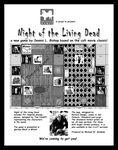
Quick clarification we have to make every time we talk about this game. The CMON Deceased core box and the Spin Master Gotham City Outbreak are two separate products. Gotham City Outbreak uses standees for its zombie hordes and bystanders rather than full plastic miniatures, though the hero characters themselves do come as full miniatures. It also only supports up to four players rather than the full six of the CMON box. Don't confuse them at retail. 12th feels right to us as a placement, but we'll happily revisit if our impressions sharpen with more sessions. We're not condemning it, we're being honest about where our experience currently sits. 11th place, Night of the Living Dead from 2020. This is the most intentionally humble game in the entire franchise, and I love it for that. It knows exactly what it is. Based on the Romero 1968 film, and they stripped the system down deliberately. There are no runners and no abominations in this box.
The enemy roster is walkers, fatties, and two new types unique to this game called relatives and breakers. The relatives mechanic is genuinely clever IP integration. Two bright red miniatures representing Karen and the brother of one of the player characters. When either relative appears on the board, every survivor currently in Zombicide mode immediately reverts to Romero mode, weakening the entire team regardless of where they are on the board. All survivors switch back to Zombicide mode only once the board is completely clear of relatives. That ties directly into the source material in a way most franchise IP integrations don't manage. The item decks are also split by region, so you had to specific areas of the board for firearms versus melee weapons versus common items. Theme and spatial strategy at the same time. And the player count handling is unique. Regardless of how many of you are at the table, all six characters are always in play. Solo player controls all six. Two players each take three. It serves the narrative logic of the film perfectly. The weakness, and it's the reason we land this at 11th, not higher, is that the deliberate simplification works beautifully for new players and film fans, but as veterans, we want more challenge and depth than this box delivers. It's an entry-level experience by design, and that's a feature for one audience and a limitation for another.
10th, Marvel Zombies from 2022. One of the most creative departures from the standard formula in the franchise's history. $9 on Kickstarter, just under 29,000 backers. The hype was real, and the game delivers something genuinely different.
You play as zombified Marvel heroes. Iron Man, Captain America, Hulk, Wasp, Captain Marvel, and Deadpool, all flesh-eating undead versions of themselves. The two mechanics that define the box are devour and gain zombie trait. Right, and rather than searching for weapons and equipment like in traditional Zombicide, our zombie heroes use the gain zombie trait action to pick up special abilities. The devour action feeds into the hunger system, which is the real engine here. Hunger levels have to be managed alongside health, and higher hunger makes our zombie heroes more powerful in combat with additional attack dice. Constant tension between feeding and restraint. We loved that loop. One to six players, 10 missions plus a tutorial. But here's why it's 10th and not higher.
24 of the 140 cards in the box are not usable without X-Men Resistance. The base box feels like half of a larger vision rather than a fully self-contained statement. We had a great time, but we kept noticing the gaps. Ninth, Invader from 2019, the franchise's first sci-fi entry. Zombie apocalypse formula in space, replacing undead humans with alien xenos on a distant planet. Survivors search for high-powered fuel. The mechanical changes are meaningful. Firearms with specific energy cell requirements, different visual language than anything in the Black Plague line. One to six players. Production quality is strong throughout. But here's the unavoidable comparison. Its companion standalone, Dark Side, released the same year and executes the sci-fi concept more distinctively. Invader plays like Zombicide in space. That's accurate, and that's also the problem. Dark Side has a visibility mechanic that meaningfully changes how encounters play out on every map tile. Invader doesn't have a differentiating hook of equivalent strength. It's a competent and enjoyable game in its own right, but when two games in the same setting and system release at the same time, and one of them has a more distinctive mechanical identity, the other inevitably suffers in direct comparison. Eighth, Army of the Dead from 2024, based on the Zack Snyder Netflix film. When we first heard this was coming, we were skeptical. The IP isn't exactly board game royalty. But the mechanics, the mechanics are what put this at eighth. The sleeper mechanic
is the most distinctive innovation in this box, and arguably in the franchise's 2024 output overall. Tokens placed face down across the map representing dormant zombies who only awaken when triggered. Noise in an adjacent zone, other zombies moving in, or player characters without the stealth ability moving through their space. Suddenly, threat mapping is completely different. You're navigating a board full of potential threats you can choose to avoid or deliberately activate.
The personal motive system is also strong. Mandatory individual side quests on top of the standard mission objectives. If a character with a personal motive dies, that objective cannot be completed, which ties character survival directly to mission success. Our tactical priorities shifted in ways no other Zombicide game pushes. And the vault board, accessible via a lift space and functioning as a separate physical level of the map. Genuine multi-floor element that no other game in the modern setting provides. We loved working through that. The criticisms are real, though. This game is very tough. First scenario failure is genuinely possible. We failed our first attempt, and we've put serious time into this system. Combine that with a niche IP that doesn't have mainstream board game audience recognition, and it stays out of the top half despite the freshness of the mechanics. Seventh, Dark Side from 2019, the better of the two 2019 sci-fi standalones, and we're confident in that placement.
that defines this game is the visibility system. Map tiles split between lit interior areas and perpetually dark exterior areas. In the dark, line of sight is dramatically reduced, which renders most ranged attacks useless. We had to use skills and item cards that illuminated areas or granted night vision to regain ranged effectiveness. That forces a different risk-reward calculation than any other Zombicide setting. Going into the dark is often necessary for mission progression, but doing so without the right tools leaves your team vulnerable in tight quarters with no ability to shoot your way out. Characters in Dark Side also have multiple life points and armor, so they can absorb more punishment than in most other entries. The critical trade-off is that losing a single character ends the game. No heroic sacrifice possible.
Which is one of the defining emotional moments in other Zombicide titles. So, removing it changes the texture of every late game scenario. Some groups will love it, some will find it more frustrating than exciting. Seventh, because the innovations are real and it stands well as an entry point, but the sci-fi setting has a smaller audience ceiling than fantasy or modern. Sixth, X-Men Resistance from 2023. For us, this is the more cohesive of the two core Marvel Zombies boxes. You and I disagree on which Marvel Zombies game is the better individual experience. We do. I lean a little more toward the original Marvel Zombies for the sheer novelty of playing as the zombies, but on a pure standalone basis, X-Men Resistance is the tighter game. Six playable heroes, Magneto, Wolverine, Rogue, Storm, Mystique, and Colossus. The X-Mansion tile set creates a modular environment across 10 missions that span the ground floor, student dorms, and underground X-Men facilities. The heroic trait system replaces the standard search action with single-use ability cards that augment heroes in ways tied to the source material. The bystander system is what really clicked for us. Non-player characters scattered across the map grant permanent abilities when rescued.
So, the mission objectives feel genuinely consequential rather than arbitrary collection tasks. We rescued one bystander in an early mission and it changed our entire approach to the next two scenarios. The threat distribution is also unusual. Six zombie hero opponents in the box, which is more boss-level enemies than most Zombicide games ship within their base box. The texture is very different from a walker-heavy spawn deck. The case against it as a standalone is that hero mode here is closer to standard Zombicide than the zombie playing mode of the core Marvel box. So, the mechanical differentiation from the rest of the franchise is less dramatic. But, the IP recognition, the production quality, and the genuinely satisfying tactical challenge place it meaningfully above its companion box for us. Fifth, White Death from 2024.
The third game in the fantasy Zombicide setting. We knew the design team had to do something fresh to justify a third fantasy entry and they delivered. Tower defense element built directly into the scenario design. Set in the frozen medieval city of Wintergrad, the game introduces fortress walls and ramparts as permanent map features. We scaled the walls to reach elevated positions with superior line of sight across multiple zones and that single addition changes the spatial calculus completely. Cauldrons positioned on the ramparts poured onto zombie-filled zones below, one of the only area-clearing tools available in the base box. Guards included as non-player units that we commanded using our actions, which adds a resource management layer absent from earlier fantasy games. The Defiler Necromancers are the new enemy type and they're brutal. They spread corruption by physically moving their spawn point location toward a beacon on the board and if the corruption tiles reach the beacon, the game ends regardless of other mission status. Race against the clock condition that no other Zombicide base game uses as its primary loss state. Honest critique though, sessions consistently ran longer than the 1-hour estimate on the box. Our first taught game ran 4 and 1/2 hours including setup. That's a real commitment. And while the innovations are genuinely fresh for the franchise, the game remains fundamentally predictable at its core. Groups not already invested in the fantasy line might not find sufficient differentiation from what ranks above it. Fully compatible with Black Plague and Green Horde though. So, for existing fantasy collection owners, this is close
to essential. Fourth, Green Horde from 2018. The direct sequel to Black Plague. This is where the fantasy line really proved itself because instead of just re-skinning Black Plague, the design team took the system and made it harder. Orc Walkers deal two damage per hit. Orc Fatties and Abominations deal three damage per hit compared to one damage per hit from all zombie types in Black Plague. That single change escalates the difficulty in a way that demands better cooperative coordination and equipment planning. The horde mechanic is the other major addition. Cards drawn during the zombie spawn phase can trigger a horde arrival that places large numbers of zombies suddenly and without warning or can resolve without spawning anything at all. Much swingier than Black Plague. We had a horde land at yellow danger level that placed 12 zombies within one zone of our survivors. Total chaos. We barely escaped that scenario. Black Plague is slightly more accessible.
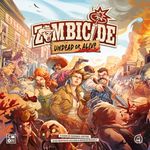
Green Horde is a great game that adds meaningful tweaks and is definitely harder and more punishing of sloppy or reckless gameplay. Fourth, because Black Plague is the stronger standalone entry point and because Green Horde's improvements are additive rather than transformative. As a second purchase for existing Black Plague owners, it's close to essential. As a first purchase, it's excellent, but slightly less forgiving for new groups than what's coming up next. Third, Undead or Alive from 2022. Wild West setting. The most mechanically streamlined Zombicide base game in the franchise's history and that streamlining cuts in multiple directions at once. Four survivor classes, Brawler, Faithful, Gunslinger, Townsfolk. Brawlers start with three health points and have a charge action that moves them up to two zones with a free melee attack included. We had a brawler clear three zones in one turn during one of our scenarios. The faithful class can use regular water from the equipment deck as holy water. They've also got the evade retro ability once per turn to prevent a zombie group from activating during the following zombie phase. Genuinely game-changing in tight moments.
Gunslingers fan their revolvers in a burst of simultaneous fire. Townsfolk perform as many search actions as they want per turn and can trace line of sight through more than one building zone, which no other class in any Zombicide game can do. These classes create more mechanically distinct character identities from the opening setup than any class-free Zombicide game achieves. We've never had this much immediate role differentiation in a Zombicide box. Buildings have no doors in this version. Entering a building activates a corpse pile inside it, which immediately becomes a new spawn point. So, progression into buildings actively opens new threat vectors behind and around your team. The double-sided train tiles can be flipped to simulate a train moving onto or off the board, smashing zombies in their path and arriving with additional enemies. We had a train arrive at exactly the wrong moment and it was the most cinematic Zombicide moment we've ever had. This is also the most difficult Zombicide game in the franchise. We've had experienced groups failing missions they could reliably complete in second edition 90% of the time. Brutal in every sense of the word.
Third, because its difficulty, while exciting for experienced players like us, creates a steeper barrier for new groups than what we have in second and first place. The Wild West setting also has a more limited appeal ceiling than the top two. Second, Zombicide Second Edition from 2021. The definitive modern Zombicide experience. This is what the original urban zombie apocalypse setting always wanted to be. Released in 2021, taking the original urban zombie apocalypse setting and applying more than a decade of franchise learning to every system in the box. The core mechanical change is the adrenaline points system, which replaced the experience track from the original games. Each zombie kill generates adrenaline points that unlock skills and abilities while at the same time attracting greater zombie numbers. A dynamic power escalation arc and the feedback loop between growing stronger and becoming a bigger target captures the tone of the source material more precisely than anything season 1 through 3 ever achieved.
12 survivors to choose from in the box. Immediate variety on repeat plays without any additional purchase. Updated map tiles designed for faster setup. Plastic dashboards replace the card-based trackers from earlier releases. Every quality of life improvement you'd want. Honest critique though, the difficulty calibration leans heavily towards accessibility over challenge. We've reliably completed Second Edition missions at a success rate that felt almost too high. Groups who want a brutal challenge will find Undead or Alive more satisfying. But, that's the accurate trade-off. Second Edition is the most polished, most accessible, and most consistently enjoyable entry in the modern setting. The single best recommendation for a group that has never played Zombicide before and wants the modern urban setting. The most universally recommended entry point in the franchise outside of Black Plague itself. Which brings us to first place, Black Plague from 2016. Black Plague is where the Zombicide formula reached its fullest expression for the widest range of players and the consensus in our group and in every group we've introduced to the franchise has consistently reflected that. The move to medieval fantasy was not purely cosmetic. The addition of Necromancers changed the tactical calculus in a way no earlier game had achieved. Necromancers can be killed by any standard weapon. They only require one damage to eliminate, the same as a walker, but they try to flee the moment they appear, moving toward spawn zones and placing new spawn tokens as they go.
The game is immediately lost if enough of them escape. Once there are six spawn tokens on the board. That means leaving a Necromancer alive and unchecked is a losing strategy. Tracking and eliminating them while managing regular Zondy hordes and advancing towards mission objectives creates a layer of priority management that was completely absent from every original era Zombicide game. Three access decision-making at all times. The armor mechanic added a defensive consideration to equipment selection that the modern setting never quite captured at the same level. The updated targeting rules made ranged combat more forgiving when friendly characters occupy the same zone as enemies, so the panic of accidentally shooting your teammate eased without removing tactical positioning concerns.
71 miniatures in the base box, nine terrain tiles, component quality stepped up significantly from original era Zombicide, and a decade later it still holds up on the table. For more than a decade since release, Black Plague has been the most consistently recommended starting Zombicide game across every group we know. The game you buy first, the game that hooks your group into the franchise, and the game that still holds up every time it comes off the shelf. Nothing in the franchise since then has replaced it as the consensus best single box Zombicide experience. Not second edition, not Undead or Alive, not Green Horde, not White Death. Every contender came close, and Black Plague still earns the top spot. If you're new to Zombicide and you [clears throat] only buy one box ever, this is the one. If you've been playing for years and somehow skipped this one, fix that. If you already own it, you already know. That's our list, 15 rankable Zombicide base games. Our honest assessment from worst to best.
We'd love to hear which placements you'd argue with, which games we shortchanged, and where your own group would shake up the order. Until next time, keep your weapons close and your spawn points closer. And maybe save your adrenaline points for when you really need them.