



Chronicles of Drunagor: Age of Darkness Deep Dive
What the Community Thinks About Chronicles of Drunagor: Age of Darkness
Chronicles of Drunagor: Age of Darkness occupies an interesting position in the dungeon crawl space. Tom Vasel of The Dice Tower praises it as a "fun, almost Euro style game" that blends traditional dungeon crawling mechanics with cleaner, more streamlined design sensibilities. The game has earned recognition for its tactical depth and family appeal, with reviewers noting that both casual players and experienced gamers find value in its scenario-driven progression. The consensus leans toward enthusiasm, though with measured acknowledgment that component quality and rule complexity present trade-offs for players who prefer elegant simplicity.
Core Mechanics That Define Chronicles of Drunagor: Age of Darkness
Escalating Difficulty Through Rune Tokens
Chronicles of Drunagor uses a rune-based system on an initiative track that fundamentally shapes each encounter. As runes accumulate throughout combat, they increase enemy power and complexity. Minions scale their movement, range, and attack damage directly based on the number of runes present, meaning early-round decisions have compounding consequences. This creates a ticking-clock tension where players must balance defeating threats immediately against the mathematical escalation of power occurring on the board itself. Boss encounters exemplify this design, with enemy attack cards referencing rune counts to determine damage output. The system ensures that no two scenarios feel identical, as the rune composition shifts what enemies are capable of in any given round.
Boss Encounters as Campaign Pinnacles
Boss fights in Chronicles of Drunagor are structured as self-contained adventures within scenarios. The Undead King, for instance, operates under completely different rules than standard enemies. Boss stat boards track immunities (such as immunity to knockdown, intimidation, or stealth), special abilities, and health pools that scale with player count, reaching into the hundreds in multiplayer sessions. Bosses draw from special attack decks during their turns, with cards that can manipulate board state, summon minions, or inflict persistent effects like curses. These encounters demand sustained tactical planning rather than mechanical routines, forcing players to commit resources strategically because retreat is not an option. The design philosophy treats boss battles as climactic moments that require table discussion and careful coordination.
The Chronicles of Drunagor: Age of Darkness Experience
Strategic Depth Dressed in Thematic Combat
Chronicles of Drunagor delivers the feeling of a tabletop fantasy campaign compressed into a contained, scenario-based format. The game balances mechanical decision-making with thematic immersion through its use of "mini events" that punctuate scenarios. Reviewers appreciate how the game layer mechanics without overwhelming players; Tom Vasel describes it as "almost Euro style," suggesting that resource management and positioning puzzles take precedence over random chaos. Each turn involves calculating damage mitigation, deciding which enemy to prioritize, and anticipating how rune escalation will reshape the tactical landscape. The experience appeals to players who want their dungeon crawling to reward planning over luck.
Tension from Escalating Darkness and Corruption
The game's darkness and corruption mechanics create mounting psychological pressure. Darkness tokens accumulate throughout scenarios, representing the corruption or environmental hazard closing in on the party. Characters can become cursed, adding persistent challenges that force adaptation. Certain boss mechanics directly exploit this system, such as requiring players to choose where they are thrown into darkness pools when pushed by the Undead King. The experience of playing Chronicles of Drunagor oscillates between moments of control (when players optimize their turn) and moments of cascading adversity (when damage, curses, or boss actions cascade). This rhythm keeps sessions engaging despite the inherent predictability of scenario structures.
What Makes Chronicles of Drunagor: Age of Darkness Stand Out
Hybrid Design Marrying Dungeon Crawl Flavor to Euro Sensibilities
Most dungeon crawlers prioritize thematic narrative and random encounters. Chronicles of Drunagor inverts that priority; it uses theme to flavor a fundamentally strategic game built on tight mechanical interactions. The rune escalation system, the boss stat mechanics, and the scenario scaling all reflect Euro-game design principles where player decisions are rewarded and randomness is constrained. This approach means that the game respects player agency in a way traditional dungeon crawls often do not. Reviewers consistently note that the game feels fresh within the crowded dungeon crawler category precisely because it refuses to anchor itself to either extreme.
Cinematic Boss Moments That Reward Cooperation
Boss encounters in Chronicles of Drunagor are designed as table events. The Undead King's "first appearance" teases the final antagonist early on, creating narrative beats that feel orchestrated yet tactically demanding. Bosses have unique attack decks, immunities that force players to adapt their typical strategies, and abilities that reshape the board itself. When a boss card reads that the Undead King "jumps to the strongest hero's area and throws characters into darkness pools," the moment hits as both tactical consequence and dramatic flourish. This design ensures that campaign progression feels like confronting increasingly powerful foes rather than replaying the same mechanics with new stat blocks. The game demonstrates that mechanical depth and thematic payoff can coexist in cooperative dungeon crawls.
Potential Drawbacks
Component Quality Inconsistencies
Chronicles of Drunagor ships with mixed physical quality. Miniatures are detailed and paintable, with reviewers noting that custom painted figures elevate the visual presentation significantly. However, scenario map tiles are notably flimsy, described as "uninspired components that don't fit the rest of the game's quality" and "lazy and cheap." The boss health tracking mat, in particular, requires workarounds to prevent it from sliding or falling when players place cubes or reach across the table. While the game is fully playable with these components, the disparity between excellent miniatures and subpar materials can detract from the atmosphere during extended play sessions. Players accustomed to premium component standards (such as those in games from Awaken Realms or Leder Games) may find the production quality underwhelming for the game's price point.
Rules Density and Scenario Learning Curve
Chronicles of Drunagor employs a substantive rulebook covering multiple subsystems: rune scaling, minion activation, boss card mechanics, darkness tokens, curses, and scenario-specific special rules. While individual mechanics are learnable, the cumulative complexity means that setup and early rounds require frequent reference to the rulebook. Boss encounters add an additional layer; the Undead King's special rules, immunities, and attack card sequences must all be mastered before that fight feels smooth. First-time players often require a dedicated teacher and tolerance for rules lookups. The game is not pick-up-and-play, which may exclude casual players or those with limited rules comprehension. Scenarios are designed to build complexity, so early scenarios are more forgiving, but campaign progression demands investment in learning the full rule set.
If You Enjoy Chronicles of Drunagor: Age of Darkness
If Chronicles of Drunagor resonates with you, consider exploring Gloomhaven, which shares the scenario-driven campaign structure and cooperative tactical positioning, though Gloomhaven emphasizes hand management and character ability cards over rune escalation. Descent: Journeys in the Dark offers a competitive dungeon crawl with similar boss encounters and miniature-centric combat, though with an adversarial structure rather than full cooperation. Cthulhu: Death May Die delivers escalating horror and boss-centric gameplay in a smaller footprint, ideal if you prefer shorter sessions with high-stakes confrontations. Ardia and Wrath of Shardon provide thematic dungeon crawling experiences for groups seeking alternatives within the same genre. Finally, if you desire the Euro-game mechanics without dungeon crawl trappings, Dungeons and Dragons board game adaptations and Gloomhaven variants offer campaign arcs with tactical depth.
What Reviewers Are Saying
This is a fun, almost Euro style game in which you're going through a dungeon crawler, but I do like some of the mini events that happen in it. Me and the kids enjoyed it.
— Tom Vasel, The Dice Tower
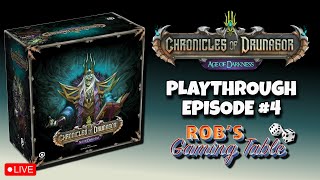
So, the undead king has 30 health per player. Usually, a boss has a huge health pool since their encounters are almost an adventure of its own. So, guess we're going to do it today all in one episode. It's going to be its own adventure. So good thing we saved it for its own little highlight here, I guess, and not just rush it at the end of a previous episode.
— Rob's Gaming Table
Minions, sorry, do not have a color as white, gray, or black, and this can be relevant for some effects. Apart from this, minions are just like any other monster. It has X movement, its range, and X attack, where X equals the amount of runes on the initiative track. So if we have three plus red runes on the track, which we have exactly three, so this sucks. These minions are move four, range one, damage three.
— Rob's Gaming Table