



Dark Tomb: The Ice Chasers Deep Dive
What the Community Thinks About Dark Tomb: The Ice Chasers
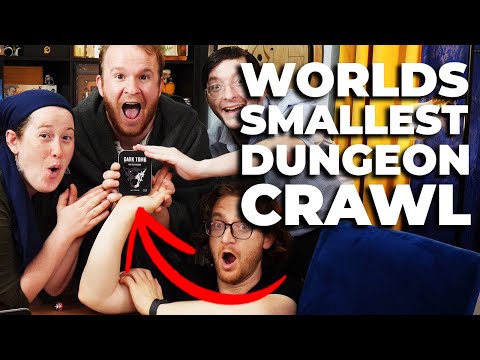
Reviewers agree that Dark Tomb: The Ice Chasers, the third entry in the Dark Tomb series from Cause Games, packs a full dungeon crawl into a very small box. Quackalope presents it as a pocket-size RPG that a group can teach in about an hour and still remember afterward. Getting Games takes a more instructional approach, walking through a full three-player game on Stage Two and explaining each rule as it comes up. Both channels describe a fully cooperative game in which the party wins as long as one character survives, and Quackalope's rules overview notes that the game supports one to five players, with a fifth player running the monsters.
Where reviewers diverge is on balance. Getting Games says the copy they played is a prototype, and that the designer has described the current version as leaning slightly on the easier side. Quackalope's four-player session was considerably harder for the party, with the first monster turn claiming a sidekick and a later revive attempt failing. Readers should note that Quackalope's videos share a single channel perspective, and that one of them is a sponsored Kickstarter preview that the host disclosed at the start. Getting Games offers a distinct outside perspective.
Core Mechanics That Define Dark Tomb: The Ice Chasers
Line of Sight and Curved Attacks
Getting Games explains that line of sight is drawn from the center of one character's space to the center of the target, and that any wall crossing that line blocks the shot. The rounded corners of the walls matter. A line that only grazes a corner still gets through, which the host demonstrates with the hero Osh before a ranged attack. Line of sight passes through characters and enemies alike, so an ally standing in the path does not stop a shot. Some attacks ignore the rule entirely. Dalia's sickle throw counts range around a wall instead of through it, and the monster Zorn attacks around corners without needing a clear line at all. Quackalope's four-player session describes the sickle throw as "like a boomerang" and makes the same point about corners. Positioning in this game is therefore as important as the dice, because a character can be out of sight of one enemy while another still has a clean angle.
The Stage Turn and Monster Behavior
After every player has taken a turn, the game runs a stage turn. Getting Games describes the sequence: the party rolls a D20 for a seismic event, where a 19 or 20 deals one damage to every character, and then each revealed monster moves and attacks in left-to-right, top-to-bottom order. Monsters pick their target by moving toward the character furthest to the left, with ties broken by the topmost position on the map. Monsters ignore black ice, which slows heroes, and a monster that rolls very poorly on an attack flees four spaces away from the party. The stage turn also works as a clock. Because the seismic event fires after each round, slow play raises the risk that an earthquake wipes out the group, so Getting Games pushes forward rather than waiting for a perfect setup. Tactical decisions often come down to predicting which character a monster will target.
The Dark Tomb: The Ice Chasers Experience
Precarious Tension
The most consistent feeling in the reviews is tension. Health totals are small: Dalia starts with seven, and two monster hits can knock a character out. Getting Games observes that heals are very rare in Dark Tomb, and that healing items do not appear in the stage they played. Quackalope's session shows the same pressure, as the party loses a sidekick on the first monster turn and a revive attempt fails on a roll of nine. Each stage reveal can add a new monster or a new threat, so the party feels that every decision carries a cost. The reviewers describe the result as less a puzzle to solve than a survival problem to manage one turn at a time.
Shared Table Storytelling
The second feeling is the conversation the game generates. Quackalope describes the four-player session as "a surprising amount of fun for how simple and how small it is," and the Kickstarter preview host says the group still remembers stories from the session. Players argue over who should grab items, debate whether to revive a fallen sidekick, and tease a party member who keeps sprinting toward loot. Quackalope even suggests that the box could work as a pocket-size one-shot with one player acting as dungeon master. The outcome feels closer to a tabletop RPG session than to a tactical skirmish, and that narrative quality is what reviewers keep returning to.
What Makes Dark Tomb: The Ice Chasers Stand Out
Interchangeable Heroes Across the Series
Reviewers consistently praise how the series connects. Getting Games notes that every game in the series uses the same core mechanics and that heroes from one game can be used in any of the others, so owning one box does not lock a player into one party. The Kickstarter preview from Quackalope confirms that the heroes from the earlier game can be used in the Ice Chasers scenarios, and recommends grabbing the whole series because the parts are interchangeable. Quackalope's gameplay video also floats the idea of a small linking expansion, with an inn-like location that carries the narrative from one scenario to another. Reviewers treat the interchangeability as a reason to build a collection rather than start fresh with each release.
A Full RPG Experience in a Pocket-Size Box
Reviewers also praise how much fits into a small package. Quackalope calls it "the smallest little dungeon crawl" they have seen, and notes that a custom dice tower made with Wormwood fits in a pocket alongside the rest of the components. The Kickstarter preview highlights that the rule system is approachable and that the game holds up at four players, a count the reviewer had not expected from a game of this size. The trade-off, which Quackalope mentions, is that the map tiles slide around on a hardwood table, and the group wished for a wooden grid to hold them in place. Even so, reviewers consider the portability a major part of the appeal.
Potential Drawbacks
Prototype Balance
Getting Games is candid that the version they played is still being tuned. The designer has described the game as leaning slightly on the easier side, and the host notes that some weapon numbers were a little too strong. Quackalope's experience pointed in a different direction for solo play. One player who had tried only the first stage found the solo scaling forgiving, while another expected a solo game to be much harder than the four-player session. Reviewers agree the balance is not finished, and that the feedback from the prototype stage will likely shape the final numbers.
Scarce Healing and High-Variance Rolls
Getting Games points out that heals are very rare and that items are the main source of healing, so a party that has not found a healing item must avoid damage entirely. Revives are a high-stakes gamble. Quackalope's group noted that reviving a sidekick requires a roll of 15 to 20, and that a poor roll brings the sidekick back as an enemy instead of an ally. The group joked that a bad revive roll could end the game. Because a single missed attack or a critical miss can leave a character exposed on the next monster turn, the combination of scarce healing and dice-driven outcomes places the burden of risk on the players' planning.
If You Enjoy Dark Tomb: The Ice Chasers
Players who enjoy the shared danger and the loot-driven party in Dark Tomb: The Ice Chasers will find similar satisfaction in Gloomhaven. Quackalope names it as a dungeon crawl they play regularly, and it offers the same sense of a party moving through a narrative while picking up items along the way. The most direct pocket-size comparison is Tiny Epic Dungeons, which Quackalope owns and rated below Dark Tomb in their session. Players who want the big-box version of an immersive dungeon experience may prefer Kingdom Death: Monster, which Quackalope describes packing for trips because of its full immersive feel.
What Reviewers Are Saying
"Remember, the goal of this stage is to defeat all of the monsters, and the slower we go, the more likely it is that we'll get hit by this seismic event that happens after all players take a turn. If we wait too long, this could wipe us out."
— Getting Games
"This was a surprising amount of fun for how simple and how small it is. I really like this. I can see my wife playing this possibly."
— Quackalope
"That four player gameplay took about an hour to teach, run, and fully immerse an experience. I still remember stories from it that I could share right now, and that's the good part of an RPG."
— Quackalope