/pic5374175.jpg)



Golem Deep Dive
What the Community Thinks About Golem
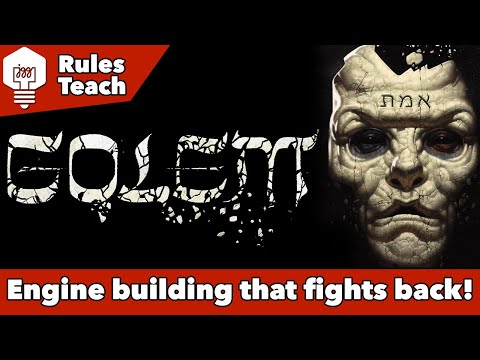
Golem draws reviewers who already know their way around dense Euro design, and the reaction across those channels lands somewhere between admiration and exhaustion. Chairman of the Board calls it "a very crunchy Euro" and "a true brain burner," rating it highly while admitting it sits outside their personal favorites because of how much work the tile interactions demand. The Broken Meeple went in wary of another "heavy dry themeless Euro," having a rocky history with the same design team's Lorenzo il Magnifico, but came away recommending Golem to anyone into Cranio Creations games, landing on a solid eight out of ten. BoardGameBollocks is the most ambivalent of the group, calling the whole package "a really strong strange beast" that establishes its own identity through its marble-based action selection, while still concluding it is "just another Euro" underneath. Where the channels agree is that Golem is not a casual pickup: it rewards a group willing to sink into its systems and punishes anyone hoping for a light night. Where they split is on whether that density is a compliment or a complaint, with Chairman of the Board and The Broken Meeple leaning toward praise for the design and BoardGameBollocks leaning toward fatigue with the genre it represents.
Core Mechanics That Define Golem
Marble Drafting from the Synagogue
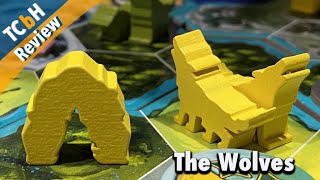
Each round, players draw colored marbles from a three-dimensional synagogue structure and place them on action tiles to determine what they can do. BoardGameBollocks explains that players get two marble drafts and one worker-placement rabbi action per round, and that the color of a drafted marble decides which colored student can advance, while the number of marbles stacked in a slot decides the strength of the action itself. Chairman of the Board notes the mechanism is recycled from the same design team's Grand Austria Hotel, where dice took the place of marbles, and singles out the physical synagogue as a weaker randomizer than a simple die because how it is shaken affects the spread of colors that come out.
Golem Movement and Control
Golems advance on their own down one of three colored streets whenever a player takes the Golem movement phase, and students have to keep pace with them or the player pays a knowledge penalty, or worse, loses victory points if a Golem gets away entirely. The Broken Meeple describes the system as "an intriguing innovation in worker placement where your golems will move of their own free will and you have to essentially catch up with them in order to keep the maintenance under control or kill them off before they get out of control." BoardGameBollocks frames the same tension more bluntly, warning that letting a Golem run unchecked is asking for trouble, and that killing one off for its bonus before it crosses the final threshold is often the smarter play.
The Golem Experience
Fast Turns, Heavy Thinking
Despite the density of options, BoardGameBollocks reports that individual turns move quickly: a marble pull, a tile flip, a token moved, and the turn is over, which keeps the table from stalling even in a game "of this complexity." Chairman of the Board frames the deeper experience differently, describing a fine line between clever design and busywork, where stringing tile upgrades and resource reserves together into a combo "is just an absolute brain masher" that can start to feel like work by the end of a round.
Long Sessions and a Demanding Solo Mode
The Broken Meeple clocks real playtime at closer to two and a half hours with a full table, even though the box states two hours, and calls the rulebook's separate solo variant "very fiddly for your first game" because of a priority chart governing exactly how the Golem AI moves and collects resources each turn. That same reviewer found the solo mode gets noticeably faster on repeat plays and, once past the learning curve, holds up as a convincing stand-in for a multiplayer opponent.
What Makes Golem Stand Out
Scoring Tied to Every Upgrade
BoardGameBollocks highlights the upgrade system as a favorite, pointing to the marble upgrade in the artifact track that links a resource action directly to a bonus every time that marble color is drafted, calling the pairing of point scoring and boosts "a nice tasty opportunity." Chairman of the Board echoes the praise for the broader scoring structure, saying they "love this actual scoring system" where developing knowledge, Golems, or artifacts each reveal menorah symbols that multiply into bigger end-game totals depending on the strategy a player commits to.
A Genuinely New Worker-Placement Twist
What both Chairman of the Board and The Broken Meeple single out is that the Golem-chases-itself structure is not a reskin of a familiar system. Chairman of the Board says outright that "not many games, if any games, apart from Grand Austria Hotel" have attempted the marble-strength mechanism Golem builds its actions around, and The Broken Meeple frames the Golem-catching tension as the game's most memorable idea, the piece that keeps it from blurring into the pile of similar-looking heavy Euros on a shelf.
Potential Drawbacks
Iconography Overload
Both reviews that spend real time with the rulebook single out the icon load as the sharpest edge of Golem. Chairman of the Board says the symbology "can be a little bit overwhelming at times" and "a little bit inconsistent as well," pointing to a worker-placement spot whose icon does not match the symbol used everywhere else for the same action. The Broken Meeple goes further, calling the appendix "six or seven pages" of ability references and adding there is no dedicated reference sheet for players to keep at hand, only a small round-order card that covers a fraction of what a table actually needs mid-game.
Thematic Disconnect and Downtime
BoardGameBollocks is the most pointed critic of Golem's theme, arguing the whole package is "just a bunch of tracks" dressed up with a marble synagogue that "thematically... doesn't make any sense," and separately flags the passing mechanism as confusing enough that they had to watch outside videos to understand it. The Broken Meeple raises a related concern about table dynamics: pulling off a long combo chain is satisfying for the active player, but "while you're doing that everybody else is kind of on their mobile phone or twiddling their thumbs," and the potential for analysis paralysis grows with every player added.
If You Enjoy Golem
The Broken Meeple places Golem on the shelf next to Newton and compares its punishing streak favorably against two other Cranio Creations titles, finding it "doesn't feel anywhere near as punishing as something like Lorenzo il Magnifico or Barrage," both of which that reviewer holds a rockier history with. Chairman of the Board draws a direct mechanical line to Grand Austria Hotel, noting Golem's marble synagogue reworks that earlier game's dice-based action selection into a physical randomizer. BoardGameBollocks hears echoes of two other titles in Golem's systems, likening the track-heavy scoring to Terra Mystica and the marble-pulling itself to Potion Explosion.
What Reviewers Are Saying
"The upgrade system not only gives you a lot of point scoring opportunities but also gives you loads of little boosts. One of our favorite upgrades is the marble upgrade in the artifact section. You can upgrade one of these, you place the tile on one of the spaces, and this means that whenever you take a red or a blue marble, depending on what side of the tile you put it on, you're going to be able to activate that bonus every time you do it. The fact that the point scoring and the bonuses are linked together, it's a nice tasty opportunity."
— BoardGameBollocks
"I actually love the mechanism itself, it's really cool, and again not many games, if any games, apart from Grand Austria Hotel have ever done that, and however, I do think the actual physical component of the synagogue isn't quite as functional as just a simple D6."
— Chairman of the Board
"It's a big pro, the tactics and strategy element of this game is where it shines at its best. It doesn't feel anywhere near as punishing as something like Lorenzo or Barrage, the two games from Cranio that I don't like."
— The Broken Meeple