










Chicken Fried Dice Deep Dive
What the Community Thinks About Chicken Fried Dice
Chicken Fried Dice has struck a chord with board game reviewers and players alike, praised for its fresh approach to a familiar genre and its infectious, high-energy gameplay. The game's name itself has become a point of pride, with reviewers noting how perfectly it captures the experience of the game. Beyond the clever branding, the community has responded enthusiastically to the simultaneous play mechanics, the engaging theme of running food trucks, and the accessible yet deep strategic options available to players. From casual family gamers to dedicated hobbyists, Chicken Fried Dice has proven to be a game that delivers both fun and substance.
Core Mechanics That Define Chicken Fried Dice
Real-Time Dice Drafting and the Chuck and Pluck
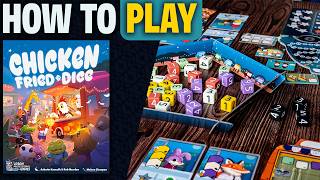
At the heart of Chicken Fried Dice lies a mechanic that distinguishes it from traditional roll-and-write games. Players simultaneously roll ingredient dice into a shared pool at the center of the table, then rapidly pluck dice one at a time to fulfill customer orders on their individual sheets. This shared-pool drafting creates a tangible sense of competition, as the best dice disappear quickly and players must think on their feet. What makes this mechanic particularly elegant is that it never feels brutally punishing. Even if a player misses out on the exact ingredient they wanted, the game provides multiple paths forward through the truck manipulation tools. The head chef role adds thematic flavor to the prep phase, where one player arranges rolled dice that determine which ingredients everyone receives that round, creating an interactive moment where players respond in unison.
Truck Manipulation and Combo-Driven Development
Each player operates a food truck with multiple stations that transform dice into usable ingredients. The sauce station allows players to change a die's color to match different ingredient needs, the wok station lets them re-roll a die, and the chop station is particularly powerful, enabling players to split a single die into smaller values. These stations aren't static across the game; they upgrade as players earn tips from satisfied customers, becoming more flexible and powerful as the game progresses. Urban Professional Games designed this escalating capability so that early investment in the tip track pays dividends later. The combo-driven nature of the game shines when fulfilling one customer unlocks bonuses that advance players on bonus boards, which then grant additional abilities that complete further orders. This cascading effect of building momentum through strategic choices creates a satisfying progression arc that keeps players engaged across all five rounds.
The Chicken Fried Dice Experience
Chaotic Fun That Never Feels Punishing
The game generates deliberate stress and chaos as a core emotional experience. When all players simultaneously roll dice and begin plucking from the shared pool, the table becomes a flurry of activity and noise. Yet this chaos is carefully balanced so that players never feel completely out of control or shut out. The abundance of dice manipulation options means that even when a player fails to grab the specific ingredient they hoped for, creative use of their truck can still deliver a viable strategy. Reviewers repeatedly emphasize that the stress of the simultaneous turns is not anxiety-inducing but rather a source of genuine joy and laughter. The game moves at a brisk pace precisely because everyone is always acting, eliminating the downtime that plagues many other roll-and-write games. This creates an experience where the table energy remains high throughout.
Thematic Immersion and Player Agency
Chicken Fried Dice excels at making players feel like they are running their own food truck competing at a festival. The game begins with the seemingly simple decision of naming your truck, an act that immediately roots players in their role and invites creativity and humor to the table. Each customer card is filled with personality, giving players a sense of serving recognizable individuals rather than abstract point-scoring targets. The customer queue mechanic creates meaningful tension, as impatient customers will leave if not served, stripping away the bonuses they would have provided. This forces players to balance the desire to execute the perfect combo against the practical need to keep customers satisfied. The result is gameplay where decisions matter both mechanically and narratively, with every choice contributing to a satisfying story of food truck entrepreneurship.
What Makes Chicken Fried Dice Stand Out
Remarkable Variety Built Into a Single Box
The designers packed substantial replayability into Chicken Fried Dice through multiple approaches. The player boards are double-sided, offering two distinct playing modes: a track-advancement side that appeals to players who love moving tokens down progression paths, and a picnic puzzle side that provides a different spatial puzzle experience. This alone gives players reason to return to the game with fresh approaches. Even more impressive is the inclusion of multiple solo modes, each reversing the corresponding truck card and presenting a unique puzzle to solve against increasingly challenging opponents. This depth of solo content transforms Chicken Fried Dice from a party game into a game with genuine staying power for single players. The variety in strategic options within a single session further enhances replayability, as players who focus their efforts on advancing specific bonus tracks can perform very differently from those who spread their attention across multiple scoring avenues.
Accessibility Without Sacrificing Strategic Depth
One of the game's greatest strengths is its ability to accommodate different player comfort levels without compromising the core experience. While the default simultaneous chuck-and-pluck creates real-time action, a variant mode allows players to select dice one at a time from the shared pool, maintaining the fast-paced feel while removing the pressure of simultaneous grabbing. This thoughtful design choice makes the game welcoming to players who might otherwise feel overwhelmed by real-time mechanics. Simultaneously, the game offers significant strategic depth for players who want to optimize their approach. Once players understand which strategies yield the best results, they can adapt their tactics to match the prep dice they receive and the customers in their queue. The game rewards focus, as players who commit to developing one or two scoring paths typically outperform those trying to do everything at once, yet players pursuing multiple scoring avenues can still compete effectively.
Potential Drawbacks
Learning Curve Around Real-Time Mechanics
While the real-time chuck-and-pluck mechanic creates the energy that makes Chicken Fried Dice special, it can feel intimidating on first introduction, particularly for players unaccustomed to simultaneous games. Some reviewers noted that the very title and framing might lead potential players to believe the game is more chaotic or physically demanding than it actually is. The chuck-and-pluck uses straightforward rules where players grab dice with two fingers, yet the perception of time pressure can initially discourage some players from engaging fully. For groups hesitant about real-time games, the variant mode does reduce anxiety, though some of the energetic appeal diminishes when players have unlimited time to carefully select each die. Getting a group past this initial reluctance may require a patient teaching moment and explicit reassurance that the game is designed to be forgiving.
Kickstarter Presentation and Component Communication
The game's crowdfunding campaign presented its deluxe offerings in a way that some felt obscured the value proposition of higher-tier pledges. Reviewers noted that the differences between standard and premium versions could have been showcased more clearly and upfront rather than scattered throughout promotional materials. The premium components, such as a themed game mat, added visual appeal but their distinctiveness wasn't immediately obvious in the campaign's presentation. Additionally, the quantity of promotional video content available during the campaign was substantial, which some reviewers felt actually cluttered the information landscape rather than helping potential backers make informed decisions. A more streamlined presentation that led with the essentials, such as instructional videos and gameplay footage, might have been more effective than flooding potential backers with overlapping information.
If You Enjoy Chicken Fried Dice
If the simultaneous, fast-paced energy of Chicken Fried Dice appeals to you, you might also enjoy Overcooked, the video game that shares a similar sensibility of coordinating under time pressure to fulfill orders in a frenetic kitchen environment. The shared-goal chaos and need for quick decision-making create parallel emotional beats. For players drawn to the dice manipulation and combo-building aspects, Las Vegas and Ganz Schon Clever provide dice-drafting and combo satisfaction at a more measured pace. Those who particularly love the variable player boards and solo modes should explore other roll-and-write titles like Welcome To, which packs thoughtful variety and meaningful player options into a compact package.
What Reviewers Are Saying
"This real time element that it introduces with everybody around the table rolling the dice. Okay, go roll. Hurry. And oh no, they got the four. I guess I can take this five and then with the five maybe I'll chop it because I really needed that four. It might sound stressful and don't get me wrong, it is stressful but in such a fantastic way."
— Borging Buzz
"Chicken Fried Dice is like Overcooked in real life. It's crazy. You're going to make mistakes, and it's an absolute blast."
— Watch Review
"It's so much fun. It's so crazy. Everybody is racing trying to get what they need. But let's talk about why you might be choosing a particular number or color of dice."
— Borging Buzz