






Panic on Wall Street! Deep Dive
What the Community Thinks About Panic on Wall Street!
Reviewers describe Panic on Wall Street! as a loud, fast, and deliberately chaotic negotiation game that rewards players who can read a room and shout their position. Beneath the noise sits a light stock market game in which managers sell shares in their companies and investors buy into them, with dice determining whether those holdings gain or lose value. Most reviewers judge the game on the table experience it creates rather than on economic depth, and several treat it as a standout among games built for large groups.
Enthusiasm for the title is strong and specific. BoardGameBollocks described it as a game that has been called the greatest shouting game ever made, and placed it 60th in a top 100 countdown. In a later countdown of high player count games, the same channel placed it third and called it one of the best games of its kind. JestaThaRogue ranked it first on a list of games for six or more players, arguing that a single session lasts about 30 minutes and that players can swap roles for a completely different second game.
Reviewers also agree on the boundaries of the game. It is not a deep strategy experience, and it is not meant for every table. Those who love it tend to bring it to conventions, large game nights, and parties, while acknowledging that its appeal depends on having enough players and enough energy to keep the bidding alive.
Core Mechanics That Define Panic on Wall Street!
Real-Time Negotiation Under a Two-Minute Timer
The defining mechanic is a free-for-all bidding round that runs on a sand timer, usually two minutes long. Investors circulate around the table, haggling with managers for shares in the companies each manager owns. When a price is agreed, the manager writes the figure on the company board and the investor places a token there, but any rival can bump that token by offering more. Adam in Wales explained the protection that keeps a purchase from being displaced: the investor asks the manager to close the price, and once the manager agrees, the token stays in place until the next turn. That closing step turns simple price haggling into a fight for position, and it is the source of much of the table's tension.
Dice-Driven Market Swings and Company Payouts
When the timer runs out, the market moves. Each stock color follows its own track, and reviewers stress that the differences are dramatic. BoardGameBollocks noted that the red stock is far more volatile than the others, and Adam in Wales described red swinging from steep losses to large gains in a single roll while blue barely moves. Investors collect income based on the current value of the shares they hold, and managers collect what was agreed during negotiation before paying a fee for each company they own. Company auctions add another layer, since certain company tiles pay investors double, which encourages players to hold back cash during the early bids.
The Panic on Wall Street! Experience
Noise, Tension, and Table Talk
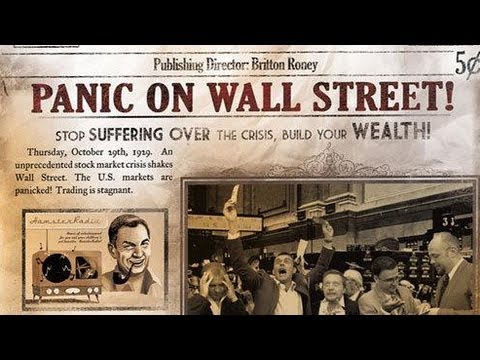
Nearly every account centers on volume. Adam in Wales described the noise level as immense once a full table is bidding at the same time, with players shouting, encouraging one another, and trying to outmaneuver their neighbors. The same review argued that the game is too loud for a cafe or bar and is best reserved for gaming events or home games, where the neighbors may still complain. Board to Death TV described a random, chaotic, loud wheeling and dealing game in which managers act confused to see whether a better offer will appear, calling the free-for-all a beautiful disaster. TheGameBoyGeek recalled a late-night session on a back patio that left the neighbors unhappy, and summarized the experience as cutthroat, stressful, and boisterous.
Reviewers present this intensity as the reason the game works rather than a flaw. The yelling is what makes each two-minute round feel like a trading floor, and it is the quality that most reviewers say sets the game apart from quieter negotiation titles.
The Feel of Speculation Without the Weight
Reviewers who enjoy heavier stock market games frame Panic on Wall Street! as a lighter cousin. Adam in Wales said the game is nothing like as meaty as Black Friday, but it still delivers the feeling of investing and speculating: buying something cheaply, watching it grow, and reacting to the market. The same review noted that the game carries a lot of randomness, although players can mitigate it by avoiding the high-risk red stock and sticking to the lower-risk green and blue shares. JestaThaRogue added that because a single game lasts about 30 minutes, managers and investors can switch sides and play a completely different game, which keeps a long evening of sessions from feeling repetitive.
What Makes Panic on Wall Street! Stand Out
Scale and Accessibility
The most consistent praise concerns player count. Adam in Wales noted that the game scales well and becomes a viable choice once a group reaches six to eleven players, while it is less appealing at three to five. Board to Death TV highlighted that the game is easy for people who do not regularly play board games to pick up, and that its shouting style makes it simple to bring to a party. BoardGameBollocks described it as a game that works best with a large number of players, which sets it apart from the many games that ask a big group to split into smaller teams.
Components and Presentation
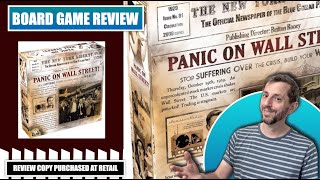
Reviewers consistently praise the physical production. Adam in Wales called the component quality fantastic, singling out the thick paper money with a distinct image for each stock type, the company cards, and the dry-erase markers with their cleaning sponges. Board to Death TV praised the artwork for capturing the late 1920s and early 1930s look, including banknotes from the United States, Canada, France, and Germany, and noted with some relief that the markers did not break on first use.
Potential Drawbacks
Bankruptcies and Limited Strategic Depth
The most serious concern comes from Adam in Wales, who observed that new players often overinvest in the first round, going all in and then going bankrupt. An eliminated player sits out for the rest of the game, which is unfortunate for that player, and the loss can leave too few investors for the managers' companies, stalling the session. Adam noted that this is an oddity that will not happen in every game. The same review concluded that the game is not one to play repeatedly with a stable group, and that it suits events where the players change from session to session. Strategy is also limited, since reviewers describe the game as very light with a good deal of randomness, and there is little long-term planning to develop across sessions.
Practical Friction: Write-On Cards, Timing, and Availability
Several practical issues come up repeatedly. Adam in Wales noted that the company cards are written on with dry-erase markers, and even careful players end up with smudges. The cards are too thick for standard sleeves, so players should accept the writing as part of the game, since post-it notes would become too fiddly in the chaos of play. Board to Death TV wished the game included a turn countdown or a turn reminder on the board, because players can lose track of which of the five rounds they are in. Availability is the final barrier. TheGameBoyGeek observed that the game has been out of print for roughly a decade, and BoardGameBollocks noted that secondhand copies sell for steep prices. BoardGameBollocks later reported that a reprint had appeared, though the channel was not certain whether it used the Wall Street theming.
If You Enjoy Panic on Wall Street!
Reviewers draw a few natural comparisons, and each suggests a different next step for players who like the game.
- Pit: TheGameBoyGeek compared Panic on Wall Street! directly to Pit, a popular older classic that also splits the group into two halves for loud, real-time trading. The reviewer found this version more fun to play, so Pit fans who want a similar frenzy with more interaction should look here first.
- Black Friday: Adam in Wales treated Black Friday as the heavier point of comparison, with far more of the investment weight that Panic on Wall Street! leaves out. Players who want the full stock market experience should look there, while those who want a lighter, faster evening with a similar feeling of speculation will find this game a good fit.
What Reviewers Are Saying
"It's not a meaty game by any stretch. It's fairly light, but it's certainly got a bit more substance to it than a lot of party games."
— Adam in Wales
"You can bring it to a party anywhere and non-gamers will easily get into it. Win lose, it's guaranteed a good time."
— Board to Death TV
"It is cutthroat, it is stressful, it is loud, it is boisterous, it is like no other game I've played."
— TheGameBoyGeek