/pic3646165.jpg)
/pic6263048.jpg)
/pic3646165.jpg)


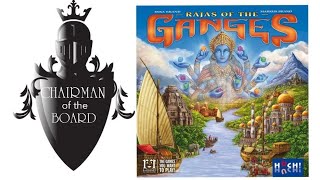







Rajas of the Ganges Deep Dive
What the Community Thinks About Rajas of the Ganges
Reception across the video community leans strongly positive. The Dice Tower calls it one of the highlights among a batch of long-shelved games finally played, praising the worker placement and dice management combination and giving it an eight out of ten. Totally Tabled ranks the game at number 45 on a personal top 50 list, describing it as one of a favorite medium weight Euro title. Before You Play cover it as a game they return to only every couple of months, and note that it always feels fresh when it comes back out. Where the channels differ is emphasis: The Dice Tower is drawn to the karma mechanic and the tension of the river track, Totally Tabled centers its praise on the dual money and victory point tracks as a genuine design innovation, and Before You Play spotlight the recruitment of worker meeples and the tile-based palace economy as the source of the game's appeal.
Core Mechanics That Define Rajas of the Ganges
Worker Placement and Dice Management
Reviewers describe the game as a worker placement and dice placement hybrid, where dice are used as resources for a host of different actions rather than purely random outcomes to accept as they land. Before You Play note that certain worker placement spots exist mainly to get more dice or better combinations of dice, including spots that let a player turn in one color of die for two of another, and high council members that can be visited depending on which die number was rolled. The Dice Tower singles out the karma mechanic, which lets a player spend karma to flip a die to its opposite face, turning what looks like an easy read, such as swapping a one for a six, into a genuinely interesting choice when the trade is something closer to a three for a four.
Dual Money and Fame Tracks
Both Totally Tabled and Before You Play call out the game's two scoring tracks, one tallying money and one tallying fame or victory points, which run in opposite directions around the board. The game ends the moment those two markers cross, so a player can lean almost entirely into money, almost entirely into points, or balance the two, since it only matters that the tracks meet and not where. Totally Tabled credits Rajas of the Ganges as one of the first games to build a win condition around that convergence, noting that other games have since borrowed the idea. The Dice Tower, drawing a comparison to Ark Nova, says this game handles that same crossing conceit better than Ark Nova does, even though the two titles otherwise play nothing alike.
The Rajas of the Ganges Experience
Building a Palace Along the River
Players grow a personal province by purchasing and placing building tiles, and both Totally Tabled and Before You Play describe connecting up roads and buildings to unlock trade and resources, with Before You Play emphasizing that acquiring a given tile requires dice that add up to its value, leading to a lot of wheeling and dealing of dice between turns. The Dice Tower highlights a river a player can travel down, with rewards that get better the further along it goes, tied to bonuses and money or points depending on what a tile provides.
Racing to Recruit and Act
Before You Play describe a race to recruit more worker meeples, since more meeples mean more actions can be taken in a turn, layering a sense of urgency on top of the board's other decisions. That same channel frames the mid-to-late game as a matter of outwitting an opponent to reach a strong play first, once the available options start to narrow.
What Makes Rajas of the Ganges Stand Out
The Karma Decision
The Dice Tower returns repeatedly to the karma mechanic as a highlight, describing the ability to flip a die's face as one of the game's most satisfying wrinkles precisely because it is not always an obvious swap, forcing a real trade-off between saving karma and improving a roll.
Room to Keep Growing
Totally Tabled points to the game's modular expansions as a major strength, saying they add a lot of replayability on top of an already favorite title. Before You Play echo this from the other side, noting their copy has an advanced side of the board that can change up scoring, plus mini expansions they own but have not yet worked into a session.
Potential Drawbacks
Converging on the Same Plays
Before You Play note that despite the range of options on the board, there are stretches where a clear strategy becomes the one to pursue, and the game shifts from open planning into a race to reach that play before an opponent does.
No Turning Back on the River
The Dice Tower flags that the river's escalating rewards come with a one-way commitment: pushing further down it pays off with better bonuses, but going too far removes the option to come back, so the choice of how far to travel carries real weight each time it comes up.
If You Enjoy Rajas of the Ganges
The Dice Tower is the only channel here to place Rajas of the Ganges alongside another title by name, comparing how its money and fame tracks converge to the similar crossing mechanism in Ark Nova, and judging that Rajas of the Ganges resolves that convergence better, notwithstanding how differently the two games otherwise play.
What Reviewers Are Saying
"This is worker placement and dice management. Two huge points for me. I'm loving that. Now, I love the balancing of getting dice and using dice."
— Joe Evans, The Dice Tower
"You have two tracks, one that's tracking your money and one that's tracking essentially victory points, and they're going in opposite directions around the track. And the winner of the game is the person who can be the first to have those two markers cross."
— Shaggy, Totally Tabled
"Over the course of the game, you're gonna be scoring two different types of points. I guess you're gonna be scoring fame as well as money, but essentially they're found on both sides of the board. And as soon as your markers cross each other, then the game ends, and whoever's the first to be able to intersect their fame and their money wins the game."
— Before You Play