






Rollie Deep Dive
What the Community Thinks About Rollie
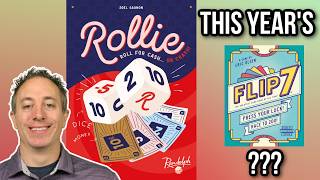
Board game reviewers see Rollie as a strong entry into the push-your-luck space, though opinions diverge on whether it breaks new ground or refines existing formulas. TheGameBoyGeek credits it as the successor to Flip Seven, arguing it outshines its predecessor with better game design and more interesting decisions. Grant Lyon praises it as a fantastic family game that captures the energy of a Vegas craps table without requiring gambling stakes. The Dice Tower reviewers are more measured: Tom Vasel gives it a solid 7/10 for being simple, clean, and fun, while another Dice Tower reviewer finds it competent but not groundbreaking compared to other push-your-luck games out there. Going Analog's hosts embrace it as a party game runner-up, citing the constant tactical decisions and emotional payoff. The consensus is clear: Rollie succeeds at what it sets out to do (deliver table excitement), though some wish it offered more strategic depth or mechanical originality.
Core Mechanics That Define Rollie
Dice Rolling for Shared Stakes
One player rolls two dice each turn. Instead of adding them, players choose one die value and take a bill of that denomination from the center pool. The trick is the asymmetry: you want the highest dollar value for points, but lower values like zero or negative-five come with end-game majority bonuses (such as one hundred dollars for the most minus-five bills). This creates an elegant tension from the outset. Reviewers note that the game does not railroad you into taking the obvious choice. Sometimes the smart move is taking a zero-value bill early in a round to secure a valuable token worth eighty to one hundred dollars at game end.
Push Your Luck With Bankable Bandit
After each roll, you face a decision: take the money you have accumulated this round and bank it (flip bills face down to lock them in your wallet), or stay in and roll again. The danger is doubles. If any player rolls doubles and you have unbanked bills of that denomination, you bust and lose everything you have collected that round. Randolph designed the game so that every table member remains emotionally invested, even when not the active roller. Reviewers consistently highlight that bystanders chant "Doubles! Doubles!" or plead for safety rolls, keeping the whole table engaged. You get to roll the dice even after you have banked out of the round, so passive players can still trigger the catastrophe that wipes out aggressive neighbors.
The Rollie Experience
Vegas Gambling Table Energy
The defining atmosphere is shared risk and shared excitement. Grant Lyon describes it as "everybody is gambling, everybody is winning money, everybody is invested in each other's rolls." The comparison to craps is apt: even though the game is competitive and only one player wins, the table functions as a collective at the moment of each roll. TheGameBoyGeek documents the tangible moments: "Crowd chanting, Doubles, Doubles, Doubles. And if doubles comes, stand up moment, everybody is jumping and screaming." These are the kinds of table reactions that matter to party game success. The game cycles quickly enough (20 minutes) that energy never sags, and the low decision load means conversation and social interaction flow naturally.
The Tension of Imperfect Information
Because banked money is flipped face-down but stacked by denomination (so players can see you have tens stacked against fives, but not the exact quantity), the game creates a productive fog. You are constantly evaluating: "Who is likely ahead on this denomination? Do I try to catch up or pivot to another bill? Should I cut my losses and secure what I have?" Reviewers praise this as a mechanic that feels simple yet creates real decisions. The tiebreaker chips (numbered one through seven, one per round) add a layer of elegance: if you bank first, you take the highest remaining tiebreaker, which breaks ties if two players end with the same majority. This often incentivizes early banking even when you might push for more, since the tiebreaker is unique and finite.
What Makes Rollie Stand Out
Everyone Stays in the Game
A clever design rule ensures engagement does not flatline once you bank out. You still get to roll the dice, even after you have locked in your money, meaning you might be the one to roll doubles and devastate your neighbors. Multiple reviewers note this as a standout feature. TheGameBoyGeek: "It keeps people engaged... even though you have no decision in this turn, you could be the one that rolled the double that screwed everybody else over." This small rule prevents kingmaking or downtime, ensuring even eliminated players feel like they have narrative agency.
Majority Bonuses Create Real Puzzles
The majority system is brilliant. Taking negative-five bills seems ridiculous until reviewers understand the payoff structure: the player with the most minus-five bills gets one hundred dollars at end game. This single mechanic transforms the game from "take money, avoid doubles" into a three-axis decision puzzle. Do you chase high dollar value (straightforward points), or sacrifice early money for majority chances on niche denominations? Do you watch which players are converging on the same denominations and shift your strategy? The design respects player agency while keeping the rules sparse enough to teach in moments.
Potential Drawbacks
Weak Performance at Low Player Counts
TheGameBoyGeek identifies the elephant in the room: Rollie is designed for four or more players. With two or three, the shared excitement evaporates. There are too few rolls between any given player turn, and the collective-risk energy that drives the party feel collapses. Notably, Randolph did not design scaling rules (such as removing certain tiebreaker chips for two-player games), likely because the game is positioned for mass-market casual play where custom rules feel like friction. This is a meaningful limitation for players seeking an intimate two-player push-your-luck experience.
Derivative Mechanics, Limited Strategic Depth
Some reviewers note that Rollie operates in a well-trodden space. The Dice Tower reviewer acknowledges "interesting ideas here, but there are just so many other better push-your-luck games" and gives it a 6/10 accordingly. The mechanics are not novel: roll dice, choose an outcome, decide when to cash out before a bust condition. Comparing it to Flip Seven, No Thanks, or even Incan Gold, Rollie refines but does not reinvent. Additionally, for players seeking tight strategy or asymmetric powers, Rollie offers little. It is a social game with light decision space, not a chess-like puzzle. Long losing streaks (multiple rounds of early doubles) can feel unfair, though part of the appeal is accepting that randomness as thematic to gambling.
If You Enjoy Rollie
Flip Seven is an obvious next step, though reviewers note Rollie improves on that design. If you loved the Vegas atmosphere and shared-risk feeling, Flip Seven shares that vibe but with a different rule set. No Thanks and Incan Gold lean into the push-your-luck mechanic with slightly more puzzle-like choices and lower luck. King of Tokyo offers a different angle: push-your-luck die rolling in a competitive creature-brawl setting with meaningful power escalation. Craps, the tabletop simulation of the casino game, provides authentic gambling tension if you want the theme straight. For lighter shared-risk games, consider the race-and-betting family (Ready, Set, Bet or similar): mechanics that keep the table unified and excited even between your own turns.
What Reviewers Are Saying
"And if doubles comes, stand up moment, everybody's jumping and screaming."
— TheGameBoyGeek
"If you like Vegas table games where everybody's gambling, everybody's winning money, everybody's invested in each other's roles, then this is a good game."
— Grant Lyon
"Very good simple decisions, very clean."
— The Dice Tower