/pic5777745.png)








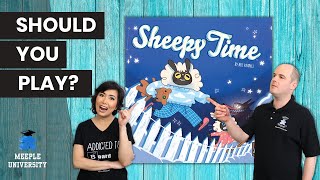








Sheepy Time Deep Dive
What the Community Thinks About Sheepy Time
Reviewers who cover push-your-luck games keep landing on the same conclusion about Sheepy Time: it delivers the swingy, anything-can-happen tension of the genre while dressing it up in a cozy sheep-and-nightmare theme. Kobray called it "definitely a game you'll be talking about at your game nights" and said it left an impression well beyond the table. Foster the Meeple placed it high on their favorite games of the year, with Jamie moving it up their personal ranking after playing it with family. All You Can Board measured it against Quacks of Quedlinburg twice: a first-impressions video still preferred Quacks, while a later debate episode about Quacks called Sheepy Time the more interesting and more satisfying game of the two.
Not every take is uncomplicated praise. John Gets Games spent real time with the game across two in-person sessions and came away impressed, but flagged a genuine tension between how the box looks and how the game actually plays, a point explored below. AEG sent John Gets Games a review copy, which the channel disclosed directly when introducing the game, alongside the fact that AEG regularly ships them copies of games the publisher releases.
Core Mechanics That Define Sheepy Time
Racing the Fence and Deciding When to Stop
Every round is a race around a circular rondel. Players hold two cards and play one per turn to move their sheep token forward, and crossing the fence between the last space and the first earns winks, the game's victory points. Each time a player crosses the fence they face the same decision described in nearly every source: call it a night and lock in the round's winks, or keep going for a chance at more. Kobray summarized the goal plainly, explaining that a player's wink token needs to cross their pillow token, which itself creeps closer every round depending on how well a player scored the round before. John Gets Games walked through the same structure in detail, noting that the pillow starts at the far end of the track and moves down based on how many winks the top finishers banked, which is what makes an early round's score matter even though every player resets to zero winks at the start of the next one.
Nightmares and the Dream Tile Engine
The threat chasing players around the board is the nightmare, drawn from a deck mixed in with the movement cards. Kobray explained that nightmares can move or jump, and that landing on or being landed on by one turns a sheep scared, with a second scare waking that player up and wiping out the winks earned that round. John Gets Games added that the box ships with multiple nightmares with different movement patterns, so the threat itself changes game to game. Layered on top is the dream tile system: players spend z tokens gained on their turns to activate tiles scattered around the rondel, each with its own effect, and between racing rounds players choose to either add a new dream tile to the board or bank more z tokens to spend later. Kobray called the combinations built from those tiles the heart of what makes each session different, while John Gets Games pointed out that because any player can land on and use a tile another player placed, the rondel effectively gets built collectively as the game goes on.
The Sheepy Time Experience
Anyone Can Win Until the Last Card
Reviewers repeatedly described a game where the lead can evaporate in a single round. Kobray put it directly: a player can be in last place, far behind everyone else, and still have their stars align and pull out a win, adding that they had never even met the person who beat them in exactly that fashion. John Gets Games lived out that swing firsthand, describing a game where they felt they had the win locked up after a strong early lead, only to watch an opponent keep pushing their luck around the board and steal the game at the very end. That same account included John Gets Games admitting they should have kept pushing rather than playing it safe, which they said is exactly the kind of decision the game keeps putting in front of players.
Quick to Teach and Easy to Come Back To
Multiple channels praised how approachable Sheepy Time is at the table. Kobray called it super inviting and super easy to teach, noting that anybody can really play it regardless of experience level. John Gets Games backed that up in practice: a four-player teaching game ran around an hour and fifteen minutes, but a second play with a group who already knew the rules wrapped up in well under an hour. Foster the Meeple's Jeff summed up the appeal in similarly simple terms, calling it a super fun push-your-luck game that more people need to try.
What Makes Sheepy Time Stand Out
A Board That Rebuilds Itself Every Game
The dream tile pool is large enough that reviewers said no two plays feel alike. Kobray pointed to the sheer number of dream tiles and the choice of nightmare as reasons each game feels really different, with the combinations of tiles forming the core of the experience. John Gets Games went further, calling out specific tiles like a trampoline that launches a player forward and a shepherd tile that can shove other sheep toward the nightmare, and said the variety meant there was more game underneath the surface than expected, with real room for creative play even though each turn only offers a choice between two cards.
Charming Presentation That Still Surprises
The look of the game came up unprompted across sources. Kobray singled out the artwork as phenomenal and inviting, calling the sheep tokens magical. John Gets Games agreed that the art is genuinely likeable, but noted it also undersold the game before they had actually played it, since a cutesy cover led them to assume it would be simple until the rules and the actual sessions proved otherwise.
Potential Drawbacks
Bad Luck Can Feel Personal
Because winning or losing a round often comes down to when a nightmare card gets drawn, more than one channel flagged the frustration that comes with variance. Kobray admitted the nightmares are frustrating sometimes even while still enjoying the game overall. John Gets Games described losing a game they felt they had already won, calling it a loss they still owned even though, as they put it, it was probably of no fault to them, and separately noted that chat viewers had brought up an expectation offset between the art and how the game actually plays. Kobray also pointed out that outside of the dream tiles there is not a whole lot of direct player interaction, so a player who calls it a night early can end up simply watching everyone else push their luck.
A Cute Cover Can Undersell the Game
The same charm that reviewers praised in the art also created a mismatch in expectations for at least one channel. John Gets Games said their first instinct on seeing the cover was that this looked like a game for five or six year olds, and that only after reading the rules and teaching it did they realize it was not really built for that young an audience, with a ten-year-old being closer to the right fit in their view. That gap between a soft, sleepy presentation and a game with real decisions and real sting when luck turns is the closest thing to a consistent criticism across the sources.
If You Enjoy Sheepy Time
All You Can Board compared Sheepy Time directly against Quacks of Quedlinburg across two videos; the verdict split, but both games scratch the same light, swingy push-your-luck itch, so fans of one are the natural audience for the other. Foster the Meeple's Jamie connected the excitement of not knowing whether a push would pay off to the feeling of playing Camel Up, describing the two as delivering that same kind of push-your-luck thrill.
What Reviewers Are Saying
"If you like push your luck games, sheepy time is definitely one of those. It's got a lot of elements of just going for it, really just gotta go for it."
— Kobray
"I think to me sheepy time felt like a more interesting game and a more satisfying game that still had that push your luck but made me feel like the decisions I was making along the way came into play a little more. And I think, I think personally that I'm going to enjoy the replay value of sheepy time more."
— All You Can Board
"Sheepy time is a push your luck game where you are going around a rondelle, and you are trying to catch dreams of sleep, and you have a nightmare chasing you. And it's a push your luck wherein you go once around the rondelle, and then you have to jump over a fence, and then you make a decision of whether or not you think you can get around the rondelle again without being captured by or woken up by the nightmare, and then you score more points the more you push your luck, but ultimately if you get woken up, you lose everything. Really, really super fun, super, super fun push your luck game that I think more people need to try."
— Jeff, Foster the Meeple