











Specter Ops Deep Dive
What the Community Thinks About Specter Ops
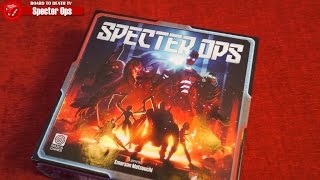
Specter Ops (reviewers often spell it Spectre Ops) is a two to five player hidden movement game designed by Emerson Matsuuchi and published by Plaid Hat Games with NASA Games. One player takes the role of an agent infiltrating a Raxxon Global facility, while the others play Hunters tasked with locating and eliminating that agent. Across the reviews, the core experience is praised for its theme, its clear rules, and the tension of the hunt, while the criticism centers on character balance, board layout, and game length.
Rodney Smith of Watch It Played presents the game as an approachable, theme-first title, and Smith's rules tutorial is the reference point other reviewers recommend for learning it. J Carlo of Board to Death TV - Board Game Reviews is the most critical voice in the set. J Carlo praises the components and the rulebook, but singles out certain Hunter characters and the road layout as dominating play. Matt Evans of Board Game Replay is enthusiastic about the hidden information and the character powers, while cautioning that a full session can run long. Board Game Critique frames Specter Ops as the title that added line of sight mechanics to the hidden movement formula in a cyberpunk setting.
Core Mechanics That Define Specter Ops
Hidden Movement
The agent never places a miniature on the board during play. Each round the agent plans a route of up to four spaces, moving diagonally or orthogonally, and records the final coordinate on a private movement pad that duplicates the board grid. Rodney Smith explains that the agent may only be placed on the board once it is spotted, so the Hunters learn position only through what they see. Matt Evans adds that a Hunter who merely passes the agent's space gets no clue, because only the space where the Hunter ends its turn matters for detection.
When the agent crosses a Hunter's line of sight without stopping in it, the agent places a last-seen token on the final visible space. Matt Evans describes this as the Hunter catching a glimpse of something out of the corner of its eye, which reveals a direction without revealing the exact location. The agent also carries hidden equipment, and reviewers highlight the hollow decoy, which lets the agent place a last-seen token up to four spaces from its real position. The agent wins by flipping three of four objectives after standing adjacent to each one, then escaping through a north exit before the fortieth turn.
Line of Sight
Hunters see in straight lines along the row and column of their space until a structure, such as a wall or a map feature, blocks the view. Roads are two spaces wide, and a Hunter standing on a road sees the full width of that road, a detail Rodney Smith's full rules video emphasizes. When a Hunter ends its movement with the agent in view, it may attack by rolling a die that must equal or exceed the distance between them, and a six lets it roll again. Board Game Critique summarizes the resulting play pattern: Hunters move openly, but they must position carefully to create overlapping sightlines and cut off escape routes.
The Specter Ops Experience
Clear, Functional Presentation
Reviewers consistently describe Specter Ops as easy to learn and run. J Carlo found the rulebook quick and well written enough that the group barely needed to consult it. Matt Evans highlights the embossed coordinate grid on the board, which keeps locations easy to read, and notes that the pad matches the board exactly so the agent can track movement cleanly. Rodney Smith makes the same point from the agent's side: the agent can follow its own record rather than studying the board for visual cues that might give its position away.
Immersive Cyberpunk Tension
The theme is the emotional anchor of the game. J Carlo says the team felt invested and immersed throughout the session, and Matt Evans enjoys the future sci-fi premise, including the spider-like minions and the idea of creeping through a dark facility where the lights are not turned on. Board Game Critique adds that the agent must constantly think about sightlines and noise, so one wrong step into view can end the game. That combination of a secret path and a visible threat is what reviewers keep returning to when they describe the experience.
What Makes Specter Ops Stand Out
Hidden Loadouts and Character Powers
The feature reviewers praise most is that Hunters never learn the agent's loadout. The agent secretly picks a character and hidden equipment, and Matt Evans stresses that the choice is not randomized, so the table keeps wondering which tools the agent holds. Each Hunter also has special abilities. Rodney Smith's character breakdown covers a precognition ability that forces the agent to reveal a past location, a puppet that can drive the vehicle instead of moving, a beast with enhanced sensors, and a gun whose sniper shot fires down a line. Matt Evans says these powers make each player feel like an intricate part of the team rather than a piece moved for line of sight.
A Theme Built Into the Rules
Reviewers see the setting as more than decoration. J Carlo writes that the game blends extremely well with its theme, and Matt Evans says the premise of breaking into a sci-fi facility is what drew Evans in. Rodney Smith ties the mechanics back to the fiction: Raxxon Global runs the planet, its employees may secretly be agents of ARK, and the vehicle and motion detector are tools of the hunt. That framing makes the rules feel like part of the story rather than an abstract set of tokens.
Potential Drawbacks
Character Balance and Board Layout
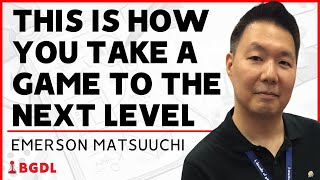
J Carlo found that some characters become staples in the Hunter group. The Puppet and the Gun, when paired with the vehicle parked on a central space and Hunters stationed at road intersections, can use the motion detector every turn to narrow the agent's location and eventually cut the board into quarters. The reviewer suggests that roads placed less centrally, or running as side veins rather than main arteries, would reduce this dominance. J Carlo calls the issue a misplaced blemish on an otherwise excellent game and still awards it 8 out of 10. Emerson Matsuuchi has explained in an interview with Board Game Design Lab that the two asymmetric sides are intentionally not split 50/50, because a game can feel fair to players even when the numbers are not perfectly even.
Length and Pacing
Matt Evans reports that the first session ran close to two hours, and the group agreed that a hunt can stretch on because cornering an agent takes many turns. Hunters who lock down the perimeter one space at a time can make progress slow, and an agent can draw out the chase by running loops. The forty-turn limit caps how long this can continue, but reviewers still note that a session can feel drawn out. Matt Evans expects that experienced groups will play faster once everyone understands the character powers.
If You Enjoy Specter Ops
Letters from Whitechapel is the comparison reviewers reach for most often. Matt Evans calls it the easiest game to compare against Specter Ops, and Evans credits its grid layout with making movement easier to follow. Evans also prefers the way Specter Ops gives each player powers, because Letters from Whitechapel can feel like moving pawns around the board. Board Game Critique describes Letters from Whitechapel as a multi-night Jack the Ripper game in which earlier nights' movements return to haunt the Jack player. Players who want a longer, story-driven hunt should look there, while players who want a quicker, more tactical hunt with a sharper sci-fi edge will find that Specter Ops fits better.
What Reviewers Are Saying
"Really cool abilities. I like that you get to choose them. I like that they're not randomized. I think that's awesome that we have no idea what you picked for characters or items, we could spend the whole game wondering."
— Board Game Replay
"The super quick and extremely well written rule book answered all our questions and hardly had us look at it twice."
— Board to Death TV - Board Game Reviews
"Agents have limited ways of directly dealing with the hunters. Instead, they're going to want to remain in the shadows."
— Watch It Played