/pic7060415.jpg)
Game Info
Year
2024
Players
2-5
Age
14+
Complexity
3.1/5
Collection
Ratings
Creator Score
Mechanic profile
Not enough video data yet
Vibe profile
Not enough video data yet
Description
The Stifling Dark is a one-vs-many hidden-movement horror board game with an innovative line-of-sight mechanic for 2-5 players. One player takes the role of the adversary, whose goal is to prevent the other players from escaping.
Featured Videos


Ask a Rules Question
All mentions
Browse transcript mentions, sentiments, pros/cons, mechanics, topics, quotes, and references.
Total mentions: 5
This page: 5
Sentiment:
pos 4 ·
mix 0 ·
neu 0 ·
neg 0
Showing 1–5 of 5
Video RFnk8FNebeo
Board Games UnLocked Review at 0:16 sentiment: positive
video_pk 113724 · mention_pk 325530
Click to watch at 0:16 · YouTube ↗
Overall sentiment (raw)
positive
Pros
- Innovative and unique hidden movement game.
- Strong atmospheric horror theme.
- The flashlight gimmick works very well.
- Scenarios and mix-and-match killers/locations add replayability.
- Distinct playable characters with unique abilities.
- Thematic wound system with conditions.
- Engaging for both investigators and the adversary once the game shifts.
Cons
- Prototype rulebook was rough and unclear.
- Adversary board and screen size made visibility an issue.
- Some fiddliness with tokens and component management.
- Early game as the adversary can feel less impactful.
- Board is very large, potentially making it hard to see for some players.
Thematic elements
- Teenagers being chased by a killer, gathering evidence, and trying to escape.
- A sawmill
Comparison games
- Dead by Daylight
- Last Friday
- Mind Management
- Sniper Elite
- Letters from Whitechapel
- Fury of Dracula
- Phasmophobia
- Mansions of Madness
- Overwatch
Mechanics (from transcript analysis)
- Asymmetrical play — One player controls the killer, while multiple players control the investigators, each with unique abilities.
- Evidence gathering — Investigators must collect evidence to progress towards an escape objective.
- Flashlight Use — Investigators use flashlights to illuminate dark spaces, which costs energy but reveals items and the adversary, and can stun them.
- Hidden Movement — The core mechanic where one player (the killer) moves secretly, and the other players (investigators) try to deduce their location.
- Objective Selection — After gathering evidence, investigators choose from multiple escape objectives (e.g., fix truck, fight adversary, power gate).
- scenario-based play — The game features different locations, killers, and investigators that can be mixed and matched, offering varied gameplay experiences.
- Wound System — Investigator wounds can be face down (nothing) or face up (with effects and conditions that must be resolved).
Video topics + discussion points
No key topics recorded for this video.
Quotes (from this video)
- everything is in the dark you have to play this game in the dark because this is glow in the dark that's not true none of that is true it is in the dark and the investigators this is this is a gimmick for a game that I think is fantastic I think it works really really well
- to me it comes a lot closer to uh the video game phasmaphobia
- there's there's bones here it just needs to be tightened right now it feels like there's a lot of stuff that's still left to open
- overall I think it's it's definitely a unique hidden movement game
- extremely atmospheric their gimmick works like the flashlight thing I think is really cool
- this is the only one where it's like the adversaries actively trying to take uh take you down I think that that's that that can you can really get into the headspace of that
- so as of right now oh I guess I should also talk a little bit about I've mentioned kind of the adversary and the investigators but the scenarios do have rules for them as well
- I'm very excited to get my copy I think this is a really really cool theme done very well extremely atmospheric
- I think it could definitely go it it will go up I think to an eight eight point five maybe even the nine if they knock the production and scenarios and stuff out of the park
References (from this video)
No references stored for this video.
Video ZP78KMRVky0
Board Games UnLocked Review at 0:16 sentiment: positive
video_pk 113593 · mention_pk 325351
Click to watch at 0:16 · YouTube ↗
Overall sentiment (raw)
positive
Pros
- The flashlight mechanic is cool, thematic, and works wonders.
- The game offers a fresh take on the hidden movement genre by having investigators be the ones running.
- The event cards and scenarios are thematically tied to the location.
- The end game objectives are interesting and kickstart a finale.
- The game has a good ebb and flow and can be both funny and creepy.
- Characters have interesting minor and major abilities.
- Movement is fluid, and sprinting adds extra movement.
- The production quality is nice.
- The adversary tracking tokens are a good design choice to avoid looking at the main board constantly.
Cons
- The rulebooks are not well-written, with information scattered and a lack of clear distinction between core and adversary rules.
- Setup issues, particularly with points of interest removal, can make large portions of the board irrelevant in lower player counts.
- The game feels like it's meant for five players; lower player counts are significantly harder for investigators and might require running multiple investigators.
- There's a lot of fiddly tokens, which can be an issue for storage and organization.
- The adversary screen is potentially limiting for future expansions and adds unnecessary complexity.
- There's not enough customization of board elements like computers and evidence locations, leading to potential board stagnation in scenarios.
- In lower player counts, there's no incentive for investigators to explore certain areas of the board.
Thematic elements
- one versus many hidden movement
Comparison games
- Fury of Dracula
- Letters from Whitechapel
- Anomaly
- Sniper Elite
- Last Friday
- Rout
Mechanics (from transcript analysis)
- Action Points — Players have a limited number of actions or charges they can use per turn, such as for using the flashlight.
- Deterrence — Investigators can deter the adversary with flashlights and items, rather than directly combating them.
- Flashlight Mechanic — Investigators can use limited flashlight charges to reveal parts of the board, including items, tokens, and the adversary. This mechanic affects movement costs and visibility.
- Hidden Movement — One player controls an adversary with hidden movement, while other players are investigators trying to find evidence.
- One vs. Many — The game pits one player as the adversary against multiple investigators.
- Player Elimination — The adversary can kill investigators, making it a threat to player survival.
- Set Collection — Investigators need to collect evidence tokens to achieve their objectives.
- Variable player powers — Each investigator has minor and major abilities, with the major ones being potentially one-time use but with ways to regain them.
Video topics + discussion points
No key topics recorded for this video.
Quotes (from this video)
- The gimmick is that the board... are two maps... and then there are three adversaries... and one thing I will say is I wish there were more locations like more boards.
- This is such a cool and thematic uh mechanism in this game.
- The rule book's just not not amazing.
- I really dislike this because you're bored in a game like this should be you should incentivize investigating.
- I really feel like you're just going to lose if the aders.
- This is one of those that is either a five player game or players are running multiple characters.
- On a scale of 1 to 10 I think as of right now I'm going to go with a seven it is a seven out of 10 it is a good game.
- I am keeping it in my collection it very much could go higher like I don't see this game getting any lower.
References (from this video)
No references stored for this video.
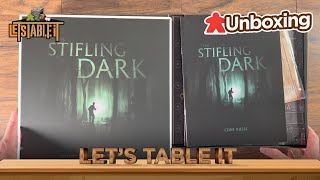
Video at76MYjwCE0
Let's Table It Unboxing at 0:22 sentiment: positive
video_pk 88175 · mention_pk 231848
Click to watch at 0:22 · YouTube ↗
Overall sentiment (raw)
positive
Pros
- Innovative flashlight line-of-sight mechanic
- Varied investigators with unique abilities
- Distinct adversary design with multiple attacks
- Robust component list and expansion content (Nightfall)
Cons
- Potentially complex rules for new players
- Asymmetric play can introduce a steeper learning curve
Thematic elements
- horror, mystery, teamwork vs. adversary
- haunting, paranormal environment with investigators exploring at night
- asymmetric, adversary-driven stealth with investigator exploration
Comparison games
none
Mechanics (from transcript analysis)
- Asymmetric win conditions — different win conditions for investigators and adversary; investigators win by escaping
- evidence gathering and event cards — investigators search for evidence and interact with a pool of items and events
- Hidden Movement — one player acts as the adversary with hidden movement and varied attacks
- hidden movement adversary — one player acts as the adversary with hidden movement and varied attacks
- item management and doors — investigators pick up and use items; doors can be locked or unlocked
- Line of Sight — novel flashlight-based line-of-sight mechanic to simulate vision in darkness
- line of sight / flashlight system — novel flashlight-based line-of-sight mechanic to simulate vision in darkness
- stamina and sprint — investigators manage stamina; sprinting consumes stamina and can exhaust
Video topics + discussion points
No key topics recorded for this video.
Quotes (from this video)
- The Stifling Dark is a one verse mini hidden movement horror board game
- a novel flashlight system to simulate true line of sight in the dead of night
- The game ends when either all of the investigators Escape meaning that the investigators win or the adversary achieves their win condition which is different for each adversary
- Nightfall expansion adds four large flashlights
References (from this video)
No references stored for this video.
Video Pks4ZXnnnjI
Board Gaming Ramblings Other at 3:06
video_pk 85609 · mention_pk 424702
Click to watch at 3:06 · YouTube ↗
Pros
none
Cons
none
Thematic elements
Comparison games
none
Mechanics (from transcript analysis)
Mechanics unknown.
Video topics + discussion points
No key topics recorded for this video.
Quotes (from this video)
- It's going so fast. It's going faster and faster.
- Number one, uh, you will get our happy faces on your in on your screen.
- It's called improv. Oh, I mean scripted.
- A lot of trick takers, some other fun games, some not so fun games.
- It is our own Easter hunt that our friends Osa and Christ made for us.
- My my biggest and most fun experience was again for like I think the third month in a row.
- Basically he made like a list. These are just like a bunch of games I want to play that I haven't played.
- My biggest surprise is in the name.
- It's weird because you put it up and it looks like a game like a game. Yes. But it is basically just like abstract puzzle.
- It's like Ticket to Ride but with bolts.
- Yes, indeed you forget.
- Thank you. Bye.
- Trickeron is gonna be my number star because I was not allowed to do my own number one this time.
- Blood Rage is fantastic. I love Blood Rage. I think Blood Rage is it's not that complicated to get into and it has so much fun depth and strategy and tactics and I just enjoy my time with it a lot.
- Blood Rage you like more than Rising Sun.
References (from this video)
No references stored for this video.
Video b4Eg08uoVNk
Meeple Mountain Review at 0:33 sentiment: positive
video_pk 36183 · mention_pk 108337
Click to watch at 0:33 · YouTube ↗
Overall sentiment (raw)
positive
Pros
- Strong thematic integration of horror and hidden movement
- Multiple scenarios and adversaries increase replayability
- Flashlight mechanic adds depth and strategic choice
- Cooperative-investigator dynamics with adversary tension
- Modular map and planned expansions for new content
Cons
- Setup and teardown can be lengthy due to scenario components
- Crowdfunding prototype may evolve in production
- Requires 3-5 players for optimal play
- Learning curve due to complex rules
Thematic elements
- Horror-themed one-versus-mini hidden movement chase
- Abandoned sawmill with paranormal activity and a horror atmosphere
- Story-driven scenarios with multiple endings
Comparison games
- Scotland Yard
- Spectre Ops
- Letters from Whitechapel
Mechanics (from transcript analysis)
- Doors and windows with tokens — Doors can be closed or damaged; windows create additional movement and risk.
- Evidence tokens and objective cards — Finding evidence drives progression toward winning conditions and possible escapes.
- Fog of war / line of sight — Obstacles and token placement restrict visibility and influence strategy.
- Hidden Movement — One player (the adversary) moves secretly while investigators try to deduce and pursue.
- Lighting mechanic with flashlights — Lights reveal spaces and items, affecting visibility and game state.
- Line of Sight — Obstacles and token placement restrict visibility and influence strategy.
- Movement Points — Stamina and sprinting govern how far characters can move and track wounds.
- Movement points / sprint mechanics — Stamina and sprinting govern how far characters can move and track wounds.
- One-versus-many / cooperative vs adversary — Investigators cooperate to achieve a common goal while the adversary acts independently.
Video topics + discussion points
No key topics recorded for this video.
Quotes (from this video)
- One player will play as the adversary and all other players will play as investigators
- The adversary involves hunting down the investigators
- There are 17 rounds total in the game
References (from this video)
No references stored for this video.
Transcript Navigation
Showing 1–5 of 5