




Valhalla Deep Dive
What the Community Thinks About Valhalla
Valhalla has sparked mixed reactions across the board game community, with reviewers divided on whether the game itself delivers or whether its extensive array of expansions carry it. Board Games UnLocked has played it multiple times across different player counts and with various expansion combinations, finding a game with solid components and production quality but questioning whether the base game holds its own weight. The consensus is that Valhalla presents an interesting dice-placement concept executed with good value for money, reviewers consistently praise the sheer amount of content included, but struggle with pacing issues, a sense of thematic disconnect, and gameplay that some describe as feeling hollow without additional modules.
Core Mechanics That Define Valhalla
Dice Placement and Warrior Activation
At its heart, Valhalla is a dice-placement game where players roll dice to determine which warriors they can activate in battle. Reviewers explain that players build armies of warriors represented by cards, each with different icons and requirements. The dice rolled determine which warriors can be fielded, and the icons on those dice must match the symbols on warrior cards to activate them. This creates a layer of resource management where luck and tactical decision-making intersect. The mechanic becomes the tension point of the game: hoping dice rolls align with available warriors, but even with mitigation options through cards and expansions like the Riders of War, outcomes can feel heavily driven by chance.
Death and Ascension to Valhalla
When warriors die in combat, they ascend to a Valhalla pile, where they become worth victory points based on their card values. This reversal of typical game logic, where dying pieces contribute to score, creates an unusual dynamic. Players take shields from opponents when they win battles, and the game ends when someone loses all their shields. Reviewers note this creates a clear win condition but also contributes to what some describe as a "runaway victory" problem: once a player gets ahead on shields and warriors in Valhalla, the gap becomes difficult to close. The designer has created a game where fallen warriors matter more than keeping them alive, but not all reviewers felt this thematic inversion worked effectively in the context of the overall experience.
The Valhalla Experience
Engaging Production with Minimal Gameplay Depth
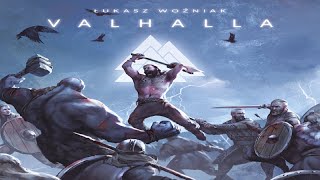
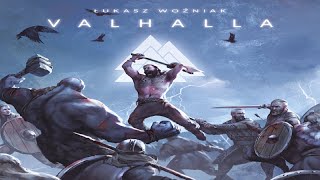
Valhalla arrives with lovely artwork, engraved dice, and excellent component quality. Reviewers consistently praise the production values and note that the game doesn't feel cheap despite its price point. However, the experience of playing frequently disappoints relative to these polished trappings. One reviewer described the base game as "blah," noting that the core mechanics alone, rolling dice, matching icons, and watching warriors die, don't sustain engagement. The game moves quickly, which some appreciate for its snappiness, but the brevity masks what reviewers perceive as shallow decision-making beneath the surface.
The Long, Stalemate-Prone Middle Game
Despite the quick rounds, Valhalla's overall length becomes a persistent complaint. Matches extend far beyond expectations, with reviewers reporting games that ran well past an hour. As the game progresses, play can grind toward stalemate, where players defensively pile shields into Valhalla and the board state becomes locked. Reviewers explain that the game becomes less about exciting tactical choices and more about grinding through turns, hoping someone will finally fall below the shield threshold. This contradiction, a game that should move quickly but stretches interminably, represents one of Valhalla's core design tensions.
What Makes Valhalla Stand Out
Exceptional Value and Content Volume
Reviewers consistently highlight that for the price point, Valhalla delivers a remarkable amount of material. One backer noted purchasing the entire Kickstarter package, including multiple mini-expansions, and felt the component quality and sheer number of cards justified the investment. Board Games UnLocked specifically called out the special abilities of the Norse hero cards as "cool" and noted that expansions like Loki's Deception, Thor's Support, and Tier's Wrath add meaningful differentiation to each game. The expansions allow players to win through non-conflict paths and provide thematic flavor tied to Norse mythology. For collectors and players who enjoy options, the breadth of content is undeniable.
Solo Mode as a Gateway
Multiple reviewers mentioned that Valhalla's solo mode offers something the competitive game does not: a sense of progression and engagement. Players can face off against escalating boss encounters, which one reviewer described as "pretty neat" and meaningfully different from the multiplayer experience. The solo campaign provides narrative stakes and a sense of victory that competitive play sometimes lacks, suggesting the game may have found its strongest application in single-player scenarios rather than the head-to-head combat the design emphasizes.
Potential Drawbacks
Themelessness and Mechanical Mismatch
The harshest criticism leveled at Valhalla centers on what reviewers call "virtually themeless" gameplay. Despite the Norse mythology setting and the flavorful expansion names, the core mechanics feel disconnected from the theme. One reviewer noted that the game devolves into "just die rolling" where outcomes feel random rather than thematic. The strength-difference mechanics in battles are interesting mathematically, but they don't always translate into visceral, thematic moments. The card art and warrior names provide window dressing on a system that, stripped of aesthetics, could apply to almost any theme.
Runaway Victory and Negative Player Interaction
Reviewers report that Valhalla suffers from a "runaway victory" problem where once a player gains an advantage in shields and Valhalla points, opponents find it nearly impossible to recover. The game's targeting system, where any player can attack any other player, can create a "one against all" dynamic that feels personal and frustrating rather than strategic. The lack of meaningful catch-up mechanics beyond the random dice rolls means early advantages compound. Reviewers felt that player interaction often reduced to targeting whoever was winning rather than emerging from clever plays or strategic depth, making the social experience of the game feel hollow.
If You Enjoy Valhalla
Players drawn to Valhalla's blend of dice placement and warrior management might find satisfaction in games that share its core appeal. Blood Rage offers similar area-control warfare with a Viking theme but includes more meaningful strategic choices and less reliance on pure chance. Cosmic Encounter provides the game-to-game variety through factions that Valhalla attempts with its expansions, but with tighter mechanical balance. Elysium, mentioned by reviewers as a point-salad alternative, offers card play where defeated units are set aside for scoring, a mechanic some felt executed more elegantly than Valhalla's own pile system. The game appeals primarily to collectors who value component quality and volume of options, and to players testing whether expansions can salvage a base game they find underwhelming.
What Reviewers Are Saying
"I don't know, the game's lackluster and boring base game, and it's too long and becomes boring with expansions, so essentially it's a boring game when it could have been a cleaner, I mean the game is simple and it's kind of streamlined, but it could have been a much deeper 60-minute game."
— Board Games UnLocked
"Valhalla was one of those games that for its price point you got a bunch of stuff, like that was one of the best things about it, was the fact it's like oh for a hundred bucks you get 90 expansions, well it's like, well they're all really mini expansions."
— Board Games UnLocked
"Valhalla's base game was so blah, but then there was a bunch of mini modules you threw in. But I mean, at what point is it like, okay, so your game design is lacking until I throw in 15 things to make it good?"
— Board Games UnLocked