





Wiz-War Deep Dive
What the Community Thinks About Wiz-War
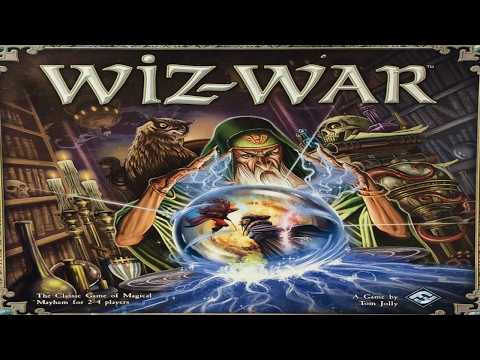
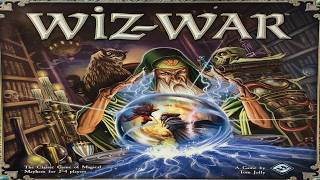
Wiz-War enjoys a devoted following among board gaming reviewers who consistently praise it as a chaotic, lighthearted experience that delivers exactly what it promises: fast-paced wizard combat without pretense. Board Games UnLocked and other community reviewers describe it as a "beer and pretzels game" that demands players embrace chaos rather than resist it. The game holds its own across nearly four decades of editions, with reviewers noting that the 8th edition (published by Fantasy Flight) remains engaging despite the release of a 9th edition that reviewers largely dismiss. Critics across multiple channels agree that Wiz-War succeeds because it balances mechanical depth with thematic coherence, offering genuine strategic choices within a deliberately absurd framework. The game's reputation rests on a simple truth: it is unapologetically fun, never asking players to pretend they are anything other than rival mages lobbing ridiculous spells at one another.
Core Mechanics That Define Wiz-War
Card-Driven Spell Casting with Diverse Schools of Magic
At the heart of Wiz-War lies a deck of spell cards organized into schools of magic. Board Games UnLocked reviewers note that the base game offers multiple schools, and expansions (Beastial Forces and Malefic Curses) expand the roster significantly. Each school handles different spell effects: buffs, debuffs, damage, transformation, and utility magic. The base game allows players to select which schools they play with, or optionally shuffle all schools together for maximum chaos. Reviewers praise the design because every school feels radically different in how it approaches combat. The power of spells can be boosted using energy cards, and unlike many card games, Wiz-War explicitly supports counter-spells and reactive play. This means a player under attack can hold spells in hand to respond, leading to back-and-forth tactical exchanges rather than passive turns watching opponents play.
Movement and Treasure Theft in a Contested Maze
Players move their wizards through a shared maze-like board, with the dual goal of either stealing opponents' treasure chests or eliminating rival wizards through direct combat. Reviewers emphasize that the maze layout creates spatial puzzle elements: line-of-sight rules govern which spells can hit which targets, and walls created by certain spells become environmental hazards. A player holding an opponent's treasure must end their turn, creating genuine risk and tension. The board itself is simple but functional, and certain spells allow players to rotate or rearrange it, which reviewers note leads to entertaining moments of political negotiation and scrambling repositioning. The first player to claim two permanent victory points (by eliminating opponents or bringing stolen treasures home) wins.
The Wiz-War Experience
Chaotic but Purposeful Competition
Wiz-War lives at the intersection of competitive intensity and shared laughter. Board Games UnLocked reviewers describe the experience as one where players expect to be "rocked all over the place" by spell combinations that border on absurdity. A single turn might involve sprouting extra arms to carry chests, being swapped places with an opponent, or having walls summoned around you, which you then break down with another spell. The chaos is real, but the short playtime (under an hour) means the sting of elimination or setback dissipates quickly. Reviewers note that the game works best at four or more players because that player count distributes targeting and prevents single players from being dogpiled. Even when reviewers found themselves annoyed at each other mid-game, they uniformly reported having "a blast," because the game's tone invites playful antagonism rather than bitterness.
Light-Hearted Whimsy Grounded in Thematic Fantasy
The art and flavor text of Wiz-War lean heavily into whimsy without sacrificing thematic coherence. Board Games UnLocked's art-focused reviewer highlighted that Wiz-War avoids the gruesome extremes of games like Magic: The Gathering, instead presenting colorful, cartoony depictions of spells and magical effects. A card might show a wizard eating a wall to break through it, or another wizard being zapped by lightning with a comedic skeleton outline. What makes this work is that the art genuinely communicates what the card does, so flavor and function align. Reviewers appreciate that playing a spell against an opponent does not feel mean-spirited; it feels playful. The game captures the energy of dueling fantasy mages without the moral weight that darker games can impose, making it ideal for groups that want competitive engagement without competitive tension.
What Makes Wiz-War Stand Out
Responsive Gameplay with Counter-Spells and Interrupts
Unlike many multiplayer card games where turns proceed linearly without interruption, Wiz-War explicitly builds in counter-spells and reactive mechanics. Board Games UnLocked reviewers praise this feature as essential to the game's balance and fun. When an opponent attacks you with a spell, you have the opportunity to hold a counter-spell in hand and activate it in response. This means that even if you are the target of aggression, you are rarely helpless. The result is that combat feels like a genuine exchange rather than passive damage-taking. Reviewers cite memorable moments where they trapped opponents in walls and were then swapped places with those same opponents because they had the right spell ready. This responsiveness also prevents any single player from running away with the game; a player ahead can be checked by a clever spell or defensive reaction.
Expansions That Preserve the Core While Expanding Options
The Beastial Forces and Malefic Curses expansions are widely praised by reviewers for adding new schools of magic without breaking the base game's elegant balance. Each new school introduces fresh spell types and strategic angles, encouraging replays and deckbuilding variation. Reviewers note that you can play with the base game schools, layer in expansion schools selectively, or shuffle everything together for maximum chaos. This modularity means the game grows in depth without requiring players to integrate complex new rules. Board Games UnLocked reviewers specifically note that the expanded spell palette only makes the game more attractive on replays, because no two games with different school combinations play identically.
Potential Drawbacks
Player Elimination and Three-Player Imbalance
Wiz-War explicitly uses player elimination as a win condition: kill all other wizards, and you win. Board Games UnLocked reviewers acknowledge this can feel rough for eliminated players, although the game's short length (under an hour) mitigates the pain. The more significant issue emerges at three players. Reviewers note that the spatial layout of the maze often leaves one player in a central position who gets targeted by the other two, creating a "bully in the middle" dynamic where one player bears the brunt of aggression. At four or more players, politics and spatial positioning distribute attacks more evenly. Two players is also not ideal, as reviewers suggest the game design assumes interaction and conflict between multiple opponents. Reviewers recommend playing with four to six players for the best experience.
The Ninth Edition Art Redesign Alienates Loyal Fans
Multiple Board Games UnLocked reviewers express frustration with the ninth edition's art direction, calling it "absolute trash" compared to the 8th edition's cartoony, character-rich aesthetic. The shift in visual style apparently disrupted the game's tone and approachability. Reviewers who own the 8th edition explicitly state they have no interest in upgrading, and new players are consistently directed toward earlier editions if they can find them. This is a notable case where a publisher's attempt to refresh a classic appears to have misfired, at least according to the reviewers consulted here.
If You Enjoy Wiz-War
Reviewers identify several related games that capture overlapping appeal. Black Rose Wars offers a similar arena-combat-between-mages experience but with a more Euro-style, point-driven framework and less chaotic spell interactions. Epic Spell Wars of the Battle Wizards: Duel at Mt. Skullzfire (and its expansions) shares Wiz-War's humorous tone and absurd spell combinations, though with more graphic humor and often longer play times. Mage Wars scratches a similar itch for head-to-head spell-slinging but with significantly less chaos and more deliberate tactical planning. Reviewers emphasize that while these games offer related experiences, none quite capture Wiz-War's blend of short playtime, chaotic fun, and thematically grounded magic system.
What Reviewers Are Saying
It's kind of a smash ameritrash you know crazy chaotic powers mages running around a map kind of thing. I've never played it. I've wanted to play it.
— Drive Thru Games
It's so light-hearted and fun and the game is a blast that like you don't feel like you're being a dick like in magic like someone's always standing there kind of like another person that everyone knows a monopoly that's what magic does. But in a card game and Wiz War it's like yeah I'm doing this card to you.
— Board Games UnLocked
Those are the spells that we go through the insane combinations of in Wiz War. And the whimsy and the the beer and pretzels nature of it just is is a blast and it's one of their games that I absolutely enjoy.
— Board Games UnLocked