









Nova Era Deep Dive
What the Community Thinks About Nova Era
Reviewers largely agree that Nova Era is a clever civilization builder that wraps dice drafting around a growing personal tableau. Rob, who runs Just the Rogue, named it their game of 2025 and called it a midway abstract civ builder that suits players who enjoy pretty colors and dice. Phil, of The Board Gaming Doctor, gave it an 8.4 out of 10 after a semi-two-handed session, and noted that the wider discussion around the game contained only minor nitpicks alongside general enjoyment.
The main point of disagreement is the level of interaction. Rob found the drafting and disaster system quite mean, a trait they do not usually enjoy, while Phil saw the same negative interaction as thematic and worth the friction, though it may hold the game back for some tables. The hosts of Rolling Dice & Taking Names raised a different concern: their sessions consistently ran about two hours, well beyond the 60 minutes printed on the box, largely because of planning time during the draft. An earlier expo preview from Watch Review described the game as an accessible yet punishing civ builder with dice drafting, which matches the overall picture.
Core Mechanics That Define Nova Era
Dice Drafting
Each round begins with the first player drawing three dice from the bag at a time until the dice zones are full, after which players claim zones in clockwise order. Rodney Smith of Watch It Played explained that the dice you take become the actions you can afford for the turn, since each die's color and pip value determine which technologies, personalities, or resources it can pay for. The draft is therefore a supply decision and a timing decision at once. Phil highlighted the second layer: every die left unclaimed advances the disaster track of its color by its value, so the dice you refuse to take can hurt the whole table. Designer Andrea Chiarvesio built the draft to feed the rest of the game, and reviewers agree it is the heart of the design.
Tableau Building
Developed technologies are placed face up into colored columns on your civilization board, and the board gradually becomes an engine. Phil described how cards provide ongoing income, production effects, protections, and cost reductions, and how scoring rewards both breadth across colors and concentration in a single card type. Rob pointed out that the tableau is also fragile, because disasters flip matching cards face down, and face-down cards stop producing or scoring until repaired. Rodney Smith noted that the technology display only offers the bottom card of each column, so players often build their tableau from whatever the table leaves available. Published by CMNNVE, the game makes this engine-building loop the main way players turn small early decisions into late-game scoring.
The Nova Era Experience
Civilization
The civilization theme lands with reviewers because the cards carry history into the rules. Phil argued that the cards interact in ways that reflect their subjects, citing a military card that makes an opponent's obsolete defenses a liability, and concluded that the abstraction does not feel too distant from the setting. Rob described the experience as a midway civ builder that rewards players who like watching a people grow across three eras, from early technologies to personalities who can shape later rounds. Reviewers tend to feel that the theme earns its tracks rather than sitting on top of them.
Tense
Nova Era keeps the table under pressure. Unrest rises whenever dice totals exceed 10, reduces every die once it enters the red zone, and can end in civil war. Dark ages strip a die from each player, and disasters damage or exile technologies at the end of each round. Rodney Smith walked through how a single unchosen die can push a disaster marker into its trigger space, forcing a player to answer for it later. Reviewers describe the feeling as a constant balancing act between the dice you want and the dice that will cost you least when the disasters arrive.
What Makes Nova Era Stand Out
Thematic Card Flavor
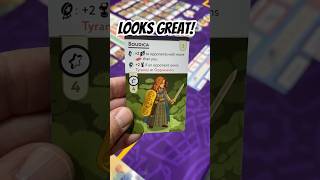
Phil singled out the card design as the strongest feature, saying that the cards represent what occurred in history and what kind of technology they depict. Phil compared the flavor favorably to Agricola, while noting it is not as dense. Rob also praised the artwork and the component look, calling the game pretty and cute on the table. Together, these points explain why reviewers keep returning to the card pool as the reason the game feels distinct from a standard abstract.
A Rulebook That Gets Out of the Way
Phil gave the rules a score of nine out of ten and described the rulebook as small and streamlined, similar in approachability to Tapestry. Rodney Smith's walkthrough supports that impression, since the core loop of roll, draft, disaster, spend, production, and cleanup is consistent across all three eras. Phil did note that a few edge cases, such as scoring reminders and the bonus for upgrading your own technologies, are easy to miss without rereading the book. Overall, reviewers see the simple structure as the reason the game can be taught quickly.
Potential Drawbacks
Planning Time and a Narrow Card Row
The most consistent criticism concerns analysis time. Rolling Dice & Taking Names felt that the draft forces long turns because players must check which cards are available, which colors they need, and how each die will affect unrest and disasters. Since only the bottom card of each display column can be taken, a die chosen for one technology can become useless if another player takes that card first. The hosts wished for a way to access deeper cards at a cost, and Rob also felt that technology options can feel scarce in later eras.
Negative Interaction and Era Transitions
Rob described the drafting and disaster systems as quite mean, and noted that obsolescence can destroy a player's production unexpectedly, especially when a new card removes a technology held by a rival. Phil agreed that the negative interaction could hold the game back for players who prefer less confrontation. Rob also said that upgrading technologies between eras grinds the game to a halt, because players must search the evolution deck and reveal obsolete cards before continuing. These moments are where the game's sharpest frustrations appear.
If You Enjoy Nova Era
Players who enjoy Nova Era's dice drafting and tableau engine will find familiar satisfaction in Ancient Knowledge, which Phil identified as the closest match in complexity and card-driven tableau feel. Tapestry, also a civilization game with many tracks and tableau building, will appeal to players who like watching a single civilization grow through a card-based engine. Players drawn to the dice drafting itself and the way competition for dice shapes each round will find Nations: The Dice Game a natural next step, since Phil noted similarities in its market and dice selection.
What Reviewers Are Saying
"A lot of these cards really interacted well with each other and represented what they do and represent what occurred in history and what kind of Technology it does in a really cool way. So every card has flavor albeit you know not the same complex flavor as say Agricola but pretty darn close."
— Phil, The Board Gaming Doctor
"The competition for the right dice and action spots creates direct interaction every round, and some technologies, especially military ones, can disrupt and destroy opponents. You need to get the right dice so you can get the right cards, but you also need to hate draft a little bit to make sure your opponents can't get what they need."
— Rob, Just the Rogue
"Drafting first, beginning last is a risk, especially if you're drafting to get a card and somebody gets the card before you. And then it's like, well, what do I do with this die now?"
— Rolling Dice & Taking Names