/pic7589516.jpg)




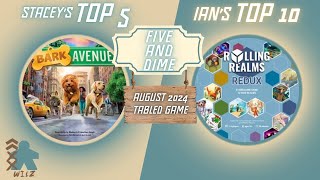




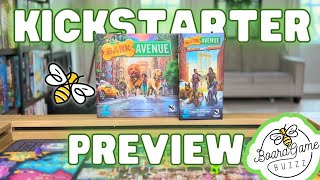
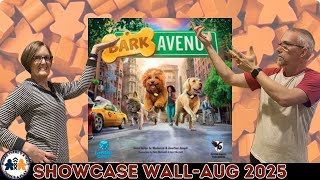



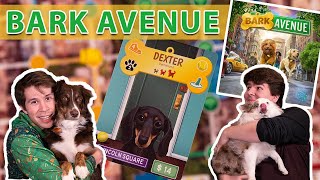





Bark Avenue Deep Dive
What the Community Thinks About Bark Avenue
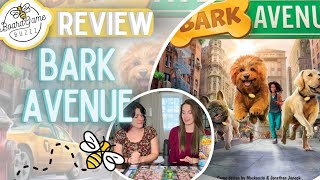
Reviewers express genuine enthusiasm for Bark Avenue, praising how the game captures the frenetic energy of dog walking in New York City while remaining accessible to new players. The theme resonates deeply: a designer who lives in Manhattan created a game that feels authentic to the experience, yet plays smoothly for everyone from casual players to seasoned gamers. The game's strongest consensus centers on how seamlessly its mechanics express the theme. One reviewer described it as "the most thematic game I've ever played, just the like the theme integrating into what you are doing in the game, I have never played a game that just made so much sense." The pick-up-and-deliver structure creates natural tension around managing limited actions, timing dog pickups before they disappear, and balancing the perfect walk against the need to move on to the next dog. Players appreciate that Bark Avenue works well across different player counts, from solo play to multiplayer chaos, though the game comes alive most vividly when multiple walkers compete for the same dogs.
Core Mechanics That Define Bark Avenue
Pick-Up and Deliver
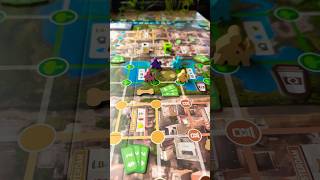
Bark Avenue strips the pick-up-and-deliver mechanic to its essence: players move through the neighborhoods of New York City's West and East Sides, pick up dogs at their owners' locations, walk them around performing activities to earn tips, and drop them off at their homes. The puzzle at the heart of each walk is route optimization. Each dog requires a minimum number of turns to walk, indicated by paw-print tokens, but dog owners have preferences: a fire hydrant sniff, a ball fetch, a splash in water. Players must balance completing all three activities against the clock, since dogs become late if held too long and stop scoring altogether. Reviewers highlight that every neighborhood on the board offers a special action when your meeple lands there, further enriching decisions about where to walk next. Tips accumulate during the walk and convert to money at game end. This structure creates urgency that mirrors the real world of Manhattan dog walking: owners won't wait, competitors will steal your dogs, and you must decide whether to perfect the current walk or move on for a fresh start.
Action Drafting and Asymmetric Turns
Each turn follows a consistent rhythm: roll the appropriate die (city or park), move that many spaces, then take one action. The die roll injects controlled chaos. Roll a poop and you gain a tip token on a dog. Roll a pigeon or squirrel and your first move is forced in that direction. Roll a bonus and you move further. This mechanism means players can never plan too far ahead; they must adapt. The game keeps the turn structure lightweight so decisions resolve quickly, preventing analysis paralysis. The true engine of tension comes from the dog card market. Dogs refresh every other round via a "competition" mechanic, and new dogs are constantly entering the available row. Players must commit quickly to the dogs they want, or someone else will grab them. This captures the thematic reality that dog owners won't wait for a walker who's still deciding.
The Bark Avenue Experience
Charming and Accessible Delight
Bark Avenue's most striking quality is how welcoming it feels. Reviewers consistently describe the game as "charming" and praise the adorable dog cards, which are based on real dogs that live in Manhattan. The theme is intuitive enough that new players grasp the core loop in minutes: move, walk, perform actions, collect tips. One reviewer noted that the game "completely took them by surprise, never thought I'd love a game about dog walking this much, but it's quickly become one of my will-play-anytime games." The artwork, illustrations by April Borisch and Chris Martinetti, brings each dog to life. During the Kickstarter, the designers offered a unique perk: back the project and get your own dog illustrated and included in the game. This personal touch deepens the connection for backers and contributes to the game's warm reception. Players find themselves reading the dog names, noticing their speeds and temperaments, and treating each walk as a mini-narrative rather than an abstract puzzle.
Fast-Paced and Competitive Tension
Despite its lightness, Bark Avenue creates surprisingly tense moments. The game plays briskly because each turn is simple, but the competition for dogs drives urgency. Reviewers report that games remain "extremely close" in scoring, with final tallies often separated by just a few dollars. The shared dog market means your careful planning can evaporate if an opponent snatches the dog you wanted. One reviewer emphasized that "you really have to make those quick snap decisions to make sure you do get really ahead in the game because the games that we've played have been extremely close every single time." The board fills and empties with dogs as rounds progress, and event cards introduce surprises. A "lawn closed" event might block the park, forcing walkers to rethink their routes. Surge pricing gives tips bonuses on certain rounds, creating spike moments when players rush to claim profitable dogs. The solo mode preserves this tension by having AI walkers stake their own meeples on preferred dogs, forcing solo players to choose between taking the dog they want and denying it to the AI.
What Makes Bark Avenue Stand Out
Thematic Integrity and Intuitive Design
Bark Avenue achieves something rare: it is simultaneously thematic and mechanically lean. Every rule makes sense within the story of dog walking. Dogs have speeds because some are hyperactive terriers and others are laid-back seniors. Dogs have favorite activities because real dog owners care about enrichment. Solo dogs can't walk with group dogs because of personality clashes. The cash economy reflects the reality of tipping. Reviewers praised this harmony extensively. "Everything just makes so much sense," one said. "The mechanics and what you are doing in the game is just so intuitive that is just so easy to learn and teach." Another noted that "the game just runs very smoothly" because the theme makes every action feel natural. This clarity means teaching new players is simple, and they grasp strategy quickly. Players can focus on decisions rather than rules lookups. The game achieves Gateway Plus status by remaining simple enough for casual players while offering strategic depth for those who optimize routes and dog selection.
Scalability Across Player Counts and Real Dog Integration
Bark Avenue works at 1-5 players through clever board design: solo and two-player games use half the board, while three to five players open the full map. This keeps competition dense and meaningful regardless of group size. The solo mode is elegant, using AI walkers with meeples that occupy spaces, blocking neighborhood actions but providing a clear rival to strategize against. Reviewers who played solo found it satisfying, though most agreed multiplayer shines brightest when human unpredictability clashes with your plans. A distinctive feature that delighted backers: the Kickstarter offered add-ons to include players' real dogs in the game. Reviewers who received this honor describe the joy of finding their pet's card during play and remembering the designer's personal connection. This crowdfunded perk became a talking point across coverage, with multiple reviewers highlighting the cuteness factor of dog cards "based on real life dogs in Manhattan."
Potential Drawbacks
Heavy Reliance on Luck and Rapid Dog Cycling
The die roll mechanic, while thematic, introduces luck that not all players enjoy. A series of poor rolls can derail your plans, and you must adapt on the fly. Some reviewers noted that the fast cycling of dogs can feel frustrating if you've set your heart on a specific dog only to see it vanish before your turn. One reviewer mentioned that "the dog cards that you have to choose from to pick up they do move quite quickly and this like I said ties into the theme where you know dogs are not going to or dog owners are not going to be waiting for you to come pick up their dog they're going to call another dog walker." This creates a tight decision window. While this mirrors real-world urgency, players who prefer building long-term plans may find the constant flux stressful. Additionally, the game is luck-heavy due to the bag-building nature of dog availability and die rolls.
Limited Strategic Depth and Potential Five-Player Pacing
Bark Avenue is fundamentally a light-to-medium weight game. While it offers more tactical richness than a party game, it does not offer the sprawling engine-building of heavier titles. For players seeking complex optimization, the game may feel shallow. A few reviewers also noted that at higher player counts, particularly five players with new players learning, the game can run longer than expected as paralysis sets in. One reviewer commented that "a five player game did run a little bit long and part of this was probably because three of the five players that we were playing with were new to the game and they were just learning it." Once players are familiar, turns snap into place, but that ramp-up time exists.
If You Enjoy Bark Avenue
Players who enjoy Bark Avenue's pick-up-and-deliver puzzle will find similar satisfaction in Dog Park, a lighter dog-themed game that uses set collection and tile placement. Those who love the route optimization aspect may appreciate Cartographers, a flip-and-write game where spatial decisions drive scoring. For gamers drawn to the thematic integration and accessibility, Tuki offers a different flavor: a dexterity game with surprising elegance and dog-adjacent charm. Finally, players who value the semi-cooperative, fast-moving feel of competing toward multiple win conditions may enjoy Kings and Queens, which shares Bark Avenue's light-hearted competitive spirit and quick decision-making.
What Reviewers Are Saying
"This game is so easy to learn, it is so easy to teach because everything just makes so much sense. The mechanics and what you are doing in the game is just so intuitive. I have never played a game that just made so much sense. This game is so thematic that the theme integrating into the gameplay, I have never played a game so good as this one."
— The Board Game Garden
"The charming nature of this game completely took me by surprise. I never thought I'd love a game about dog walking this much, but it's quickly become one of my will-play-anytime games. It's got adorable dog cards that are actually based on real life dogs in Manhattan."
— Watch It Played
"The thing with this game that really draws me to it is the integration of the theme. All the pieces, not just that it's about dogs. Everything just feels really fast-paced and fitting for the New York City setting. Once you realize the theme hit, you understand why the dogs move so quickly and I like it. It's nice when you recognize theme is doing the heavy lifting in a game."
— Coverage