














Under the Leaves Deep Dive
What the Community Thinks About Under the Leaves
Under the Leaves has captured the attention of the board game community as a standout example of how design can balance accessibility with clever mechanical depth. Reviewers across multiple channels consistently praise the game's charm and approachability, while some note that it occupies a crowded space within the tile placement genre. The game resonates particularly well with those seeking a light, quick experience that still offers genuine puzzle-solving satisfaction, though it divides opinion when compared directly against other recent releases in its category.
Core Mechanics That Define Under the Leaves
Tile Placement and Pollination
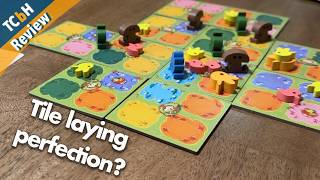
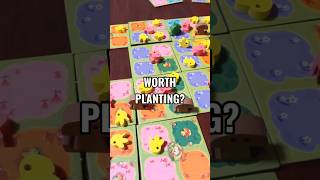
At its heart, Under the Leaves is a tile placement game where each player builds a personal garden grid over 12 rounds, starting with a single tile. On each turn, a player selects from three face-up tiles and places it adjacently on their board. The core mechanic revolves around creating areas of the same terrain color. When three or more tiles of the same color become adjacent, that area becomes "pollinated," and the player places a bee token to mark it. The genius of the design lies in how these areas interact: when you create a new area of a color already on your board, you get to add another bee to the original pollinated area as well, creating a cascading effect that rewards planning across the entire garden. Multiple bees can be stacked and replaced with a larger bee piece when an area has three, creating visual clarity and a satisfying sense of accumulation.
Cascading Scoring and Chain Reactions
The scoring potential multiplies when a single tile becomes fully pollinated across all its terrain types, triggering a hummingbird token. These hummingbirds can form rows and columns, and when three hummingbirds line up, the middle one gains an extra hummingbird. Beyond the pollinator economy, three rotating goal cards available each game provide additional scoring targets: creating areas containing multiple mushroom dwellers, isolating a puddle completely surrounded by fields, and forming perfect squares of four different terrain types to attract leaf dwellers. This combination of mechanics means a single well-placed tile can unlock multiple scoring opportunities simultaneously, turning turns into moments of satisfying discovery when a player realizes they have achieved several goals at once.
The Under the Leaves Experience
Cozy and Cute Aesthetics
Reviewers consistently highlight the game's aesthetic charm as a major draw. The box interior reveals adorable artwork, and the wooden meeples representing bees, hummingbirds, mushrooms, and other forest critters delight players who expect only functional components. Solo players and group players alike respond to the gentle nature theme: you are cultivating a thriving habitat for small forest friends. The visual presentation of a growing garden filled with these charming little tokens creates a satisfying sense of accomplishment that goes beyond the mechanical score. Multiple reviewers note that the game has a quiet, cozy quality that makes it easy to reach for repeatedly, despite its strategic depth. The game attracts onlookers at the table who become curious about what they are watching unfold.
Quick and Puzzle-Like Gameplay
Under the Leaves plays fast, typically wrapping up in under 30 minutes even with new players, though some may run to the full 30-minute estimate on the box. The puzzle-like nature of tile selection and placement creates a satisfying mental workout without requiring extensive rules overhead. The game introduces itself clearly: choose a tile, place it adjacently, check for pollinated areas, check for goal cards, move to the next player. Yet within this simple framework, the cascading mechanics create meaningful decision space. Players describe the experience as "whipping out" the game for a quick puzzle, one that works equally well in multiplayer or as a solo challenge.
What Makes Under the Leaves Stand Out
The Pollinator Token Economy
What distinguishes Under the Leaves from similar tile placement games is the cascading pollination system. When you create a new area of a color you have already pollinated, every previously pollinated area of that same color receives another bee, creating a deeply interconnected scoring web. This is not simply about adding another fourth tile to an area; the system rewards players who thoughtfully build multiple separate sections of the same color across their tableau. The hummingbird bonus, triggered when all terrain types on a single tile become pollinated, adds another layer of reward for diversified planning. Reviewers note that this interplay between separate areas and their interaction creates moments of genuine delight when a placement unexpectedly pays off multiple existing features.
Accessible Depth for New Players
Several reviewers explicitly mention that Under the Leaves succeeds at introducing newer players to tile placement mechanics without overwhelming them. The game teaches quickly, the turn structure never changes, and the rules overhead is minimal. Yet despite this accessibility, experienced players can engage with the spatial puzzle and forward planning. It serves as a bridge game: light enough for players of any experience level, but containing enough mechanism to satisfy someone seeking a quick brain teaser. Reviewers who work with diverse gaming tables note that it is one of the few games they can confidently bring out and teach to almost anyone without hesitation or significant cognitive load.
Potential Drawbacks
Visual Clarity Issues on the Board
The Dice Tower review raises a significant usability concern that other players have corroborated: determining which areas are pollinated and which are not can be visually confusing on the physical board. When a bee is placed in any one tile of a pollinated area, that entire area is considered lit up, but the distinction between pollinated and unpollinated areas is not always immediately apparent when scanning the board. The wood tiles and small bee tokens do not create enough visual separation to make the state of the garden instantly clear. Some players compensate by following a mental checklist (bee first, then other bees, then hummingbirds), but this mental overhead detracts from the otherwise smooth gameplay. One reviewer notes they often wish the game existed as a digital app, where highlighting could solve this problem immediately.
Analysis Paralysis and Pedestrian Feel
Because the game has no hidden scoring or obscured information, players can theoretically calculate every possible outcome of the three available tiles and their placement options. Some players prone to analysis paralysis may struggle with this, taking extended turns to evaluate permutations. The Dice Tower review expresses a broader concern: in a crowded genre of recent tile placement games like Azul and Harmonies, Under the Leaves can feel incremental. While the cascading pollination system is clever, the reviewer finds the overall experience "pedestrian and forgettable" compared to newer peers in the space. The visual plainness of the tiles themselves, despite the cute box art and tokens, contributes to this assessment. Additionally, some reviewers note that the wooden meeples, while charming, are fragile; they have broken pieces in their copies due to the way holes are cut into the components, making them structurally weaker than standard wooden tokens.
If You Enjoy Under the Leaves
Players who gravitate toward Under the Leaves often appreciate games that balance charm with mechanical substance. Azul shares the accessible tile placement foundation and quick playtime, though it focuses on simpler area majority rather than cascading token placement. Harmonies also presents a lighter tile placement experience with beautiful production and cascading scoring potential when you build harmonious color groups. Both games offer similar gateway qualities but with distinct mechanical flavors. Several reviewers note that Under the Leaves occupies a sweet spot for teachers and casual gamers who want their tile placement games approachable without sacrificing puzzle depth, making it a natural choice if you enjoy games that welcome newcomers without insulting experienced players.
What Reviewers Are Saying
"It is so cute. I am obsessed. This is a very cute tile placement game which we are going to play. It's such a cozy little tile placement that I think you can whip it out so quickly and just do a little puzzle."
— Solo Playthrough
"But also the game is so short and it's so cute. I can get a lot of people to play this. I really think this is a a lighter harmony. That's what it feels like in many ways and a lot easier for me to teach. This is a game that I can bring out and play with almost anybody who's playing games first time."
— The Dice Tower
"This one is really hot right now. I have the feeling everybody loves this game and I think it's good. Um, I think what it what it does great is I give also those uh people who don't play as many games or like new to games or just play like a few simpler games a good way to play play a decent title lane game."
— Sir Thecos